Study in Canada Difficulty: Essential 2026 Policy Updates
30/05/2026 Phong Nguyen
In the context of Canada’s rapidly evolving immigration policies, understanding the **study in canada difficulty** has become the primary concern for Vietnamese students. The 2026–2027 period marks a new era where the Canadian Government is shifting away from mass settlement to focusing resources on priority sectors facing severe labor shortages. Navigating the right path and understanding the new regulations will help you turn challenges into golden opportunities to study and work long-term in the land of the maple leaf.
1. The Reality of study in canada difficulty in 2026–2027
To objectively answer the question regarding study in canada difficulty, we need to look at the international student management by Immigration, Refugees and Citizenship Canada (IRCC). Currently, Canada has applied a cap on the number of new Study Permit applications, which means competition is higher than in previous years. However, the hurdle isn’t a total closure but a screening process to select applicants with serious academic goals and who choose the right professions that society needs.
In the 2026–2027 period, the **study in canada difficulty** depends heavily on your ability to adapt to new standards. The Canadian government is prioritizing the approval of applications for high-quality training programs, especially at the undergraduate and postgraduate levels. If you have a clear study path, demonstrate strong financial capacity, and choose provinces with talent attraction policies, the door to studying abroad remains wide open.
1.1. Shift from Mass Immigration to Priority Skilled Immigration
An important point to note is that Canada’s settlement strategy has changed. Instead of granting Permanent Residency (PR) broadly across all sectors, Canada is now focusing on category-based selection. This means that if you choose to study general programs like business administration or marketing, the **study in canada difficulty** will become a challenging puzzle when competing for jobs and immigration points.
Conversely, students pursuing priority sectors will receive many bonus points and maximum support from both federal and provincial governments.
2. Application Requirements and Latest Study Permit Regulations
To prepare best and not worry about **study in canada difficulty**, mastering the application requirements is a prerequisite. The current Study Permit application process requires stricter administrative documentation. One of the biggest changes is the requirement for a Provincial Attestation Letter (PAL).
This is a mandatory document for most international students wishing to pursue college or university programs in Canada.
Your application needs to demonstrate logic between your previous academic background and your intended major in Canada. Consular officers will carefully review your Study Plan to ensure you are truly coming to Canada to study rather than just seeking work opportunities. Regarding the procedural aspect of **study in canada difficulty**, it will be hard if you prepare your application superficially, but it will be very smooth if you have professional advice and transparency in all provided information.
2.1. Language Proficiency and Academic Requirements
English proficiency (IELTS/PTE) or French remains a key factor. In 2027, minimum requirements tend to increase slightly to ensure students can keep up with the curriculum and quickly integrate into the labor market. Possessing a good language certificate not only improves your profile but is also the key to reducing the pressure of **study in canada difficulty** when starting life in a completely new environment.
3. New Financial Requirements and 24-Hour Weekly Work Rule
Financial issues are often a barrier that makes many people concerned about **study in canada difficulty**. Starting from 2024 and continuing through 2026–2027, the Cost of Living requirement in financial profiles has increased significantly. Specifically, the GIC (Guaranteed Investment Certificate) amount has doubled compared to before to reflect the actual cost of living in Canada.
This requires families to have more careful budget preparation before deciding to submit an application.
Additionally, work regulations have also seen important adjustments. After a period of allowing students to work unlimited hours, the Canadian Government has finalized a new regulation allowing international students to work a maximum of 24 hours per week during academic terms. This change aims to help students focus more on their studies, avoiding situations where neglecting school leads to poor results or loss of status.
The 24-hour/week limit also helps you balance rest and cultural experiences, thereby making the **study in canada difficulty** story lighter psychologically.
3.1. Benefits of the 24-Hour Weekly Work Regulation
Although work hours are limited, minimum wages in Canadian provinces are continuously increasing. With 24 hours of work per week, students can still cover a portion of their living expenses if they manage their spending wisely. Importantly, you should seek jobs related to your field of study to accumulate practical experience while still in school.
When you have experience in your profession, you will find that the **study in canada difficulty** is no longer a major issue when searching for official employment after graduation.
4. How to Choose Majors and Schools to Avoid study in canada difficulty
The strategy for choosing a major is the factor that decides 80% of your success. To avoid worrying about **study in canada difficulty**, you should focus on the top priority occupational groups in Canada for the 2026–2027 period. Instead of following general majors, head towards fields where Canadian society is facing severe labor shortages.
4.1. Healthcare Sector
The Canadian healthcare system is facing a large-scale personnel shortage due to an aging population. Fields such as Nursing, Medical Assistants, Elderly Care, and Laboratory Technology are always on the top priority list for settlement. Healthcare graduates often have a near-perfect job placement rate and benefit from special settlement policies from both federal and provincial levels.
If you have a passion for healthcare, this is the shortest path to eliminate worries about **study in canada difficulty**.
4.2. STEM Group (Science, Technology, Engineering, and Mathematics)
Canada is striving to become a global technology hub, especially in Artificial Intelligence (AI), Cybersecurity, and Software Development. STEM training programs in Canada are highly regarded for their practical application. Students in this block not only have high starting salaries but are also prioritized in high-skilled immigration invitations.
Choosing STEM will help you feel more confident when facing the question of **study in canada difficulty** in the future.
4.3. Construction & Trades Sector
With plans to expand infrastructure and resolve housing issues, Canada is in great need of electricians, carpenters, welders, and civil engineers. These are occupations with short training periods, focusing on practice, and having huge recruitment needs. Many provinces have separate settlement programs for skilled labor in the construction sector.
This choice is suitable for those who want to graduate and start working quickly, helping to reduce the financial burden and the pressure of **study in canada difficulty**.
5. Study Path Toward Employment and Settlement in 2027
The ideal path to success in Canada usually starts with choosing a program at a Designated Learning Institution (DLI) eligible for a Post-Graduation Work Permit (PGWP). In the 2026–2027 period, PGWP regulations may have new updates, requiring students to graduate from majors that align with labor market needs to be granted longer work permits. This once again confirms the importance of choosing the right major from the start to avoid **study in canada difficulty** at the final stage.
After graduating and obtaining a PGWP, you need to accumulate at least one year of professional work experience in Canada. This is a necessary condition for you to apply to the Express Entry system or Provincial Nominee Programs (PNP). By possessing a Canadian degree and work experience in priority sectors like Healthcare, STEM, or Construction, your settlement score will be very competitive.
This process requires perseverance and a detailed plan, but it is the most sustainable way to answer the question of **study in canada difficulty**.
5.1. Leveraging Provincial Nominee Programs (PNP)
Each province in Canada has its own specific labor needs. For example, Atlantic provinces or central provinces like Saskatchewan and Manitoba often have more flexible settlement policies for international students who graduate locally. Researching the policies of each region carefully will help you optimize your settlement opportunities and see that **study in canada difficulty** actually depends on which destination you choose on the map of Canada.
6. Assess Your Canada Settlement Potential for 2027 Now
Many young people are still struggling with the question of **study in canada difficulty** because they lack a comprehensive view of their personal profile. Each applicant has unique strengths and weaknesses, from academic level and financial capacity to language skills. Self-assessment can sometimes lead to unnecessary mistakes, causing study opportunities to be missed or the settlement path to become more arduous.
To prepare for the 2026–2027 plan, you need in-depth and personalized consultation. Early profile assessment will help you know where you stand, what needs improvement, and which major to choose to optimize your settlement potential. Don’t let conflicting information online confuse you about **study in canada difficulty**; seek out experienced experts to get structured and accurate guidance.
The journey to conquer Canada is a long road that requires investment in both intellect and finances. However, in a country that always respects the contributions of immigrants and has a world-leading education system, the efforts you put in will surely be rewarded. Start preparing today to turn your Canadian dream into reality, regardless of policy changes that may make many people think about **study in canada difficulty**.
If you are nurturing plans to study and settle in Canada during the 2026–2027 period, don’t let policy questions slow you down. Every change from the Canadian Government opens new doors for those who know how to seize them and prepare thoroughly.
Contact the team of experts at SIEC now for detailed advice on priority major selection, financial profile assessment, and building the strongest settlement plan. We will accompany you to answer all questions about **study in canada difficulty** and help you realize your goal of settling in this developed nation.
Find out more detailed information and receive direct support from us to start your journey most favorably at SIEC via the link: https://siec.com.vn/dang-ky
Are You Ready to Breakthrough Your Global Career With SIEC?
Don’t let your prestigious degree just sit on paper. Let SIEC experts advise you on a study abroad path combined with a job orientation strategy starting today!
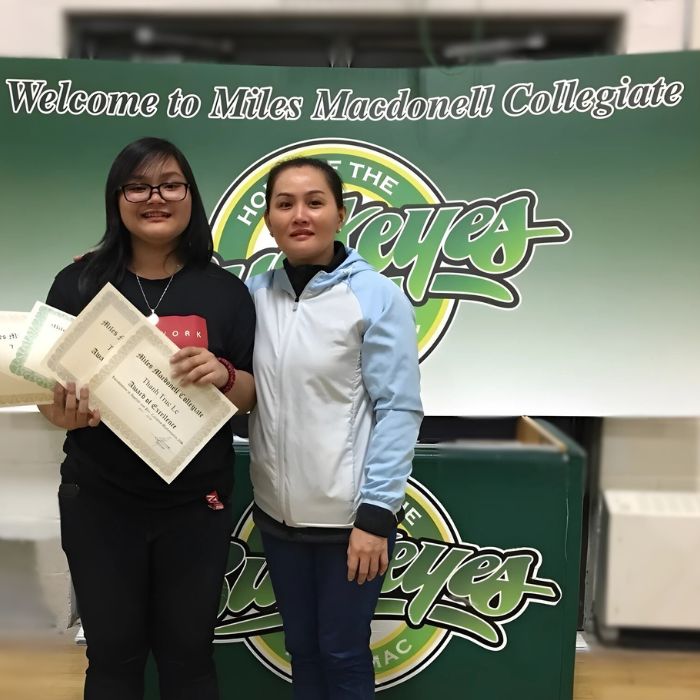
Lê Thanh Trúc, Student at Miles Macdonell Collegiate
“My family and I are deeply grateful to SIEC for not only securing my **Canada high school student visa** in Grade 10 but also for assisting my parents and siblings in obtaining their **visitor visas**. That was an invaluable gift.” — Lê Thanh Trúc, Student at **Miles Macdonell Collegiate** Secure Your Early High School (Secondary) […]
Phan Thị Ngọc Huỳnh, Former Student in Winnipeg
“The solid foundation provided by SIEC and Ms. Huong not only helped me realize my study abroad dream but also gave me the confidence to graduate, secure a stable job, and **settle permanently in Canada**.” — Phan Thị Ngọc Huỳnh, Former Student, currently working in **Winnipeg, Canada** Explore Your Study & Immigration Pathway in Canada […]
Hoàng Giang, Student at Edmonds College
“With her dedication and passion, Ms. Huong helped launch my **American dream**, opening up a vast world of opportunity and the chance to meet new friends.” — Hoàng Giang, Student at **Edmonds College** Explore More About Studying in the USA Spotlight on Edmonds College (Washington State) Gain in-depth knowledge about the programs, tuition fees, and […]
Khánh Lê, Student at LaSalle College
“Thank you to Ms. Huong and the SIEC team for their dedicated partnership and support, from my application phase until I was settled in Canada, helping me confidently pursue my dreams.” — Khánh Lê, Student at **LaSalle College** Explore Further Canada Study Opportunities Spotlight on LaSalle College Gain deeper insights into the programs, tuition fees, […]
Quỳnh Giao, Student at Red River Colleg
“She didn’t just stop at completing the application; she was an inspiration, a true motivator…” — Quỳnh Giao, Student at **Red River College** Continue Your Canada Study Abroad Journey Spotlight on Red River College Polytechnic (RRC Polytech) Discover the high-demand, **applied learning programs** at **Red River College** – one of the premier post-secondary institutions in […]