Canada immigration guide: Requirements and priority jobs
04/08/2026 Phong Nguyen
During the 2026–2027 period, Canada immigration policies are undergoing landmark changes. Instead of opening doors to all applicants as in previous years, the Canadian government is now focusing intensely on attracting highly skilled human resources in essential sectors. Keeping up with new regulations regarding documentation, finances, and priority occupations will be the key to realizing your dream of settling in the Maple Leaf country.
Document Requirements and Critical Changes for Canada Immigration 2026–2027
To prepare for your Canada immigration roadmap over the next two years, applicants should pay close attention to changes in scoring and application processing. The Canadian government has begun applying stricter standards to ensure that immigrants can quickly integrate into the labor market. Factors such as age, education level, and work experience still play a core role, but the priority has clearly shifted toward individuals with expertise that matches the list of labor-shortage occupations.
Language Proficiency and Degree Requirements
Language proficiency is a prerequisite if you want to navigate Canada immigration 240 smoothly. Minimum CLB (Canadian Language Benchmark) scores are trending upward, especially for skilled worker programs. Regarding qualifications, the Educational Credential Assessment (ECA) must be completed early to ensure your education is equivalent to Canadian standards. Applicants with a Master’s or PhD will have a significant point advantage in the Express Entry system.
Work Experience in Priority Occupations
Practical work experience is the deciding factor that makes your Canada immigration profile stand out. In the 2026–2027 phase, years of work experience abroad or within Canada in sectors such as Healthcare, STEM, and Construction will receive priority points. This helps reduce competitive pressure compared to administrative or general business fields, which currently have a very high volume of backlogged applications.
New Study Permit Regulations and Financial Requirements for Canada Immigration 240
Study Permit policies have undergone stricter adjustments to control the number of international students and ensure educational quality. Applying for a Study Permit is no longer as simple as before; it requires applicants to have a clear study path and demonstrate a serious academic purpose toward the long-term goal of Canada immigration 240. Universities and colleges are also subject to enrollment caps, making early application essential.
Latest Financial Requirements for International Students
One of the biggest changes affecting Canada immigration plans is the level of financial proof required. From 2024 onward, the required cost-of-living amount has increased significantly to reflect the reality of living costs in Canada. Specifically, in addition to the first year’s tuition, students must prove they have at least approximately $20,635 CAD in their account. This ensures students can afford their expenses without being overly dependent on part-time work, allowing them to focus better on studying and skill accumulation.
The Importance of a Letter of Acceptance from a DLI
For a Canada immigration 256 application to have a high success rate, you must be accepted into a Designated Learning Institution (DLI) eligible for the Post-Graduation Work Permit (PGWP). Not all schools in Canada help you obtain a work permit after graduation, so checking the DLI list is a step that cannot be overlooked during the application process.
Impact of the 24-Hour Work Policy on Students Seeking Canada Immigration
The new regulation limiting part-time work to 24 hours per week during academic terms is a noteworthy point for those planning for Canada immigration. Previously, during the pandemic, students were allowed to work unlimited hours, but the current policy has returned to controlled hours to protect students’ academic interests. Working 24 hours per week is still sufficient for students to cover part of their living expenses and gain practical work experience in a local environment.
Balancing Studies and Gaining Experience
This work policy encourages students to focus on their specialization rather than just general labor jobs. For the Canada immigration 240 pathway, part-time work experience in your field of study will be much more valuable when you graduate and apply for official jobs. Canadian employers highly value students who know how to manage their time to both complete their degree well and gain professional exposure.
Full-Time Work Opportunities During Breaks
Despite the 24-hour limit during terms, students are still allowed to work full-time during scheduled school breaks. This is a golden opportunity to increase income and expand social networks, providing strong support for future Canada immigration goals. Taking full advantage of internships (Co-op) is also a smart strategy to secure a job offer immediately after graduation.
Choosing Priority Sectors: Healthcare, STEM, and Construction for Canada Immigration 256
In the Canada immigration strategy for the 2026–2027 period, the government is focusing on category-based selection. Instead of relying solely on general CRS scores, applicants with experience in essential occupations will be invited to apply for permanent residency with lower point requirements. Choosing the right field of study from the start will help you fast-track your progress and increase your chances of successful Canada immigration 256.
Healthcare and Social Assistance Group
With an aging population, Canada is facing a severe shortage of healthcare personnel. Positions such as nurses, personal care assistants, laboratory technicians, and psychologists are always at the top of the priority list. Students choosing to study in this field not only have a 100% job opportunity after graduation but also benefit from special immigration policies from both federal and provincial levels, making the Canada immigration journey as short as possible.
STEM and Information Technology Group
Science, Technology, Engineering, and Mathematics (STEM) are the drivers of Canada’s economic growth. Experts in Artificial Intelligence (AI), cybersecurity, software development, and data engineering are always in high demand. If you have a strong technical background, pursuing STEM programs will open wide doors for Canada immigration 256 with attractive starting salaries and modern working environments.
Construction and Transportation Group
To address the housing crisis and infrastructure development, Canada needs a large number of skilled workers in the Construction industry. Trades such as electricians, plumbers, construction managers, and carpenters are being prioritized in immigration invitation rounds. This is a practical direction for those who want to pursue Canada immigration through skilled trades without necessarily following high academic degrees.
Detailed Roadmap from Studying to Working and Canada Immigration
A sustainable Canada immigration roadmap typically lasts from 3 to 5 years, starting from choosing the right study program until receiving a Permanent Resident (PR) card. Careful preparation for each step will help you avoid legal risks and optimize both time and investment costs. To achieve the Canada immigration 240 goal, you need to follow these critical steps.
Study and Graduation Phase
After receiving your Study Permit, you will begin your program in Canada. During this time, focus on achieving good academic results and participating in extracurricular activities to enhance your profile. Immediately after completing your program (minimum 8 months, but 2+ years is recommended), you need to apply for a PGWP to stay and work legally for 1 to 3 years. This is an indispensable stepping stone toward Canada immigration through the study stream.
Accumulating Work Experience and Applying for PR
Once you have a PGWP, you need to find a job within the TEER 0, 1, 2, or 3 occupational categories. After accumulating at least 1 year of full-time work experience in Canada, you will be eligible to enter the Express Entry system or Provincial Nominee Programs (PNP). Possessing work experience in the priority sectors mentioned above will give your Canada immigration 256 profile a superior advantage over other applicants.
Assess Your Eligibility for Canada Immigration 2027 Now
The current moment is the best time to start preparing for your future Canada immigration plans. With policy fluctuations, having an overview and accurately assessing your own capabilities will help you choose the most correct path. Do not wait until regulations become more difficult; be proactive in researching and assessing your profile today so as not to miss out on Canada immigration 240 opportunities in the coming years.
Assessing immigration potential involves reviewing your projected CRS score, existing financial capacity, and the alignment of your qualifications with the Canadian labor market. A detailed plan with early preparation will help you feel more confident when facing government changes. The goal of Canada immigration is not just about changing your place of residence but also about building a sustainable future for yourself and your family in one of the most livable countries in the world.
The journey to conquer the Canadian dream requires persistence and the right direction. If you are concerned about documentation procedures or do not know which occupation to choose to optimize your Canada immigration 256 potential, seek support from reputable consultants. With professional companionship, your path to the Maple Leaf country will become clearer and closer than ever.
If you are looking for a secure study and settlement roadmap in Canada for the 2026–2027 period, do not hesitate to contact SIEC for in-depth consultation. We are committed to providing the most up-to-date information on immigration policies, helping you choose priority occupations and build the most impressive profile.
Let SIEC accompany you on the path to realizing your immigration goals in one of the world’s leading developed nations. Access the link below now to receive dedicated support from our team of experienced experts and start your journey to change your future today at: https://siec.com.vn/dang-ky
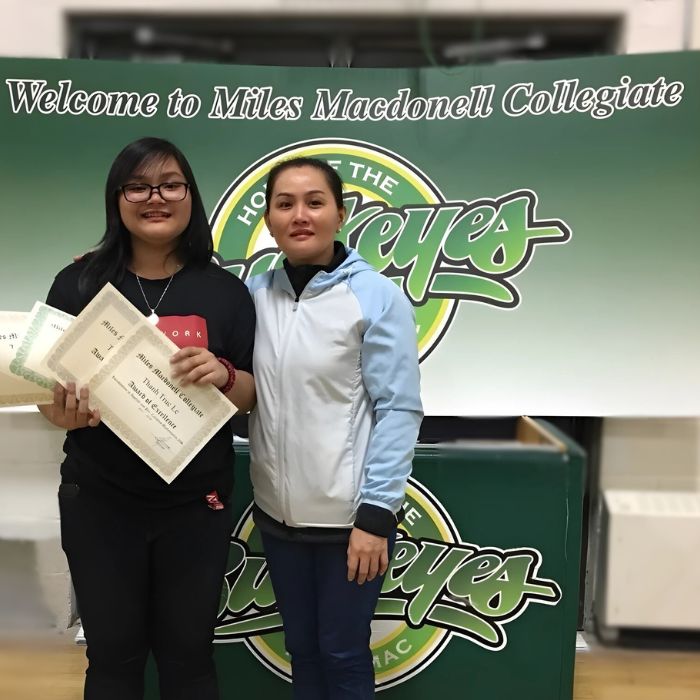
Lê Thanh Trúc, Student at Miles Macdonell Collegiate
“My family and I are deeply grateful to SIEC for not only securing my **Canada high school student visa** in Grade 10 but also for assisting my parents and siblings in obtaining their **visitor visas**. That was an invaluable gift.” — Lê Thanh Trúc, Student at **Miles Macdonell Collegiate** Secure Your Early High School (Secondary) […]
Phan Thị Ngọc Huỳnh, Former Student in Winnipeg
“The solid foundation provided by SIEC and Ms. Huong not only helped me realize my study abroad dream but also gave me the confidence to graduate, secure a stable job, and **settle permanently in Canada**.” — Phan Thị Ngọc Huỳnh, Former Student, currently working in **Winnipeg, Canada** Explore Your Study & Immigration Pathway in Canada […]
Hoàng Giang, Student at Edmonds College
“With her dedication and passion, Ms. Huong helped launch my **American dream**, opening up a vast world of opportunity and the chance to meet new friends.” — Hoàng Giang, Student at **Edmonds College** Explore More About Studying in the USA Spotlight on Edmonds College (Washington State) Gain in-depth knowledge about the programs, tuition fees, and […]
Khánh Lê, Student at LaSalle College
“Thank you to Ms. Huong and the SIEC team for their dedicated partnership and support, from my application phase until I was settled in Canada, helping me confidently pursue my dreams.” — Khánh Lê, Student at **LaSalle College** Explore Further Canada Study Opportunities Spotlight on LaSalle College Gain deeper insights into the programs, tuition fees, […]
Quỳnh Giao, Student at Red River Colleg
“She didn’t just stop at completing the application; she was an inspiration, a true motivator…” — Quỳnh Giao, Student at **Red River College** Continue Your Canada Study Abroad Journey Spotlight on Red River College Polytechnic (RRC Polytech) Discover the high-demand, **applied learning programs** at **Red River College** – one of the premier post-secondary institutions in […]