Canada immigration 2026: Latest policy and pathway updates
04/08/2026 Phong Nguyen
In recent years, Canada’s immigration policies have undergone significant transformations to meet the actual demands of the labor market. While the **Canada immigration 2022** and **Canada immigration 2023** phases witnessed an explosion in the number of skilled workers and international students, the transition to **Canada immigration 2025** and especially Canada immigration 2026 has seen the Canadian Government apply stricter standards. Instead of broad-based recruitment, the country is now focusing on attracting highly skilled individuals in sectors facing severe labor shortages. Understanding the roadmap and new regulations is key to helping you realize your dream of settling in the land of the maple leaf in the near future.
Canada immigration 2026 trends and the shift from mass immigration to priority occupations
Since the pandemic, economic recovery needs have driven Canada to open its doors wider to immigrants. However, lessons from the **Canada immigration 2022** period showed that accepting too many applications without careful selection by occupation put pressure on the housing system and public services. Therefore, starting in 2024 and extending through **Canada immigration 2026**, Immigration, Refugees and Citizenship Canada (IRCC) has implemented invitation rounds based on specific occupational categories.
Instead of relying solely on high Express Entry scores as before, candidates participating in **Canada immigration 2026** need to focus on strategic occupational groups. This change ensures that newcomers can quickly find employment and contribute directly to the economy. Top priority sectors include Healthcare, STEM (Science, Technology, Engineering, and Mathematics), and Construction. These are fields with sustainable hiring needs and are less affected by short-term economic fluctuations, making your **Canada immigration 2026** roadmap more secure.
Compared to the **Canada immigration 2023** period, when requirements were still quite flexible, the Government has now tightened quotas for international students and workers. This means competition will increase, and only applications with thorough preparation in both language proficiency and professional experience will have the highest chance of success in their **Canada immigration 2026** plan.
Document conditions and new financial requirements for the Canada immigration 2026 roadmap
To prepare for **Canada immigration 2026** through the study and work pathway, candidates must pay special attention to changes in legal documentation and financial capacity. One of the most important changes is the requirement for **Study Permits** and financial proof regulations, which have been raised significantly compared to the **Canada immigration 2025** phase.
Regarding study applications aimed at **Canada immigration 2026**, international students are now mandatory required to have a Provincial Attestation Letter (PAL) alongside a Letter of Acceptance (LOA) from Designated Learning Institutions (DLI). This regulation aims to control the number of students in each region to avoid overcrowding. Additionally, language proficiency requirements (IELTS or PTE) are being scrutinized more closely to ensure students can study and work effectively after graduation, creating a prerequisite for successful **Canada immigration 2026**.
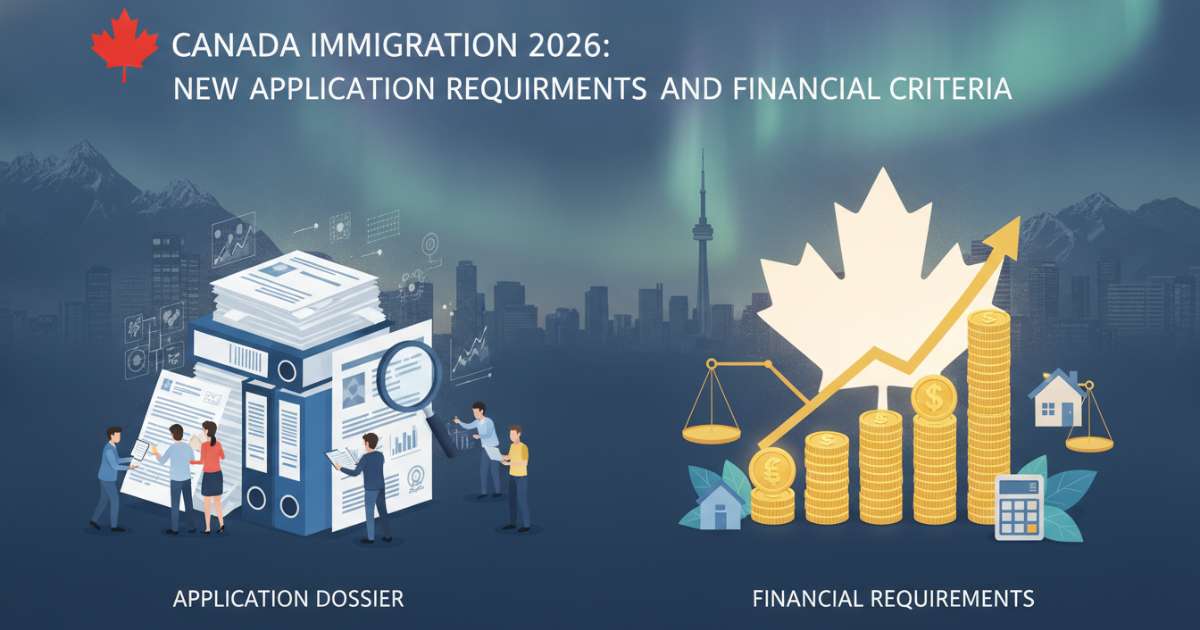
Financial requirements are also a major hurdle to overcome. Since 2024, the cost-of-living requirement for a study visa has doubled compared to the **Canada immigration 2022** years. Specifically, a student needs to prove they have approximately 20,635 CAD for first-year living expenses, excluding tuition fees. This is a significant figure that families need to prepare early if they aim for the **Canada immigration 2026** goal. Raising financial requirements helps the Government ensure international students have sufficient resources to cover their lives without over-relying on part-time work, thereby focusing on studying and accumulating skills for long-term **Canada immigration 2026** objectives.
24-hour weekly work limit for international students
A notable new point in the study and **Canada immigration 2026** policy is the regulation on off-campus work hours. After a period of allowing unlimited work to address labor shortages during **Canada immigration 2023**, IRCC has officially applied a 24-hour weekly work cap during academic sessions. This regulation helps balance earning extra income with ensuring student academic performance.
Compliance with work hour regulations is extremely important for those planning for **Canada immigration 2026**. Any violation related to the conditions of a study permit could lead to visa extension refusal or affect future Permanent Residency (PR) applications for **Canada immigration 2026**. Therefore, students need to manage their time reasonably to both gain practical work experience in Canada and maintain good academic results to qualify for Provincial Nominee Programs.
Choosing priority occupations to optimize Canada immigration 2026 opportunities
While in the **Canada immigration 2022** phase, immigrants could choose any profession as long as it was on the NOC list, the smartest strategy for **Canada immigration 2026** today is to focus on groups prioritized by the Government. Choosing the right field not only helps you find work easily but also grants you priority in the processing of immigration applications.
The Healthcare and Medical Care group remains at the top of the **Canada immigration 2026** priority list. With an aging population, Canada needs a large number of nurses, orderlies, and physical therapy specialists. Graduates in these fields often have a very short **Canada immigration 2026** pathway because provinces always have specific immigration programs for healthcare workers.
Additionally, the STEM group, including software specialists, data engineers, and cybersecurity experts, is also a focus of **Canada immigration 2026**. Canada is striving to become a global technology hub; therefore, those with high technical skills are always sought after. Similarly, the Construction industry and skilled trades (such as electricians, carpenters) are facing severe shortages to meet infrastructure and housing projects. Studying these fields will give you a superior advantage over candidates pursuing general fields like business or administration in the **Canada immigration 2026** roadmap.
Why you shouldn’t choose mass immigration like the Canada immigration 2023 phase
Many candidates still hold the mindset of the **Canada immigration 2023** phase, which is choosing easy study programs or general labor jobs to quickly get to Canada. However, current reality shows that immigration programs for general labor are narrowing significantly. Choosing mass immigration paths forces you to face very high cut-off scores and long processing times, posing a risk to your **Canada immigration 2026** plan.
Meanwhile, investing in priority occupations like Healthcare or STEM, though requiring higher entry standards, brings job and immigration security. Category-based Express Entry draws for these occupations often have much lower scores than general draws. Therefore, to ensure success for your **Canada immigration 2026** goal, you should pivot toward specialized fields instead of following trend-based study programs.
How to choose schools and effective study paths for Canada immigration 2026 goals
Choosing a school is the first strategic step in the **Canada immigration 2026** journey. Not all schools in Canada make you eligible for a Post-Graduation Work Permit (PGWP). You need to carefully check the list of Designated Learning Institutions (DLI) and ensure your program is PGWP-eligible, as this is the vital “key” to moving toward **Canada immigration 2026**.
When choosing a school for your **Canada immigration 2025** and **Canada immigration 2026** plans, you should also consider geographic factors. Provinces like Saskatchewan, Manitoba, or the Atlantic provinces often have more open immigration policies compared to Ontario or British Columbia. Studying in these regions not only helps reduce financial pressure but also increases the chance of receiving a provincial nomination, an factor that adds 600 points to your Express Entry profile when being reviewed for **Canada immigration 2026**.
An ideal study path usually starts with a college or university program lasting at least 2 years in a priority occupation. After graduation, you will be granted a PGWP with a duration of up to 3 years. During this time, accumulating at least 1 year of professional work experience in Canada is a prerequisite for you to apply for **Canada immigration 2026** through the Canadian Experience Class (CEC) or provincial skilled worker streams.
The transition roadmap from employment to permanent residency when pursuing Canada immigration 2026
After completing your studies and securing a job, the final stage in the **Canada immigration 2026** journey is applying for Permanent Residency (PR). This is the time to maximize the advantages of your Canadian work experience and educational background. For those working in Healthcare, STEM, or Construction, opportunities will be wider through IRCC’s occupation-based selection rounds.
Throughout your work process, always stay updated on policy changes in the province where you reside. Many provinces have programs specifically for international students who graduated locally and have job offers from regional businesses. Preparing your **Canada immigration 2026** application needs to be done meticulously, from credential evaluation and language testing to requesting work experience confirmation from employers.
Additionally, active participation in the community and improving language skills (especially French if possible) will provide a significant boost to your Comprehensive Ranking System (CRS) score. The **Canada immigration 2026** goal is fully within reach if you have a clear roadmap, comply with the law, and persist in pursuing occupations that Canadian society truly needs.
Prepare your application early to seize Canada immigration 2027 opportunities
Although the current goal is **Canada immigration 2026**, looking further ahead to the **Canada immigration 2027** phase is extremely necessary. Immigration policies always have a lag and are usually announced 1 to 2 years in advance. Preparing your file from now not only helps you respond timely to changes in 2026 but also creates a solid foundation for the following years.
Start by assessing your personal capacity and choosing a suitable study program today. Thorough preparation in terms of finances, knowledge, and mindset will make you more confident when facing challenges in the **Canada immigration 2026** application process. Don’t let sudden policy changes disrupt your plans. Instead, always update yourself with official information and seek advice from reputable experts to ensure your **Canada immigration 2026** roadmap goes as smoothly as possible.
The journey to conquering a Canadian Permanent Resident card requires persistence and a correct strategy. With changes focusing on quality and priority occupations, **Canada immigration 2026** promises to be a golden opportunity for those who truly have the ability and desire to contribute to the nation’s development. Start acting today to turn your dream into reality.
To ensure your roadmap is on the right track and to optimize your chances of success, being advised by experienced experts is extremely important. Contact us to have your profile assessed and to build the most suitable study and work roadmap for your actual conditions.
We will accompany you in choosing priority occupations, preparing finances, and completing necessary legal procedures to seize **Canada immigration 2027** opportunities starting now.
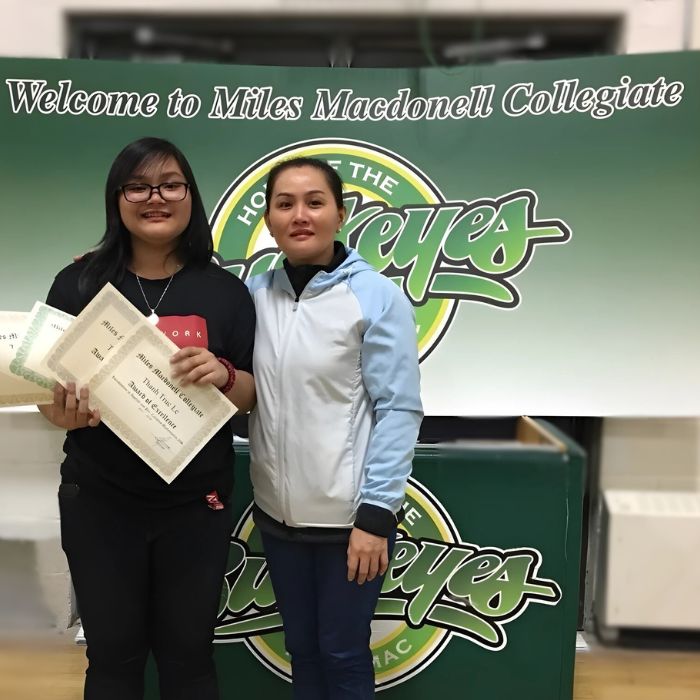
Lê Thanh Trúc, Student at Miles Macdonell Collegiate
“My family and I are deeply grateful to SIEC for not only securing my **Canada high school student visa** in Grade 10 but also for assisting my parents and siblings in obtaining their **visitor visas**. That was an invaluable gift.” — Lê Thanh Trúc, Student at **Miles Macdonell Collegiate** Secure Your Early High School (Secondary) […]
Phan Thị Ngọc Huỳnh, Former Student in Winnipeg
“The solid foundation provided by SIEC and Ms. Huong not only helped me realize my study abroad dream but also gave me the confidence to graduate, secure a stable job, and **settle permanently in Canada**.” — Phan Thị Ngọc Huỳnh, Former Student, currently working in **Winnipeg, Canada** Explore Your Study & Immigration Pathway in Canada […]
Hoàng Giang, Student at Edmonds College
“With her dedication and passion, Ms. Huong helped launch my **American dream**, opening up a vast world of opportunity and the chance to meet new friends.” — Hoàng Giang, Student at **Edmonds College** Explore More About Studying in the USA Spotlight on Edmonds College (Washington State) Gain in-depth knowledge about the programs, tuition fees, and […]
Khánh Lê, Student at LaSalle College
“Thank you to Ms. Huong and the SIEC team for their dedicated partnership and support, from my application phase until I was settled in Canada, helping me confidently pursue my dreams.” — Khánh Lê, Student at **LaSalle College** Explore Further Canada Study Opportunities Spotlight on LaSalle College Gain deeper insights into the programs, tuition fees, […]
Quỳnh Giao, Student at Red River Colleg
“She didn’t just stop at completing the application; she was an inspiration, a true motivator…” — Quỳnh Giao, Student at **Red River College** Continue Your Canada Study Abroad Journey Spotlight on Red River College Polytechnic (RRC Polytech) Discover the high-demand, **applied learning programs** at **Red River College** – one of the premier post-secondary institutions in […]