Latest Updates on the Canada RNIP program for Immigrants
06/08/2026 Phong Nguyen
In the context of significant changes in Canada’s immigration policies, the Canada RNIP program remains one of the most sustainable pathways for international students. The 2026–2027 period marks a transition in immigration policies toward a focus on high-level professional skills rather than mass immigration. The Canadian government is clearly prioritizing individuals capable of contributing directly to the economy in rural and northern regions. Grasping the latest regulations regarding the Canada RNIP program will help you build an effective study and work roadmap, ensuring your ability to obtain a permanent resident card in the near future.
Eligibility Requirements for the Canada RNIP program in 2026–2027
To participate in the Canada RNIP program, candidates must meet strict standards from both the federal government and local communities. In the 2026–2027 period, these criteria have been tightened to ensure that candidates have the ability to integrate and commit long-term to their area of residence.
Work Experience and Language Requirements
Candidates must have at least one year of continuous work experience within the last three years. For students graduating from universities or colleges located in areas covered by the Canada RNIP program, work experience requirements may be waived if they meet specific study duration criteria. Language requirements are also mandatory, with minimum CLB (Canadian Language Benchmark) scores depending on the job level according to the NOC category. Occupations in the Healthcare and STEM sectors often require higher language proficiency to ensure professional communication capabilities.
Community Approval and Recommendation Letters
One of the unique features of the Canada RNIP program is that you must receive a recommendation letter from one of the participating communities. The community will evaluate your profile based on your intention to reside there long-term, professional skills that match local needs, and your existing ties to the area. Immigration profiles need to be meticulously prepared to prove that you are the asset the community is looking for to drive regional economic development.
Changes to Study Permits and Financial Requirements for Studying in Canada
Before proceeding toward the Canada RNIP program, most candidates begin their journey as international students. Since 2024 and extending into the 2026–2027 period, Study Permit regulations have undergone several important adjustments that students must keep in mind.
Provincial Attestation Letter (PAL) Regulations
Currently, most Study Permit applications for college and undergraduate levels require a Provincial Attestation Letter (PAL). This is a tool for the Canadian government to control the number of international students entering the country, prioritizing regions facing labor shortages under the Canada RNIP program. Choosing schools in rural areas can make it easier to receive a PAL compared to overcrowded major cities like Toronto or Vancouver.
New Financial Requirements for International Students
The Canadian government has significantly increased the financial proof requirement (GIC) to ensure students can afford their living expenses. For those on a path to join the Canada RNIP program, preparing a solid financial foundation is evidence of seriousness and the ability to stabilize one’s life. The new financial requirements do not stop at tuition fees but also include reserves for housing costs and insurance in northern regions, where weather conditions can be more extreme.
24-Hour Weekly Part-Time Work Regulation and Experience Opportunities
A positive change in policy for international students is the regulation regarding off-campus work hours. Instead of the previous 20-hour limit, students are now permitted to work up to 24 hours per week during regular academic terms.
Enhancing Labor Market Access
Increasing work hours helps students gain more income and, more importantly, the opportunity to accumulate practical experience in Canada. For those aiming for the Canada RNIP program, working part-time in fields related to their major is a massive advantage. Local work experience helps you build a network and find employers willing to sponsor you after graduation.
Balancing Study and Work
Although allowed to work 24 hours, students must ensure their academic performance to maintain their Study Permit. Good academic results are a prerequisite for transitioning to Post-Graduation Work Permits (PGWP), which opens the door to participating in the Canada RNIP program. RNIP communities often prioritize students with a serious academic attitude and strong professional skills in priority occupations.
Choosing Majors and Schools Prioritized by the Canada RNIP program
To optimize your chances of success with the Canada RNIP program, the choice of major and school plays a decisive role. Instead of choosing general majors, you should focus on three key industry groups that are facing severe labor shortages in Canada.
Healthcare and Wellness Sector
Canada is facing an aging population, especially in rural areas. Majors such as Nursing, Medical Assistants, and Elderly Care are always on the priority list of the Canada RNIP program. Healthcare graduates often find employment immediately and receive maximum community support during the immigration application process. This group has the highest immigration rate and stable salary levels.
STEM and Information Technology Sector
Science, Technology, Engineering, and Mathematics (STEM) fields are the growth engines of every region. In the Canada RNIP program, software specialists, mechanical engineers, and electrical technicians are always in high demand. Studying at technical colleges in RNIP areas gives you access to local businesses hungry for technological innovation, creating a solid foundation for applying for a permanent resident card.
Construction and Practical Engineering Sector
Infrastructure in northern regions is receiving heavy investment, leading to a high demand for electricians, carpenters, welders, and construction managers. Choosing a Construction major not only makes it easier to find a job but also makes your Canada RNIP program profile stand out. These occupations require practical skills and resilience, which perfectly align with Canada’s regional economic development orientation in the 2026–2027 period.
Roadmap from Studying to Working and Receiving Canadian Permanent Residency
To achieve the goal of immigrating through the Canada RNIP program, you need a methodical and long-term roadmap. Early preparation while still in your home country will help you avoid unnecessary risks.
Preparation and Study Phase
First, you need to choose a study program lasting at least 2 years at a recognized educational institution located within an RNIP area. During your studies, take advantage of the 24-hour weekly work regulation to find jobs in priority sectors like Healthcare or Construction. Understanding the culture and needs of the local community is the key to receiving a recommendation for the Canada RNIP program later on.
Graduation and Immigration Application Phase
After graduating, you need to apply for a Post-Graduation Work Permit (PGWP) and work full-time for a local employer. Once you have a formal Job Offer and meet the language criteria, you can apply for community approval. The Canada RNIP program will prioritize processing profiles that have strong ties to the region. Once you receive the recommendation letter, you will proceed to submit your permanent residency application to Immigration, Refugees and Citizenship Canada (IRCC).
Assess Your 2027 Canada Immigration Potential Now for a Detailed Roadmap
Researching and executing a Canada RNIP program application on your own can be difficult due to constantly changing legal regulations. Each community within the RNIP has its own criteria for occupations and scoring systems. To avoid missing the golden opportunity in the 2026–2027 period, you need advice from experienced experts in the field of Canadian immigration.
We provide in-depth profile assessment services, helping you accurately evaluate your chances of success based on your current qualifications, experience, and financial capacity. Our team of experts will help you choose the school and major that best fits the Canada RNIP program, while supporting you in preparing the necessary steps to receive a community recommendation. Don’t let policy changes become a barrier to your immigration dream.
Take initiative in building your future in the Land of the Maple Leaf today. Starting early with a precise roadmap will save you time and costs while maximizing your chances of receiving a green card. Contact us for comprehensive support regarding the Canada RNIP program and the latest study-to-immigrate procedures.
If you are looking for a secure path to immigrate to Canada in the coming years, let SIEC accompany you. We are committed to providing the most up-to-date information and optimal solutions for each specific case, helping you realize your dream of settling in Canada’s developing community regions.
Do not hesitate in the face of attractive career and immigration opportunities in Northern and Rural Canada. Connect with SIEC’s professional consulting team for a profile survey and in-depth advice on the priority occupations in the latest RNIP list.
Access the link below now to have leading experts help you build a personalized study and immigration roadmap, giving you peace of mind on your journey to conquer the prestigious Canadian permanent resident card.
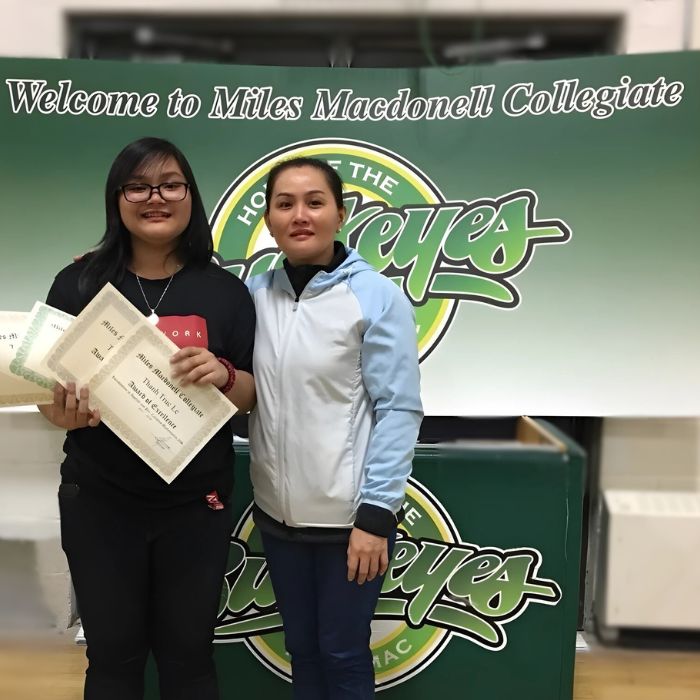
Lê Thanh Trúc, Student at Miles Macdonell Collegiate
“My family and I are deeply grateful to SIEC for not only securing my **Canada high school student visa** in Grade 10 but also for assisting my parents and siblings in obtaining their **visitor visas**. That was an invaluable gift.” — Lê Thanh Trúc, Student at **Miles Macdonell Collegiate** Secure Your Early High School (Secondary) […]
Phan Thị Ngọc Huỳnh, Former Student in Winnipeg
“The solid foundation provided by SIEC and Ms. Huong not only helped me realize my study abroad dream but also gave me the confidence to graduate, secure a stable job, and **settle permanently in Canada**.” — Phan Thị Ngọc Huỳnh, Former Student, currently working in **Winnipeg, Canada** Explore Your Study & Immigration Pathway in Canada […]
Hoàng Giang, Student at Edmonds College
“With her dedication and passion, Ms. Huong helped launch my **American dream**, opening up a vast world of opportunity and the chance to meet new friends.” — Hoàng Giang, Student at **Edmonds College** Explore More About Studying in the USA Spotlight on Edmonds College (Washington State) Gain in-depth knowledge about the programs, tuition fees, and […]
Khánh Lê, Student at LaSalle College
“Thank you to Ms. Huong and the SIEC team for their dedicated partnership and support, from my application phase until I was settled in Canada, helping me confidently pursue my dreams.” — Khánh Lê, Student at **LaSalle College** Explore Further Canada Study Opportunities Spotlight on LaSalle College Gain deeper insights into the programs, tuition fees, […]
Quỳnh Giao, Student at Red River Colleg
“She didn’t just stop at completing the application; she was an inspiration, a true motivator…” — Quỳnh Giao, Student at **Red River College** Continue Your Canada Study Abroad Journey Spotlight on Red River College Polytechnic (RRC Polytech) Discover the high-demand, **applied learning programs** at **Red River College** – one of the premier post-secondary institutions in […]