Ultimate Study in Canada guide for PR and Career Success
29/04/2026 Phong Nguyen
The journey to finding study and work opportunities in the land of the maple leaf during the 2026-2027 period is undergoing pivotal changes. Grasping this Study in Canada guide accurately will help students and parents make the most informed decisions for the future. Instead of the broad immigration policies of the past, the Canadian Government is now focusing on attracting talent into priority occupational groups to address labor shortages in essential sectors.
1. Profile Conditions and Latest Study Permit Regulations
To begin this journey, preparing a complete dossier is the first crucial step in any Study in Canada guide. Currently, Immigration, Refugees and Citizenship Canada (IRCC) has implemented stricter regulations on the number of study permits issued annually. Students must receive a Letter of Acceptance from a Designated Learning Institution (DLI) accompanied by a Provincial Attestation Letter (PAL) for most undergraduate and college programs.
1.1. Academic Proficiency Requirements
Most Canadian institutions require a Grade Point Average (GPA) of “Good” or higher to ensure students can keep up with the curriculum. For majors in the Healthcare and STEM groups, the required scores are often higher due to the specialized nature of the fields. Maintaining a strong academic record will be a significant advantage when competing for spots at prestigious public schools in Ontario or British Columbia.
1.2. Language Proficiency Requirements
Proficiency in English or French is a mandatory condition for being granted a Study Permit. Typically, an IELTS score of 6.0 to 6.5 is the basic requirement for college and university programs. If you hold a French certificate, immigration opportunities through language-priority streams will be much wider in 2026 and 2027.
Document Type
Basic Requirement
Important Note
Letter of Acceptance (LOA)
From a valid DLI school
Must be valid at the time of submission
Provincial Attestation Letter (PAL)
Mandatory for Bachelor/College levels
Issued by the provincial government where the school is located
Language Certificate
IELTS, PTE, or TEF
Should reach a level equivalent to CLB 7 or higher
Study Plan
Clear explanation of purpose
Needs to demonstrate logic and honesty
2. Financial Requirements and 24-Hour Weekly Work Regulations
Financial requirements and 24-hour weekly work regulations
One of the newest highlights in this Study in Canada guide for this phase is the change in the financial proof threshold. The government has increased the required cost-of-living amount to ensure international students can afford their stay without being overly dependent on part-time work. This helps students focus maximum effort on their studies to achieve the best results.
2.1. New 2026 Financial Proof Levels
Currently, in addition to the first year’s tuition, students need to prove they have at least approximately 20,635 CAD for living expenses. This figure is adjusted annually based on the cost-of-living index in Canada. Preparing solid finances not only helps the Study Permit application be easily approved but also reduces psychological pressure when first settling into a new environment.
2.2. New Work Hour Regulations for International Students
Starting this academic year, the Canadian Government has officially applied a regulation allowing international students to work off-campus for up to 24 hours per week during academic sessions. This is a slight relaxation from the previous 20-hour rule, yet it still ensures students dedicate enough time to their research. During scheduled breaks or summer holidays, you are still permitted to work full-time to gain experience and income.
Expense Category
Estimate (CAD/year)
Notes
Average Tuition
15,000 – 35,000
Depending on the major and institution
Living Expenses (GIC)
20,635 – 22,000
Minimum requirement to ensure livelihood
Health Insurance
600 – 1,000
Mandatory for all students
Books and Supplies
1,000 – 2,000
May vary depending on the field of study
3. How to Choose Priority Majors and Schools for Immigration Goals
In the context of rapidly shifting immigration policies, choosing a major is no longer just about personal preference but must be based on the priority occupation list. This is a core element in our Study in Canada guide that every applicant should research thoroughly. Canada needs highly skilled workers to build infrastructure and provide community healthcare.
3.1. Priority for Healthcare and Wellness Groups
With an aging population, positions such as nurses, medical assistants, and psychological specialists are always on the top priority list. Graduates in these fields often have an immediate job placement rate and benefit from specific provincial and federal immigration programs through Express Entry.
3.2. Strengths of the STEM Group
Science, Technology, Engineering, and Mathematics (STEM) fields continue to maintain their strong position. Specifically, areas like artificial intelligence, cybersecurity, and software engineering are receiving heavy investment. Studying in the STEM group provides a massive competitive edge when immigration applications are reviewed, thanks to bonus points for high professional qualifications.
3.3. Construction and Skilled Trades Group
To address the housing crisis, Canada is in dire need of civil engineers, electricians, carpenters, and construction project managers. Short-term vocational or college programs in Construction are currently attracting many international students due to their practical learning pathways and solid immigration prospects after graduation.
4. Study and Work Pathway in Canada for 2026-2027
To achieve long-term immigration goals, you need a systematic pathway from choosing a school to applying for permanent residency. This Study in Canada guide highlights the close connection between credentials, local work experience, and cultural adaptability. Following the right pathway will help you save maximum time and costs.
4.1. Learning and Experience Accumulation Phase
After completing a program of at least 2 years, students will be granted a Post-Graduation Work Permit (PGWP) with a duration of up to 3 years. This is the “golden time” to accumulate Canadian work experience in priority sectors. This work experience is a prerequisite for increasing points in current immigration scoring systems.
4.2. Transitioning to Permanent Resident Status
Based on your work experience and degrees, you can choose to apply through immigration streams such as the Canadian Experience Class or Provincial Nominee Programs (PNP). Note that in 2027, candidates working in Healthcare, STEM, and Construction groups will be prioritized for invitations to apply with lower point thresholds compared to other groups.
Implementation Step
Detailed Content
Estimated Timeline
Choose School and Major
Focus on the priority list
3 – 6 months before intake
Complete Academic Program
Ensure good academic results
2 – 4 years depending on level
Work with PGWP
Work in a priority specialty
1 – 3 years
Apply for Immigration
Through Express Entry or PNP
6 – 12 months processing
5. Evaluate Your 2027 Canada Immigration Potential Now
Self-assessing your profile can sometimes lead to avoidable mistakes due to a lack of updated information on immigration laws. For the most comprehensive and accurate Study in Canada guide, you should conduct an in-depth profile evaluation. This helps identify strengths, weaknesses, and steps needed for improvement to optimize immigration opportunities in the near future.
The expert team at SIEC is always ready to accompany you in analyzing indicators of age, qualifications, language skills, and work experience. We focus on building personalized pathways, especially for those wishing to pursue sustainable careers in Healthcare, STEM, and Construction. Don’t let policy changes become a barrier to your dreams.
Start your plan with the most thoughtful and scientific preparation. Understanding the Study in Canada guide is not just about knowing the numbers but also about understanding the development trends of Canadian society in the coming decades. We believe that with effort and the right direction, the door to immigration in Canada is always open for true talent.
If you are wondering which major to choose for easy immigration in 2027, contact us immediately for support. We provide the most up-to-date information on the labor market and the latest legal regulations from the Canadian Government. Your success is a testament to the reputation and quality of SIEC’s services in the field of study abroad and immigration consulting.
Let SIEC help you realize your Canadian dream with the safest and most effective pathway. We are committed to providing optimal solutions, helping you confidently step into an international learning environment and build a solid career in this world-leading developed nation.
Contact SIEC now for in-depth consultation and to receive the most detailed study-immigration pathway for 2026-2027. Our experienced team of experts will help you evaluate your profile and provide the most valuable advice to optimize your chances of success.
Don’t miss the golden opportunity to become part of the high-quality workforce community in Canada through priority occupations. Access the link below now to start your journey with SIEC.
Call for contact to receive study abroad and immigration information at SIEC: https://siec.com.vn/dang-ky
Are You Ready to Break Through Your Global Career with SIEC?
Don’t let your prestigious degree just stay on paper. Let SIEC experts advise you on a study abroad pathway combined with a job orientation strategy starting today!
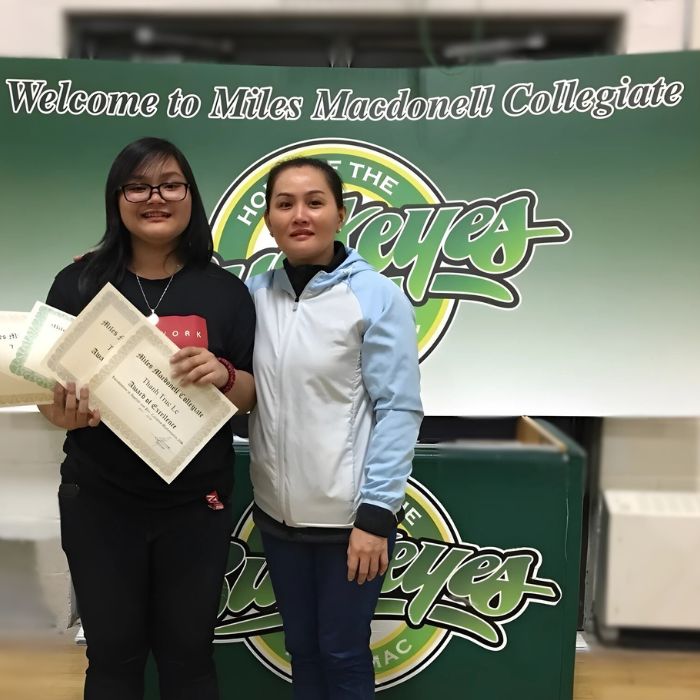
Lê Thanh Trúc, Student at Miles Macdonell Collegiate
“My family and I are deeply grateful to SIEC for not only securing my **Canada high school student visa** in Grade 10 but also for assisting my parents and siblings in obtaining their **visitor visas**. That was an invaluable gift.” — Lê Thanh Trúc, Student at **Miles Macdonell Collegiate** Secure Your Early High School (Secondary) […]
Phan Thị Ngọc Huỳnh, Former Student in Winnipeg
“The solid foundation provided by SIEC and Ms. Huong not only helped me realize my study abroad dream but also gave me the confidence to graduate, secure a stable job, and **settle permanently in Canada**.” — Phan Thị Ngọc Huỳnh, Former Student, currently working in **Winnipeg, Canada** Explore Your Study & Immigration Pathway in Canada […]
Hoàng Giang, Student at Edmonds College
“With her dedication and passion, Ms. Huong helped launch my **American dream**, opening up a vast world of opportunity and the chance to meet new friends.” — Hoàng Giang, Student at **Edmonds College** Explore More About Studying in the USA Spotlight on Edmonds College (Washington State) Gain in-depth knowledge about the programs, tuition fees, and […]
Khánh Lê, Student at LaSalle College
“Thank you to Ms. Huong and the SIEC team for their dedicated partnership and support, from my application phase until I was settled in Canada, helping me confidently pursue my dreams.” — Khánh Lê, Student at **LaSalle College** Explore Further Canada Study Opportunities Spotlight on LaSalle College Gain deeper insights into the programs, tuition fees, […]
Quỳnh Giao, Student at Red River Colleg
“She didn’t just stop at completing the application; she was an inspiration, a true motivator…” — Quỳnh Giao, Student at **Red River College** Continue Your Canada Study Abroad Journey Spotlight on Red River College Polytechnic (RRC Polytech) Discover the high-demand, **applied learning programs** at **Red River College** – one of the premier post-secondary institutions in […]