How to Succeed in Atlantic Canada immigration Fast and Easy
30/07/2026 Phong Nguyen
In the 2026–2027 period, Canada’s immigration policies are undergoing distinct shifts toward tightening mass settlement routes while prioritizing high-skilled individuals in essential sectors. Understanding the roadmap for Atlantic Canada immigration is now more critical than ever for those intending to build a future in the Great White North. Instead of applying through general labor streams that face extremely high competition, the Canadian government is currently encouraging international students and workers to apply in the Atlantic provinces. This region requires a significant workforce to develop the economy and maintain the social welfare system. To succeed in **Atlantic Canada immigration**, candidates must master legislative changes, financial requirements, and the list of priority occupations for recruitment in the coming years.
1. Document Requirements for Atlantic Canada immigration in 2026–2027
To begin the Atlantic Canada immigration process, candidates must meet a stricter set of standards than in previous years. The first and most important condition is that you must have a job offer from a designated employer in one of the four Atlantic provinces, including New Brunswick, Nova Scotia, Prince Edward Island, or Newfoundland and Labrador. This job must fall under the National Occupational Classification (NOC) TEER categories 0, 1, 2, 3, or 4, depending on the specific program you are pursuing.
1.1. Education and Experience Requirements
Candidates wishing to pursue Atlantic Canada immigration need qualifications equivalent to a Canadian high school diploma or post-secondary degree. If your credentials were obtained outside of Canada, you are required to complete an Educational Credential Assessment (ECA) to ensure equivalency. Regarding work experience, you must prove that you have at least one year of continuous work experience within the last five years. This experience must be directly related to the position offered by the Canadian employer.
1.2. Language Proficiency and Adaptability
Language proficiency is a key factor in ensuring your Atlantic Canada immigration file is processed quickly. According to the new regulations for 2026–2027, the minimum English or French score usually requires a CLB 4 or CLB 5, depending on the occupation. However, to be competitive in priority sectors such as Healthcare or STEM, a score of CLB 7 or higher will be a major advantage. Additionally, candidates need a clear settlement plan, demonstrating a desire to remain long-term within the local community in the Atlantic region.
2. New Study Permit Regulations and Financial Requirements for Atlantic Canada immigration
The pathway through international study remains the most sustainable way to achieve the goal of Atlantic Canada immigration. However, from 2024 onwards and extending through 2026–2027, Immigration, Refugees and Citizenship Canada (IRCC) has applied a cap on the number of Study Permits issued. This means competition among international students will increase, and only high-quality applications will be selected.
2.1. Provincial Attestation Letter (PAL) Mechanism
A new point that those seeking Atlantic Canada immigration should note is the Provincial Attestation Letter (PAL) regulation. Most international students applying for a Study Permit now must have this letter from the province where the school is located. This is how the government controls the number of students flocking to overcrowded areas and redirects them to regions in need of labor, such as the Atlantic region. Choosing to study in these provinces will make the process of obtaining a PAL more favorable.
The financial proof requirement for international students has increased significantly to ensure learners can cover their living expenses without being overly dependent on part-time work. To prepare for an Atlantic Canada immigration plan, students need to prove they have approximately 20,635 CAD for living costs in the first year, excluding tuition and airfare. Preparing abundant and transparent financial resources is a prerequisite for visa approval amidst increasingly strict regulations.
3. Changes to the 24-Hour Weekly Work Limit for Students
One of the most important updates affecting the Atlantic Canada immigration roadmap is the change in part-time work hours for international students. Instead of being allowed to work unlimited hours as during the pandemic, or only 20 hours as before, the Canadian government has adjusted the limit to 24 hours per week during regular academic semesters.
3.1. Impact on Gaining Practical Experience
The 24-hour weekly work regulation helps students earn extra income while still ensuring time for their studies. For those aiming for Atlantic Canada immigration, this is an opportunity to find part-time jobs related to their field of study. Having Canadian work experience while still in school will enhance your profile and build relationships with local employers, making it easier to receive a Job Offer after graduation.
3.2. Time Management and Legal Compliance
Strict compliance with the allowed work hours is extremely important. If this regulation is violated, students may have their Study Permit revoked and lose their chance for Atlantic Canada immigration permanently. In the 2026–2027 period, authorities will increase inspections through tax data and social insurance management systems. Therefore, students need to balance studying and working to achieve good academic results while accumulating the necessary skills for the labor market.
4. Choosing Majors and Schools to Optimize Atlantic Canada immigration Opportunities
Choosing the right major determines 80% of the success of an Atlantic Canada immigration plan. In the 2026–2027 period, Canada no longer encourages general majors in management or business but focuses on sectors facing severe labor shortages.
4.1. Healthcare and Wellness Sector
This is the top priority sector for Atlantic Canada immigration. Positions such as nurses, personal care assistants, and laboratory technicians are always in short supply in the Atlantic provinces. Graduates in these fields almost always find employment immediately and receive maximum support during the permanent residency application process. Training programs in Nova Scotia or New Brunswick often include internships at major hospitals, facilitating future settlement.
4.2. STEM and Information Technology Sector
Science, Technology, Engineering, and Mathematics (STEM) are the drivers of Canada’s economic development. Studying majors such as software development, data analysis, or mechanical engineering will open wide doors for Atlantic Canada immigration. Tech companies in this region are expanding and are ready to sponsor highly qualified employees. This is the pathway for those with strong logical thinking who want a stable income in Canada.
4.3. Construction and Skilled Trades
With the goal of addressing the housing crisis, Canada is in dire need of skilled tradespeople in construction. Fields such as electricity, plumbing, carpentry, and construction management are given special priority in Atlantic Canada immigration programs. The advantage of these sectors is shorter vocational training time, lower costs, and consistently high market demand. Workers in construction often have a faster route to permanent residency thanks to specialized provincial immigration streams.
5. Detailed Roadmap from International Study to Employment and Atlantic Canada immigration
To achieve a Permanent Resident (PR) card, candidates must follow a methodical roadmap and prepare early. The typical Atlantic Canada immigration journey lasts from 3 to 5 years, depending on your study program and work experience.
5.1. Study and Adaptation Phase
The first step is to choose a college or university on the DLI list in the Atlantic region and complete a minimum 2-year program. During this time, you should focus on learning English and participating in community activities to increase your adaptability. Understanding the local work culture will greatly benefit your later Atlantic Canada immigration process.
5.2. Post-Graduation Work Phase
After graduating, you need to apply for a Post-Graduation Work Permit (PGWP). With this permit, you can work for any employer in Canada. To optimize your Atlantic Canada immigration chances, you should seek a job in your field of expertise within the Atlantic provinces. One year of work experience here will be sufficient to apply for the Atlantic Immigration Program (AIP) or Provincial Nominee Programs (PNP).
5.3. Permanent Residency Application Phase
Once you have enough experience and have received sponsorship from an employer, you will proceed to submit your Atlantic Canada immigration application to IRCC. The processing time can range from 6 to 12 months. While waiting, you must maintain legal residency status and continue contributing to the local economy. Upon receiving your PR card, you and your family will enjoy all healthcare, education, and social security benefits like a true Canadian citizen.
6. Evaluate Your Canada Immigration Eligibility for 2027 Today
In the context of constantly changing migration policies, self-assessing your profile is a wise move to avoid wasting time and money. To know if you are suitable for the Atlantic Canada immigration program, you need to consider factors such as age, qualifications, language proficiency, and current financial capacity. Early evaluation helps you identify weaknesses in your profile to improve them in time, such as taking a higher IELTS exam or re-selecting a major that fits the 2027 recruitment trends.
The Atlantic Canada immigration program remains one of the most open pathways for those with thorough preparation and high determination. With support from priority policies for Healthcare, STEM, and Construction sectors, the opportunity to become a Canadian permanent resident is within your reach. Start your journey by seeking official information and building a personalized roadmap today.
The journey to conquer a Canadian permanent residency card in the 2026–2027 period requires a deep understanding of immigration law and careful preparation in all aspects. If you are wondering about choosing a major, a school, or need the most optimal settlement roadmap for yourself and your family, do not hesitate to seek professional advice.
Contact the expert team at SIEC immediately for a detailed profile assessment and to receive the most valuable advice for your immigration plan. We are always ready to accompany you on the path to building a new future in the beautiful land of the maple leaf.
Conquer the Dream of Atlantic Canada immigration and Create a Global Career with SIEC
Atlantic Canada immigration is opening wide doors for those seeking a sustainable future in the Atlantic provinces with extremely flexible immigration policies. To not miss this opportunity, SIEC provides comprehensive study abroad and career orientation solutions, helping you prepare the foundation of knowledge and skills necessary to confidently position yourself and succeed on the international settlement path.
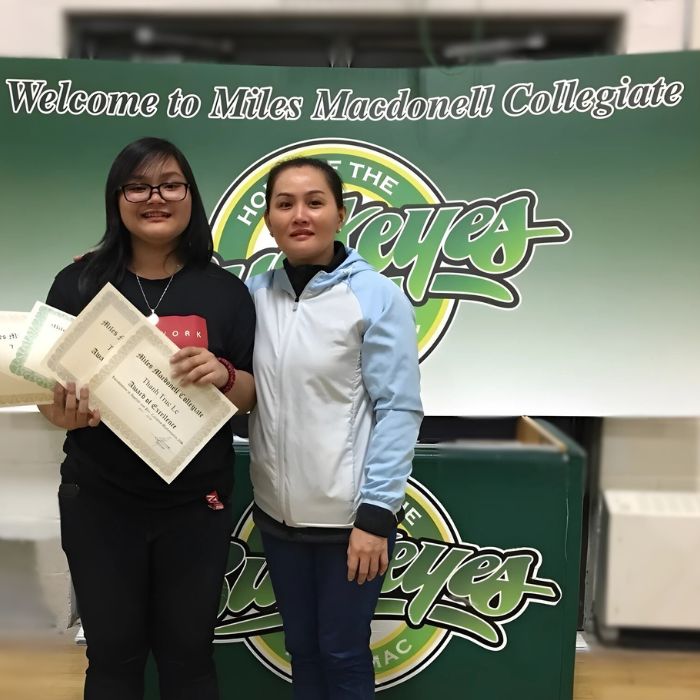
Lê Thanh Trúc, Student at Miles Macdonell Collegiate
“My family and I are deeply grateful to SIEC for not only securing my **Canada high school student visa** in Grade 10 but also for assisting my parents and siblings in obtaining their **visitor visas**. That was an invaluable gift.” — Lê Thanh Trúc, Student at **Miles Macdonell Collegiate** Secure Your Early High School (Secondary) […]
Phan Thị Ngọc Huỳnh, Former Student in Winnipeg
“The solid foundation provided by SIEC and Ms. Huong not only helped me realize my study abroad dream but also gave me the confidence to graduate, secure a stable job, and **settle permanently in Canada**.” — Phan Thị Ngọc Huỳnh, Former Student, currently working in **Winnipeg, Canada** Explore Your Study & Immigration Pathway in Canada […]
Hoàng Giang, Student at Edmonds College
“With her dedication and passion, Ms. Huong helped launch my **American dream**, opening up a vast world of opportunity and the chance to meet new friends.” — Hoàng Giang, Student at **Edmonds College** Explore More About Studying in the USA Spotlight on Edmonds College (Washington State) Gain in-depth knowledge about the programs, tuition fees, and […]
Khánh Lê, Student at LaSalle College
“Thank you to Ms. Huong and the SIEC team for their dedicated partnership and support, from my application phase until I was settled in Canada, helping me confidently pursue my dreams.” — Khánh Lê, Student at **LaSalle College** Explore Further Canada Study Opportunities Spotlight on LaSalle College Gain deeper insights into the programs, tuition fees, […]
Quỳnh Giao, Student at Red River Colleg
“She didn’t just stop at completing the application; she was an inspiration, a true motivator…” — Quỳnh Giao, Student at **Red River College** Continue Your Canada Study Abroad Journey Spotlight on Red River College Polytechnic (RRC Polytech) Discover the high-demand, **applied learning programs** at **Red River College** – one of the premier post-secondary institutions in […]