Complete Atlantic Immigration Program Guide for PR Success
29/07/2026 Phong Nguyen
In the context of Canada’s immigration policies undergoing significant changes toward selecting highly skilled immigrants, the **Atlantic Immigration Program** remains one of the top choices for international students and workers. The 2026–2027 period marks a turning point as the Canadian government shifts away from mass immigration, instead focusing maximum resources on sectors facing severe labor shortages. The **Atlantic Immigration Program** (AIP) is designed to attract individuals who wish to work and live long-term in the four eastern coastal provinces, including New Brunswick, Nova Scotia, Prince Edward Island, and Newfoundland and Labrador.
Understanding the roadmap for settling in Canada via AIP through study and work in priority sectors will help candidates increase their success rate and shorten the time to receive a permanent resident card.
1. Overview of the Atlantic Immigration Program roadmap for 2026 and 2027
The **Atlantic Immigration Program** is a federal initiative in coordination with the Atlantic provinces to address population aging and labor shortages. Unlike other immigration programs, AIP requires candidates to have a job offer from a designated employer in the region. In the 2026–2027 phase, this pathway becomes particularly attractive for those choosing to study at colleges and universities within the region.
After graduation, students can easily transition to a work permit and apply for the **Atlantic Immigration Program** without needing as many years of work experience as other skilled worker categories.
1.1. Advantages of the AIP compared to other immigration streams
One of the strongest points of the **Atlantic Immigration Program** is that language and educational requirements are often lower than those of the Express Entry program. Additionally, the AIP application processing is considered faster and more transparent. For international students graduating in the Atlantic region, this program allows them to apply for permanent residency as soon as they receive a formal job offer from a local business, without needing to accumulate a full year of Canadian work experience.
This creates a massive competitive advantage for those wanting to settle down early in the Land of the Maple Leaf.
1.2. Changes in government selection orientation
From 2025 onwards, Canada has begun tightening immigration regulations to ensure the quality of human resources. Therefore, the **Atlantic Immigration Program** is no longer broadly open to all sectors. The government prioritizes candidates with expertise in essential fields such as Healthcare, STEM (Science, Technology, Engineering, Mathematics), and Construction.
Choosing the right field of study from the beginning will be the most important key for candidates to maximize the benefits of the **Atlantic Immigration Program** in the future.
2. New Document Conditions and Financial Requirements for AIP Settlement
To prepare for the **Atlantic Immigration Program** roadmap during the 2026–2027 period, candidates must pay close attention to changes in application conditions and financial capacity. The Canadian government has raised the financial proof requirements to ensure immigrants can afford life amidst the rising cost of living. Furthermore, Study Permit regulations have new updates that students must strictly follow to maintain their AIP settlement path.
2.1. Requirements for Qualifications and Work Experience
For the skilled worker stream, you need qualifications equivalent to a Canadian high school or college degree and at least one year of related work experience. However, for international students graduating in the Atlantic region aiming for the **Atlantic Immigration Program**, you only need to complete a minimum 2-year study program at a recognized institution. Most importantly, you must find a job in a priority sector and be sponsored by an employer according to the regulations of the **Atlantic Immigration Program**.
2.2. Latest Financial Requirement Updates for International Students
Starting in 2024 and continuing into subsequent years, the proof of funds for international students has increased significantly. Instead of the old rate, students now need to prove they have approximately $20,635 CAD for first-year living expenses, excluding tuition. This is a crucial figure that anyone intending to settle via the **Atlantic Immigration Program** through the study pathway must prepare for carefully.
Transparency in financial sources not only helps you easily obtain a Study Permit but also serves as evidence of your serious preparation for a long-term plan in Canada.
2.3. Study Permit Regulations and Related Documents
To begin the **Atlantic Immigration Program** journey, the first step is usually applying for a Study Permit. In the 2026–2027 period, the Study Permit review process will focus on the authenticity of the study plan. You must have an acceptance letter from a Designated Learning Institution (DLI) in the Atlantic region.
Once you have a Study Permit, maintaining good academic standing and complying with residency regulations is mandatory to avoid affecting your future **Atlantic Immigration Program** application.
3. The 24-Hour Weekly Work Limit and Its Impact on Students
One of the most important changes affecting the lives of international students aiming for the **Atlantic Immigration Program** is the regulation on off-campus work hours. Instead of allowing unlimited work as during the pandemic, the Canadian government has established a new limit to ensure students focus on their studies while still having the opportunity to gain local practical experience.
3.1. Details of the 24-Hour Weekly Work Regulation
From 2024, international students are allowed to work up to 24 hours per week during regular academic sessions. This regulation aims to help students balance study and work to cover costs. For those targeting the **Atlantic Immigration Program**, utilizing these 24 hours for jobs related to their field of study is incredibly valuable.
Part-time work experience at local businesses will help you build a network and enhance your ability to find a formal job offer after graduation to apply for the **Atlantic Immigration Program**.
3.2. Benefits of Part-time Work for Immigration Files
Although work hours are limited, if you know how to choose your jobs selectively, it will be a major plus for your **Atlantic Immigration Program** application. Working in a professional environment in Canada helps you practice communication skills, understand the work culture, and especially receive high praise from employers. Many students have successfully received long-term job offers from their part-time workplaces, thereby opening the door to AIP settlement smoothly and quickly.
4. Priority Occupations for AIP Settlement in 2026-2027
As mentioned, Canada’s immigration strategy is shifting strongly toward prioritizing essential occupations. If you want to ensure a successful **Atlantic Immigration Program** outcome in 2026–2027, choosing to study in Healthcare, STEM, or Construction is the wisest decision. These sectors not only have high recruitment demand but also receive maximum support from the Atlantic provincial governments.
4.1. Healthcare and Wellness Sector
Healthcare is always a top priority in the **Atlantic Immigration Program** category. With staff shortages in the healthcare system, positions such as nurses, personal care assistants, and lab technicians are always in demand. Students graduating in Healthcare in provinces like Nova Scotia or New Brunswick often have immediate job opportunities.
This is the shortest and most certain path to achieving your AIP goals because the government always reserves priority spots for this group.
4.2. STEM Sector (Science, Technology, Engineering, and Mathematics)
In the digital age, tech and engineering experts play a pivotal role in the economic development of the Atlantic region. Fields like software development, data analysis, electrical engineering, and mechanical engineering are always on the priority list for the **Atlantic Immigration Program**. The provinces are striving to attract tech companies to set up headquarters, so the demand for STEM labor is immense.
Studying STEM programs not only brings attractive salaries but also makes your **Atlantic Immigration Program** profile stand out and easily approved.
4.3. Construction and Technical Trades Sector
To meet housing and infrastructure needs, the construction industry in Canada needs a large amount of skilled labor. Jobs like electricians, plumbers, carpenters, and construction managers are positions where it is very easy to find work for an **Atlantic Immigration Program** application. Unlike office jobs, the construction sector requires high practical skills and often has shorter training routes at vocational colleges.
This is an excellent choice for those wanting to quickly join the labor market and implement their **Atlantic Immigration Program** plans.
5. How to Choose the Optimal Major and School for AIP Opportunities
Choosing the right school and major is the most important stepping stone in the entire **Atlantic Immigration Program** roadmap. Not every school in Canada qualifies you for the AIP. You must study at public educational institutions or licensed private schools for postgraduate training located within the four Atlantic provinces.
This ensures that after graduation, you will belong to the international student category prioritized for **Atlantic Immigration Program** applications.
5.1. Criteria for Selecting Schools in the Atlantic Region
When looking for schools to serve your **Atlantic Immigration Program** goals, you should prioritize schools with strong links to local businesses. Schools like the University of New Brunswick, Dalhousie University, or community college systems like Nova Scotia Community College often have paid internship (Co-op) programs. These programs help you connect with employers earlier, making it easier to get the necessary job offer for your AIP application right after graduation.
5.2. Choosing a Major Based on the Labor Shortage List
Don’t just choose a major based on personal preference; compare it with the list of occupations in shortage in the province where you intend to live. Each province in the Atlantic region has unique needs, but generally, Healthcare and Construction always top the list. Choosing a major on the priority list will help you minimize job-seeking risks and increase the chances of an employer sponsoring your **Atlantic Immigration Program** settlement.
Research the labor market reports of each province carefully before making a final decision.
6. The Roadmap from Study to Work and Successful AIP Settlement
To achieve a permanent resident card through the **Atlantic Immigration Program**, you need a specific plan and strict adherence to each step. This roadmap usually lasts 3 to 5 years depending on your study program and job-seeking ability. Perseverance and thorough preparation of both knowledge and soft skills will be the deciding factors in realizing your AIP dream in the near future.
6.1. Phase 1: Study and Skill Accumulation
During 2-4 years of study in Canada, your main goal is to complete the program with good results and actively participate in extracurricular activities or internships. Maximize the 24-hour weekly work regulation to work in fields related to your major. These experiences not only enhance your profile but also help you understand labor market requirements, creating a solid foundation for your **Atlantic Immigration Program** application later.
Don’t forget to practice your English or French skills to achieve the language certification required by the program.
6.2. Phase 2: Finding a Designated Employer
After graduation, you need to quickly find work at a business designated by the provincial government for the **Atlantic Immigration Program**. Not every company has the right to sponsor workers under the AIP, so you need to check the list of valid employers on the provincial website. When you receive a formal job offer, you and the employer will together create a settlement plan with the support of local settlement service organizations to complete your AIP file.
6.3. Phase 3: Applying for Permanent Residency
Once you have all the documents, including the provincial endorsement letter, job offer, and settlement plan, you can apply for permanent residency with Immigration, Refugees and Citizenship Canada (IRCC). While waiting for the results of your **Atlantic Immigration Program** application, you can apply for a temporary work permit to continue working and contributing to the local community. If your application meets all standards for health, criminal record, and professional expertise, you will receive a permanent resident card and officially complete the AIP journey.
The journey to settle via the **Atlantic Immigration Program** in the 2026–2027 period requires clear orientation and thorough preparation in all aspects. Focusing on priority occupations not only makes it easier to find work but is also the safest way to ensure a long-term future in Canada. With support policies from the government and high labor demand in the Atlantic region, this is the golden time to start planning your new career and life.
Let us accompany you in analyzing opportunities and building the most effective study-to-settlement roadmap. Capturing accurate information about new regulations will help you avoid unnecessary mistakes during the application process.
Contact SIEC now for in-depth advice on study programs and **Atlantic Immigration Program** opportunities suited to your abilities. We will help you assess your chances of success and prepare all necessary conditions to realize your goal of settling in the Land of the Maple Leaf by 2027.
Assess your potential for Canada 2027 settlement now by registering for a direct consultation with our experienced experts. Don’t miss the chance to change your future and your family’s through a professional study and work path in the high-potential Atlantic provinces.
The **Atlantic Immigration Program** is the shortest path to help you realize your dream of becoming a permanent resident, but choosing the right major and job to meet program conditions requires a long-term strategic vision. At SIEC, we don’t just provide information; we directly design study-to-career roadmaps, ensuring every step you take leads toward settlement and a sustainable career in Canada.
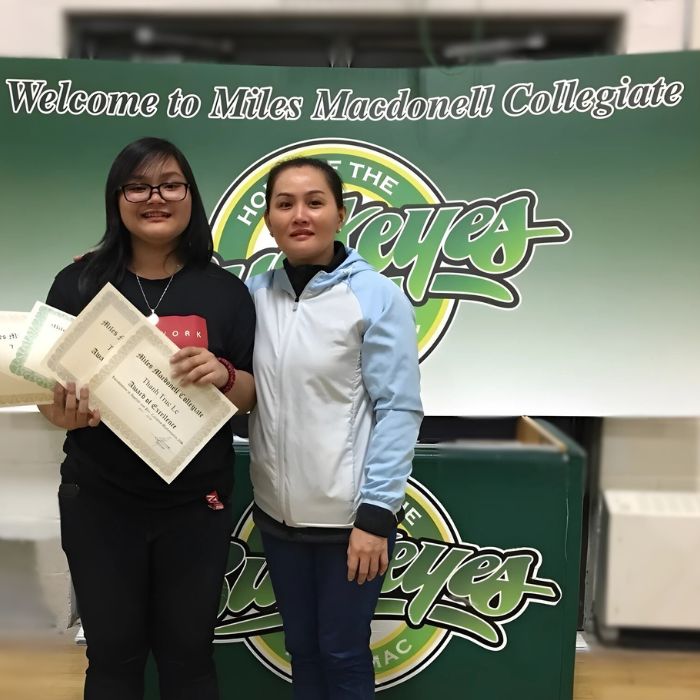
Lê Thanh Trúc, Student at Miles Macdonell Collegiate
“My family and I are deeply grateful to SIEC for not only securing my **Canada high school student visa** in Grade 10 but also for assisting my parents and siblings in obtaining their **visitor visas**. That was an invaluable gift.” — Lê Thanh Trúc, Student at **Miles Macdonell Collegiate** Secure Your Early High School (Secondary) […]
Phan Thị Ngọc Huỳnh, Former Student in Winnipeg
“The solid foundation provided by SIEC and Ms. Huong not only helped me realize my study abroad dream but also gave me the confidence to graduate, secure a stable job, and **settle permanently in Canada**.” — Phan Thị Ngọc Huỳnh, Former Student, currently working in **Winnipeg, Canada** Explore Your Study & Immigration Pathway in Canada […]
Hoàng Giang, Student at Edmonds College
“With her dedication and passion, Ms. Huong helped launch my **American dream**, opening up a vast world of opportunity and the chance to meet new friends.” — Hoàng Giang, Student at **Edmonds College** Explore More About Studying in the USA Spotlight on Edmonds College (Washington State) Gain in-depth knowledge about the programs, tuition fees, and […]
Khánh Lê, Student at LaSalle College
“Thank you to Ms. Huong and the SIEC team for their dedicated partnership and support, from my application phase until I was settled in Canada, helping me confidently pursue my dreams.” — Khánh Lê, Student at **LaSalle College** Explore Further Canada Study Opportunities Spotlight on LaSalle College Gain deeper insights into the programs, tuition fees, […]
Quỳnh Giao, Student at Red River Colleg
“She didn’t just stop at completing the application; she was an inspiration, a true motivator…” — Quỳnh Giao, Student at **Red River College** Continue Your Canada Study Abroad Journey Spotlight on Red River College Polytechnic (RRC Polytech) Discover the high-demand, **applied learning programs** at **Red River College** – one of the premier post-secondary institutions in […]