Secrets to a Successful Canada immigration Ally Strategy
31/07/2026 Phong Nguyen
In the context of landmark changes in Canada’s immigration policies, finding a solid pathway through a Canada immigration Ally has become more important than ever. The 2026–2027 period marks a significant shift from general immigration to prioritizing highly skilled candidates in essential sectors. The Canadian government is currently focusing maximum resources on attracting talent in fields such as Healthcare, STEM (Science, Technology, Engineering, and Mathematics), and Construction to address severe labor shortages.
Preparing a professional Canada immigration Ally profile now will help you seize the opportunity to become a permanent resident in the near future.
1. Canada Immigration Ally Trends by Priority Occupations for 2026–2027
Entering 2026 and 2027, Canada is no longer maintaining an open-door policy for all occupational groups as before. Instead, the country is applying a targeted selection strategy through category-based Express Entry draws. For your Canada immigration Ally journey to be successful, candidates need to focus on sectors that Canadian society truly needs.
The Healthcare sector tops the priority list with a massive demand for nurses, doctors, and personal support workers due to a rapidly aging population.
In addition, STEM occupations continue to be a pillar of Canada’s sustainable economic development plan. Experts in artificial intelligence, cybersecurity, and software development are always sought after with high salaries and a very favorable Canada immigration Ally pathway. The Construction industry is also on this list as the Canadian government ramps up infrastructure and social housing projects.
Possessing skills in electrical work, plumbing, or construction management will be a valuable ticket to help you realize your immigration dream.
This shift means that those pursuing unskilled labor or saturated industries will face more difficulties. However, for those who choose a Canada immigration Ally route through studying and working in priority sectors, the door to residency remains wide open. Understanding labor market trends will help you make the right decisions regarding your field of study and place of residence in Canada.
1.1. Priority for Healthcare and Social Assistance sectors
The Canadian healthcare system is under great pressure, leading the federal and provincial governments to continuously introduce specific immigration programs. When choosing a Canada immigration Ally in this field, you will have access to draws with lower score requirements compared to other sectors. Jobs such as nursing assistants, laboratory technicians, and physiotherapists are in high demand in provinces like Ontario and British Columbia.
1.2. The attraction of STEM and high-tech sectors
Canada is striving to become a global tech hub; therefore, candidates with a STEM background are always favored in the immigration points system. The Canada immigration Ally pathway for tech graduates is often shorter thanks to provincial nominee programs dedicated to tech talent. Strong investment in digital transformation in Canada ensures that you will have a stable career and a certain residency opportunity after graduation.
1.3. Construction and technical infrastructure
With the goal of addressing the housing crisis, Canada needs hundreds of thousands of skilled workers in the Construction industry. Those with practical experience or professional qualifications in this field will find that applying for a Canada immigration Ally becomes easier through programs like Federal Skilled Trades or provincial economic immigration streams. This is a highly practical sector with a very high probability of finding a job immediately after graduation.
2. Profile Requirements and Latest Updated Study Permit Process
To begin your Canada immigration Ally journey through the study route, obtaining a Study Permit is a prerequisite. Since 2024 and extending into the 2026 period, Immigration, Refugees and Citizenship Canada (IRCC) has imposed stricter regulations on the number of study permits issued. One of the most important changes is the requirement for a Provincial Attestation Letter (PAL).
Most international students wishing to attend college or undergraduate programs must have this certificate from the province where the school is located before applying for a Study Permit.
A Canada immigration Ally application via the study stream must demonstrate a clear educational purpose and a plan to return home after completing the course, although Canada still encourages students to stay and work. You need to prepare all necessary documents such as a Letter of Acceptance (LOA) from a Designated Learning Institution (DLI), a valid passport, and relevant academic qualifications. In particular, language proficiency (English or French) is an indispensable factor, usually requiring an Academic IELTS of 6.0 or higher or equivalent certificates to ensure the ability to keep up with the curriculum.
The current Study Permit review process also places more emphasis on the authenticity of the profile. Preparing a persuasive Study Plan, clearly stating the reasons for choosing Canada and a priority major, will increase the success rate of your Canada immigration Ally plan. Additionally, a medical exam and providing a clean police certificate are also mandatory steps in this process.
Ensure that all information provided is truthful and consistent to avoid unnecessary legal risks.
2.1. Requirements for the Provincial Attestation Letter (PAL)
The PAL system is designed to control the number of international students in each region, ensuring that infrastructure and public services are not overloaded. When submitting a Canada immigration Ally application, you must check if your chosen school is on the list of institutions authorized to issue a PAL. Some programs such as Master’s, PhDs, or primary/secondary school students may be exempt from this requirement, but for the majority of students pursuing priority occupations at the college level, a PAL is mandatory.
2.2. Proving educational purpose and career roadmap
A good Study Plan doesn’t just talk about studying; it must show the link between the field of study in Canada and your previous experience or qualifications. To optimize your Canada immigration Ally opportunities, you should clearly explain why studying in Canada is necessary for your long-term career. A logical transition from studying to working in priority sectors will be a major plus in the eyes of the visa officer.
3. Financial Requirements and the 24-Hour Weekly Work Regulation
One of the most important updates affecting the Canada immigration Ally pathway in 2026–2027 is the financial capacity requirement. IRCC has significantly increased the Cost of Living financial proof requirement to ensure international students can afford the high cost of living in Canada. Instead of the old 10,000 CAD level, students now need to prove they have approximately 20,635 CAD (subject to annual change) plus the first year’s tuition.
Preparing abundant financial resources will help you focus entirely on your studies and prepare for future Canada immigration Ally steps.
Regarding work regulations, the Canadian government has officially implemented a 24-hour per week limit for international students during academic terms. This regulation replaces the previous temporary policy that allowed unlimited work hours. The goal of limiting work hours is for students to prioritize their studies while still having the opportunity to gain practical work experience in Canada.
During official breaks such as summer or winter holidays, students are still allowed to work full-time to increase their income and expand their social networks.
Complying with work hour regulations is extremely important for those who intend to pursue a long-term Canada immigration Ally goal. Any violation related to Study Permit conditions can lead to deportation or being denied a Post-Graduation Work Permit (PGWP). Therefore, you need to manage your time effectively, balancing studying in priority fields with part-time work so as not to affect your academic results or future immigration profile.
3.1. Details on the new financial proof levels
The new required financial level reflects the reality of living costs in major Canadian cities like Toronto or Vancouver. When planning your Canada immigration Ally, you should prepare a reserve amount higher than the IRCC minimum for safety. Financial sources can include savings accounts, family assets, or bank-verified student loans.
Transparency in the source of funds will make your application more credible.
3.2. Utilizing 24 work hours to gain experience
Despite the 24-hour limit, if you know how to choose part-time jobs related to priority majors like Healthcare or STEM, you will have a significant advantage when applying for a Canada immigration Ally. For example, a nursing student can work as an assistant in nursing homes, or an IT student can work part-time in technical support. These experiences not only help cover costs but are also highlights in your future job applications.
4. Strategies for Choosing Majors and Schools to Optimize Canada Immigration Ally Opportunities
Choosing the right major and the right school is the key to realizing your Canada immigration Ally goal. Instead of choosing schools in overcrowded cities, you should consider provinces with open immigration policies and high demand for labor in priority sectors. For instance, the Atlantic provinces or Central provinces like Manitoba and Saskatchewan often have Provincial Nominee Programs (PNP) that are very favorable for international students.
Studying in these areas helps you easily earn regional bonus points when applying for a Canada immigration Ally.
Regarding the field of study, you should prioritize programs that integrate paid internships (Co-op). This is a great opportunity for you to access the Canadian labor market while still in school. Majors like Construction, Information Technology, and Health Administration often have many attractive Co-op positions.
Practical work experience in Canada through Co-op is highly valued and often leads to official job offers immediately after graduation, creating a solid stepping stone for your Canada immigration Ally profile.
Additionally, note that you must choose schools on the DLI list and the program must be eligible for a Post-Graduation Work Permit (PGWP). Not all private schools in Canada meet this requirement, so you need to research carefully on the official IRCC website. A study pathway of 2 years or more will typically result in a 3-year PGWP, providing you with enough time to accumulate the necessary work experience to meet Canada immigration Ally standards.
4.1. Selecting a province based on immigration policy
Each province in Canada has different labor needs. If you choose a Canada immigration Ally in Alberta, engineering and energy-related fields may be an advantage. Meanwhile, Nova Scotia is very hungry for labor in healthcare and construction.
Carefully researching the priority occupation list of each province will help you choose the most suitable destination for your abilities and immigration goals.
4.2. The importance of Co-op programs
A Co-op program is not just a way to earn extra income but also the shortest path to understanding Canadian work culture. For a Canada immigration Ally pathway, the relationships you build during your internship can become sponsors or provide important recommendation letters for your future immigration profile. Prioritize courses with high applicability and a large network of corporate partners.
5. Detailed Roadmap from Graduation to Canadian Permanent Residency
The Canada immigration Ally journey truly accelerates after you complete your studies. The first step after graduation is applying for a PGWP within 180 days of receiving notification of course completion. With a PGWP in hand, you have the right to work full-time for any employer in Canada.
This is the golden period to accumulate work experience in priority occupation groups (TEER 0, 1, 2, or 3 according to the National Occupational Classification NOC system) to prepare for your Canada immigration Ally application.
After having at least 1 year of professional work experience in Canada, you will be eligible to enter the Express Entry system under the Canadian Experience Class (CEC). This is one of the most popular and fastest routes to obtaining a Permanent Resident (PR) card. Additionally, if you work in sectors like Healthcare, STEM, or Construction, you may be invited through Category-based selection draws, which have significantly lower CRS score requirements than general draws.
This increases the likelihood of success for your Canada immigration Ally roadmap.
Besides Express Entry, Provincial Nominee Programs (PNP) are also an excellent choice. Many provinces have immigration streams dedicated to international students who graduated locally or those with job offers in priority occupations. Closely monitoring changes in provincial policies and maintaining a good profile will help you be more flexible in choosing the most suitable Canada immigration Ally path.
Finally, once you receive an Invitation to Apply (ITA), you will proceed to submit your permanent residency application and wait for approval from the government.
5.1. Accumulating quality work experience
Not all jobs have equal value in a Canada immigration Ally profile. To optimize your score, your job must fall within the required occupational categories and match your studied expertise. Career advancement and taking on management positions will also help you score higher in the eyes of immigration officials.
Always focus on improving your professional and language skills throughout your working time in Canada.
5.2. Leveraging Provincial Nominee Programs (PNP)
PNP programs often provide an additional 600 points to the Express Entry system if you are nominated by a province, which almost guarantees you will receive an ITA for a Canada immigration Ally. Each province has its own points system and criteria, often prioritizing those who have spent time in the locality. Proactively researching and applying for suitable PNP streams will significantly shorten the waiting time to become a permanent resident.
6. Assess Your Canada Immigration 2027 Potential Now
Preparing for a Canada immigration Ally roadmap is never too early, especially as immigration regulations become increasingly complex and selective. The 2026–2027 period will require candidates to have not only qualifications but also a clear strategy regarding their profession and living location. Don’t let policy changes hinder your dreams.
Instead, turn them into opportunities by preparing a superior profile that fits Canada’s actual needs.
If you are still wondering which major to choose in Healthcare, STEM, or Construction for the highest Canada immigration Ally success rate, or are unclear about new financial requirements and work regulations, seek professional advice. Assessing your profile now will help you identify strengths to promote and gaps to fix, thereby building a personalized, effective, and time-saving study and immigration roadmap.
The Canada immigration Ally journey is a long road that requires perseverance and an understanding of immigration law. With thorough preparation and high determination, you can absolutely own a Canadian permanent resident card and build a bright future in one of the most livable countries in the world. Take your first step today to not miss golden opportunities in the 2026–2027 period.
Are you nurturing a dream of immigrating to the land of the maple leaf but have many concerns about the latest changes in immigration policy for 2026-2027? Don’t let a lack of information interrupt your future plans. Let the experienced team of experts at SIEC accompany you and help you build the most optimal, personalized study, work, and immigration roadmap based on your own abilities and aspirations.
Don’t hesitate, contact us now for in-depth advice on priority occupations, support in completing your Study Permit application, and answers to all questions about the latest financial requirements. The opportunity to become a Canadian permanent resident is within your reach; let SIEC help you realize it in the safest and most sustainable way.
Conquer Your Canadian Residency Dream With a Global Career Roadmap at SIEC
Choosing a Canada immigration Ally to accompany you on your journey to reach the world is the key to helping you overcome procedural and policy barriers to build your future with peace of mind. At SIEC, we don’t just provide study abroad consulting; we design personalized career roadmaps, helping pupils, students, and working professionals optimize their chances for sustainable residency in Canada through methodical preparation of knowledge and professional skills.
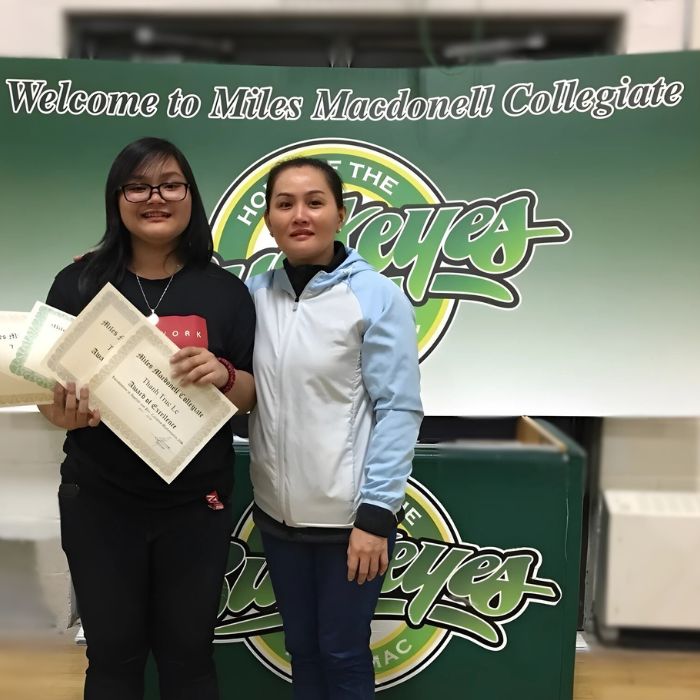
Lê Thanh Trúc, Student at Miles Macdonell Collegiate
“My family and I are deeply grateful to SIEC for not only securing my **Canada high school student visa** in Grade 10 but also for assisting my parents and siblings in obtaining their **visitor visas**. That was an invaluable gift.” — Lê Thanh Trúc, Student at **Miles Macdonell Collegiate** Secure Your Early High School (Secondary) […]
Phan Thị Ngọc Huỳnh, Former Student in Winnipeg
“The solid foundation provided by SIEC and Ms. Huong not only helped me realize my study abroad dream but also gave me the confidence to graduate, secure a stable job, and **settle permanently in Canada**.” — Phan Thị Ngọc Huỳnh, Former Student, currently working in **Winnipeg, Canada** Explore Your Study & Immigration Pathway in Canada […]
Hoàng Giang, Student at Edmonds College
“With her dedication and passion, Ms. Huong helped launch my **American dream**, opening up a vast world of opportunity and the chance to meet new friends.” — Hoàng Giang, Student at **Edmonds College** Explore More About Studying in the USA Spotlight on Edmonds College (Washington State) Gain in-depth knowledge about the programs, tuition fees, and […]
Khánh Lê, Student at LaSalle College
“Thank you to Ms. Huong and the SIEC team for their dedicated partnership and support, from my application phase until I was settled in Canada, helping me confidently pursue my dreams.” — Khánh Lê, Student at **LaSalle College** Explore Further Canada Study Opportunities Spotlight on LaSalle College Gain deeper insights into the programs, tuition fees, […]
Quỳnh Giao, Student at Red River Colleg
“She didn’t just stop at completing the application; she was an inspiration, a true motivator…” — Quỳnh Giao, Student at **Red River College** Continue Your Canada Study Abroad Journey Spotlight on Red River College Polytechnic (RRC Polytech) Discover the high-demand, **applied learning programs** at **Red River College** – one of the premier post-secondary institutions in […]