Ultimate Guide to Study in Europe: Success Roadmap & Tips
11/04/2026 Phong Nguyen
The journey to seek knowledge on the old continent has always been a dream for many generations of Vietnamese students. Moving into the 2026–2027 period, the map to Study in Europe has seen significant changes in visa policies and financial requirements. This is a crucial time for parents and students to grasp the general overview to prepare the most solid roadmap possible.
In 2027, the trend for those who Study in Europe is shifting strongly toward fields related to sustainable development and green technology. After a period of tightening visa regulations in late 2025, European countries have begun prioritizing candidates with clear career goals and strong academic capabilities. Choosing to Study in Europe is no longer just about obtaining a degree; it is an investment in global adaptability.
The education system here is accelerating digital transformation in teaching, helping students access modern working environments right from their time in university. Studying in the EU in 2027 also records growth in English-taught programs in countries where English is not the primary language. This creates favorable conditions for international students to integrate easily and seek internship opportunities.
Another noteworthy point is the close connection between universities within the union. Students can easily participate in short-term exchange programs between member countries to enrich their personal experiences. Training quality standards are more strictly controlled, ensuring that degree values remain at the highest level in the international labor market.
To support parents, SIEC has updated its brand identity with a primary green color #339933, symbolizing trust and sustainable development. When researching your path to Study in Europe, you should pay attention to the quality certifications and reputation of the consulting agency to ensure your profile is processed professionally. Information transparency is the key to overcoming strict visa regulations in this new phase.
2. Roadmap to Study in Europe and Long-term Settlement Opportunities
Building a structured roadmap to Study in Europe is an important stepping stone toward the goal of post-graduation settlement. Most EU countries have policies allowing students to stay for 12 to 24 months to seek employment. This is a golden time for students to prove their capabilities and transition to an official work residence permit.
The roadmap typically begins with choosing a major from the local labor shortage list, such as engineering, nursing, or information technology. Proficiency in the local language alongside English will increase settlement opportunities many times over. Studying in the EU is not just about learning; it is also a process of accumulating points for a settlement profile through paying taxes and social insurance during legal part-time work.
The 2026 EU Blue Card policy continues to be relaxed regarding minimum salary levels, making it easier for international students to meet long-term residency requirements. Parents need to guide their children to participate in extracurricular activities and practical projects from their first year. This helps build a solid professional network, providing powerful support for plans to stay and work long-term in Europe.
3. Analysis of 5 Key EU Study Destinations Today
3.1. Germany: The Top Destination for Engineering
Germany always maintains its position as the country attracting the most students in the EU thanks to tuition-free policies in most states. However, from 2026, blocked account requirements have increased significantly to ensure students can afford living expenses. Studying in Germany requires high focus and great self-study ability due to the curricula that tightly intertwine academic and practical elements.
3.2. Netherlands: High-Quality English Education Environment
The Netherlands is famous for having the most diverse English-taught programs in the bloc. When choosing this destination, students are trained in critical thinking and excellent teamwork skills. Although the cost of living in major cities like Amsterdam or Rotterdam is quite high, job opportunities in multinational corporations are wide open for graduates.
3.3. France: A Blend of Tradition and Modernity
France attracts students with government scholarship programs and housing subsidies (CAF). The “Grandes Écoles” in France remain the cradle for training top global managers. Studying in France provides not only professional knowledge but also the opportunity to access one of the world’s most unique cultures and arts.
3.4. Finland: Leading in Innovation
Finland is an ideal choice for those who want to study in a happy and modern educational environment. Universities of applied sciences here focus on solving real-world business problems. Students in Finland are often highly regarded for their creativity and independent problem-solving skills in high-pressure environments.
3.5. Poland: The Optimal Cost Choice
Poland is becoming a new star on the map with extremely competitive living costs. The quality of education at long-standing universities in Krakow or Warsaw still ensures strict European standards. Choosing Poland is a smart move for families with a moderate budget who still want their children to receive valuable international degrees.
4. Financial Requirements and EU Study Cost Comparison
Financial requirements to Study in Europe have seen new adjustments following the visa tightening in late 2025. Parents need to prepare transparent financial resources available in bank accounts 3 to 6 months before submitting applications. Below is a comparison table of average costs for 2026 for your easy reference.
Country
Avg. Tuition (Year)
Living Costs (Month)
Financial Proof Requirement
Germany
0 – 3,000 EUR
900 – 1,100 EUR
Blocked account ~12,000 EUR
Netherlands
8,000 – 15,000 EUR
1,000 – 1,300 EUR
Savings book ~15,000 EUR
France
2,700 – 4,000 EUR
800 – 1,000 EUR
Family income proof
Finland
6,000 – 12,000 EUR
700 – 900 EUR
Savings book ~10,000 EUR
Poland
2,000 – 5,000 EUR
500 – 700 EUR
Savings book ~8,000 EUR
Note that the above costs may change depending on individual lifestyle and the chosen city. In addition to tuition fees, parents also need to consider mandatory health insurance fees and annual residence permit renewal fees. Preparing ample finances will help students focus on their studies without heavy economic pressure.
5. Most Valuable EU Study Scholarships
Scholarships are an important goal to help reduce the financial burden when you Study in Europe. The Erasmus Mundus program continues to be the most prestigious scholarship, covering full tuition and living expenses for excellent students. To hunt for a scholarship, candidates need an impressive profile and a persuasive essay about their goals for contributing to the community.
Besides union-wide scholarships, each country also has its own scholarship funds such as DAAD in Germany, Holland Scholarship in the Netherlands, or Eiffel in France. Students should actively seek information on official university websites one year before enrollment. Many universities also have tuition reduction policies for students with excellent academic achievements during their first year of study.
SIEC regularly updates the list of the latest financial support packages to accompany Vietnamese students. Owning a scholarship is not only economically significant but also proof of the superior ability of the student. Start preparing your English certificates and social activities today to increase the competitiveness of your application.
6. How to Choose an EU Study Destination Based on Career Goals
Choosing the right country depends largely on the family budget and long-term career goals. If you are passionate about engineering and want to work in leading automotive manufacturing plants, Germany is an irreplaceable choice. For those who love business and tech startups, the Netherlands will provide a dynamic and open environment.
If your goal is to work in international organizations or the high-end fashion industry, consider France. Finland is suitable for students who want to conduct deep research into education or information technology in a peaceful living environment. Meanwhile, Poland is a great stepping stone to get acquainted with the European education system before transferring to other countries in your roadmap.
The expert team at SIEC, with extensive experience, is always ready to listen and provide the most practical advice. We understand that each student is a unique individual with different strengths. Consulting at SIEC always aims for transparency, accuracy, and putting the student’s interests first to build a bright future in Europe.
To receive a detailed roadmap and a list of schools suitable for your personal capacity, parents and students please contact SIEC immediately. We are committed to providing professional application support services, from school selection until you settle into your life abroad.
Let SIEC become your trusted companion on the path to conquering your dream in 2026 and 2027. Our dedicated consulting team will help you answer all questions about visa procedures and the latest financial requirements.
Register for in-depth consultation on study and settlement programs in Europe through SIEC’s system so as not to miss the most attractive opportunities at https://siec.com.vn/dang-ky
Are You Ready to Breakthrough Your Global Career with SIEC?
Don’t let your prestigious degree just sit on paper. Let SIEC experts advise you on a study roadmap combined with a job orientation strategy starting today!
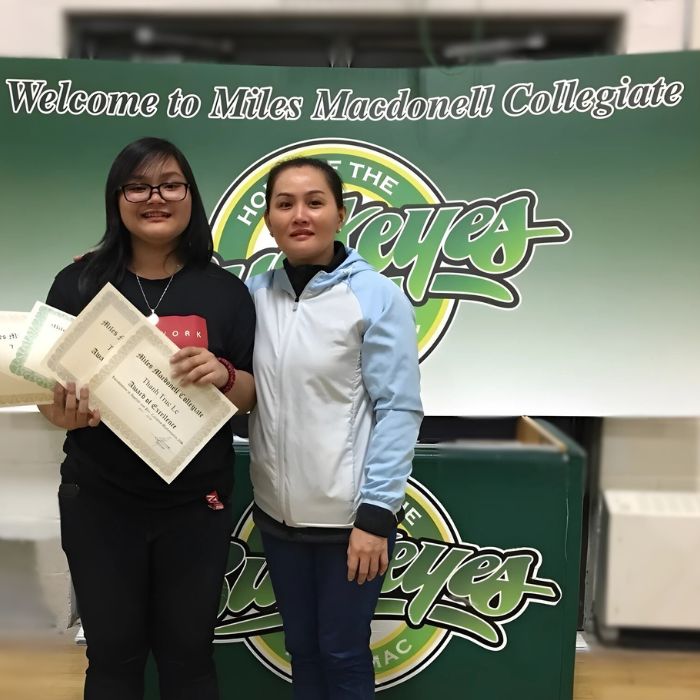
Lê Thanh Trúc, Student at Miles Macdonell Collegiate
“My family and I are deeply grateful to SIEC for not only securing my **Canada high school student visa** in Grade 10 but also for assisting my parents and siblings in obtaining their **visitor visas**. That was an invaluable gift.” — Lê Thanh Trúc, Student at **Miles Macdonell Collegiate** Secure Your Early High School (Secondary) […]
Phan Thị Ngọc Huỳnh, Former Student in Winnipeg
“The solid foundation provided by SIEC and Ms. Huong not only helped me realize my study abroad dream but also gave me the confidence to graduate, secure a stable job, and **settle permanently in Canada**.” — Phan Thị Ngọc Huỳnh, Former Student, currently working in **Winnipeg, Canada** Explore Your Study & Immigration Pathway in Canada […]
Hoàng Giang, Student at Edmonds College
“With her dedication and passion, Ms. Huong helped launch my **American dream**, opening up a vast world of opportunity and the chance to meet new friends.” — Hoàng Giang, Student at **Edmonds College** Explore More About Studying in the USA Spotlight on Edmonds College (Washington State) Gain in-depth knowledge about the programs, tuition fees, and […]
Khánh Lê, Student at LaSalle College
“Thank you to Ms. Huong and the SIEC team for their dedicated partnership and support, from my application phase until I was settled in Canada, helping me confidently pursue my dreams.” — Khánh Lê, Student at **LaSalle College** Explore Further Canada Study Opportunities Spotlight on LaSalle College Gain deeper insights into the programs, tuition fees, […]
Quỳnh Giao, Student at Red River Colleg
“She didn’t just stop at completing the application; she was an inspiration, a true motivator…” — Quỳnh Giao, Student at **Red River College** Continue Your Canada Study Abroad Journey Spotlight on Red River College Polytechnic (RRC Polytech) Discover the high-demand, **applied learning programs** at **Red River College** – one of the premier post-secondary institutions in […]