Top Guide: Choosing the Best Canadian study cities for you
11/05/2026 Phong Nguyen
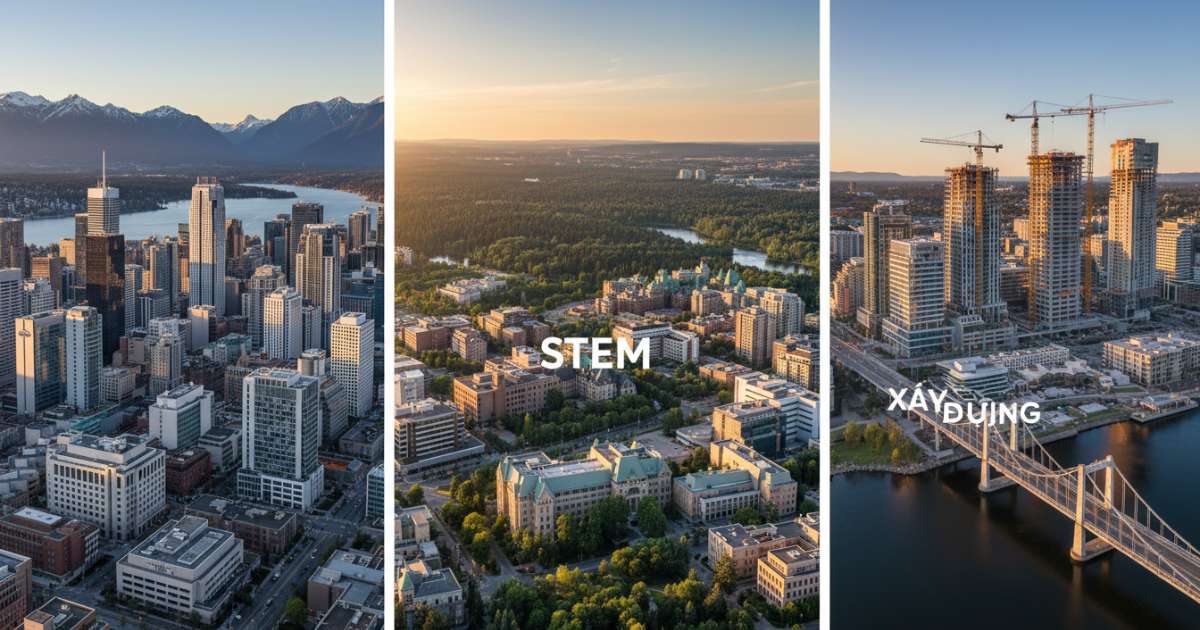
Entering the 2026–2027 period, Canada’s immigration policies have undergone landmark changes, shifting from mass intake to focusing on specific occupational groups facing severe labor shortages. Researching the **Best Canadian study cities** is no longer just about finding beautiful landscapes or low tuition fees; more importantly, it is about choosing the right region with priority settlement policies for Healthcare, STEM, and Construction sectors. Amidst tightening Study Permit regulations and financial proof requirements, building a study pathway linked to sustainable settlement goals is the key factor for international student success.
1. New Financial and Study Permit Regulations When Exploring the **Best Canadian study cities**
To determine the **Best Canadian study cities**, students must first master the changes in application requirements for 2026 and 2027. The Canadian government has raised the financial requirements for international students to ensure they can afford the cost of living in expensive cities. Instead of the old rates, students now need to prove financial capacity equivalent to approximately 20,635 CAD per year, excluding tuition fees.
This directly impacts the decision of where to study in Canada, as living costs in major hubs like Toronto or Vancouver are much higher than in surrounding areas.
Regarding part-time work regulations, international students are currently allowed to work off-campus for up to 24 hours per week during academic terms. This adjustment helps students focus more on their studies while still earning extra income to cover living expenses. When considering which Canadian province to study in, you should research the local part-time job market.
Cities with rapidly developing infrastructure and healthcare services often have a high demand for part-time labor, creating favorable conditions for students to work while studying.
Study Permit applications in this period also require more meticulous preparation, especially the Provincial Attestation Letter (PAL). Your choice of the Best Canadian study cities will determine which provincial quota you fall under. Provinces facing shortages in Healthcare and STEM sectors tend to issue PALs more quickly to attract international talent for long-term study and work.
2. Where to Study in Canada for the Highest Employment Opportunities
If you are wondering where to study in Canada to easily find a job after graduation, the answer lies in regions with strong investment in industry and infrastructure. In the 2026–2027 period, cities in Ontario and British Columbia maintain their positions as economic centers, but competition there is fierce. Instead, regions like Alberta or Saskatchewan are becoming ideal destinations when choosing the **Best Canadian study cities** due to lower living costs and high recruitment demand in the Construction and Energy sectors.
When determining where to study in Canada, students should look at the list of Priority Occupations. Cities with large hospital systems or high-tech zones are ideal for Healthcare and STEM students. Choosing the right study location helps you easily access internships (Co-op), thereby building a professional network while still in school.
This is a crucial stepping stone to securing a stable job after graduation.
Furthermore, researching where to study in Canada must be linked to Post-Graduation Work Permit (PGWP) eligibility. Currently, Canada prioritizes granting PGWPs to study programs directly related to labor-shortage sectors. Therefore, selecting cities with universities and colleges strong in STEM or Healthcare will make your settlement pathway much smoother.
3. Analyzing Which Province in Canada is Suitable for Healthcare, STEM, and Construction
To know which Canadian province to study in for settlement goals through priority sectors, we need to examine the Provincial Nominee Programs (PNP) of each region. For the Healthcare group, provinces like Nova Scotia and New Brunswick have special immigration programs dedicated to future nurses and doctors. If you choose the **Best Canadian study cities** in these areas, the chance of receiving a settlement invitation immediately after graduation is very high.
For the STEM group, Ontario and British Columbia remain top names when discussing which Canadian province to study in. However, Saskatchewan is emerging as a new powerhouse with policies to attract IT specialists and engineers. Choosing to study in Saskatchewan allows students to enjoy a peaceful life with attractive salaries and a fast track to becoming a permanent resident through priority streams for skilled workers.
Specifically for the Construction industry, Alberta is the most satisfactory answer to the question of which Canadian province to study in. With a population boom and housing demand, cities like Calgary or Edmonton need a large number of civil engineers, project managers, and skilled tradespeople. When considering your options, if you have strengths in technology and construction, Alberta provides a dynamic working environment with some of the highest incomes in Canada.
3.1. Advantages of the Healthcare Sector in Eastern Coastal Provinces
Coastal provinces like Prince Edward Island or Newfoundland and Labrador are facing rapid population aging. This makes the demand for healthcare personnel more urgent than ever. When researching where to study in Canada, medical students should consider schools in these areas to benefit from tuition support and priority settlement policies.
3.2. Opportunities for STEM Students in New Tech Hubs
Besides Toronto, cities like Kitchener-Waterloo are dubbed the Silicon Valley of the North. This is a great suggestion for the **Best Canadian study cities** if you are passionate about technology. Businesses here are always scouting for graduates in computer science, artificial intelligence, and data analysis.
3.3. Growth of the Construction Industry in Central Provinces
Manitoba and Saskatchewan are implementing many large infrastructure projects to connect economic zones. Choosing which Canadian province to study in within the central region will help construction students easily find internships and official jobs after graduation, while taking advantage of flexible provincial settlement policies.
4. Top Regions That Answer the Question of the **Best Canadian study cities**
In the 2026–2027 period, the list of the **Best Canadian study cities** has seen significant changes. Below are the top suggestions based on employment and settlement criteria for priority occupations:
Calgary (Alberta)
An ideal city for the Construction and Energy sectors. With low taxes and reasonable living costs, Calgary is a perfect answer for those seeking to optimize their finances.
Saskatoon (Saskatchewan)
Famous for agricultural research and biotechnology (STEM) programs. This is a location where studying in Canada provides a balance between academics and realistic settlement opportunities.
Winnipeg (Manitoba)
This city has very open settlement policies for international students graduating in engineering and healthcare. If you are looking for which Canadian province to study in with a simple settlement pathway, Manitoba is a top choice.
Ottawa (Ontario)
Canada’s capital is not only a political hub but also home to many high-tech companies. It is a brilliant destination when considering the best options for the STEM field.
Halifax (Nova Scotia)
For those pursuing Healthcare or Marine Science, Halifax provides a quality learning environment and broad settlement opportunities through the Atlantic Immigration Program.
Selecting the **Best Canadian study cities** should be based on thorough analysis of the local labor market. Don’t just look at the size of the city; look at the list of occupations that the province is prioritizing for settlement invitations. This helps you avoid graduating without finding a suitable job to meet the conditions for becoming a permanent resident.
5. School and Major Selection Strategy for Guaranteed Settlement in 2027
To ensure settlement prospects in 2027, students need a smart major and school selection strategy. Instead of choosing general business majors which face extreme competition, focus on Healthcare groups (nursing, elderly care), STEM (Information Technology, Mechanical Engineering, Data Analysis), and Construction (Civil Engineering, Electrical, Welding). Once the major is identified, finding the **Best Canadian study cities** becomes easier as each region typically has its own training strengths.
When choosing a school, prioritize public Colleges or Universities that offer Co-op programs (paid internships). Having work experience in Canada during your studies is a huge plus when applying for jobs later. Simultaneously, check if the school is on the list of Designated Learning Institutions (DLI) and if the program is eligible for a PGWP.
This is a vital factor when deciding where to study in Canada for long-term settlement.
Additionally, students should pay attention to language requirements. Priority sectors like Healthcare often require very high levels of English or French for professional practice. Therefore, choosing which Canadian province to study in that has a language environment matching your abilities is also part of a successful strategy.
For example, if you are proficient in French, Quebec or Francophone communities in Ontario would be excellent choices for your study destination.
6. Roadmap from International Study to Employment and Settlement in Canada 2027
A typical roadmap for an international student starts with choosing the right major and the right place for where to study in Canada. After completing a program lasting 2 to 4 years, students apply for a PGWP to stay and work. During this time, accumulating work experience in priority sectors like Healthcare, STEM, or Construction is extremely important.
Once you have 1 year of Canadian work experience, you can apply for permanent residency through the Express Entry system or Provincial Nominee Programs.
In 2027, Canada is expected to continue applying Category-based selection for settlement invitations. This means that if you work in Healthcare or STEM, the score required to be invited for settlement will be lower than for other groups. Therefore, considering which Canadian province to study in that has support policies for these sectors from the start will help you shorten the waiting time and increase your success rate.
An important note is that students need to regularly update themselves on changes in policies from Immigration, Refugees and Citizenship Canada (IRCC). Regulations on Study Permits or the list of priority occupations can change according to economic needs at any time. Choosing a city with economic diversity will help you be more flexible in career transitions if necessary, ensuring your settlement roadmap remains solid.
Finally, remember that settlement is a long-term process requiring perseverance and careful preparation. From meeting new financial conditions and complying with the 24-hour weekly work limit to choosing the right location for where to study in Canada, everything must be aimed at the final goal of becoming a permanent resident. With the right preparation, the dream of settling in the Land of the Maple Leaf is entirely within your reach.
To realize your study and settlement goals in Canada during 2026–2027, you need a personalized roadmap based on your actual capacity and aspirations. Understanding new immigration regulations and the labor market in each province will help you make the most accurate decisions for your future.
Let experienced experts assist you in evaluating your profile and building an optimal major and school selection strategy. Don’t miss the opportunity to become part of the high-tech workforce community in Canada by participating in a settlement feasibility assessment today.
Contact SIEC now for detailed advice on study and settlement pathways in Canada according to priority occupational groups. We will help you answer all questions about financial conditions, visa regulations, and how to choose the most suitable city for your goals.
Assess your Canada 2027 settlement potential now to begin your journey to conquer the future in one of the most livable countries in the world. The professional consulting team at SIEC is always ready to accompany you every step of the way.
Call to action for study and settlement information at SIEC: https://siec.com.vn/dang-ky
Are You Ready to Breakthrough Your Global Career with SIEC?
Don’t let your prestigious degree just stay on paper. Let SIEC experts advise you on a study abroad roadmap combined with a strategic career orientation starting today!
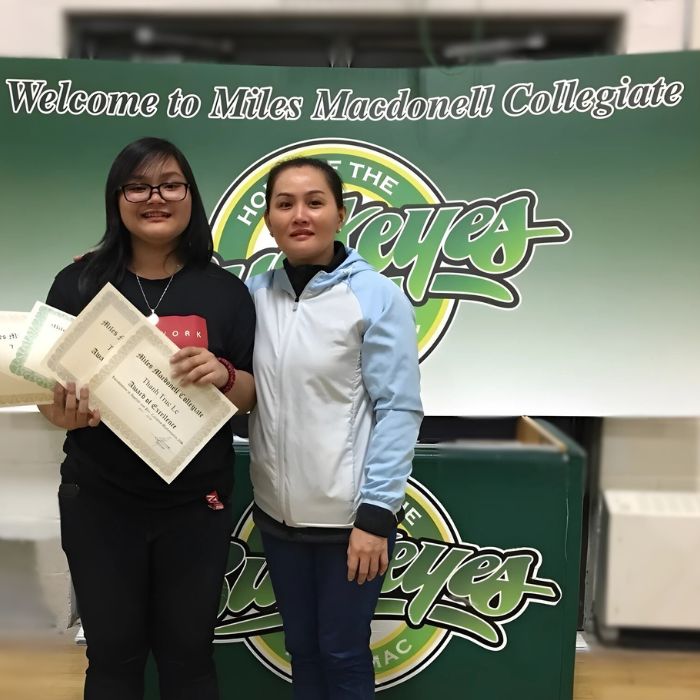
Lê Thanh Trúc, Student at Miles Macdonell Collegiate
“My family and I are deeply grateful to SIEC for not only securing my **Canada high school student visa** in Grade 10 but also for assisting my parents and siblings in obtaining their **visitor visas**. That was an invaluable gift.” — Lê Thanh Trúc, Student at **Miles Macdonell Collegiate** Secure Your Early High School (Secondary) […]
Phan Thị Ngọc Huỳnh, Former Student in Winnipeg
“The solid foundation provided by SIEC and Ms. Huong not only helped me realize my study abroad dream but also gave me the confidence to graduate, secure a stable job, and **settle permanently in Canada**.” — Phan Thị Ngọc Huỳnh, Former Student, currently working in **Winnipeg, Canada** Explore Your Study & Immigration Pathway in Canada […]
Hoàng Giang, Student at Edmonds College
“With her dedication and passion, Ms. Huong helped launch my **American dream**, opening up a vast world of opportunity and the chance to meet new friends.” — Hoàng Giang, Student at **Edmonds College** Explore More About Studying in the USA Spotlight on Edmonds College (Washington State) Gain in-depth knowledge about the programs, tuition fees, and […]
Khánh Lê, Student at LaSalle College
“Thank you to Ms. Huong and the SIEC team for their dedicated partnership and support, from my application phase until I was settled in Canada, helping me confidently pursue my dreams.” — Khánh Lê, Student at **LaSalle College** Explore Further Canada Study Opportunities Spotlight on LaSalle College Gain deeper insights into the programs, tuition fees, […]
Quỳnh Giao, Student at Red River Colleg
“She didn’t just stop at completing the application; she was an inspiration, a true motivator…” — Quỳnh Giao, Student at **Red River College** Continue Your Canada Study Abroad Journey Spotlight on Red River College Polytechnic (RRC Polytech) Discover the high-demand, **applied learning programs** at **Red River College** – one of the premier post-secondary institutions in […]