Studying Hospitality Management Abroad in 2026: Abyss or Glory? A Strategic Analysis for a Million-Dollar Investment
19/05/2026 Phong Nguyen
“Amidst the storm of Artificial Intelligence (AI), cutting-edge automation models, and global economic shifts, is investing billions of VND in studying Hospitality Management abroad still a wise decision? Or is it merely blindly chasing an outdated prestige from a bygone era?”
Studying Hospitality Management Abroad in 2026: Abyss or Glory? A Strategic Analysis for a Million-Dollar Investment
For many parents and students in Vietnam, the phrase “Hospitality Management” always conjures up images of magnificent lobbies, elegant suits, lavish banquets, and opportunities to work in world-renowned 5-star international corporations. The essence of this industry has always been associated with prosperity, luxury, and limitless mobility. However, entering 2026, the reality of the global labor market is dealing heavy blows to that outdated mindset, forcing us to take a serious look before deciding to invest in studying Hospitality Management abroad.
Thousands of service management graduates every year face a saturated market for operational staff, starting salaries that fall short of expectations, and more severely, fierce displacement by next-generation automation technologies. Artificial Intelligence is no longer a story of the future; it is actively restructuring the entire personnel blueprint of major hotels. This article by SEO and study abroad strategy experts at SIEC – Overseas Education & Visa Consulting will not paint a rosy picture just to sell a course at all costs. We will frankly “fact-check” together, stripping away each layer of truth regarding inherent challenges and risks, while reshaping the smartest pathway for those who truly want to turn their decision of studying Hospitality Management abroad into a peak career leverage.
Global Market Context: The Service Industry is Evolving, Not “Dying”
According to the long-term strategic report from the World Travel & Tourism Council (WTTC), the global travel and hospitality sector is projected to contribute a record-breaking $15.5 trillion USD to the global GDP by 2033, accounting for nearly 11.6% of the world economy. Alongside these impressive figures, quantitative analysis data from UN Tourism also confirms that international tourist arrivals have surpassed historical peaks, unlocking millions of new employment opportunities on a global scale.
However, both major organizations have issued a severe structural warning: The employment composition within the Hospitality industry is shifting at a breakneck pace. Mechanical, repetitive front-line operational roles are being thoroughly automated by robots and intelligent software. Conversely, recruitment demand for high-level experts in customer experience architecture, big data behavior analysis (Big Data Marketing), and digital revenue optimization (Revenue Management) is facing an acute labor shortage. This poses a major paradox for young individuals planning on studying Hospitality Management abroad in the digital age.
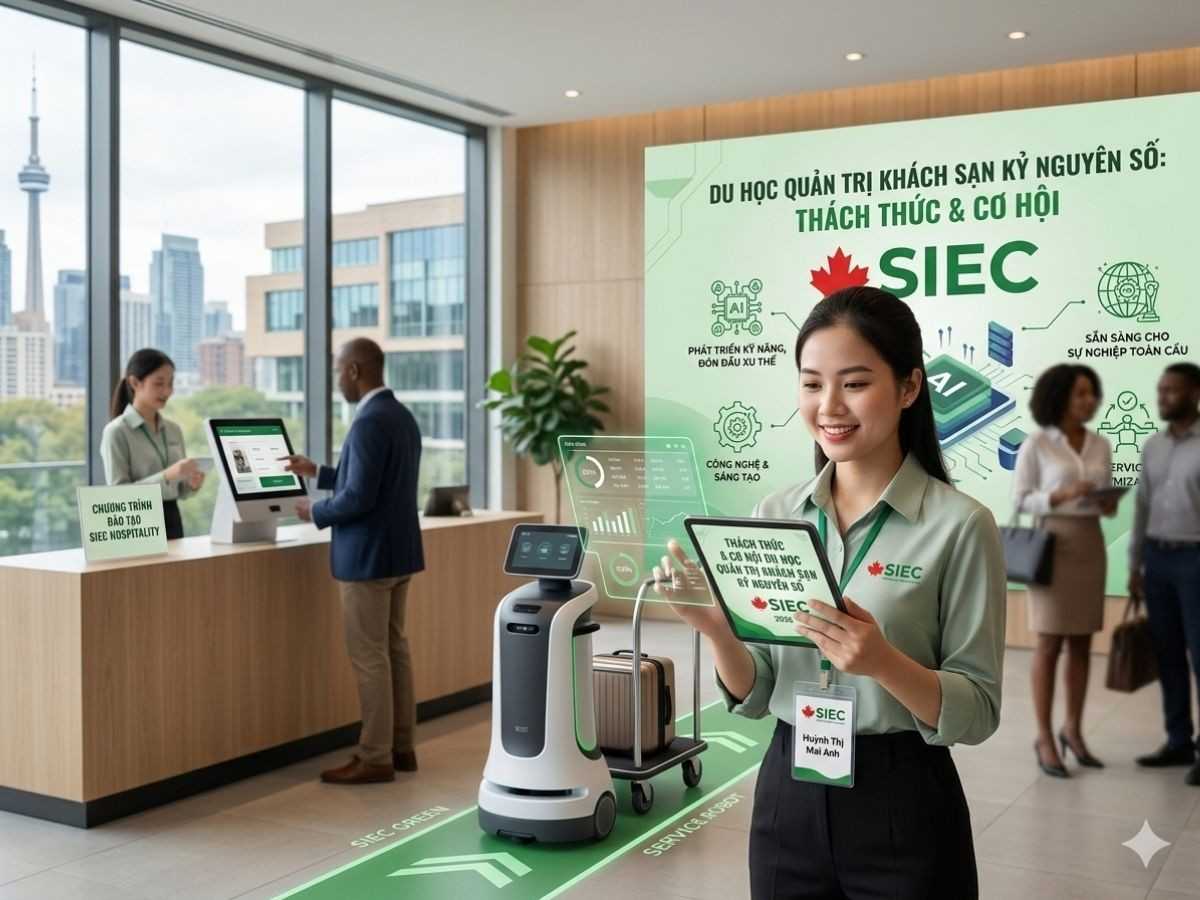
The transition from traditional operational models to data-driven management and bespoke emotional experiences in the Hospitality industry.
Part 1: “The Abyss” – Harsh Truths About Traditional Hospitality Management
Before making your final decision on what to study in 2026 and spending a substantial family budget amounting to billions of VND for overseas education, you must understand the nature of the systemic risks threatening the actual value of your upcoming bachelor’s degree.
1. The absolute dominance of Artificial Intelligence and Automation (RPA & GenAI)
If you believe that the primary objective of studying Hospitality Management abroad is to learn how to set up a Euro-standard banquet table, memorize housekeeping standard operating procedures (SOPs), or execute check-in and check-out procedures at the reception desk—you are placing yourself in an extremely vulnerable position. In 2026, next-generation Generative AI systems, self-check-in kiosks integrated with biometrics facial recognition, and smart room-service robots have replaced over 70% of front-line staff at major hotel chains across the US, Singapore, Europe, and Japan.
Modern algorithms can process thousands of reservation requests, allocate rooms, and optimize logistical workflows within milliseconds without a single error. Repetitive jobs that lack strategic thinking and macro-management are vanishing completely from the global workforce map. Therefore, if an international school’s curriculum continues to focus solely on teaching raw muscle-operational skills, it is undoubtedly an obsolete trap for students choosing the path of studying Hospitality Management abroad.
2. Radical shifts in consumer behavior of Gen Z and Gen Alpha
The traditional definition of luxury (Old Luxury)—where customers rate a hotel based on the gilding of the lobby, heavily complex architecture, or the thickness of the hallway carpet—is entering a phase of sharp decline. The generations holding the primary purchasing power today demand seamless digital connectivity, eco-friendly philosophies (Green Practices), and particularly authentic, hyper-personalized local experiences tailored down to the finest detail.
They are completely willing to pay a premium to stay at a unique homestay nestled in pristine nature highly rated on Airbnb or experiential sharing platforms rather than a cookie-cutter, soulless suite of a legacy hotel chain that lacks creativity and distinct identity. This rapid change requires future managers to possess the mindset of an emotional journey designer who has a profound understanding of culture and behavioral psychology. If you proceed with studying Hospitality Management abroad without being equipped with this flexible and sharp mindset, you will immediately face market elimination upon graduation.
3. The trap of “Low-End Operational Labor Exploitation” post-graduation
A sad and brutal reality in major labor markets like Australia, Canada, or New Zealand—which very few conventional study abroad agencies dare to share openly—is the unskilled labor trap. Many students graduating with a bachelor’s or master’s degree in Hospitality from mid-tier schools have had to start their careers doing heavy manual labor: cleaning rooms, carrying luggage, or washing dishes at minimum wage for consecutive years under the guise of “gaining baseline practical experience.”
While gaining baseline experience isn’t inherently wrong, if your curriculum lacks core modules in financial management, strategic operations, and human resource leadership, you can easily fall into the cycle of being permanently stuck at the bottom of the operational pyramid, unable to break through to mid and high-level executive roles. This represents a massive loss in terms of both time and opportunity cost for a family’s investment in studying Hospitality Management abroad.
4. Degree inflation versus real-world problem-solving capabilities
The global job market in 2026 is no longer infatuated with CVs that look polished only on the school’s name but are completely hollow in terms of practical competency. Many enterprises complain that graduates do not know how to handle a PR crisis on social media, cannot read a department’s profit and loss (P&L) statement, and are entirely flustered when a hotel’s Property Management System (PMS) encounters a data security breach. Global degree inflation is drastically diminishing the value of standard university degrees. Clients and businesses only pay for individuals who can generate concrete solutions that optimize profits and drive the growth of GOPPAR (Gross Operating Profit Per Available Room) for the enterprise.
Part 2: “The Glory” – Redefining the High-Level Value of the Hospitality Industry
But if this industry truly faces so many dark sides and structural challenges, why do global elites, children of massive business conglomerates, and outstanding high-achievers continue to flock to Switzerland, the US, or Australia to pursue studying Hospitality Management abroad? The answer lies in a core secret: They do not study to perform repetitive manual tasks; they study to master the ultimate capability of the modern world – The art of managing human relationships at the highest echelon.
1. A comprehensive shift from Operations to Customer Experience Architecture (CX)
When AI algorithms and automated systems flawlessly execute mechanical technical tasks, humans are fully liberated to focus on the supreme values that machines can never replicate: profound empathy, the ability to curate bespoke emotional moments, and the art of resolving complex psychological crises for clients in the most sophisticated manner. A true world-class curriculum for studying Hospitality Management abroad in 2026 trains you to become a “Chief Experience Architect.”
You will learn to decipher consumer behavior and master advanced behavioral psychology, thereby designing a seamless customer journey that touches every sense of the guest from before they arrive until after they depart, transforming them into loyal brand ambassadors. This is the exclusive capability asset that guarantees you remain irreplaceable by any robot or AI algorithm throughout your entire professional career.
2. Mastering Big Data and High-Level Digital Revenue Management
The real glory of a new-generation hospitality manager in the digital era is the capability to navigate complex data systems, analyzing millions of user behaviors on OTA platforms and social media to deploy a dynamic pricing strategy in real time. The ultimate goal is no longer just filling rooms at all costs, but optimizing Revenue Per Available Room (RevPAR) and minimizing operating expenses through precise AI forecasting models.
This specialized knowledge in financial management, cash flow optimization, and growth digital marketing will transform a graduate coming out of a program for studying Hospitality Management abroad into an authentic business strategist. It provides the perfect launchpad for a meteoric rise to positions such as Chief Commercial Officer, Regional Director, or General Manager (GM) of prestigious multinational corporations.
3. The infinite power of “Interdisciplinary Hospitality”: A golden ticket to elite industries
There is a massive commercial secret that only industry insiders truly comprehend: An outstanding bachelor’s degree resulting from studying Hospitality Management abroad at top-tier global institutions does not confine you within the physical boundaries of a hotel or resort. It is, in reality, a powerful “golden ticket” that opens doors to ultra-high-margin industries and elite working environments.
A luxury service mindset, pristine diplomatic etiquette, high stress tolerance, and extreme psychological empathy are the invaluable assets that private wealth management banks (Private Banking), elite global airlines, luxury real estate developers, ultra-luxury automotive brands (Rolls-Royce, Bentley), and 5-star international aesthetic hospitals are aggressively headhunting with exceptionally lucrative compensation packages. You are not just studying to work in a hotel; you are learning how to operate the most premium business models of the global economy.
4. Building a powerful, high-net-worth international network
When you choose developed nations as the destination for your journey of studying Hospitality Management abroad, you are placing yourself within an educational and professional ecosystem of elite individuals. You share classrooms with the heirs of conglomerate chairmen, learn under the mentorship of former global GMs of legendary hotel chains, and intern at the world’s most vibrant economic hubs. This alumni network built during your study abroad years is an intangible yet lifelong wealth asset, opening doors to multi-million dollar business collaborations that would be hard to access domestically.
Modern training programs must seamlessly integrate global financial logic, digital technology analysis, and macro-strategic management.
Strategic Blueprint: Where Should You Study Hospitality in 2026?
To thoroughly optimize your family’s investment budget of billions of VND, choosing a country aligned with your immigration goals, financial capacity, and long-term career path is paramount. Let us analyze the positioning matrix of the top 5 destination countries for Hospitality education below:
Country
Core Strengths
Internship & Job Opportunities
Best Suited For
Switzerland
The historic birthplace of Luxury Management. Rigorous, standard-setting curricula with European heritage, emphasizing absolute attention to detail and premium brand management logic.
Compulsory paid internship programs for at least 6 months per year at ultra-luxury hotel groups, elite watchmaking brands, or major global financial institutions.
Students with robust family financial backing, aiming to become global C-suite executives or return to scale up their family business.
Australia
A highly hands-on approach to training, perfectly marrying academic theory with the practical demands of a vibrant, rapidly evolving domestic tourism market.
Generous part-time work allowance of up to 48 hours per fortnight during semesters and unlimited hours during breaks. Post-study work visas extend from 2 to 4 years.
Students seeking long-term employment opportunities, international real-world experience, and optimization of early ROI via student earnings.
USA
Focuses on macro-management concepts, corporate franchising, operating massive mega-chain systems, and leveraging cutting-edge digital technology platforms.
The OPT framework permits legal employment in the US post-graduation within the corporate headquarters of the world’s largest hotel empires located in bustling financial hubs.
Ambitious young minds passionate about scale, harboring dreams of steering strategic operations within global corporate headquarters like Marriott, Hilton, or Hyatt.
Canada
Education tethered to sustainable eco-tourism, mega-event coordination, and secure destination management. Notably more affordable tuition and living expenses compared to the US and Switzerland.
Paid Co-op internship programs are structurally integrated directly into the academic credential. Transparent pathways to secure a PGWP (Post-Graduation Work Permit) for up to 3 years.
Students viewing studying Hospitality Management abroad as a solid, step-by-step strategic path to achieving long-term permanent residency in a developed North American nation.
Singapore
Accelerated program durations, maximizing efficiency and fast-track operational tactics of Asia’s premier financial and digital service hub. Degrees awarded directly by UK or Australian partners.
Prime internship placement within complex financial structures and leading integrated casino resorts right in the Lion City, under highly disciplined corporate standards.
Students looking to save time, working with a moderate budget, and preferring geographical proximity to Vietnam while securing an authentic international credential.
An Intelligent and Comprehensive Strategic Roadmap with SIEC
To guarantee that your decision to pursue studying Hospitality Management abroad results in an exceptional return on investment for your future career rather than a risky emotional gamble, the seasoned expert team at SIEC has engineered an exclusive positioning framework, tailor-made for each student’s specific profile:
✓ Deep core competency mapping via specialized career psychometric testing: SIEC consultants will never advise you to select a school based solely on raw popularity. We map out whether your inherent profile aligns with financial, data-driven revenue management (Data/Revenue Oriented) or human interaction and luxury experience design (CX/Luxury Service Cultivation) to accurately match you with the right country and university right from day one.
✓ Elite scholarship acquisition strategies for the world’s top 1% Hospitality institutions: SIEC proudly stands as a direct, long-term strategic partner of global premium educational networks, representing elite institutions in Switzerland such as Les Roches Global Hospitality Education and Glion Institute of Higher Education. Our specialists work side-by-side with you to refine your personal statement, sharpen critical thinking, and conduct mock 1-1 interview prep with international admissions heads to secure the highest possible scholarship values, lessening the financial equation for your family.
✓ End-to-end legal visa processing and long-term career mentorship: We take charge of verifying, structuring, and optimizing your family’s financial profile into a transparent, air-tight case that aligns perfectly with strict immigration policies, maintaining an exceptional visa success rate. Crucially, once you depart, SIEC stays by your side, linking you into our powerful global local Alumni networks to support your search for premium paid internships and early career recruitment preparation before graduation. Your decision of studying Hospitality Management abroad will always have SIEC as an unwavering anchor.
Don’t Choose an Industry on Rumors – Choose Based on Strategy
Your future career and your family’s multi-billion VND investment deserve to be guided by a calculated, visionary decision, rather than casual advice lacking empirical data on social media. Allow the senior strategists at SIEC to break down the global labor market blueprint of 2026 for you, lock in the most optimal institution, and map out a customized study abroad pathway built to capitalize on the new economic currents today.
Final Verdict from the Strategic Advisory Team at SIEC
Looking at the macro economic transformation, deciding on studying Hospitality Management abroad within the context of 2026 is by no means a descent into a dark, hopeless “abyss” as pessimistic observers frequently claim. However, it is also certainly no longer an effortless, straightforward path to “glory” for those with a passive mindset who merely want to learn repetitive, manual operational workflows.
This premium service sector only welcomes individuals possessing grand ambitions, the courage to step beyond traditional operational comfort zones, the acumen to blend data technology into the art of human care, and an intelligent investment roadmap. Let SIEC – Overseas Education & Visa Consulting have the honor of being your strategic architect and most trusted companion, guiding you step-by-step to the absolute zenith of international executive leadership.
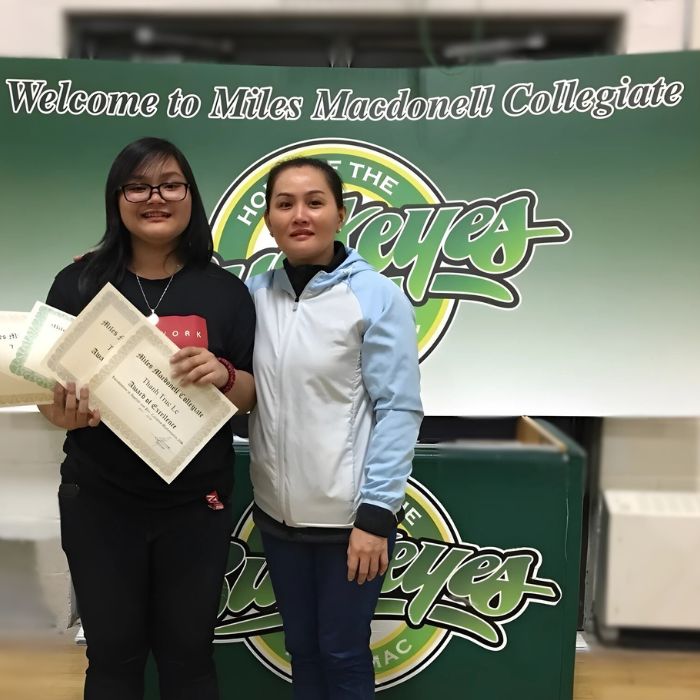
Lê Thanh Trúc, Student at Miles Macdonell Collegiate
“My family and I are deeply grateful to SIEC for not only securing my **Canada high school student visa** in Grade 10 but also for assisting my parents and siblings in obtaining their **visitor visas**. That was an invaluable gift.” — Lê Thanh Trúc, Student at **Miles Macdonell Collegiate** Secure Your Early High School (Secondary) […]
Phan Thị Ngọc Huỳnh, Former Student in Winnipeg
“The solid foundation provided by SIEC and Ms. Huong not only helped me realize my study abroad dream but also gave me the confidence to graduate, secure a stable job, and **settle permanently in Canada**.” — Phan Thị Ngọc Huỳnh, Former Student, currently working in **Winnipeg, Canada** Explore Your Study & Immigration Pathway in Canada […]
Hoàng Giang, Student at Edmonds College
“With her dedication and passion, Ms. Huong helped launch my **American dream**, opening up a vast world of opportunity and the chance to meet new friends.” — Hoàng Giang, Student at **Edmonds College** Explore More About Studying in the USA Spotlight on Edmonds College (Washington State) Gain in-depth knowledge about the programs, tuition fees, and […]
Khánh Lê, Student at LaSalle College
“Thank you to Ms. Huong and the SIEC team for their dedicated partnership and support, from my application phase until I was settled in Canada, helping me confidently pursue my dreams.” — Khánh Lê, Student at **LaSalle College** Explore Further Canada Study Opportunities Spotlight on LaSalle College Gain deeper insights into the programs, tuition fees, […]
Quỳnh Giao, Student at Red River Colleg
“She didn’t just stop at completing the application; she was an inspiration, a true motivator…” — Quỳnh Giao, Student at **Red River College** Continue Your Canada Study Abroad Journey Spotlight on Red River College Polytechnic (RRC Polytech) Discover the high-demand, **applied learning programs** at **Red River College** – one of the premier post-secondary institutions in […]