Study pharmacy in Canada: Entry Requirements and PR Path
26/05/2026 Phong Nguyen
In the context of Canada’s immigration policies undergoing significant adjustments toward selecting highly skilled labor, the decision to study pharmacy in Canada has become a strategic choice for international students for the 2026–2027 period. Instead of broad-based immigration as in previous years, the Canadian Government is now focusing on essential sectors such as Healthcare, STEM, and Construction. Pharmacy, with its pivotal role in the public healthcare system, consistently remains at the top of the priority list for permanent residency.
Preparing a well-structured academic roadmap not only helps you access world-class education but also opens up the most favorable opportunities to become a permanent resident.
1. Trends in Studying Pharmacy in Canada and Priority Immigration Policies for 2026-2027
The 2026–2027 period marks a turning point in Canada’s immigration policy as the nation shifts its focus toward selection based on labor market needs. When deciding to study pharmacy in Canada, students need to clearly understand that this field belongs to the Healthcare category, one of the priority groups for bonus points and invitations for residency through Express Entry category-based draws. Canada’s aging population is putting significant pressure on the healthcare system, leading to an urgent demand for clinical pharmacists, pharmacy technicians, and pharmaceutical researchers.
Unlike administrative or business professions, choosing to study pharmacy in Canada provides a high level of job security immediately after graduation. Provinces such as Ontario, British Columbia, and Alberta all have specific Provincial Nominee Programs (PNP) dedicated to healthcare workers. This means your pathway to permanent residency will be shorter and less competitive compared to the general average.
The Canadian Government is committed to creating maximum conditions to retain graduates from healthcare sectors to strengthen the national social welfare system.
Furthermore, pursuing this field during this period also gives you access to groundbreaking advancements in biotechnology and vaccine research. Canada is investing billions of dollars into pharmaceutical research centers, creating thousands of new positions in the STEM field. Consequently, students not only have the opportunity to work in pharmacies or hospitals but can also join multinational pharmaceutical corporations with highly attractive starting salaries.
2. Application Requirements and Entry Standards for International Students
To begin your journey to study pharmacy in Canada, students must meet rigorous academic and language proficiency standards. This is a highly specialized field directly related to human health; therefore, Canadian universities and colleges often set high entry thresholds to ensure the quality of training.
2.1. Academic Requirements and Foundational Subjects
Most educational institutions, when reviewing applications to study pharmacy in Canada, require applicants to have a Grade Point Average (GPA) in the good to excellent range, typically above 7.5 or 8.0 on the Vietnamese scale. The most important subjects include Mathematics, Chemistry, and Biology. If you plan to enroll in a Doctor of Pharmacy (PharmD) program, you usually need to complete 1 to 2 years of undergraduate pre-pharmacy coursework in basic sciences before officially applying to the faculty of pharmacy.
2.2. Language Proficiency as a Decisive Factor
Communication skills and the ability to comprehend specialized documents are mandatory. International students need to achieve a minimum IELTS score of 6.5 to 7.0, with no individual band below 6.0. Some schools require higher Speaking scores to ensure students can accurately provide medication counseling to patients in the future.
Additionally, French language certification is a significant advantage if you intend to study in Quebec or wish to increase your immigration points later on.
2.3. Competency Tests and Supplemental Documents
For intensive university programs, students may be required to take the Pharmacy College Admission Test (PCAT) or participate in direct interviews with the admissions committee. Furthermore, letters of recommendation and a personal statement clearly outlining your goals to study pharmacy in Canada play a vital role in helping your application stand out among thousands of others. Preparing your application 6 to 12 months before the intake date is essential to ensure all documents are perfectly completed.
3. New Regulations on Study Permits and Financial Proof Requirements for 2026
Starting in 2024 and extending through the 2026–2027 period, Immigration, Refugees and Citizenship Canada (IRCC) has implemented several new Study Permit regulations to tighten the quality management of international students. When applying to study pharmacy in Canada, you must pay special attention to the Provincial Attestation Letter (PAL), a mandatory document for study permit applications for most levels of study.
Financial requirements have also been adjusted significantly upward to reflect the actual cost of living in Canada. Currently, international students need to prove they have enough funds for living expenses—approximately over 20,000 CAD for the first year, excluding tuition fees. Financial proof must be demonstrated transparently through savings accounts, income statements of sponsors, or other valuable assets.
The government wants to ensure that students have sufficient financial resources to focus on their studies without being overly pressured by financial issues.
Although regulations have become stricter, for students who choose to study at reputable Designated Learning Institutions (DLI), Study Permit approval rates remain very high. This is because pharmacy is listed among the nation’s priority workforce training categories. Consular officers often view applications more positively when they have a clear academic pathway toward professions where Canada is facing severe labor shortages.
4. 24-Hour Weekly Part-Time Work Policy and Pharmacy Internship Opportunities
One of the most important updates for international students is the regulation regarding off-campus work hours. Instead of the previous 20-hour limit, students who study pharmacy in Canada are now permitted to work up to 24 hours per week during academic terms. This change helps students earn extra income to cover living expenses while gaining practical work experience in a multicultural environment.
For pharmacy students, seeking part-time jobs at pharmacies or healthcare facilities is extremely beneficial. You can start with customer support or administrative assistant positions in pharmacies. These experiences not only help you become familiar with medication names and the operational processes of the Canadian healthcare system but also serve as a major plus on your future resume.
Furthermore, most pharmacy programs integrate paid internship terms (Co-op). This is a golden opportunity for students to apply theoretical knowledge to practice under the supervision of professional pharmacists. Through Co-op, you not only earn a good income but also build a network of industry relationships, which is crucial for finding official employment and completing your immigration profile after graduation.
5. Guide to Choosing Programs and Schools for Pharmacy in Canada
The pharmaceutical field in Canada is diverse with many different levels of training. Choosing the right program from the start will determine the success of your roadmap to study pharmacy in Canada and achieve residency. Depending on your academic ability and financial condition, you can consider the following paths.
5.1. Pharmacy Technician Program
These are usually 2-year college diploma courses. This program focuses on practical skills such as preparing medications, inventory management, and customer interaction. The advantages of this choice are shorter study time, lower costs, and very high job opportunities immediately after graduation.
Upon completion, you can take the certification exam to practice as a pharmacy technician in retail pharmacies or hospitals.
5.2. Clinical Pharmacist Program (Doctor of Pharmacy – PharmD)
This is the path for students with excellent academic records who wish to become professional pharmacists. The PharmD program typically lasts 4 years after you have established a foundation in basic sciences. Choosing this route requires a significant investment of time and money, but in return, the salary and social status of pharmacists in Canada are very high.
You will have the authority to prescribe certain medications and provide in-depth clinical advice to patients.
5.3. Leading Universities and Colleges
When selecting a school to study pharmacy in Canada, you should prioritize institutions with strong links to the local healthcare system. Some prominent names include the University of Toronto and the University of British Columbia for undergraduate levels, and schools like Seneca Polytechnic, Humber College, or Algonquin College for pharmacy technician programs. Ensure the program is accredited by the Canadian Council for Accreditation of Pharmacy Programs (CCAPP) so your degree is valid for professional practice.
6. Academic Roadmap Towards Employment and Canadian Residency 2027
Building a clear roadmap is the key to realizing your immigration dream when you study pharmacy in Canada. After completing a program of at least 2 years, international students are eligible to apply for a Post-Graduation Work Permit (PGWP) valid for up to 3 years. This is a precious time to accumulate professional work experience in Canada.
In the 2026–2027 period, the typical immigration pathway will unfold as follows: First, you graduate and take the pharmacy practice certification exam in the province where you live. Next, you work in your field to accumulate the required number of work hours. With a degree and experience in the healthcare sector, you will have an absolute advantage when applying to the Express Entry system through the priority category (Category-based selection).
Pharmacy is always in the category of professions with lower invitation scores and more frequent invitation rounds.
Another direction is through Provincial Nominee Programs (PNP). For example, in British Columbia, the BC PNP Healthcare program provides a priority immigration pathway for healthcare professionals. Simply having a job offer from a healthcare facility in the province brings your opportunity to receive a provincial nomination and become a permanent resident very close.
Grasping the regulations on immigration according to priority occupations instead of general immigration will help you save time and increase your probability of success.
7. Evaluate Your 2027 Canada Immigration Potential with Experts
With constant changes in immigration policy, attempting to research and apply to study pharmacy in Canada on your own can be risky. Every individual has a different academic and financial background; therefore, a custom-designed roadmap is needed to optimize the chances of success. Evaluating your profile now will help you know exactly where you stand and what else you need to prepare to meet the 2027 standards.
Don’t let administrative barriers or a lack of information disrupt your future plans. Pharmacy is not just a stable career but also a golden ticket for you and your family to build a new life in Canada. Start by thoroughly researching school requirements, provincial regulations, and the latest Study Permit application steps.
Thorough preparation today is the foundation for your brilliant success in the land of the maple leaf in the coming years.
The journey to study pharmacy and settle through the healthcare priority stream is opening up larger opportunities than ever for those with determination and proper preparation. Contact reputable consulting units to have your profile evaluated in detail and to update the latest changes in immigration policies specifically for the health sector. A smart roadmap will help you realize your dream of settling in Canada in the most sustainable and secure way.
To ensure your profile meets the strict criteria of the Canadian Department of Immigration during the 2026–2027 phase, receiving advice from experienced experts is vital. We are ready to help you assess your academic ability, financial capacity, and build the most optimal study plan, helping you confidently conquer your career and residency goals.
Let SIEC accompany you in realizing your plans to study and work in Canada. With a deep understanding of the labor market and the latest immigration policies, we will help you choose the right major, the right school, and prepare the perfect application to receive a Study Permit and move toward a Canadian Green Card.
Don’t miss the chance to become part of one of the world’s leading healthcare systems. Register now to have our experts evaluate your immigration potential and receive detailed information about scholarships and the most prestigious pharmacy training programs in Canada today.
Are You Ready to Breakthrough into a Global Career with SIEC?
Don’t let your prestigious degree stay only on paper. Let SIEC experts advise you on a study roadmap combined with a job-oriented strategy starting today!
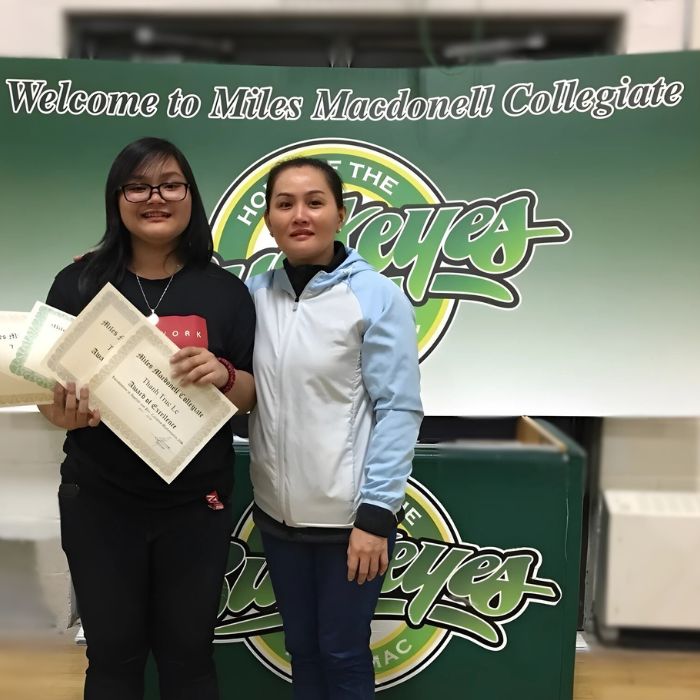
Lê Thanh Trúc, Student at Miles Macdonell Collegiate
“My family and I are deeply grateful to SIEC for not only securing my **Canada high school student visa** in Grade 10 but also for assisting my parents and siblings in obtaining their **visitor visas**. That was an invaluable gift.” — Lê Thanh Trúc, Student at **Miles Macdonell Collegiate** Secure Your Early High School (Secondary) […]
Phan Thị Ngọc Huỳnh, Former Student in Winnipeg
“The solid foundation provided by SIEC and Ms. Huong not only helped me realize my study abroad dream but also gave me the confidence to graduate, secure a stable job, and **settle permanently in Canada**.” — Phan Thị Ngọc Huỳnh, Former Student, currently working in **Winnipeg, Canada** Explore Your Study & Immigration Pathway in Canada […]
Hoàng Giang, Student at Edmonds College
“With her dedication and passion, Ms. Huong helped launch my **American dream**, opening up a vast world of opportunity and the chance to meet new friends.” — Hoàng Giang, Student at **Edmonds College** Explore More About Studying in the USA Spotlight on Edmonds College (Washington State) Gain in-depth knowledge about the programs, tuition fees, and […]
Khánh Lê, Student at LaSalle College
“Thank you to Ms. Huong and the SIEC team for their dedicated partnership and support, from my application phase until I was settled in Canada, helping me confidently pursue my dreams.” — Khánh Lê, Student at **LaSalle College** Explore Further Canada Study Opportunities Spotlight on LaSalle College Gain deeper insights into the programs, tuition fees, […]
Quỳnh Giao, Student at Red River Colleg
“She didn’t just stop at completing the application; she was an inspiration, a true motivator…” — Quỳnh Giao, Student at **Red River College** Continue Your Canada Study Abroad Journey Spotlight on Red River College Polytechnic (RRC Polytech) Discover the high-demand, **applied learning programs** at **Red River College** – one of the premier post-secondary institutions in […]