Updated Study in Canada requirements for Global Students
15/04/2026 Phong Nguyen
Entering the 2026-2027 period, Canada’s immigration policies have undergone landmark changes. Instead of mass recruitment, the Canadian government is focusing on attracting high-performing international students who pursue fields facing severe labor shortages. Understanding the Study in Canada requirements during this time is a decisive factor in building a sustainable academic and immigration pathway in the land of the maple leaf.
1. Study in Canada requirements for documentation and legal procedures in 2026
The current international student management system requires more transparency and rigor in the application review process. To begin the journey, students must have a Letter of Acceptance (LOA) from a Designated Learning Institution (DLI). This is the first and most important step in the list of Study in Canada requirements today.
In addition to the admission letter, students must submit a Provincial Attestation Letter (PAL) for most levels of study. This regulation helps Canada control the number of students in accordance with the receiving capacity of each locality. The team of experts at SIEC always updates the list of provinces with remaining quotas to support students in submitting their applications at the right time.
Study Permit applications in the 2026-2027 period require a detailed study plan explanation. You need to prove that choosing a field of study in Canada is logical relative to your previous education or directly serves your future career goals. Professionalism in application preparation will help increase the visa approval rate on the first attempt.
1.1. Study Permit regulations and accompanying conditions
A Study Permit is not just a study license but also comes with conditions regarding length of stay and work rights. Students must maintain active academic status at their school to keep this permit valid. Violating attendance regulations or changing schools without declaration could lead to the risk of deportation.
In 2026, Immigration, Refugees and Citizenship Canada (IRCC) has increased inspections of the authenticity of degrees and language certificates. Any fraud in the application will lead to serious consequences, including a 5-year entry ban. Therefore, honesty is a prerequisite for any candidate complying with Study in Canada requirements.
2. Academic and language proficiency requirements for Canada
Many students and parents often wonder what is needed to keep up with the curriculum in Canada. Academically, the minimum Grade Point Average (GPA) usually ranges from 6.5 or higher for college levels and 7.0 or higher for university levels. For priority groups such as Healthcare or STEM, the level of competition will be much higher.
Language proficiency is a mandatory tool for students to absorb knowledge and socialize. Most top universities require an IELTS Academic score of 6.5 (with no skill below 6.0) or an equivalent PTE Academic certificate. Preparing your language skills well in your home country will help you save time and the cost of preparatory English courses in Canada.
The table below summarizes the basic academic requirements for different study levels in Canada in 2026:
Study Level
GPA Requirement
IELTS Requirement
Diploma
6.0 – 6.5
6.0 (no band under 5.5)
Bachelor’s Degree
7.0 or higher
6.5 (no band under 6.0)
Post-Graduate
7.0 or higher
6.5 or higher
2.1. The importance of preparing a knowledge foundation
Beyond grades, succeeding in Canada also depends on self-study and research skills. The Canadian education system values proactivity and critical thinking. Students should equip themselves with essay writing and presentation skills in English beforehand so as not to be overwhelmed in the first semester.
3. Study in Canada requirements regarding finances for 2026-2027
Financial issues are always a top concern for families. So, what are the financial capacity requirements? Since 2025, the required amount to prove living expenses has increased significantly, ranging from approximately 21,000 CAD to 23,000 CAD per year for a single student, excluding tuition fees.
Average tuition fees in Canada for international students in 2026 are expected to be between 18,000 CAD and 35,000 CAD depending on the program and institution. Engineering and medical fields usually have higher fees compared to economics or arts. Detailed financial planning for the entire course is essential.
The GIC (Guaranteed Investment Certificate) remains a popular choice for fast financial proof. Students deposit money into a Canadian bank, and this amount is gradually repaid monthly to cover living expenses after arriving in Canada. This is the clearest evidence for meeting the stability requirements throughout the study process.
3.1. Updated estimated living costs for 2026-2027
Rental costs and necessities in major cities like Toronto or Vancouver are on an upward trend. Students should consider choosing smaller cities or provinces that encourage immigration to reduce financial pressure. SIEC encourages students to take advantage of dormitories or homestays during their first year.
4. Requirements for choosing priority career orientations
In the new immigration strategy, Canada focuses on addressing labor shortages in key sectors. So, what does Canada require when choosing a major? The answer lies in alignment with the priority occupation categories (Category-based selection) to increase the chances of post-graduation immigration.
The Healthcare sector always tops the priority list. With an aging population, Canada needs a large number of nurses, medical assistants, and psychologists. Students in this group not only enjoy high salaries but also benefit from priority immigration processing from both federal and provincial governments.
The STEM group (Science, Technology, Engineering, and Mathematics) continues to be the driver of economic development. Experts in artificial intelligence, cybersecurity, and software engineering are always sought after. The Study in Canada requirements for this group are often strict regarding logical thinking and science subject scores.
The Construction and Skilled Trades sectors are also facing severe labor shortages. Jobs such as electricians, plumbers, or construction managers have very clear immigration pathways. This is a smart choice for those who want to enter the labor market early and have a stable income immediately after graduation.
4.1. Benefits of choosing the right priority occupation
By choosing the right priority occupation, students will benefit from Provincial Nominee Programs (PNP) specifically for those fields. This helps reduce competitive pressure in the general Express Entry system. Success now requires not just studying but also being keen on labor market information.
5. Part-time work regulations and study-to-work pathways
An important change in the Study in Canada requirements for 2026 is the regulation on part-time work hours. International students are allowed to work off-campus for a maximum of 24 hours per week during academic sessions. This regulation aims to help students focus more on their studies while still having the opportunity to gain practical work experience in Canada.
After graduation, students can apply for a Post-Graduation Work Permit (PGWP). The duration of the PGWP is usually equivalent to the length of study, up to a maximum of 3 years. This is the golden time to accumulate professional work experience in Canada, a mandatory condition for applying for skilled immigration.
A smart academic pathway should include Co-op programs (paid internships). Having real-world work experience during your studies makes your profile stand out to employers. At SIEC, we advise on courses that integrate internships to help students optimize their career opportunities.
5.1. Optimizing sustainable immigration opportunities in 2027
Immigrating to Canada is no longer a story for the masses but a reward for those with thorough preparation. Maintaining a clean record, work experience in priority sectors, and excellent language proficiency are the keys to success. Start researching Study in Canada requirements today so you don’t miss out on valuable opportunities.
The journey to conquer the Canadian dream requires a deep understanding of constantly changing laws and regulations. Don’t let documentation shortcomings hinder your future. Let the experienced team of experts at SIEC accompany you in assessing your profile and building a personalized pathway.
Contact SIEC now for detailed advice on priority occupations and updates on the latest immigration policy changes for 2027. We are committed to providing transparent, accurate information and dedicated support for every student.
Evaluate your 2027 Canada immigration potential at SIEC to receive the most detailed pathway: https://siec.com.vn/dang-ky
Are You Ready to Breakthrough Your Global Career with SIEC?
Don’t let your prestigious degree just stay on paper. Let SIEC experts advise you on a study abroad pathway combined with a career-oriented strategy starting today!
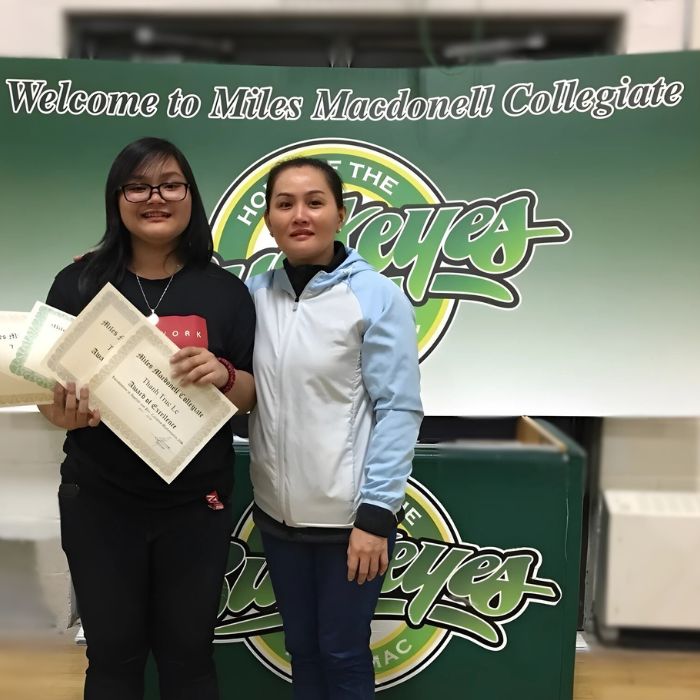
Lê Thanh Trúc, Student at Miles Macdonell Collegiate
“My family and I are deeply grateful to SIEC for not only securing my **Canada high school student visa** in Grade 10 but also for assisting my parents and siblings in obtaining their **visitor visas**. That was an invaluable gift.” — Lê Thanh Trúc, Student at **Miles Macdonell Collegiate** Secure Your Early High School (Secondary) […]
Phan Thị Ngọc Huỳnh, Former Student in Winnipeg
“The solid foundation provided by SIEC and Ms. Huong not only helped me realize my study abroad dream but also gave me the confidence to graduate, secure a stable job, and **settle permanently in Canada**.” — Phan Thị Ngọc Huỳnh, Former Student, currently working in **Winnipeg, Canada** Explore Your Study & Immigration Pathway in Canada […]
Hoàng Giang, Student at Edmonds College
“With her dedication and passion, Ms. Huong helped launch my **American dream**, opening up a vast world of opportunity and the chance to meet new friends.” — Hoàng Giang, Student at **Edmonds College** Explore More About Studying in the USA Spotlight on Edmonds College (Washington State) Gain in-depth knowledge about the programs, tuition fees, and […]
Khánh Lê, Student at LaSalle College
“Thank you to Ms. Huong and the SIEC team for their dedicated partnership and support, from my application phase until I was settled in Canada, helping me confidently pursue my dreams.” — Khánh Lê, Student at **LaSalle College** Explore Further Canada Study Opportunities Spotlight on LaSalle College Gain deeper insights into the programs, tuition fees, […]
Quỳnh Giao, Student at Red River Colleg
“She didn’t just stop at completing the application; she was an inspiration, a true motivator…” — Quỳnh Giao, Student at **Red River College** Continue Your Canada Study Abroad Journey Spotlight on Red River College Polytechnic (RRC Polytech) Discover the high-demand, **applied learning programs** at **Red River College** – one of the premier post-secondary institutions in […]