Study Canada vs USA: Which Country Is Better for Students?
29/05/2026 Phong Nguyen
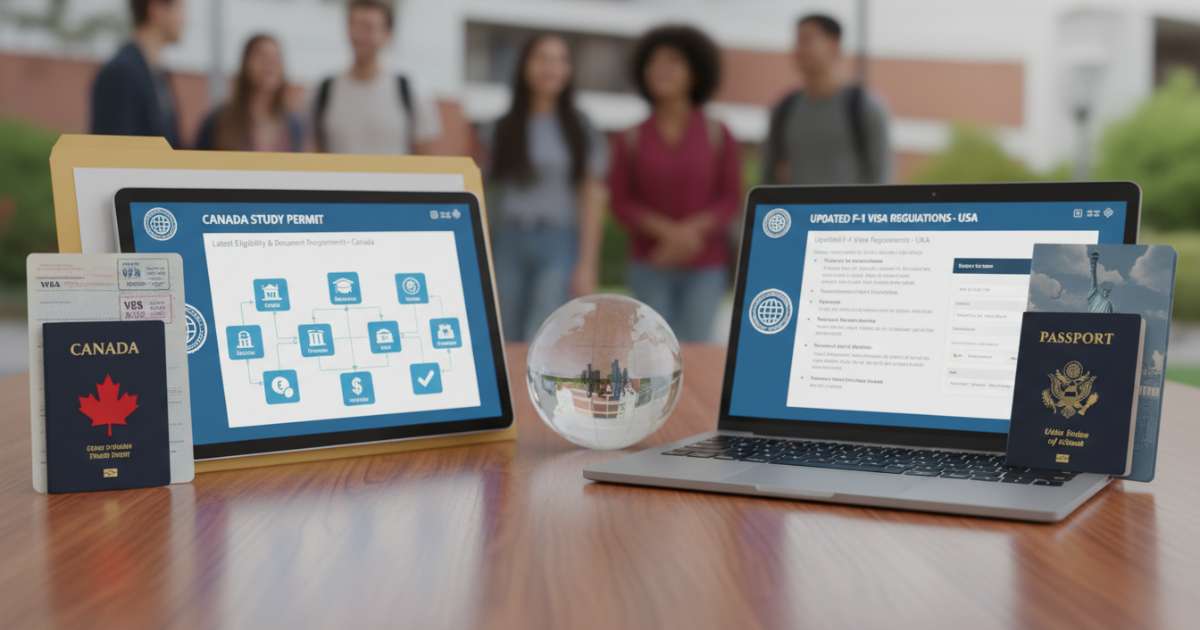
The decision of whether to **Study Canada vs USA** has always been a challenging puzzle for many families and students as we head into 2026 and 2027. Both nations possess world-leading education systems; however, their pathways and immigration policies are undergoing distinct changes. While the US maintains its appeal through prestigious universities and a vibrant job market, Canada is transforming significantly by tightening general immigration and focusing intensely on priority occupational sectors.
This article will provide a detailed analysis of various aspects to help you decide whether to **Study Canada vs USA** to best suit your financial capacity and long-term career goals.
1. General Overview: Study Canada vs USA in the 2026-2027 Period
When considering whether to **Study Canada vs USA**, students need to look at the differences in their ultimate objectives. The US is an ideal destination for those wishing to access a peak academic environment and work at multinational corporations with attractive salaries. However, opportunities for permanent residency in the US after graduation are often more difficult due to highly competitive work visa and Green Card policies.
In contrast, Canada is applying a clearer roadmap for international students, especially those studying in sectors where the country is facing severe labor shortages.
In the 2026-2027 period, Canada no longer encourages immigration based on general degrees. Instead, the government prioritizes applicants with specialized skills in specific fields. If you intend to stay, work, and settle long-term, choosing to study in Canada or the US will depend on whether you are ready to pursue priority occupations.
The US remains a land of great opportunities, but Canada offers more stability and an easier path to becoming a permanent resident for the engineering and healthcare sectors.
Regarding costs, Canada typically has lower tuition and living expenses compared to major cities in the US. However, with Canada’s new financial regulations applied from 2024 and maintained through 2027, this gap is gradually narrowing. Students need to prepare more robust financial resources to meet the strict requirements from the immigration departments of both countries when deciding to study in Canada or the US.
2. Application Requirements and Latest Study Permit Regulations
To answer the question of whether it is easier to study in Canada or the US in terms of procedures, we need to examine the regulations for Study Permits and Visas. In the US, the F-1 Visa application process still focuses on a face-to-face interview at the Embassy or Consulate. Students must prove their intention to return home after finishing their studies, even though many still find ways to stay and work through the OPT program.
Academic records and English proficiency are prerequisites for receiving an I-20 from schools in the US.
For Canada, the Study Permit issuance process has seen many important changes. Since 2024, most students attending college and undergraduate programs must have a Provincial Attestation Letter (PAL) alongside their letter of acceptance from the school. This aims to control the number of international students and ensure educational quality.
When choosing to study in Canada or the US, you should note that Canadian applications lean towards proving transparent finances and a study plan tied to the actual labor needs of that specific province.
Language requirements are also a point to consider. US schools often require TOEFL or IELTS with high scores, along with standardized tests like the SAT or ACT for undergraduate levels. In Canada, IELTS Academic or PTE Academic are the most common certificates.
For those wondering whether to study in Canada or the US, preparing a strong academic profile and excellent language skills will increase the success rate of obtaining a study permit in both countries.
2.1. Financial Requirements for Studying in Canada in 2027
One of the biggest changes affecting the decision to study in Canada or the US is the level of financial proof. Canada has significantly increased the living cost requirement in bank accounts. International students now need to prove they have approximately over 20,000 CAD for one year of living, excluding tuition fees.
This figure is predicted to continue adjusting according to the inflation index in 2026 and 2027. The increase in financial requirements aims to ensure students can afford their lives without being overly dependent on part-time work.
2.2. 24-Hour Weekly Work Regulation for International Students
Part-time work policies are also an important factor when you **Study Canada vs USA**. In the US, international students are generally only allowed to work on-campus for a maximum of 20 hours per week during the semester. Off-campus work is only permitted in special cases and must be approved by immigration authorities.
This limits the ability of students to earn extra income and gain practical experience.
Conversely, Canada has officially applied a new regulation allowing international students to work off-campus for up to 24 hours per week during study terms. During holidays or summer breaks, students can still work full-time. The 24-hour weekly rule helps students balance study and work while accumulating work experience in a local environment.
This is a major advantage for those choosing between Canada or the US but still wanting extra income to support living costs.
3. Priority Sectors for Immigration in Canada Instead of General Immigration
The 2026-2027 period marks a significant shift in Canada’s immigration policy. Instead of being open to all fields, Canada is now focusing on attracting talent in sectors with labor shortages. If your goal is immigration, your choice to study in Canada or the US must be linked to choosing a major in a priority group.
Below are the three main sectors where Canada is rolling out the red carpet for talent.
3.1. Healthcare and Medical Care Sector
The aging population in Canada creates a huge demand for healthcare workers. Fields such as Nursing, Medical Assistants, Laboratory Technology, and Elderly Care are at the top of the priority list. Graduates in these fields almost find jobs immediately and receive maximum support in the Permanent Residency (PR) application process.
When you weigh the options to **Study Canada vs USA**, the Healthcare sector in Canada provides a much higher guarantee for a future of residency compared to business or arts majors.
3.2. STEM Sector (Science, Technology, Engineering, and Mathematics)
The STEM group is always a strength of both the US and Canada. However, in the US, STEM students get a 24-month OPT extension but still face the risk of not winning the H-1B Visa lottery. Meanwhile, Canada has specialized immigration programs for tech talent and engineers.
Experts in Information Technology, Software Engineering, Data Analysis, and Mechanical Engineering are always welcome. If you have a talent for natural sciences and are wondering whether to study in Canada or the US, Canada provides a sustainable residency path through Express Entry draws specifically for the STEM group.
3.3. Construction and Skilled Trades Sector
Canada is facing a housing crisis, leading to a massive demand for skilled workers in the Construction field. Trades such as Electrical, Welding, Carpentry, Construction Management, and HVAC installation are severely understaffed. Unlike the US, where these jobs are often for local unskilled labor, Canada encourages international students to study and work in construction with very high salaries.
This is a pragmatic and effective direction for those who want to stabilize their lives quickly when choosing to study in Canada or the US in 2027.
4. Roadmap from Studying to Employment and Residency in Canada 2027
To achieve the goal of residency, students need a clear study and work roadmap. First is choosing a school and program on the list of Designated Learning Institutions (DLI) that qualify for a Post-Graduation Work Permit (PGWP). When deciding to study in Canada or the US, you should know that the PGWP in Canada allows you to stay and work for up to 3 years after graduation without needing an immediate company sponsor.
This is much more flexible than the OPT system in the US.
During the PGWP period, students need to accumulate at least one year of professional work experience in priority sectors such as Healthcare, STEM, or Construction. Canadian work experience is the key factor in increasing points in the Comprehensive Ranking System (CRS) of Express Entry. Additionally, Provincial Nominee Programs (PNP) are also an effective direction, especially in provinces hungry for technical labor.
Identifying this roadmap right from the beginning will help you answer the question of whether to **Study Canada vs USA** most convincingly.
By 2027, residency regulations may require higher levels of language proficiency and local integration. Therefore, students should not only focus on academic studies but also actively participate in the community and improve their English or French skills. Thorough preparation in all aspects will help the transition from an international student to a permanent resident go smoothly.
Choosing to study in Canada or the US is not just about choosing a place to learn, but choosing a place to build a long-term career.
5. How to Choose Majors and Schools when Deciding Between Canada or the US
Choosing a major and a school should be based on three main factors: personal ability, financial capacity, and residency goals. If you have excellent academic ability and abundant finances, top universities in the US will provide great prestige and an international networking web. However, if you prioritize security and the opportunity to stay and work long-term, colleges or universities in Canada with practical training programs in priority sectors will be a wiser choice.
When you compare whether to study in Canada or the US, carefully review the list of occupations in demand in each country.
In Canada, you should prioritize schools located in areas with favorable provincial residency policies like Saskatchewan, Manitoba, or the Atlantic provinces if you pursue Construction or Healthcare. For the STEM group, major cities like Toronto, Vancouver, or Waterloo remain top technology hubs. Choosing the right school and the right major will help you optimize your residency points and minimize risks after graduation.
The decision of whether to **Study Canada vs USA** needs to be made after carefully researching the actual labor market of each region.
Don’t forget to consult with education experts to update yourself on the latest changes in visa and residency policies of both countries. In a volatile world, accurate and timely information is the key for you to make the right choice between studying in Canada or the US for your 2026-2027 study journey.
The journey to conquer your study and residency dreams requires serious preparation and a smart strategy. Whether you choose to study in Canada or the US, always persevere with your goals and constantly improve your personal value. Canada, with its policy focusing on priority sectors, is opening a wide door for those who know how to seize the opportunity.
Start planning today to turn your dreams into reality in the near future.
To get the most accurate look at your personal profile and your chances of success, speaking directly with experienced experts is essential. We are ready to help you analyze in detail the advantages and challenges when choosing to study in Canada or the US, thereby building the most perfect personalized roadmap.
Don’t miss the chance to update the latest information on skilled worker residency policies and attractive scholarship programs in Canada and the US. Let us accompany you on the path to creating a future in the world’s leading developed countries.
Contact our professional advisory team immediately for support in assessing your profile and answering all questions about whether to study in Canada or the US in the 2026-2027 period. We are committed to providing the most transparent, accurate, and dedicated information for your journey.
Assess your potential for Canada 2027 residency now so as not to miss out on residency spots reserved for priority sectors. This is the golden time for you to prepare for a new, stable, and prosperous life in the land of the maple leaf.
Are You Ready to Breakthrough Your Global Career with SIEC?
Don’t let your prestigious degree just sit on paper. Let SIEC experts advise you on a study abroad roadmap combined with a job-oriented strategy starting today!
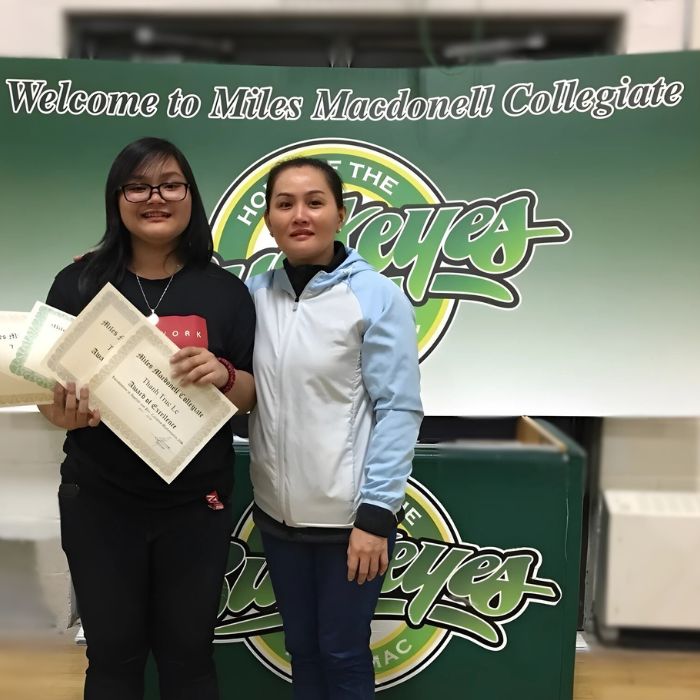
Lê Thanh Trúc, Student at Miles Macdonell Collegiate
“My family and I are deeply grateful to SIEC for not only securing my **Canada high school student visa** in Grade 10 but also for assisting my parents and siblings in obtaining their **visitor visas**. That was an invaluable gift.” — Lê Thanh Trúc, Student at **Miles Macdonell Collegiate** Secure Your Early High School (Secondary) […]
Phan Thị Ngọc Huỳnh, Former Student in Winnipeg
“The solid foundation provided by SIEC and Ms. Huong not only helped me realize my study abroad dream but also gave me the confidence to graduate, secure a stable job, and **settle permanently in Canada**.” — Phan Thị Ngọc Huỳnh, Former Student, currently working in **Winnipeg, Canada** Explore Your Study & Immigration Pathway in Canada […]
Hoàng Giang, Student at Edmonds College
“With her dedication and passion, Ms. Huong helped launch my **American dream**, opening up a vast world of opportunity and the chance to meet new friends.” — Hoàng Giang, Student at **Edmonds College** Explore More About Studying in the USA Spotlight on Edmonds College (Washington State) Gain in-depth knowledge about the programs, tuition fees, and […]
Khánh Lê, Student at LaSalle College
“Thank you to Ms. Huong and the SIEC team for their dedicated partnership and support, from my application phase until I was settled in Canada, helping me confidently pursue my dreams.” — Khánh Lê, Student at **LaSalle College** Explore Further Canada Study Opportunities Spotlight on LaSalle College Gain deeper insights into the programs, tuition fees, […]
Quỳnh Giao, Student at Red River Colleg
“She didn’t just stop at completing the application; she was an inspiration, a true motivator…” — Quỳnh Giao, Student at **Red River College** Continue Your Canada Study Abroad Journey Spotlight on Red River College Polytechnic (RRC Polytech) Discover the high-demand, **applied learning programs** at **Red River College** – one of the premier post-secondary institutions in […]