Languages spoken in Canada for Study and Immigration 2026
27/05/2026 Phong Nguyen
Canada has always been an attractive destination for international students thanks to its top-tier education quality and open immigration policies. However, before beginning this journey, the question of what the **languages spoken in Canada** are is often the first concern for most students and parents. Understanding the **languages spoken in Canada** not only helps you integrate better but is also a decisive factor in your ability to find employment and achieve permanent residency during the 2026-2027 period. What language is spoken when studying in Canada is the foundation of your success.
1. What language is spoken in Canada and the linguistic reality across provinces
To answer the question regarding what language is spoken when studying in Canada, we need to understand that Canada is an officially bilingual country with two main languages: English and French. However, the prevalence of these **languages spoken in Canada** varies significantly depending on the territory and province. Most provinces, such as Ontario, British Columbia, Alberta, and Manitoba, primarily use English as the main language for communication in daily life and academia.
Meanwhile, Quebec is the only province where French is the official and mandatory language for most administrative activities.
For international students, the issue of which language to use usually leans toward English, as most high-quality training programs are taught in this language. However, if you intend to settle in Quebec, proficiency in French will be an extremely large advantage. In the 2026-2027 period, the Canadian government continues to maintain policies that encourage immigrants who know both languages, but English still plays the leading role in priority occupations nationwide.
Identifying the **languages spoken in Canada** also helps you mentally prepare for a multicultural environment. In major cities like Toronto or Vancouver, you will hear many different languages from immigrant communities, but English remains the most important connecting tool. Therefore, focusing on practicing English communication skills is the smartest move for your study abroad roadmap.
2. What language to learn for studying in Canada to optimize 2027 immigration prospects
Once you know the **languages spoken in Canada**, the next issue to consider is what language to learn for studying in Canada to meet admission and immigration requirements. Currently, universities and colleges in Canada accept various international English certificates. The most popular are IELTS Academic, PTE Academic, and TOEFL iBT.
Among them, the PTE certificate is increasingly favored due to its objectivity and fast results, making it suitable for those who need to submit their applications urgently.
The question of what language to learn also depends on your immigration goals. If you are aiming for skilled worker immigration programs or priority occupations such as Healthcare, STEM, and Construction, you need to achieve a minimum language score according to the Canadian Language Benchmarks (CLB). Typically, CLB level 7 (equivalent to IELTS 6.0 with no skill below 6.0) is the basic requirement to compete in immigration invitation rounds by Immigration, Refugees and Citizenship Canada (IRCC).
Additionally, when researching what to learn, you should not overlook specialized English courses. Especially in fields like Healthcare or Construction, mastering professional terminology in English will help you pass professional certification exams in Canada more easily. Thorough language preparation while still in your home country will save you significant time and costs when you arrive in Canada.
3. Application requirements and Study Permit changes for 2026-2027
Besides identifying the **languages spoken in Canada**, students need to update themselves on important changes in Study Permit regulations. Since 2024, the Canadian government has applied new quotas for the number of study permits issued and requires a Provincial Attestation Letter (PAL) for most levels below graduate studies. This means the application process has become stricter and more competitive than before.
To complete your study abroad profile, in addition to proving language proficiency, you need to prepare full academic documents such as transcripts, diplomas, and a Letter of Acceptance from a Designated Learning Institution (DLI). IRCC also pays special attention to the student’s Study Plan. You need to clearly explain the reasons for choosing your major and school, and commit to returning home after completing the course, although Canada always has pathways to transition to permanent residency for those who qualify.
A clear understanding of the linguistic environment also supports you during interviews or when explaining your profile to the consulate. Confidence in communication and flexible language use are the best evidence of your academic capacity. In the 2026-2027 period, applications for priority sectors like STEM or Healthcare are often viewed more positively due to the very high demand for labor in Canada.
4. New financial requirements and the 24-hour weekly work regulation
One of the biggest changes that international students need to note, alongside the **languages spoken in Canada**, is the financial requirement. Starting from 2024, the financial proof for living expenses has increased significantly, reaching 20,635 CAD per individual (excluding tuition fees). This figure reflects the actual cost of living in Canada and ensures students have enough financial resources to focus on their studies without excessive economic pressure.
Regarding part-time work, the Canadian government has officially applied a new regulation allowing international students to work a maximum of 24 hours per week during the semester and full-time during breaks. This is a reasonable adjustment that helps students earn extra income while still ensuring academic results. When working part-time, you will clearly see the importance of your language skills, as good communication will help you find jobs with higher pay and more professional working environments.
Effective financial management and compliance with the 24-hour weekly work rule are key factors in maintaining the legal status of your Study Permit. You should not violate the work hour regulations due to the pressure of earning money, as this can directly affect your ability to apply for a Post-Graduation Work Permit (PGWP) and your long-term immigration path later on.
5. Focus on studying and immigrating via priority occupations instead of general ones
Instead of choosing general majors that are saturated with labor, a smart roadmap for the 2026-2027 period is to focus on priority industry groups. When researching the **languages spoken in Canada**, you should also know that language is just a tool, while professional knowledge in key areas is the key to immigration. Canada is currently prioritizing three main sectors: Healthcare, STEM (Science, Technology, Engineering, Mathematics), and Construction.
5.1. Healthcare Sector
The demand for healthcare workers in Canada has never cooled down due to an aging population. Jobs such as nursing, personal care assistants, and laboratory technicians are always at the top of the priority list. If you choose this field, your language preparation should focus on medical English certificates to communicate effectively with patients and colleagues.
5.2. STEM Sector
With the rapid development of technology, experts in software, cybersecurity, artificial intelligence, and civil engineering are highly sought after. Immigration programs through the Express Entry system often have separate category-based selection rounds for STEM candidates. This is the shortest and most certain path to receiving a Permanent Resident (PR) card if you have good professional capacity and fluent English skills.
5.3. Construction Sector
Canada is facing a housing crisis, leading to a massive demand for labor in the construction industry. Occupations such as carpenters, electricians, welders, and construction project managers are being encouraged by the government for immigration. When studying these fields, you are not only trained in techniques but also learn how to work in a multicultural environment, where knowing the common languages will help you coordinate well with teams on-site.
6. How to choose a major and school suitable for your ability and immigration goals
To choose the right major and school, you need to start by evaluating your own abilities and career interests. Don’t just follow trends; consider whether you have enough perseverance to pursue difficult fields like Healthcare or STEM. Once you have identified your major, look for colleges or universities on the DLI list that offer Co-op programs (work-integrated learning).
The location of study plays a role as important as knowing the **languages spoken in Canada**. Provinces like Saskatchewan, Manitoba, or the Atlantic provinces often have easier Provincial Nominee Programs (PNP) compared to Ontario or British Columbia. Studying in these regions can help you gain additional priority points in your immigration profile after graduation.
Research the labor market in each area thoroughly to ensure that the major you study has a high recruitment demand there.
Additionally, pay attention to the training quality and facilities of the school. A reputable institution not only provides knowledge but also helps you build a professional network. During your studies, take every opportunity to practice the language and immerse yourself in the local culture through group discussions or internships at enterprises.
7. Roadmap from study to employment and Canadian immigration 2027
The typical roadmap for an international student wishing to settle in Canada begins with completing a study program of at least 2 years to receive a 3-year PGWP. During this time, you need to find a job in the appropriate occupational groups (TEER 0, 1, 2, 3) and accumulate at least 1 year of work experience in Canada. This is the most important stage for you to prove your capacity and integration into Canadian society.
Once you have enough work experience and meet the language requirements, you can apply for the Express Entry system or provincial nomination programs. With the trend of immigration by priority occupation, if you work in Healthcare, STEM, or Construction, your chances of receiving an Invitation to Apply (ITA) for permanent residency will be much higher than in other occupations. The Canadian government is committed to facilitating skilled workers in these fields to boost the national economy.
By 2027, immigration standards may become stricter regarding professional qualifications and language proficiency. Therefore, constantly improving your professional skills and maintaining your English performance is mandatory. Always stay updated with the latest information from IRCC and prepare backup plans to ensure your immigration journey goes smoothly and successfully.
The journey of studying and settling in Canada is a promising path but not without challenges. Thorough preparation, from understanding the **languages spoken in Canada** to choosing priority occupations, will be a solid foundation for your future. Don’t let policy changes discourage you; instead, turn them into opportunities by preparing an impressive competency profile.
If you are still wondering about what to learn or need a detailed immigration roadmap for yourself, seek out reputable consulting units. Support from experts will help you save time, optimize costs, and most importantly, increase the success rate of your Canadian dream.
Start preparing for your journey today to timely seize the golden opportunities in the 2026-2027 period. Canada always welcomes talented, enthusiastic, and well-prepared individuals to contribute to the sustainable development of the nation.
Are you nurturing a dream of studying and building a career in the land of the maple leaf but don’t know where to start? Don’t let questions about language or new immigration regulations become a barrier to your future.
Contact SIEC now for in-depth advice on study-to-immigration roadmaps in priority sectors. Our team of experts will help you answer questions about the **languages spoken in Canada** in detail and build the most optimal profile strategy for 2027.
Assess your Canada 2027 immigration potential today to receive a completely free personalized roadmap!
Are You Ready to Breakthrough Your Global Career with SIEC?
Don’t let your prestigious degree just sit on paper. Let SIEC experts advise you on a study abroad roadmap combined with a career orientation strategy starting today!
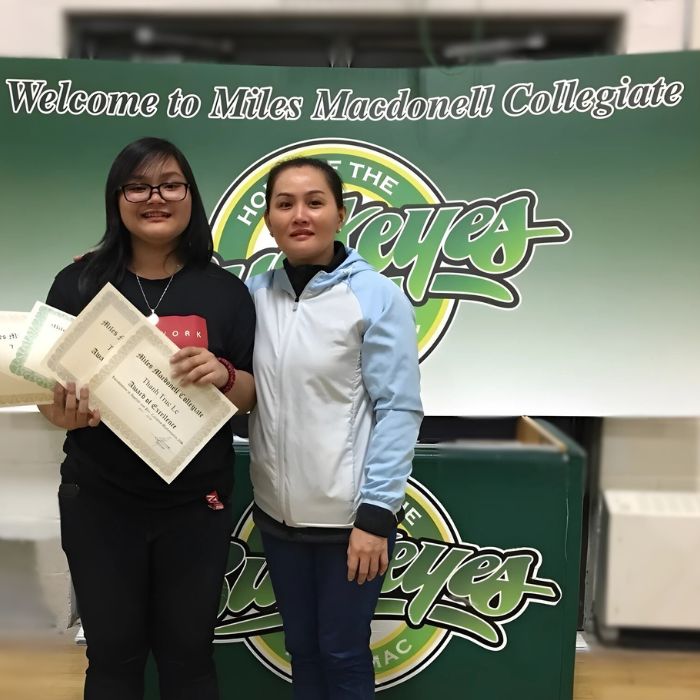
Lê Thanh Trúc, Student at Miles Macdonell Collegiate
“My family and I are deeply grateful to SIEC for not only securing my **Canada high school student visa** in Grade 10 but also for assisting my parents and siblings in obtaining their **visitor visas**. That was an invaluable gift.” — Lê Thanh Trúc, Student at **Miles Macdonell Collegiate** Secure Your Early High School (Secondary) […]
Phan Thị Ngọc Huỳnh, Former Student in Winnipeg
“The solid foundation provided by SIEC and Ms. Huong not only helped me realize my study abroad dream but also gave me the confidence to graduate, secure a stable job, and **settle permanently in Canada**.” — Phan Thị Ngọc Huỳnh, Former Student, currently working in **Winnipeg, Canada** Explore Your Study & Immigration Pathway in Canada […]
Hoàng Giang, Student at Edmonds College
“With her dedication and passion, Ms. Huong helped launch my **American dream**, opening up a vast world of opportunity and the chance to meet new friends.” — Hoàng Giang, Student at **Edmonds College** Explore More About Studying in the USA Spotlight on Edmonds College (Washington State) Gain in-depth knowledge about the programs, tuition fees, and […]
Khánh Lê, Student at LaSalle College
“Thank you to Ms. Huong and the SIEC team for their dedicated partnership and support, from my application phase until I was settled in Canada, helping me confidently pursue my dreams.” — Khánh Lê, Student at **LaSalle College** Explore Further Canada Study Opportunities Spotlight on LaSalle College Gain deeper insights into the programs, tuition fees, […]
Quỳnh Giao, Student at Red River Colleg
“She didn’t just stop at completing the application; she was an inspiration, a true motivator…” — Quỳnh Giao, Student at **Red River College** Continue Your Canada Study Abroad Journey Spotlight on Red River College Polytechnic (RRC Polytech) Discover the high-demand, **applied learning programs** at **Red River College** – one of the premier post-secondary institutions in […]