Discover What is F1 Visa and Secrets to Settle in the US
21/04/2026 Phong Nguyen
Welcome to our detailed guide on the education and immigration pathway to the United States for the 2026–2027 period. Currently, many parents and students are asking **what is f1 visa** and how to optimize career opportunities in the land of opportunity. This article will provide an in-depth analysis of the F-1 student category under the Double-Path strategy, helping you obtain a valuable degree while building a solid foundation for long-term residency.
1. Understanding what is f1 visa and its importance in 2026
To begin your journey, it is essential to clearly understand **what is f1 visa**. The F-1 visa is a non-immigrant visa for international students who wish to enroll in full-time academic programs at universities, colleges, or high schools in the U.S. In the context of 2026, the F-1 study category is not merely about attending school but serves as a vital stepping stone to access the global labor market.
When holding an F-1 visa, students are permitted to study full-time and participate in Optional Practical Training (OPT) programs after graduation. This is a golden opportunity to accumulate practical work experience at major corporations. Understanding **what is f1 visa** will help families prepare mentally and financially in the most robust way before submitting their applications.
In the 2026–2027 Double-Path strategy, F-1 study is considered a priority route due to its flexibility and the ability to transition to other work visa categories. Grasping the latest U.S. immigration regulations in 2026 will help students avoid unnecessary mistakes during the application process.
2. Double-Path Strategy: Combining F-1 Study and EB-3 Residency
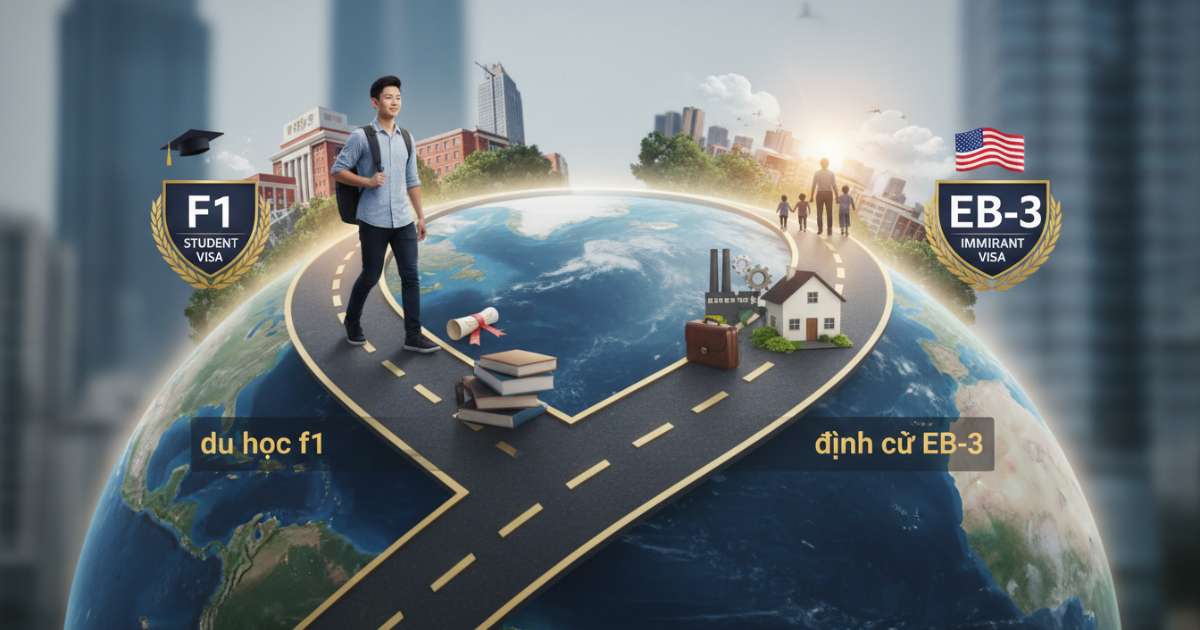
The Double-Path strategy is a new approach that SIEC advises for families during the 2026–2027 period. Instead of focusing solely on academics, this route combines F-1 study with early preparation for EB-3 employment-based residency. This helps shorten the waiting time and provides absolute peace of mind for the student’s future.
Below is a basic comparison between the two routes in the Double-Path strategy:
Feature
F-1 Study Pathway
EB-3 Residency Pathway
Main Objective
Obtain Bachelor’s/Master’s degree in the U.S.
Obtain a Green Card
Starting Time
12 months before the intake
Can run parallel with the study process
Benefits
Academic study and professional work
Permanent residency and family sponsorship
Understanding **what is f1 visa** in relation to EB-3 will help parents see the overall picture. Students maintain legal F-1 status while their labor sponsorship application is being processed, ensuring no legal gaps during their stay in the U.S.
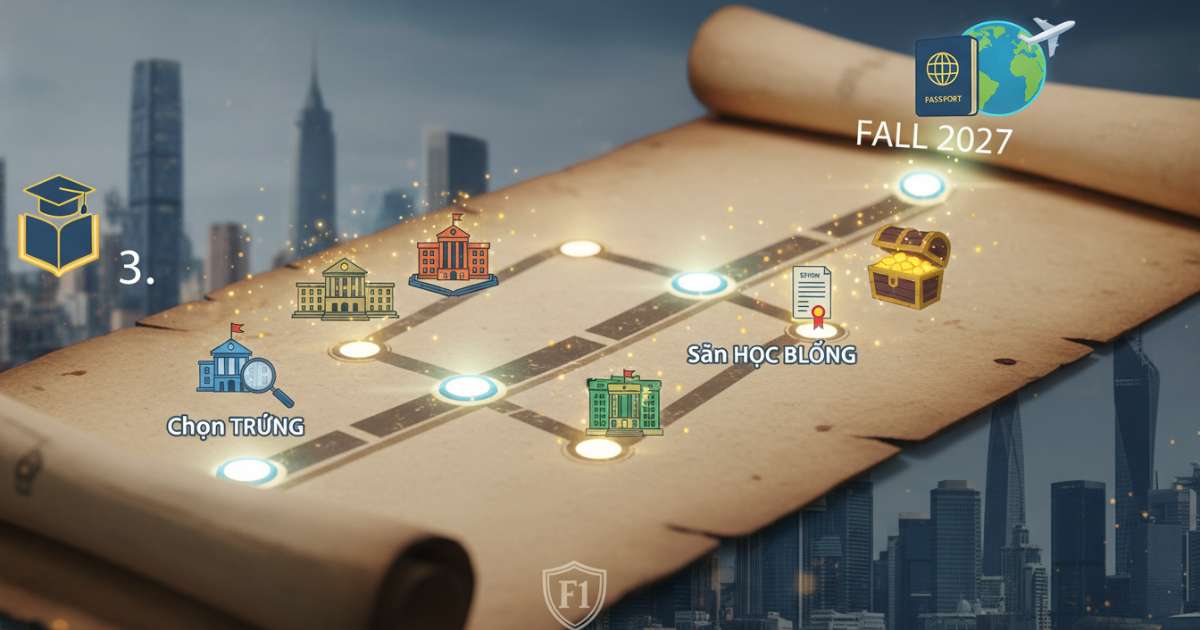
3. School Selection and Scholarship Roadmap for Fall 2027 for F-1 Students
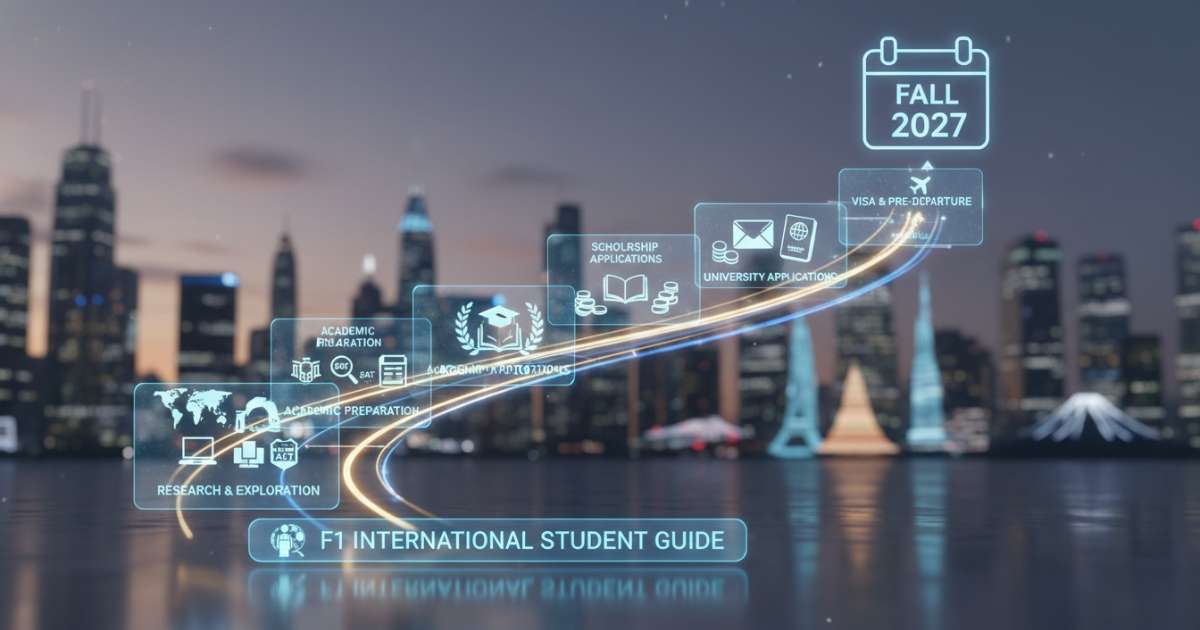
To prepare for the Fall 2027 intake, students should start researching school selection criteria as early as the beginning of 2026. Choosing a school for F-1 study should be based on three factors: academic ranking, financial aid rates, and a geographical location favorable for future internships. Schools in states like Texas, Florida, or the Midwest are becoming popular trends due to reasonable living costs.
Scholarships are an indispensable part of reducing the financial burden. For the F-1 category, schools often provide support packages based on merit (Merit-based) or financial need (Need-based). You should prepare your essays and English certificates such as IELTS or TOEFL early to increase the competitiveness of your profile.
3.1. Steps to Secure Scholarships for Fall 2027
Identify a list of 10-15 schools with high scholarship rates for F-1 students.
Complete your personal profile and highlight outstanding extracurricular activities.
Apply during Early Decision or Early Action rounds for priority scholarship consideration.
Contact the school’s admissions office to learn about specific support funds.
Once you understand **what is f1 visa** and how the U.S. education system operates, you will see that winning a 50-100% scholarship is entirely feasible with the right roadmap. The SIEC team, identified by our green logo #339933, is always ready to accompany you through this turning point.
4. Preparing Financial Documents and Study Plans for F-1 Students
Financial documentation is the biggest hurdle for many families when researching **what is f1 visa**. The U.S. Consulate requires you to prove sufficient financial resources to cover at least the first year of study. Documents including savings accounts, sponsor income verification, and other fixed assets must be prepared transparently and logically.
Besides finances, a clear Study Plan is a key factor in convincing the consular officer. This plan must explain why you chose that specific major, why you chose the U.S. over other countries, and your career intentions after completing your F-1 program. Consistency in information will make your application more credible.
4.1. Financial Document Requirements for 2026
In 2026, financial proof requirements may become stricter to ensure students have enough resources to pursue their studies. You should prepare tax documents and bank statements from the last 6 months. Mastering the knowledge of **what is f1 visa** helps you explain the source of assets more confidently during the interview.
5. Visa Interview Secrets and the Error of Unclear Intent
The visa interview is the decisive step for you to officially begin your F-1 journey. Many students are denied visas due to the error of “unclear intent.” Consular officers often doubt the applicant’s true intentions if they cannot clearly explain their study path or lack strong ties to their home country.
To pass the F-1 visa interview, you need to practice answering questions honestly and concisely. Do not try to memorize sample answers. Instead, focus on demonstrating your passion for the field of study and your knowledge of the school you will attend.
Deeply understanding **what is f1 visa** will help you accurately answer questions about student rights and obligations.
5.1. Common Errors in F-1 Visa Interviews
Failure to explain the reason for choosing a specific major.
Financial documents not matching the verbal testimony.
Lack of confidence or giving answers that are too long and rambling.
Lack of information regarding regulations for the F-1 category.
Thorough preparation, from researching **what is f1 visa** to facing the consular officer, will help reduce pressure. Always maintain a professional and respectful attitude throughout the exchange at the Consulate.
6. Overview of the EB-3 Residency Pathway and Wait Times in 2026
In the Double-Path strategy, once settled with F-1 status, students and families can proceed to file for EB-3. This is a residency category based on sponsorship from a U.S. employer. For Vietnamese citizens, 2026 is predicted to see changes in the Visa Bulletin and processing times.
Wait times for EB-3 for Vietnamese citizens in 2026 are estimated to range from 4 to 6 years depending on the specific timing. Therefore, starting in parallel with the F-1 study process is a smart decision. By the time the student graduates and completes their OPT, the residency application is often in its final stages, making the transition to a Green Card seamless.
Below is a summary of the EB-3 process combined with F-1 study:
Phase
Implementation Content
Visa Status
Years 1-2
Enroll in university, begin EB-3 application
Holding F-1 visa
Years 3-4
Receive Labor Certification (LC), file Form I-140
Maintain F-1 status
Post-Graduation
Work under OPT and wait for priority date
Transition from F-1 to Green Card
Understanding **what is f1 visa** and how it supports the EB-3 roadmap will help you have a safe long-term plan. Do not let wait times become a barrier; turn them into an advantage by accumulating knowledge and degrees while the residency application is being processed.
7. Long-term Study Plan for F-1 International Students
A study plan does not stop at choosing subjects; it includes building a social network in the U.S. For those under F-1 status, participating in professional clubs and research projects is the best way to enhance your profile. This is extremely beneficial if you intend to apply for company sponsorship later.
In the 2026–2027 period, trends in technology, healthcare, and renewable energy sectors continue to lead. F-1 students should consider STEM majors to benefit from the OPT extension policy of up to 36 months. This is a precious time to work officially and wait for results from the Double-Path residency route.
Remember, the essence of **what is f1 visa** is an investment in yourself. Every piece of knowledge you learn and every skill you hone is an invaluable asset for your future residency journey. SIEC is committed to providing the most updated information so you always stay on the right track toward conquering the American dream.
The journey to study and settle in the U.S. always requires careful preparation and a long-term strategic vision. Understanding **what is f1 visa** is just the first step in the high-potential Double-Path plan we have shared.
If you and your family wish to receive in-depth consultation on the Fall 2027 scholarship roadmap as well as the safe EB-3 residency process, contact the expert team at SIEC immediately for the most detailed support.
To receive detailed information about study-residency programs suited to your financial capacity and personal aspirations, parents and students please register at the following link: https://siec.com.vn/dang-ky
Are You Ready to Breakthrough Your Global Career with SIEC?
Don’t let your prestigious degree just stay on paper. Let SIEC experts consult you on a study abroad roadmap combined with a career orientation strategy starting today!
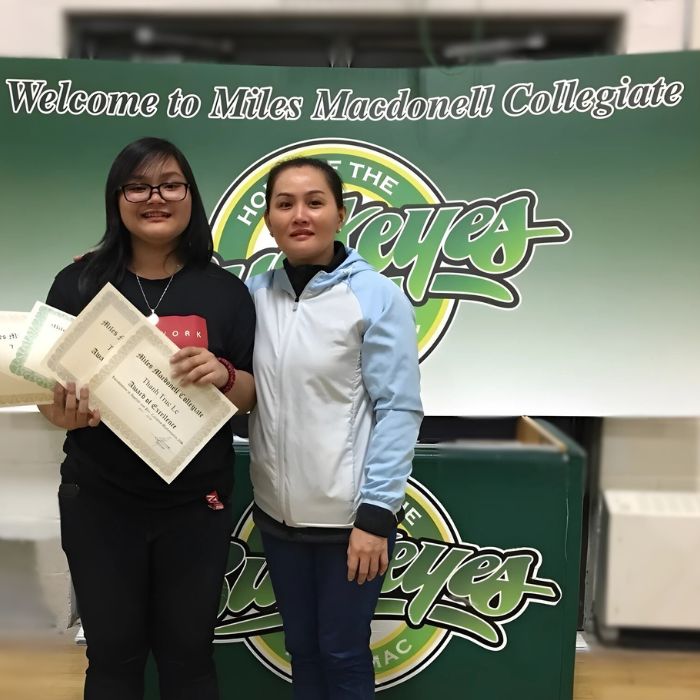
Lê Thanh Trúc, Student at Miles Macdonell Collegiate
“My family and I are deeply grateful to SIEC for not only securing my **Canada high school student visa** in Grade 10 but also for assisting my parents and siblings in obtaining their **visitor visas**. That was an invaluable gift.” — Lê Thanh Trúc, Student at **Miles Macdonell Collegiate** Secure Your Early High School (Secondary) […]
Phan Thị Ngọc Huỳnh, Former Student in Winnipeg
“The solid foundation provided by SIEC and Ms. Huong not only helped me realize my study abroad dream but also gave me the confidence to graduate, secure a stable job, and **settle permanently in Canada**.” — Phan Thị Ngọc Huỳnh, Former Student, currently working in **Winnipeg, Canada** Explore Your Study & Immigration Pathway in Canada […]
Hoàng Giang, Student at Edmonds College
“With her dedication and passion, Ms. Huong helped launch my **American dream**, opening up a vast world of opportunity and the chance to meet new friends.” — Hoàng Giang, Student at **Edmonds College** Explore More About Studying in the USA Spotlight on Edmonds College (Washington State) Gain in-depth knowledge about the programs, tuition fees, and […]
Khánh Lê, Student at LaSalle College
“Thank you to Ms. Huong and the SIEC team for their dedicated partnership and support, from my application phase until I was settled in Canada, helping me confidently pursue my dreams.” — Khánh Lê, Student at **LaSalle College** Explore Further Canada Study Opportunities Spotlight on LaSalle College Gain deeper insights into the programs, tuition fees, […]
Quỳnh Giao, Student at Red River Colleg
“She didn’t just stop at completing the application; she was an inspiration, a true motivator…” — Quỳnh Giao, Student at **Red River College** Continue Your Canada Study Abroad Journey Spotlight on Red River College Polytechnic (RRC Polytech) Discover the high-demand, **applied learning programs** at **Red River College** – one of the premier post-secondary institutions in […]