Comprehensive Study in Canada reviews for Priority Majors
30/04/2026 Phong Nguyen
The journey to seek study and work opportunities in the Land of the Maple Leaf during the 2026-2027 period is undergoing pivotal changes. The latest Study in Canada reviews show that the government is tightening regulations on the number of international students while opening doors for individuals pursuing professions facing severe labor shortages. Instead of general immigration goals as in previous years, the current strategy focuses heavily on priority sectors including Healthcare, STEM, and Construction to ensure sustainable economic development.
1. Study in Canada reviews regarding application requirements and Study Permit 2026
To prepare a complete application in 2026, students should pay special attention to the new Provincial Attestation Letter (PAL) regulations. This is a mandatory document for most levels of study except for Master’s and PhD programs. A thorough review of the application process will help you avoid unnecessary errors that could cause delays or rejections.
Basic academic requirements still require students to graduate from high school with a grade point average of 6.5 or higher. However, for priority sectors like Healthcare or STEM, competitive scores usually fall between 7.5 and 8.5. Language proficiency remains a key factor, with a minimum IELTS Academic requirement of 6.0 or 6.5 depending on the level of study and the institution.
Regarding the Study Permit application process, processing times have been optimized thanks to the online processing system. Study in Canada reviews indicate that proving a clear study purpose and a logical learning path is the most important factor in convincing consular officers. You need to explain the reason for choosing your major and how that field of study will benefit your future career in Canada or your home country.
1.1. Checklist of documents to prepare for 2026
Passport valid for at least 6 months and related identification documents.
Official Letter of Acceptance from a Designated Learning Institution (DLI).
Provincial Attestation Letter (PAL) for undergraduate and college levels.
Valid language proficiency certificate (IELTS, PTE, or TOEFL).
Degrees and transcripts from the most recently completed level of education.
A detailed study plan clearly outlining career orientation.
2. New financial requirements in Study in Canada reviews for 2026-2027
One of the most important updates when conducting Study in Canada reviews is the change in the financial proof threshold. Starting in 2024 and continuing with high standards into 2026, Immigration, Refugees and Citizenship Canada (IRCC) has doubled the cost-of-living requirement to ensure students have sufficient funds without over-relying on part-time jobs. This helps students focus better on their studies and achieve high results.
Specifically, in addition to tuition for the first year, students must prove they have at least 20,635 CAD (rounded to 21,000 CAD for safety) for personal living expenses. If accompanied by family members, this figure increases accordingly. This is a challenge but also a guarantee of financial security for international students living in major cities like Toronto or Vancouver, where the cost of living is quite high.
Financial Item
Estimated Requirement 2026
Notes
Average Tuition
18,000 – 35,000 CAD/year
Depends on major and institution
Living Expenses
21,000 CAD/year
Minimum IRCC requirement
Health Insurance
600 – 1,000 CAD/year
Mandatory for international students
Books and Supplies
1,500 – 2,500 CAD/year
Varies for STEM or Healthcare fields
3. 24-hour weekly work regulation and practical experience
The off-campus work policy for international students has seen clear adjustments in recent Study in Canada reviews. Instead of unlimited work hours as seen in the post-pandemic period, students are now only allowed to work a maximum of 24 hours per week during regular academic sessions. This regulation aims to balance earning extra income with ensuring students’ academic progress at school.
During scheduled breaks or summer vacations, students are still permitted to work full-time. Taking advantage of part-time work in fields related to your major is a huge advantage. For example, Construction students can find technical assistant jobs, or Healthcare students can work in elderly care facilities to gain practical experience in Canada.
Many students, when sharing their Study in Canada reviews, mention that the minimum wage in most provinces currently ranges from 15 to 17 CAD per hour. With 24 hours of work per week, students can cover a portion of their housing and transportation costs. However, you should not rely on part-time work as the primary source of income to pay tuition, as this will put significant pressure on your health and academic results.
4. How to choose priority majors and schools for immigration in 2026
Choosing the right field of study determines 70% of your successful immigration chances. When performing Study in Canada reviews in the new context, experts advise students to focus on three strategic sectors: Healthcare, STEM, and Construction. These are fields where Canada is prioritizing immigration processing through programs like Express Entry based on category-based selection.
4.1. Healthcare and Social Assistance Sector
Canada is facing a rapidly aging population, leading to a massive demand for healthcare workers. Positions such as nurses, dental assistants, occupational therapists, and lab technicians are always on the priority list. Reviews of studying in Canada in the healthcare field show that although the curriculum is demanding and entry requirements are high, job and immigration opportunities are almost guaranteed after graduation.
4.2. STEM and High-Tech Sector
Science, Technology, Engineering, and Mathematics (STEM) fields are the main growth engines of the Canadian economy. Graduates in majors like Computer Science, Software Engineering, Data Analysis, or Electrical Engineering are always sought after by corporations. When looking at this sector, you will find that starting salaries for STEM fields are generally higher than the average, with many immigration pathways available through provincial nominee programs for skilled workers.
4.3. Construction and Skilled Trades Sector
To address the housing crisis, Canada needs hundreds of thousands of workers in the construction industry. Trades such as electricians, plumbers, construction managers, and civil engineers are receiving special priority. Construction-related reviews suggest this is the most practical path for those who want immediate employment and fast-tracked immigration without focusing too much on intensive academic degrees.
5. Pathway from study to employment and PR in Canada 2027
The ideal pathway when planning for 2026 begins with choosing a study program of 2 years or more at a DLI eligible for a Post-Graduation Work Permit (PGWP). After completing your course, you will be granted a PGWP for up to 3 years to stay, look for work, and accumulate professional experience in Canada.
During your work period, you should focus on jobs within priority sectors to optimize your score in the Express Entry system. Provinces like Ontario, British Columbia, or Alberta often have specific Provincial Nominee Programs (PNP) for graduates within that province, especially those working in Healthcare and STEM. Staying updated on category-based draws is key to receiving Permanent Residency (PR) as quickly as possible.
By 2027, immigration regulations may focus even more deeply on a candidate’s direct economic contribution. Therefore, possessing a Canadian degree combined with practical work experience in essential sectors will create an absolute competitive advantage. Previous students emphasize that you should start preparing your immigration profile while still in school by participating in internships (Co-op) to build a professional network.
5.1. Steps to optimize the 2027 immigration pathway
Choose a field of study from the priority list (Healthcare, STEM, Construction).
Complete the study program with good results and actively participate in Co-op.
Apply for a PGWP immediately after receiving graduation confirmation.
Work full-time in priority occupations to accumulate experience.
Monitor Express Entry draws and provincial programs to apply for PR.
Preparing a methodical study plan and staying updated with information is absolutely essential. SIEC, with its team of experienced experts, is always ready to accompany you in evaluating your profile and building the most optimal immigration pathway for 2027. Let us help you turn your Canadian dream into reality with the most solid and professional steps.
Contact SIEC today for detailed advice on priority professions and receive a personalized immigration opportunity assessment for 2026-2027.
We are committed to providing transparent, accurate information and supporting you throughout the process from application to settling into your life in Canada.
Assess your Canada 2027 immigration potential now by registering your information at the link below to receive support from leading immigration experts.
Ready to Break Through Your Global Career with SIEC?
Don’t let your prestigious degree just sit on paper. Let SIEC experts advise you on a study pathway combined with a strategic employment orientation starting today!
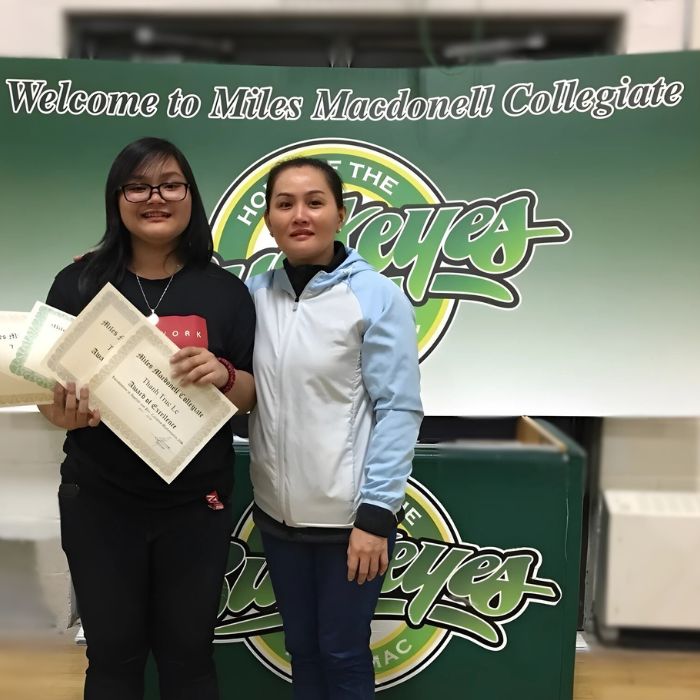
Lê Thanh Trúc, Student at Miles Macdonell Collegiate
“My family and I are deeply grateful to SIEC for not only securing my **Canada high school student visa** in Grade 10 but also for assisting my parents and siblings in obtaining their **visitor visas**. That was an invaluable gift.” — Lê Thanh Trúc, Student at **Miles Macdonell Collegiate** Secure Your Early High School (Secondary) […]
Phan Thị Ngọc Huỳnh, Former Student in Winnipeg
“The solid foundation provided by SIEC and Ms. Huong not only helped me realize my study abroad dream but also gave me the confidence to graduate, secure a stable job, and **settle permanently in Canada**.” — Phan Thị Ngọc Huỳnh, Former Student, currently working in **Winnipeg, Canada** Explore Your Study & Immigration Pathway in Canada […]
Hoàng Giang, Student at Edmonds College
“With her dedication and passion, Ms. Huong helped launch my **American dream**, opening up a vast world of opportunity and the chance to meet new friends.” — Hoàng Giang, Student at **Edmonds College** Explore More About Studying in the USA Spotlight on Edmonds College (Washington State) Gain in-depth knowledge about the programs, tuition fees, and […]
Khánh Lê, Student at LaSalle College
“Thank you to Ms. Huong and the SIEC team for their dedicated partnership and support, from my application phase until I was settled in Canada, helping me confidently pursue my dreams.” — Khánh Lê, Student at **LaSalle College** Explore Further Canada Study Opportunities Spotlight on LaSalle College Gain deeper insights into the programs, tuition fees, […]
Quỳnh Giao, Student at Red River Colleg
“She didn’t just stop at completing the application; she was an inspiration, a true motivator…” — Quỳnh Giao, Student at **Red River College** Continue Your Canada Study Abroad Journey Spotlight on Red River College Polytechnic (RRC Polytech) Discover the high-demand, **applied learning programs** at **Red River College** – one of the premier post-secondary institutions in […]