Complete Study in Canada process: Steps You Need to Know
01/05/2026 Phong Nguyen
Starting from the 2026-2027 period, Canada’s immigration policies have undergone significant shifts, focusing strongly on attracting skilled human resources in essential sectors. Mastering the Study in Canada process is not merely about completing admission files, but also a strategic preparation for transitioning to sustainable permanent residency. Instead of the previous trend of mass settlement, the Canadian government now prioritizes educational pathways linked to labor market needs, particularly in Healthcare, STEM, and Construction. This article will provide the most detailed and updated look at the necessary steps to realize your dream of studying and working in the Great White North.
1. Document Requirements and the Study in Canada process 2026-2027
To begin the Study in Canada process, the first and most important step is to prepare a comprehensive application that meets the strict standards of both educational institutions and immigration authorities. In the 2026-2027 period, academic and language proficiency requirements are being scrutinized more closely to ensure students can succeed in an international learning environment.
1.1. Academic and Language Requirements
Most colleges and universities in Canada require applicants to have an average academic standing of “Good” or higher, equivalent to a GPA of 6.5/10. For programs in the STEM or Healthcare groups, this requirement may be higher, often ranging from 7.5 to 8.0 to ensure competitiveness. Regarding language proficiency, IELTS Academic or PTE Core certificates are popular choices. A safe score for visa application and admission is typically IELTS 6.0 (with no skill below 5.5) for College levels and 6.5 or higher for University or Postgraduate levels.
1.2. Personal Documents and Study Plan
In the Study in Canada process, the Study Plan (Letter of Explanation) plays a decisive role. You need to clearly present your reasons for choosing Canada, your reasons for choosing the specific major, and demonstrate how that program will benefit your future career. Particularly, if you choose priority occupations such as Construction or Information Technology, emphasize the alignment between your personal capacity and the labor needs of the province where you intend to study.
Passport valid for at least 2 years.
Highest diploma and transcripts/academic records.
English language certificate (IELTS, PTE, TOEFL).
Letter of Acceptance (LOA) from a DLI school.
Provincial Attestation Letter (PAL) if required.
2. Financial Requirements and Study Permit Procedures in the Study in Canada process
One of the biggest changes in the updated Study in Canada process for 2026-2027 is the financial capacity requirement. Immigration, Refugees and Citizenship Canada (IRCC) has raised the financial proof requirements to ensure students have enough to cover living expenses amidst global inflation.
2.1. Financial Proof According to the Latest Regulations
International students now need to prove they have enough funds equivalent to the first year’s tuition plus the regulated living costs. This figure has increased significantly compared to previous years, requiring students to have meticulous budget preparation. Utilizing a Guaranteed Investment Certificate (GIC) at Canadian banks is the most common and secure way to complete this step in the **Study in Canada process**. This GIC amount not only makes the application transparent but also helps students manage monthly expenses after arriving in Canada.
2.2. Study Permit Application and Provincial Attestation
After obtaining the LOA and preparing your finances, you will proceed to apply for a Study Permit. A new point in the current Study in Canada process is the requirement for a Provincial Attestation Letter (PAL) for most College and University programs. The PAL is a tool for the government to control the number of international students in each region, preventing infrastructure overload. Processing times can range from 8 to 12 weeks; therefore, you should apply at least 4-6 months before the official intake.
3. 24-Hour Weekly Work Regulation for International Students
The work policy for international students underwent a major adjustment in the **Study in Canada process** starting from late 2024 and applied throughout the 2026-2027 period. Instead of allowing unlimited off-campus work as seen during the pandemic, the new regulation limits off-campus work hours to 24 hours per week during regular academic sessions.
3.1. Balancing Study and Part-time Work
The 24-hour/week rule is designed to help students focus maximally on their studies, ensuring educational outcomes. Compliance with this regulation is mandatory to maintain the legal status of your Study Permit. Violations could result in the risk of deportation or the refusal of a Post-Graduation Work Permit (PGWP). During scheduled breaks or summer holidays, students are still permitted to work full-time to accumulate extra income and practical experience.
3.2. Benefits of Working in Priority Sectors
In a **Study in Canada process** aimed at settlement, choosing part-time work related to your field of study is a smart tactic. For example, if you are studying Healthcare, working part-time at senior care facilities or clinics will help you gain valuable experience. Similarly, Construction students can seek technical assistant or part-time site supervisor roles. These experiences will be a major plus when you apply for official jobs after graduation.
4. How to Choose Majors and Schools when following the Study in Canada process
Choosing a major is no longer based purely on personal preference but must closely follow Canada’s list of priority occupations. This helps optimize the **Study in Canada process** and increases future settlement opportunities. Canadian provinces are focusing their budgets and priority policies on three main sectors: Healthcare, STEM, and Construction.
4.1. Healthcare and Social Assistance Group
Canada is facing a serious aging population, leading to a massive demand for Healthcare personnel. Positions such as nurses, personal care assistants, and lab technicians are always at the top of the priority list for settlement. When choosing a school in the Study in Canada process for this group, you should prioritize institutions with links to major hospital systems to ensure internships and employment after graduation.
4.2. STEM and High-Tech Group
The STEM group (Science, Technology, Engineering, and Mathematics) is the engine of Canada’s economic development. Experts in cybersecurity, software development, and data analysis are highly sought after with very high starting salaries. The Study in Canada process for this group often requires students to have a strong mathematical foundation and the ability to adapt quickly to new technologies. Provinces like Ontario and British Columbia are ideal destinations for STEM students due to the concentration of major tech corporations.
4.3. Construction and Skilled Trades Group
To address the housing crisis, Canada is ramping up infrastructure and civil construction projects. Consequently, Construction personnel, including civil engineers, electricians, carpenters, and project managers, have very open settlement opportunities. This group of sectors has a shorter study pathway but offers very stable and competitive income. Including this sector in your Study in Canada process will help shorten the time spent searching for a job after graduation.
5. Pathway from Study to Employment and Settlement in 2027
The ultimate goal for most students when undertaking the **Study in Canada process** is to become a Permanent Resident (PR). However, from 2027, the settlement pathway will no longer be available to everyone in a general manner. Instead, the government will focus on settlement programs based on skills and priority occupations.
5.1. Leveraging the Post-Graduation Work Permit (PGWP)
After completing a study program of at least 8 months at an eligible DLI, you can apply for a PGWP. This is a crucial stepping stone in the Study in Canada process to accumulate Canadian work experience. The duration of the PGWP usually matches the duration of study, up to a maximum of 3 years. During this time, you need to quickly find a job in priority sectors to increase your immigration points.
5.2. Settlement via Priority Occupations instead of General Settlement
The Express Entry system has now shifted to category-based draws. This means that if you have work experience in Healthcare, STEM, or Construction, you will have a better chance of receiving an invitation to settle with a lower CRS score compared to other occupations. This is the key point in the modern Study in Canada process: study the right major, work the right job for guaranteed settlement. Additionally, Provincial Nominee Programs (PNP) are also an effective route, especially in provinces hungry for skilled labor.
To succeed in the **Study in Canada process** during the 2026-2027 period, students need early preparation in terms of finances, language, and career orientation. Focusing on essential occupations not only helps you find a job easily but also ensures a solid position in the pathway to becoming a future Canadian citizen.
If you are worried about changes in immigration policy and want to find the safest study-to-settlement pathway, let SIEC accompany you. We possess a team of experienced experts who are always updated with the latest information on the labor market and visa regulations in Canada.
Contact us for in-depth consultation and perform your Canada 2027 Settlement Eligibility Assessment today. SIEC is committed to helping you build an optimal study plan, suitable for your own capacity and Canada’s actual needs. Register for information at: https://siec.com.vn/dang-ky
Are You Ready to Breakthrough Your Global Career with SIEC?
Don’t let your prestigious degree just stay on paper. Let SIEC experts advise you on a study abroad pathway combined with a career orientation strategy starting today!
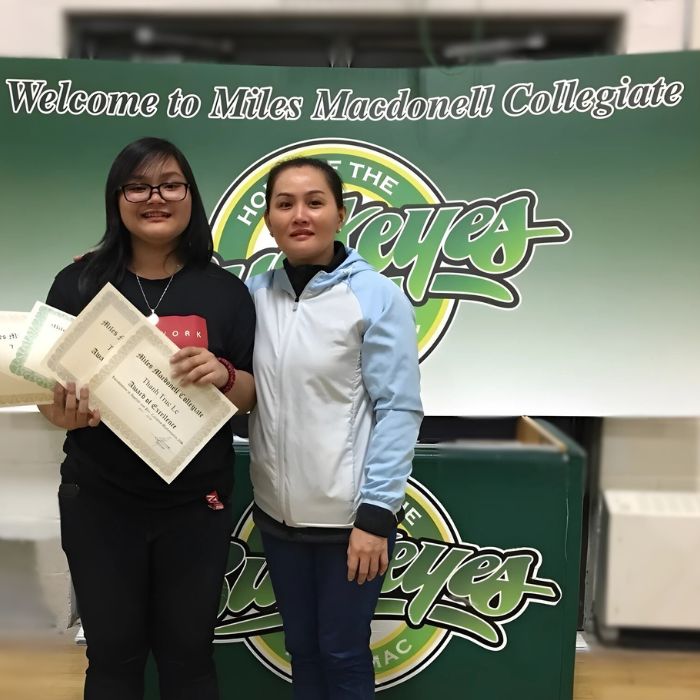
Lê Thanh Trúc, Student at Miles Macdonell Collegiate
“My family and I are deeply grateful to SIEC for not only securing my **Canada high school student visa** in Grade 10 but also for assisting my parents and siblings in obtaining their **visitor visas**. That was an invaluable gift.” — Lê Thanh Trúc, Student at **Miles Macdonell Collegiate** Secure Your Early High School (Secondary) […]
Phan Thị Ngọc Huỳnh, Former Student in Winnipeg
“The solid foundation provided by SIEC and Ms. Huong not only helped me realize my study abroad dream but also gave me the confidence to graduate, secure a stable job, and **settle permanently in Canada**.” — Phan Thị Ngọc Huỳnh, Former Student, currently working in **Winnipeg, Canada** Explore Your Study & Immigration Pathway in Canada […]
Hoàng Giang, Student at Edmonds College
“With her dedication and passion, Ms. Huong helped launch my **American dream**, opening up a vast world of opportunity and the chance to meet new friends.” — Hoàng Giang, Student at **Edmonds College** Explore More About Studying in the USA Spotlight on Edmonds College (Washington State) Gain in-depth knowledge about the programs, tuition fees, and […]
Khánh Lê, Student at LaSalle College
“Thank you to Ms. Huong and the SIEC team for their dedicated partnership and support, from my application phase until I was settled in Canada, helping me confidently pursue my dreams.” — Khánh Lê, Student at **LaSalle College** Explore Further Canada Study Opportunities Spotlight on LaSalle College Gain deeper insights into the programs, tuition fees, […]
Quỳnh Giao, Student at Red River Colleg
“She didn’t just stop at completing the application; she was an inspiration, a true motivator…” — Quỳnh Giao, Student at **Red River College** Continue Your Canada Study Abroad Journey Spotlight on Red River College Polytechnic (RRC Polytech) Discover the high-demand, **applied learning programs** at **Red River College** – one of the premier post-secondary institutions in […]