Complete Guide to All Study in Canada Requirements Today
04/04/2026 Phong Nguyen
The journey to conquering the North American dream is undergoing pivotal changes in the 2026–2027 period. The Canadian government is currently tightening entry regulations while simultaneously opening doors for highly skilled candidates in essential sectors. Mastering the latest study in Canada requirements will help you prepare an accurate academic and settlement roadmap, avoiding a waste of time and money.
1. Overview of study in Canada requirements in the New 2026 Context
Entering 2026, Immigration, Refugees and Citizenship Canada (IRCC) has applied stricter standards for international students. Instead of the previous mass settlement policies, the country is focusing on attracting individuals capable of contributing directly to the economy. Current study in Canada requirements no longer stop at having sufficient funds and good academic standing but also require alignment between the field of study and actual labor market needs.
The new Study Permit quota system remains in place to ensure educational quality and housing availability across provinces. Therefore, applying early and choosing the right Designated Learning Institution (DLI) is a prerequisite. The 2026 study in Canada requirements particularly emphasize the integrity of the application and the candidate’s clear educational goals.
Furthermore, SIEC’s instructional infographics, featuring the signature #339933 color scheme, provide a visual overview of the application process. The SIEC logo on these documents confirms professional companionship, helping you overcome complex legal barriers. Understanding the study in Canada requirements from the start will be the key to building a sustainable future in the Great White North.
2. Study in Canada requirements regarding Academic Ability and Language Proficiency
To be accepted into an educational institution in Canada, students must meet standards for Grade Point Average (GPA) and language proficiency. Depending on the level of study—college, undergraduate, or postgraduate—academic study in Canada requirements will differ significantly. Typically, a minimum GPA of 6.5 or higher is a safe level for applying to reputable public schools.
Regarding language proficiency, IELTS Academic remains the most popular certificate; however, others like PTE Academic or TOEFL iBT are also widely accepted. English language study in Canada requirements usually demand an IELTS score of 6.0 (no band under 5.5) for college programs and 6.5 (no band under 6.0) for undergraduate and graduate programs. If you are targeting Healthcare or STEM fields, requirements may be higher to ensure the ability to absorb specialized knowledge.
Level of Study
GPA Requirement
IELTS Requirement
High School
6.0 – 6.5
Not required (entrance test available)
College
6.5+
6.0 (no band under 5.5)
University
7.0+
6.5 (no band under 6.0)
Postgraduate
7.5+
6.5 – 7.0
Meeting academic study in Canada requirements is only the beginning. In 2026, top universities also emphasize extracurricular activities, personal essays, and work experience for master’s programs. This helps the admissions committee assess your potential for growth in the Canadian labor market later on.
3. Financial and Income Proof study in Canada requirements for 2026
One of the biggest changes in study in Canada requirements for the 2026–2027 period is the level of financial proof. IRCC has adjusted the Cost of Living threshold to reflect the current economic reality. Students no longer only need to prove 10,000 CAD as before; this figure has increased significantly to ensure students can afford expenses without being overly dependent on part-time work.
Specifically, financial study in Canada requirements require you to have enough for the first year’s tuition plus living expenses of approximately 21,000 – 25,000 CAD (depending on the region). If you apply via the regular financial proof stream, explaining the sponsor’s income source is extremely important. Documents such as personal income tax, business licenses, and bank statements must be meticulously prepared.
Below is an estimate of basic costs to meet financial study in Canada requirements in 2026:
Cost Item
Estimated Fee (CAD/year)
Tuition (varies by program and school)
18,000 – 35,000
Living expenses (housing, food)
20,635 – 24,000
Health insurance
600 – 1,000
Books and supplies
1,500 – 2,500
To optimize the application, students should use a Guaranteed Investment Certificate (GIC) from designated banks. This is the most transparent and effective way to prove financial study in Canada requirements, helping to increase the visa approval rate. The expert team at SIEC will assist you in creating a detailed financial plan, ensuring your application fully meets the latest IRCC regulations.
4. New Study Permit Regulations and the 24-Hour Weekly Work Limit
Since late 2024 and fully implemented in 2026, regulations on part-time work hours for international students have been adjusted. Instead of working a maximum of 20 hours or being unlimited as during the pandemic, current study in Canada requirements allow students to work a maximum of 24 hours per week during academic terms. This regulation aims to help students focus more on their studies while still earning income to cover living costs.
During official holidays like summer or winter breaks, students are still allowed to work full-time. However, compliance with work hour study in Canada requirements is mandatory. If violated, you may face the risk of having your Study Permit revoked and being deported from Canada.
This is a point that students need to pay special attention to so as not to affect their long-term settlement roadmap.
Additionally, the Provincial Attestation Letter (PAL) requirement remains an integral part of the study in Canada requirements to apply for a Study Permit for most undergraduate and college programs. Each province has its own quota, so choosing provinces in high demand for labor will help the PAL application process go more smoothly. Support from SIEC with updated 2026 information will help you quickly grasp these changes.
5. Choosing Priority Majors for Canada PR in 2027
Canada’s settlement strategy in 2027 will focus heavily on category-based selection invitations. Therefore, the study in Canada requirements for successful settlement depend greatly on the field of study you choose now. Instead of general business degrees, you should focus on three spearhead sectors: Healthcare, STEM (Science, Technology, Engineering, Math), and Construction.
The Healthcare sector always tops the priority list due to Canada’s aging population. Positions such as nurses, medical assistants, and lab technicians are always in severe shortage. Meeting the study in Canada requirements in this field not only helps you get a job immediately after graduation but also ensures your settlement application is prioritized in Express Entry draws.
STEM and Construction sectors are equally important. With the boom in AI technology and infrastructure development needs, software engineers, data analysts, and construction managers are highly sought after with very high starting salaries. When considering study in Canada requirements, you should research training programs that integrate paid internships (Co-op) to accumulate Canadian work experience while still in school.
Construction Project Management, Architecture, Civil Engineering.
Orienting yourself toward the right profession from the moment you research study in Canada requirements will help you stay ahead of 2027 settlement trends. SIEC is always ready to provide a list of top training institutions in these fields, along with the latest labor market reports, so you can make the wisest choice.
6. Roadmap from Graduation to Permanent Residency for International Students
After completing the study program and fully meeting the graduation study in Canada requirements, students will be eligible to apply for a Post-Graduation Work Permit (PGWP). This is the most important stepping stone toward Permanent Residency (PR). However, from 2026, the duration and conditions for granting a PGWP may be more closely linked to the field of study and the labor needs of each territory.
The ideal roadmap is to work for at least 1 year in your specialized field after graduation. During this time, you need to continue improving your language skills because the study in Canada requirements for settlement usually demand a higher IELTS General or CELPIP level than at the time of admission. Possessing a Job Offer from a Canadian employer will also add significant points to your Express Entry profile.
Provincial Nominee Programs (PNP) are also an excellent option if you study in provinces like Saskatchewan, Manitoba, or the Atlantic provinces. Each province has its own study in Canada requirements for local graduates, usually prioritizing occupations experiencing labor shortages in that region. This roadmap requires long-term preparation and a deep understanding of immigration law.
By 2027, settlement regulations may include additional priorities for students with French language skills or those willing to work in areas outside major cities like Toronto or Vancouver. Grasping these study in Canada requirements and trends will help you optimize your chances of becoming a Canadian permanent resident as quickly as possible.
7. Assess Your 2027 Canada Settlement Potential with SIEC
Researching and processing an application on your own amidst a sea of constantly changing information is not easy. To know exactly whether you meet the study in Canada requirements, you need a professional and dedicated consulting unit. SIEC, with years of experience in the field of study abroad and immigration, will be your reliable companion on the path to conquering Canada.
We provide in-depth profile assessment services, helping you evaluate your visa success and settlement potential based on your current capacity. Based on the updated 2026–2027 study in Canada requirements, SIEC will design a personalized roadmap, from choosing the right school and priority major to preparing financial documents and interview coaching. Don’t let policy changes become a barrier to your dream.
Contact SIEC today for detailed advice on study in Canada requirements and to receive the latest information on valuable scholarships as well as attractive skilled immigration programs. We are committed to bringing you the most optimal, transparent, and effective solutions.
The door to Canadian settlement in 2027 is wide open for those who are well-prepared and moving in the right direction. Let SIEC help you realize that dream with professionalism and deep market insight. Register for a consultation now so you don’t miss out on golden opportunities during this transition period of Canadian immigration policy.
Call for contact for study and settlement information at SIEC to have top experts assess your profile and build a personalized roadmap for 2026-2027. Visit https://siec.com.vn/dang-ky to start your journey.
We are always ready to answer any questions about financial conditions, work regulations, and priority settlement sectors to help you step confidently into the future.
Are You Ready to Break Through Your Global Career with SIEC?
Don’t let your prestigious degree just stay on paper. Let SIEC experts advise you on a study abroad roadmap combined with a job-oriented strategy starting today!
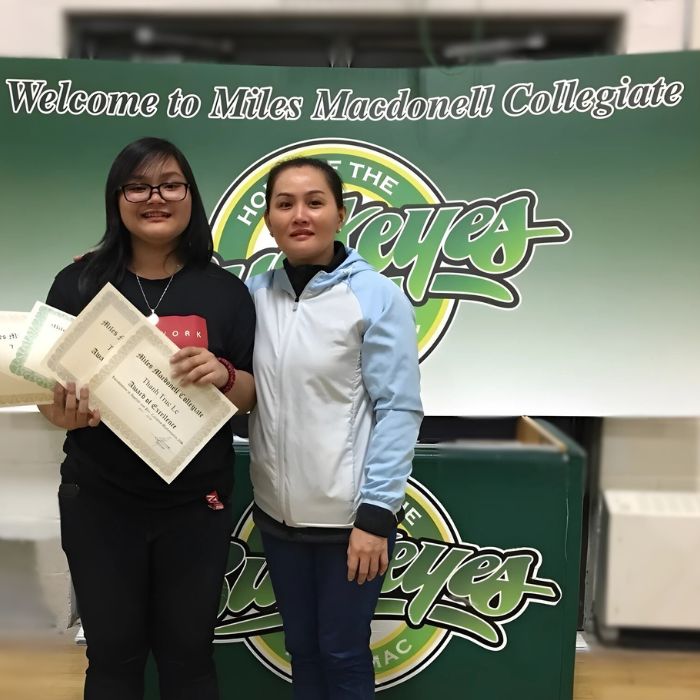
Lê Thanh Trúc, Student at Miles Macdonell Collegiate
“My family and I are deeply grateful to SIEC for not only securing my **Canada high school student visa** in Grade 10 but also for assisting my parents and siblings in obtaining their **visitor visas**. That was an invaluable gift.” — Lê Thanh Trúc, Student at **Miles Macdonell Collegiate** Secure Your Early High School (Secondary) […]
Phan Thị Ngọc Huỳnh, Former Student in Winnipeg
“The solid foundation provided by SIEC and Ms. Huong not only helped me realize my study abroad dream but also gave me the confidence to graduate, secure a stable job, and **settle permanently in Canada**.” — Phan Thị Ngọc Huỳnh, Former Student, currently working in **Winnipeg, Canada** Explore Your Study & Immigration Pathway in Canada […]
Hoàng Giang, Student at Edmonds College
“With her dedication and passion, Ms. Huong helped launch my **American dream**, opening up a vast world of opportunity and the chance to meet new friends.” — Hoàng Giang, Student at **Edmonds College** Explore More About Studying in the USA Spotlight on Edmonds College (Washington State) Gain in-depth knowledge about the programs, tuition fees, and […]
Khánh Lê, Student at LaSalle College
“Thank you to Ms. Huong and the SIEC team for their dedicated partnership and support, from my application phase until I was settled in Canada, helping me confidently pursue my dreams.” — Khánh Lê, Student at **LaSalle College** Explore Further Canada Study Opportunities Spotlight on LaSalle College Gain deeper insights into the programs, tuition fees, […]
Quỳnh Giao, Student at Red River Colleg
“She didn’t just stop at completing the application; she was an inspiration, a true motivator…” — Quỳnh Giao, Student at **Red River College** Continue Your Canada Study Abroad Journey Spotlight on Red River College Polytechnic (RRC Polytech) Discover the high-demand, **applied learning programs** at **Red River College** – one of the premier post-secondary institutions in […]