Best Secrets to Immigrate as a Canada skilled worker in 2026
23/07/2026 Phong Nguyen
In the context of significant adjustments to Canada’s immigration policies, understanding the roadmap for a **Canada skilled worker** has become more essential than ever for those planning to build a future in the Great White North. The 2026–2027 period marks a major turning point as the Canadian government shifts its focus from general recruitment to prioritizing sectors with critical labor shortages. Instead of applying directly from abroad with extremely high competition, the pathway from studying to working and then applying for permanent residency is considered the safest and most effective route. This article provides a detailed look at new regulations, from financial requirements and part-time work rules to choosing the right major to optimize your chances of becoming a permanent resident.
1. Trends for a Canada skilled worker in 2026 and 2027
Entering the 2026–2027 phase, Immigration, Refugees and Citizenship Canada (IRCC) has clearly defined a strategy focusing on priority occupational groups. Immigrating as a Canada skilled worker no longer relies solely on sky-high CRS (Comprehensive Ranking System) scores in general draws, but rather on prioritizing candidates with work experience or qualifications in essential fields. The three core sectors include Healthcare, STEM (Science, Technology, Engineering, Mathematics), and Construction.
In the Healthcare sector, Canada is facing a rapidly aging population, leading to a massive demand for nurses, doctors, and personal support workers. For the STEM group, the explosion of artificial intelligence and the digital economy means software engineers, data specialists, and electrical engineers are always in high demand. Specifically for the Construction industry, the goal of building millions of new homes to resolve the housing crisis has turned electricians, carpenters, and construction managers into top candidates for the **Canada skilled worker** immigration programs. Choosing to study in these fields will give international students a significant advantage when participating in category-based selection draws.
2. Latest Documentation and Financial Requirements for International Students
To begin the journey as a **Canada skilled worker**, the first and most important step is obtaining a Study Permit. However, starting from 2024 and extending into the 2026–2027 period, IRCC has tightened permit regulations. Students must have a Provincial Attestation Letter (PAL) alongside an acceptance letter from a Designated Learning Institution (DLI). This ensures that the number of international students aligns with the capacity and labor needs of each province.
Another notable change is the financial requirement. To ensure students can afford the high cost of living in Canada, the proof of funds has increased significantly. Instead of the previous 10,000 CAD level, students now need to prove they have at least approximately 20,635 CAD (adjusted annually for inflation) for first-year living expenses, excluding tuition. Preparing a transparent and strong financial profile is the key factor in obtaining a Study Permit, creating a solid foundation for your plan to become a **Canada skilled worker** after graduation.
3. How the 24-Hour Weekly Work Rule Affects Students
Since late 2024, Canada has officially implemented a new regulation regarding off-campus work hours for international students. Instead of being allowed to work unlimited hours as during the pandemic, students are now only permitted to work a maximum of 24 hours per week during academic sessions. This regulation was introduced to help students focus more on their studies, ensuring the quality of their qualifications so they can easily enter the labor market and apply for residency later.
Although work hours are limited, the minimum wage in many Canadian provinces has increased, helping students cover costs. More importantly, students should utilize this time to seek part-time jobs related to their field of study. For example, a nursing student could work as a care assistant in nursing homes, or an IT student could provide technical support. These practical experiences not only increase income but also serve as a huge plus in a future residency application, as they prove the ability to adapt to a professional working environment in Canada.
4. Choosing the Right Major and School to Secure Your Future
Choosing the right major and institution accounts for 50% of the success in the roadmap to becoming a permanent resident. Advice from immigration experts is to prioritize training programs at Colleges or Universities on the DLI list that offer the Post-Graduation Work Permit (PGWP). In particular, students should look toward provinces with favorable immigration policies or those in dire need of manpower in priority sectors, such as Saskatchewan, Manitoba, or the Atlantic provinces.
If you choose Healthcare, look for schools with strong links to local hospital systems for easy internships and job placement. For STEM fields, schools in Ontario or British Columbia often have vast technology partner networks. Meanwhile, the Construction industry is booming in provinces with strong infrastructure development. Studying in these areas makes it easier to receive a Provincial Nominee Program (PNP) invitation, one of the fastest ways to realize the dream of immigrating without facing intense competition at the federal level.
5. Detailed Roadmap from Study to Employment and Long-term Residency
The path to residency through the study route typically lasts 3 to 5 years depending on the program. After completing a course of at least 2 years, students are granted a PGWP valid for up to 3 years. This is the golden time to accumulate practical work experience in Canada. According to regulations, with just 1 year of full-time work experience in occupations under TEER categories 0, 1, 2, or 3, you are eligible to apply for the Canadian Experience Class (CEC) program within the Express Entry system.
In the 2026–2027 period, if your work experience falls under priority sectors like Healthcare, STEM, or Construction, you will be invited to apply for residency with much lower CRS scores than other occupations. Additionally, provincial nomination programs always reserve priority slots for local graduates with a job offer from a business within the province. The combination of a Canadian degree, language proficiency (IELTS or CELPIP), and professional work experience is the perfect formula for achieving your goal of staying in Canada permanently.
6. Assess Your Canada Immigration Potential for 2027 with Experts
With continuous changes in immigration policy, trying to navigate the process alone can sometimes lead to unnecessary mistakes. To know exactly if your profile meets the standards for the future, performing an in-depth competency assessment is essential. Experts will analyze your education, age, financial capacity, and especially your career orientation to provide a personalized roadmap, saving time and money.
Don’t wait until regulations become stricter; start preparing today to stay ahead of opportunities in 2026 and 2027. Early assessment will help you choose the right major in the priority list, thereby increasing your chances of receiving a residency invitation immediately after graduation. This is a strategic move to ensure that all your efforts and investment in studying abroad result in the worthy outcome of a Canadian permanent resident card for your whole family.
The journey to conquer a Canadian permanent resident card always requires thorough preparation and a correct strategy from the very first step. With priority policies for essential sectors in the 2026–2027 period, immigration opportunities are wider than ever for those who have prepared well in terms of knowledge and professional skills.
If you are wondering about choosing a major or need a detailed roadmap to optimize your success, contact SIEC immediately for in-depth consultation. We are committed to accompanying you in profile assessment, school selection, and building the most sustainable immigration path in this leading developed nation.
Don’t miss the chance to change your future; register for a consultation and assessment of your immigration potential today at: https://siec.com.vn/dang-ky
Conquer the Dream of becoming a Canada skilled worker with SIEC Experts
The **Canada skilled worker** pathway is a sustainable way for you to build a stable life and develop a career in one of the most livable countries in the world. To help you prepare the strongest foundation, SIEC provides specialized study abroad and global career orientation consulting services, helping you optimize your profile and seize key career opportunities in Canada.
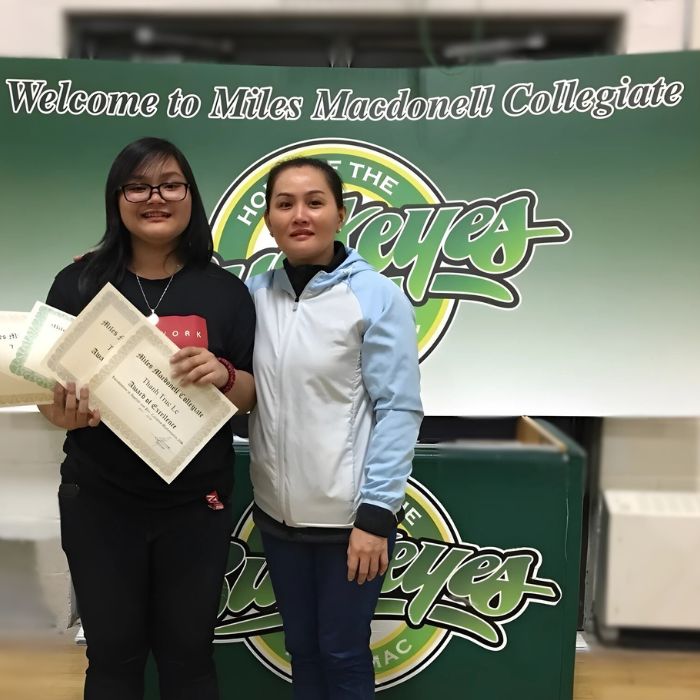
Lê Thanh Trúc, Student at Miles Macdonell Collegiate
“My family and I are deeply grateful to SIEC for not only securing my **Canada high school student visa** in Grade 10 but also for assisting my parents and siblings in obtaining their **visitor visas**. That was an invaluable gift.” — Lê Thanh Trúc, Student at **Miles Macdonell Collegiate** Secure Your Early High School (Secondary) […]
Phan Thị Ngọc Huỳnh, Former Student in Winnipeg
“The solid foundation provided by SIEC and Ms. Huong not only helped me realize my study abroad dream but also gave me the confidence to graduate, secure a stable job, and **settle permanently in Canada**.” — Phan Thị Ngọc Huỳnh, Former Student, currently working in **Winnipeg, Canada** Explore Your Study & Immigration Pathway in Canada […]
Hoàng Giang, Student at Edmonds College
“With her dedication and passion, Ms. Huong helped launch my **American dream**, opening up a vast world of opportunity and the chance to meet new friends.” — Hoàng Giang, Student at **Edmonds College** Explore More About Studying in the USA Spotlight on Edmonds College (Washington State) Gain in-depth knowledge about the programs, tuition fees, and […]
Khánh Lê, Student at LaSalle College
“Thank you to Ms. Huong and the SIEC team for their dedicated partnership and support, from my application phase until I was settled in Canada, helping me confidently pursue my dreams.” — Khánh Lê, Student at **LaSalle College** Explore Further Canada Study Opportunities Spotlight on LaSalle College Gain deeper insights into the programs, tuition fees, […]
Quỳnh Giao, Student at Red River Colleg
“She didn’t just stop at completing the application; she was an inspiration, a true motivator…” — Quỳnh Giao, Student at **Red River College** Continue Your Canada Study Abroad Journey Spotlight on Red River College Polytechnic (RRC Polytech) Discover the high-demand, **applied learning programs** at **Red River College** – one of the premier post-secondary institutions in […]