2026 Student Visa Shifts: Australia and Canada Tighten Rules—Where are the Strategic Pathways?
02/04/2026 Phong Nguyen
The global education landscape has never witnessed shifts as seismic as those occurring in early 2026. As major destinations like Australia and Canada simultaneously implement rigorous tightening of their entry protocols, the era of “easy study visas” has officially come to an end. However, at SIEC – Study Abroad & Visa Consulting, we believe that every barrier creates a new premium pathway for those who are prepared and professionally guided.
This article provides the most comprehensive analysis of the 2026 student visa policy, synthesized by SIEC’s expert team from official government updates and years of hands-on experience. We will decode the complexities of these changes and illuminate the “strategic bright spots” that will allow you to achieve your dream of studying abroad in 2026 despite the heightened regulations.
Navigating the 2026 visa storm requires a precision-engineered strategy.
I. The 2026 Global Landscape: Why Student Visa Policies Are Shifting
The year 2026 marks a turning point in international migration history. Rapid population growth in major Australian and Canadian hubs has placed unprecedented pressure on healthcare, transportation, and particularly the housing market. Consequently, the 2026 student visa policy has pivoted from a volume-based approach to a “quality-first” mandate.
Governments are no longer just issuing visas; they are acting as “academic gatekeepers.” They seek students who possess not only financial stability but also exceptional academic merit and a transparent career roadmap that aligns with the host country’s labor needs. This “great migration reset” of 2026 is designed to filter out non-genuine applicants and protect the integrity of the international education sector—a change that SIEC – Study Abroad & Visa Consulting is fully equipped to help you navigate.
II. Australia: The “Genuine Student” Mandate and the End of Visa Hopping
In 2026, Australia has fully matured its screening process through the Genuine Student (GS) Test, which has completely replaced the outdated GTE (Genuine Temporary Entrant) format. This is no longer a simple statement of purpose; it is a multi-layered assessment of an applicant’s academic intent.
1. Decoding the GS (Genuine Student) Test
According to the latest 2026 directives from the Australian Department of Home Affairs, the GS Test focuses on qualitative, critical-thinking questions. Applicants must provide evidence-backed answers regarding:
The logical progression from their previous studies to their chosen Australian course.
A granular analysis of why the specific Australian institution was chosen over global or domestic competitors.
A detailed post-study plan that demonstrates how the acquired skills will be applied within the Vietnamese or international labor market.
Generic or AI-generated responses are now flagged as “high risk,” making professional consultation from SIEC indispensable.
2. Elevated English and Financial Benchmarks
The 2026 student visa policy for Australia has solidified English proficiency requirements: a minimum IELTS of 6.5 for Undergraduate and 7.0 for Postgraduate degrees. Financially, the required “cost of living” evidence has surpassed $30,000 AUD per year. Most importantly, the government has severely restricted “Visa Hopping,” making it nearly impossible to switch from a tourist visa to a student visa while onshore without a pre-approved, highly specialized study plan.
III. Canada: The PAL Quota System and Postgraduate Priorities
Canada in 2026 has moved away from being a “catch-all” destination for diploma-seekers. The 2026 student visa policy focuses on regional labor needs and high-level academic research through the Provincial Attestation Letter (PAL) system.
1. The Provincial Attestation Letter (PAL) Mechanism
Every province in Canada is now allocated a strict quota of international students by Immigration, Refugees and Citizenship Canada (IRCC). This has created a “first-come, first-served” environment for PALs. Provinces like Ontario and British Columbia reach their caps months in advance, making early application through SIEC – Study Abroad & Visa Consulting a survival necessity for 2026 intake.
2. GIC Requirements and Financial Realistic Expectations
To combat inflation, the Guaranteed Investment Certificate (GIC) amount now exceeds $20,635 CAD. This ensures students are financially self-sufficient. At SIEC, we recommend preparing a financial buffer at least 20% higher than the government minimum to increase the “credibility score” of your visa application.
3. Post-Graduation Work Permit (PGWP) Reforms
The PGWP is no longer guaranteed for all. In 2026, only students graduating from programs aligned with “In-demand occupations” (Healthcare, STEM, Trades) or those completing Master’s and PhD programs are eligible for long-term work permits. This makes choosing the right program more critical than ever.
IV. Strategic Comparison: Australia vs. Canada (2026 Update)
To assist you in making an informed decision, SIEC – Study Abroad & Visa Consulting has compiled this high-level comparison of the 2026 student visa policy across both nations:
Feature
Australia (2026)
Canada (2026)
Primary Filter
GS Test (Intent & Merit)
PAL (Provincial Quotas)
Visa Processing
4 – 8 Weeks (Priority for Tier 1)
8 – 14 Weeks (Includes PAL step)
Financial Requirement
~$30,000 AUD (Living Cost)
~$20,635 CAD (GIC)
Top “Bright Spot”
Regional Priority & STEM Skilled List
Master’s/PhD (PAL Exempt)
V. Decoding the “Bright Spots”: 3 Strategies to Outsmart the 2026 Rules
While the 2026 student visa policy is daunting, SIEC – Study Abroad & Visa Consulting has identified three high-probability success pathways:
1. The “Postgraduate Powerhouse” Strategy
In Canada, Master’s and PhD applicants are currently the “royalty” of international students. They are often exempt from PAL requirements, receive faster processing, and retain the right for their spouses to obtain work permits. In Australia, the GS Test is significantly more lenient for Postgraduate applicants as they are perceived as high-value assets for the nation’s research and development sectors.
2. The Regional Advantage (Beyond the Capitals)
If your goal is PR (Permanent Residency), look beyond Sydney, Melbourne, and Toronto. 2026 student visa policy heavily incentivizes Regional Australia (Perth, Adelaide, Gold Coast) and Canada’s Prairie provinces (Alberta, Saskatchewan). These regions offer lower living costs, easier provincial nominations, and additional post-study work rights.
3. Crafting the “Academic Soul” (LOE/SOP)
When everyone has the required GPA and funds, the decision rests on the Statement of Purpose (SOP). A “soulless” SOP leads to rejection. At SIEC, we help you articulate a narrative that connects your personal history with your future aspirations, convincing immigration officers of your genuine intent even under the strictest 2026 scrutiny.
VI. Why SIEC is Your Essential Partner in 2026
In an era of policy turbulence, attempting a visa application alone is like sailing without a compass. SIEC – Study Abroad & Visa Consulting acts as your strategic navigator. We don’t just process papers; we engineer success.
Our 2026 service suite includes:
360-Degree Profile Audit: We identify potential “red flags” before the Lãnh sự quán does.
GS Test Coaching: We provide exclusive mock interview sessions to prepare you for Australia’s qualitative questions.
Global Institutional Network: SIEC partners with top-tier universities, ensuring you get the earliest possible PAL or CoE (Confirmation of Enrolment).
Unlock Your Global Future in 2026!
The rules have changed, but your dreams shouldn’t. Let SIEC’s world-class experts design your personalized roadmap to success.
VII. Comprehensive FAQ: Navigating 2026 Visa Concerns
1. Is the 2026 student visa rejection rate really that high?
The rejection rate has increased, but primarily for “low-quality” or “high-risk” applications. If you have a clear academic goal, solid financials, and professional guidance from SIEC – Study Abroad & Visa Consulting, your success probability remains exceptionally high.
2. Can I still work while studying in 2026?
Yes, but both countries have tightened work hour limits (usually capped at 24 hours per fortnight or week) to ensure students prioritize their education. The government wants to see that you do not *rely* on work to survive.
3. What is the biggest mistake students make in 2026?
Wait-and-see attitude. With quota systems like PAL and early caps in Australia, waiting until the last minute is a guarantee for failure. Early bird applicants (6-9 months in advance) have a massive advantage.
4. Does having a relative in Australia/Canada help or hurt?
Under the 2026 student visa policy, it’s a double-edged sword. It proves you have support, but it may also raise “non-genuine” flags regarding your intent to return home. We help you frame this correctly in your GS Test or SOP.
VIII. Conclusion: The Future Belongs to the Prepared
The 2026 student visa policy serves as a filter—separating the serious from the casual. While the barriers are higher, the rewards are greater. A degree from a top-tier Australian or Canadian institution in 2026 carries more prestige and career weight than ever before because you have proven yourself against global standards.
Do not let complex regulations stop your progress. Choose the right strategy, choose the right region, and choose the right partner. With SIEC – Study Abroad & Visa Consulting, the “door to the world” remains wide open. Your global journey begins with a single, informed decision today.
SIEC – STUDY ABROAD & VISA CONSULTING: INTEGRITY – EXPERTISE – SUCCESS
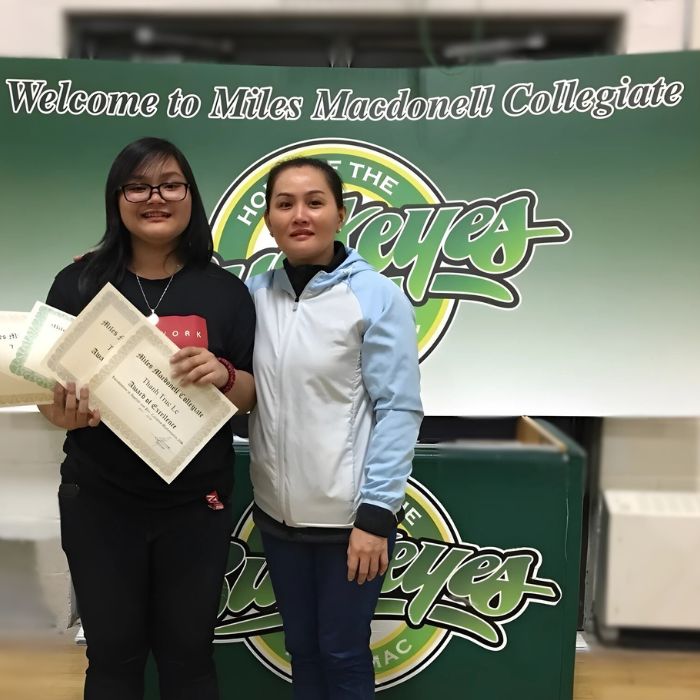
Lê Thanh Trúc, Student at Miles Macdonell Collegiate
“My family and I are deeply grateful to SIEC for not only securing my **Canada high school student visa** in Grade 10 but also for assisting my parents and siblings in obtaining their **visitor visas**. That was an invaluable gift.” — Lê Thanh Trúc, Student at **Miles Macdonell Collegiate** Secure Your Early High School (Secondary) […]
Phan Thị Ngọc Huỳnh, Former Student in Winnipeg
“The solid foundation provided by SIEC and Ms. Huong not only helped me realize my study abroad dream but also gave me the confidence to graduate, secure a stable job, and **settle permanently in Canada**.” — Phan Thị Ngọc Huỳnh, Former Student, currently working in **Winnipeg, Canada** Explore Your Study & Immigration Pathway in Canada […]
Hoàng Giang, Student at Edmonds College
“With her dedication and passion, Ms. Huong helped launch my **American dream**, opening up a vast world of opportunity and the chance to meet new friends.” — Hoàng Giang, Student at **Edmonds College** Explore More About Studying in the USA Spotlight on Edmonds College (Washington State) Gain in-depth knowledge about the programs, tuition fees, and […]
Khánh Lê, Student at LaSalle College
“Thank you to Ms. Huong and the SIEC team for their dedicated partnership and support, from my application phase until I was settled in Canada, helping me confidently pursue my dreams.” — Khánh Lê, Student at **LaSalle College** Explore Further Canada Study Opportunities Spotlight on LaSalle College Gain deeper insights into the programs, tuition fees, […]
Quỳnh Giao, Student at Red River Colleg
“She didn’t just stop at completing the application; she was an inspiration, a true motivator…” — Quỳnh Giao, Student at **Red River College** Continue Your Canada Study Abroad Journey Spotlight on Red River College Polytechnic (RRC Polytech) Discover the high-demand, **applied learning programs** at **Red River College** – one of the premier post-secondary institutions in […]