The Ultimate Guide for International Students: Working in Canada 2026 — Co-op, Study & Open Work Permits
17/04/2026 Phong Nguyen
Are you planning to build your future and seek opportunities for working in Canada 2026? This is a pivotal year for the Great White North, characterized by landmark policy shifts from Immigration, Refugees and Citizenship Canada (IRCC). Navigating the nuances of integrated Co-op permits, the new 24-hour weekly work limit, and Open Work Permit eligibility is no longer just about extra income—it is the cornerstone of your permanent residency strategy. At SIEC – Study Abroad & Visa Consulting, we have curated this 2,000+ word comprehensive manual to empower you with factual updates and professional insights. This is your roadmap to professional success in Canada’s evolving 2026 landscape.
Figure 1: 2026 updates for working in Canada for international students
As we progress through 2026, Canada remains the top-tier destination for global talent. However, the “study-to-work” pathway has become more sophisticated. According to the latest data from Statistics Canada, international students who gain relevant work experience during their studies are 70% more likely to secure high-paying roles upon graduation. Working in Canada 2026 is about more than survival; it is about strategic integration into one of the world’s most resilient economies.
I. The Co-op Revolution: No Separate Work Permit Required in 2026!
Effective April 1, 2026, IRCC has implemented one of the most significant administrative simplifications in a decade. For years, students enrolled in mandatory Co-op programs had to apply for a separate Co-op Work Permit, often facing 4-month processing delays that jeopardized their internships.
1. Integrated Work Authorization on Study Permits
In 2026, if your Letter of Acceptance (LOA) confirms that a Co-op or internship is an essential part of your program, your Study Permit will automatically include the authorization to work for your Co-op placement. This “One-Stop Permit” approach eliminates the need for separate applications, allowing you to start your professional placement as soon as your academic schedule permits.
This policy applies to students at Designated Learning Institutions (DLIs) across Canada. You can verify the official documentation requirements on the Immigration, Refugees and Citizenship Canada (IRCC) portal.
2. Key Eligibility Criteria for Co-op Integration
To benefit from this streamlined process for working in Canada 2026, you must meet the following:
Full-Time Status: You must maintain full-time enrollment throughout your academic terms. Switching to part-time status may void your work authorization.
Work-to-Study Ratio: The total duration of your Co-op placements must not exceed 50% of the total length of your program.
Relevance: The work must be a mandatory component of your degree, confirmed by your DLI’s registrar.
II. Decoding Permit Types for Working in Canada 2026
Misinterpreting work rights is a primary reason for permit non-compliance. In 2026, IRCC uses real-time data integration with the Canada Revenue Agency (CRA) to monitor hours worked. Understanding your specific permit limits is vital.
1. Study Permit: The 24-Hour Weekly Limit
After various pilot programs, Canada has codified a new balance for 2026: 24 hours per week for off-campus work during academic sessions.
During Semesters: You are permitted to work in Canada 2026 for up to 24 hours weekly. This allows for a sustainable balance between income and academic success.
Scheduled Breaks: During summer and winter holidays, you may work Full-Time (40+ hours/week). You can find high-demand seasonal roles via the Canada Job Bank.
On-Campus Work: Interestingly, work performed within your school’s campus often does not count toward the 24-hour off-campus limit, though you should check your specific permit notes.
2. Open Work Permits (OWP) in 2026
The eligibility for Open Work Permits has seen major refinement. In 2026, the focus is on supporting the spouses of students in high-value programs.
Graduate Students: Spouses of students in Master’s and Doctoral programs remain eligible for OWP.
Professional Sectors: Spouses of students in specific high-demand undergraduate sectors (like Healthcare or STEM) may also qualify under new 2026 pilot programs.
Work Rights: OWP holders have no restriction on hours or employers, making them highly competitive in the Canadian labor market.
🚀 Expert Tip from SIEC:
Never begin working in Canada 2026 before your classes officially start. Working during the “pre-arrival” or “orientation” phase (if it is before the academic start date) is a violation of your Study Permit conditions and can lead to immediate deportation.
III. SIEC’s Strategic Roadmap for Employment Success
Securing a quality job while working in Canada 2026 requires a localized approach. Canadian employers value “Soft Skills” and “Cultural Fit” as much as technical expertise.
1. The “Canadian-Style” Resume & LinkedIn
Your resume must be concise, results-oriented, and free of personal details like age or photos. Focus on quantifiable achievements. Furthermore, your LinkedIn profile is your digital billboard. In 2026, 85% of professional roles in Canada are filled through networking rather than job boards. SIEC – Study Abroad & Visa Consulting provides personalized workshops to help you master the “Informational Interview” technique.
2. Obtaining Your SIN (Social Insurance Number)
You cannot legally be paid without a SIN. You can apply for this 9-digit number as soon as you arrive in Canada at any Service Canada location. Ensure your Study Permit has the printed “work condition” remarks before heading to the office.
3. Understanding TEER Categories
The National Occupational Classification (NOC) uses TEER categories (0, 1, 2, 3, 4, 5) to define job levels. For those eyeing Permanent Residency (PR), working in Canada 2026 in TEER 0, 1, 2, or 3 roles is crucial. These roles count toward Express Entry points, whereas TEER 4 and 5 (unskilled labor) typically do not.
IV. High-Demand Sectors for Student Work in 2026
Identify where the labor shortages are to maximize your hourly rate and long-term prospects.
Industry Sector
Popular Part-Time Roles
Avg. Hourly Rate (CAD)
Healthcare & Biotech
Lab Assistant, Home Care Support
$20.00 – $26.00
Digital Technology
Junior Web Dev, QA Tester
$24.00 – $32.00
Financial Services
Bank Teller, Insurance Clerk
$19.00 – $23.00
Green Energy
Sustainability Assistant
$21.00 – $27.00
V. Frequently Asked Questions (FAQ) – Working in Canada 2026
1. Can I work more than 24 hours if I work for two different employers?
No. The 24-hour limit is cumulative across all jobs. If you work in Canada 2026 for 15 hours at one shop and 10 hours at another, you have worked 25 hours and are in violation of your permit. IRCC tracks this through your SIN and CRA filings.
2. Does volunteering count toward my 24-hour limit?
Generally, no—provided the work is truly “volunteering” (i.e., for a non-profit and not replacing a paid position). However, any unpaid internship for a commercial company often does count toward your hours. Consult EduCanada for specific volunteer guidelines.
3. What happens if I lose my job?
Losing a job does not affect your Study Permit status, but if you were relying on that job for “Experience Points” toward PR, ensure you get a Record of Employment (ROE) to document your hours worked.
NAVIGATE YOUR CANADA 2026 JOURNEY WITH SIEC
The regulations for working in Canada 2026 are complex, but the rewards are immense. Don’t leave your future to chance. Let SIEC’s expert consultants design a personalized study and career path that secures your success in the Maple Country.
We are your trusted partner in international education. With our Transparency – Dedication – Professionalism ethos, SIEC ensures every student thrives on the global stage.
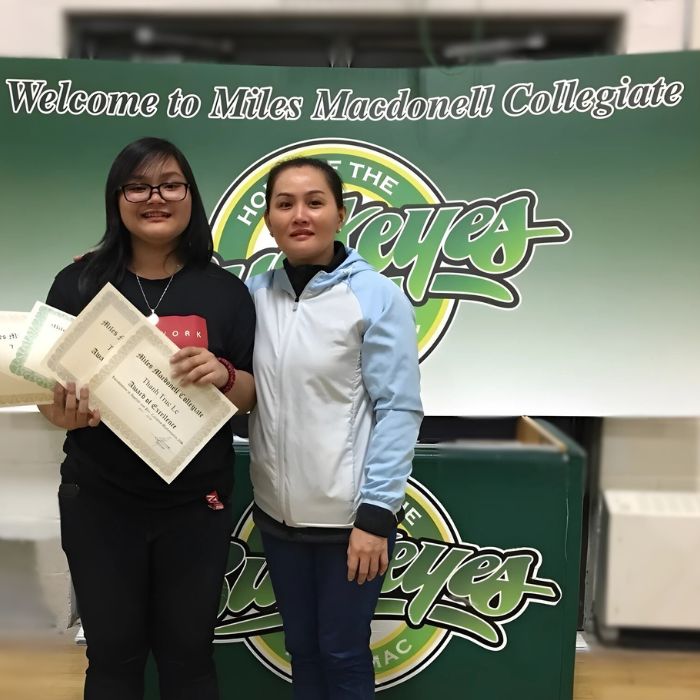
Lê Thanh Trúc, Student at Miles Macdonell Collegiate
“My family and I are deeply grateful to SIEC for not only securing my **Canada high school student visa** in Grade 10 but also for assisting my parents and siblings in obtaining their **visitor visas**. That was an invaluable gift.” — Lê Thanh Trúc, Student at **Miles Macdonell Collegiate** Secure Your Early High School (Secondary) […]
Phan Thị Ngọc Huỳnh, Former Student in Winnipeg
“The solid foundation provided by SIEC and Ms. Huong not only helped me realize my study abroad dream but also gave me the confidence to graduate, secure a stable job, and **settle permanently in Canada**.” — Phan Thị Ngọc Huỳnh, Former Student, currently working in **Winnipeg, Canada** Explore Your Study & Immigration Pathway in Canada […]
Hoàng Giang, Student at Edmonds College
“With her dedication and passion, Ms. Huong helped launch my **American dream**, opening up a vast world of opportunity and the chance to meet new friends.” — Hoàng Giang, Student at **Edmonds College** Explore More About Studying in the USA Spotlight on Edmonds College (Washington State) Gain in-depth knowledge about the programs, tuition fees, and […]
Khánh Lê, Student at LaSalle College
“Thank you to Ms. Huong and the SIEC team for their dedicated partnership and support, from my application phase until I was settled in Canada, helping me confidently pursue my dreams.” — Khánh Lê, Student at **LaSalle College** Explore Further Canada Study Opportunities Spotlight on LaSalle College Gain deeper insights into the programs, tuition fees, […]
Quỳnh Giao, Student at Red River Colleg
“She didn’t just stop at completing the application; she was an inspiration, a true motivator…” — Quỳnh Giao, Student at **Red River College** Continue Your Canada Study Abroad Journey Spotlight on Red River College Polytechnic (RRC Polytech) Discover the high-demand, **applied learning programs** at **Red River College** – one of the premier post-secondary institutions in […]