International Student Psychology: The Science Behind Homesickness & 5 Proven Ways to Overcome It
25/05/2026 Phong Nguyen
A hurried, tight embrace at the security gate of Tan Son Nhat or Noi Bai International Airport, a tear rolling down a mother’s cheek as she turns her face away to hide it, and a father’s trembling pat on the shoulder filled with high expectations… You turn around and walk away, carrying the ambitions of your youth and the immense hopes of your family. But then, after a long flight spanning tens of hours across halfway around the globe, reality hits you: you step into a strange dormitory room in the US, Canada, or Australia. On that very first night, the space is so agonizingly silent that you can clearly hear the ticking of the clock and your own breathing. That is the exact moment an overwhelming sense of emptiness and loss crashes over you like a fierce wave. You suddenly realize: You are truly far from home, completely alone in an entirely unfamiliar world.
Studying abroad is always painted as a brilliant, rosy picture featuring prestigious, ancient university campuses, exploratory trips across Europe or America, and thousand-dollar career opportunities upon graduation. However, behind that glamorous halo lies a dark shadow that every insider must navigate, yet rarely expresses on social media. The baggage you bring into the world doesn’t just consist of thick textbooks, heavy winter coats, or a stellar GPA transcript; it also contains the chaotic, intense fluctuations of international student psychology.
How can you overcome homesickness, prevent loneliness from “swallowing” the bright, youthful days ahead, and turn this challenging period into a solid launching pad for your maturity? This in-depth article by SIEC – Study Abroad & Visa Consulting is not merely a psychological survival guide; it serves as a warm mental embrace, helping both parents and freshmen build the most resilient “psychological immune system” for the journey of conquering the future.
1. The Science Behind Homesickness: The Core of the Study Abroad Psychological “Shock”
Many young people stepping foot in a foreign land often carry a huge sense of inferiority and self-blame. They silently endure, hiding the fact that they cry into their pillows every night because they fear their parents back home will worry, or they are afraid of being judged by peers as “weak,” “incompetent,” or “spoiled.” However, from the perspective of behavioral psychologists and neuroscientists, homesickness is absolutely not a sign of emotional frailty. It is a completely natural biological and psychological response mechanism that strongly affects the human cognitive system when there is an abrupt change in the living environment.
When you live in your home country, your brain has built an incredibly solid “Comfort Zone” based on daily, repetitive stimuli: the familiar taste of your mother’s cooking, the voices of loved ones, the sunlit streets, and even the characteristic noises of the city. The central nervous system uses these elements as anchors to establish homeostasis. When you study abroad, this entire safety navigation system is completely wiped out in less than a 24-hour flight. You have to absorb a different language, a different culture, and a completely alien system of communication symbols. At this moment, the Amygdala in your brain immediately sends out danger signals, triggering states of anxiety, restlessness, and profound isolation. This is the core state of the negative fluctuations in international student psychology.
The 4-Stage Model of “Culture Shock” Affecting International Student Psychology
To know how to control emotions and overcome homesickness, we first need to clearly understand where we stand in the psychological adaptation cycle. According to Lysgaard’s sociological research, almost all international students go through a classic U-shaped graph consisting of 4 stages of adaptation:
Honeymoon Phase: Typically occurs during the first 1 to 2 weeks after arriving in the host country. Everything around you is new, modern, civilized, and as beautiful as in the movies. You are full of energy, excited to take check-in photos, explore the campus, enjoy Western cuisine, and feel immense pride in your decision to study abroad.
Crisis/Shock Phase: Often hits unexpectedly from the 3rd week and lasts up until the 3rd month. When the novelty wears off, the reality of daily life begins to unfold. Language barriers leave you exhausted after every lecture; the pressure from heavy assignments weighs you down; daily inconveniences, self-isolation, freezing weather, or intense loneliness set in. This is the period when international student psychology is most vulnerable, and the need to find solutions to overcome homesickness becomes more urgent than ever.
Recovery Phase: Takes place from the 4th to the 6th month. The human mechanism of self-adaptation begins to operate. You learn to accept differences, find effective time-management methods, know how to use public transportation, become adept at grocery shopping and cooking, and begin to connect and expand your circle of friends.
Adjustment Phase: Occurs after about 1 year of living away from home. You feel comfortable, confident, and your international student psychology is fully stabilized. You begin to consider the host country as your second home, fully prepared for long-term career development goals.
Figure 1: Graph depicting the 4 stages of psychological transformation in international students and the progression cycle of homesickness according to international education research.
Real Data: Global Statistics on International Student Mental Health
To prove that homesickness is a shared “privilege” and a common challenge for all international students rather than an individual flaw, let’s look at the scientific statistics from reputable global health and educational organizations:
According to a large-scale academic study by the American Psychological Association (APA), up to 69% to 71% of international students experience moderate to severe homesickness during their first 3 months of enrollment.
A survey conducted across major universities in Australia revealed that 45% of international students face significant barriers regarding their international student psychology in their first year, leading to reclusive behavior and refusal to participate in social activities.
Notably, up to 75% of students admit that excessive use of social media inadvertently doubles the severity of their homesickness, hindering the process of trying to overcome homesickness as they constantly view images of family gatherings and friends in their home country.
2. The “Hidden” Symptoms of International Student Psychological Crisis When Away From Home
Homesickness is not simply manifested through tears or missing the faces of your parents. The fluctuations and traumas in international student psychology are incredibly complex and subtle, often hiding beneath biological and behavioral symptoms that even the insiders cannot self-identify:
Physical Symptoms Hindering the Ability to Overcome Homesickness
The human brain and body are a unified organic entity. When mental state remains under prolonged stress and anxiety due to environmental changes, the adrenal glands continuously secrete high levels of the hormone Cortisol. This directly causes negative biological reactions: sudden hair loss, chronic insomnia, or restless, fragmented sleep. Digestive system disorders such as chronic stomachaches, anorexia, or conversely – Binge Eating disorder – are all negative defensive reactions of the body when international student psychology falls into a prolonged state of insecurity.
Behavioral and Cognitive Symptoms
Cognitively, you will feel a distinct decline in your ability to concentrate. While sitting in large university lecture halls, even though you desperately want to listen, your mind goes blank, unable to absorb the lecture. Behaviorally, psychological inhibition makes you sensitive, easily angered, and prone to lashing out at friends around you or loved ones when calling home. This unintentionally creates a dangerous toxic loop: Loneliness & Isolation → Poor Academic Performance → Prolonged Stress & Pressure → Depression & Severe Homesickness → Desire to Give Up and Return Home.
3. Differences in Culture Shock by Country: US vs. Canada vs. Australia
Depending on the country you choose to set foot in, the environmental factors influencing international student psychology will carry entirely different characteristics. Understanding this clearly helps you proactively build an appropriate adaptation script:
International Students in the US: Fierce Competition and Geographic Isolation
The United States is a vast country. Except for bustling metropolises that utilize public transit like New York or Boston, most other states require a car for mobility. The inability to commute independently in the early days makes freshmen feel “imprisoned” within the dormitory campus. Additionally, a culture that highly values Individualism combined with fierce academic competition at American universities can make international students feel isolated, finding it difficult to build deep, soulful friendships.
International Students in Canada: The Harsh Winter and “Winter Blues”
For students coming from tropical climates like Southeast Asia, the prolonged winter with white snow and temperatures dropping to minus tens of degrees Celsius in Canada is a genuine shock. The lack of sunlight during winter directly reduces Serotonin levels in the body, leading to Seasonal Affective Disorder (SAD), also known as the “Winter Blues”. This syndrome resonates with homesickness, causing international student psychology in Canada to easily plummet into states of melancholy and severe energy depletion.
International Students in Australia: Fast-Paced Life and the Pressure of Part-time Work
Australia is an ideal destination with an open policy regarding part-time work for international students. However, this very aspect inadvertently creates immense pressure. Many students have to juggle a packed schedule: completing class assignments while racing against time to work part-time to cover living expenses. Physical exhaustion drastically reduces psychological resistance, turning the feelings of emptiness and the desire to overcome homesickness into a seemingly unsolvable puzzle every time night falls.
4. Comprehensive Strategy: 5 Practical Ways to Thoroughly Overcome Homesickness
Recognizing the problem is the first step, but taking proactive, scientific action is the decisive key. Below is a 5-step behavioral strategy summarized from SIEC’s experience in supporting thousands of international students, helping you completely master your international student psychology:
Method 1: Accept Your Current Emotions and Set a “Deadline” for Sadness
The biggest and most common mistake young people make is trying to “brace themselves,” denying or suppressing negative thoughts in their international student psychology. The more you evade it, the more persistently loneliness will cling to you. Instead, bravely face it and tell yourself: “I am in a strange country halfway across the world, it is completely logical and normal for me to miss home.”
However, the core secret to helping you overcome homesickness at this step is: Set a clear deadline for your emotions. Allow yourself the right to be sad, the right to cry, and the right to miss home for exactly one hour. Once the alarm rings ending that hour, firmly stand up, wash your face with cold water, tidy up your room, or start doing something useful to drag your brain back to objective reality.
Method 2: “Package” Your Sensory Space to Recreate a Sense of Safety
Homesickness, at its essence, is the sudden deprivation of familiar sensory stimuli. You can absolutely use behavioral psychology techniques to proactively recreate those sensory experiences right in your new living space:
Smell and Taste: When packing your luggage, smartly bring along some signature spices like Pho seasoning, Vietnamese pepper, or a traditional coffee filter. Cooking a purely traditional meal yourself not only fills your hungry stomach but the familiar aroma wafting through the room will soothe your nervous system, release happy hormones, and instantly relieve international student psychology pressure.
Sight and Sound: Print out photos of close family and friends and stick them in your study corner. Bring a small souvenir or a familiar hugging pillow from home so that every time you look at it, you always feel the companionship and draw immense spiritual strength from your homeland.
Method 3: Apply the “Virtual Disconnect” Rule to Establish Real Connections
Smartphones and social networks are often double-edged swords that exacerbate negative developments in international student psychology due to FOMO (Fear Of Missing Out). Continuously scrolling through Facebook and Instagram to see pictures of friends back home gathering for meals, celebrating the New Year, or holding class reunions will only make you feel more self-pitying and lonely.
To overcome homesickness, establish strict self-discipline: limit your social media usage time and force yourself to step out of your dorm room for at least 2 hours a day. Proactively go down to the library, join sports, music, photography clubs, or volunteer activities on campus. Direct interactions with people in real life are the most effective antidote to dispel loneliness.
Figure 2: Proactively engaging in outdoor extracurricular activities on campus is the golden key to stabilizing international student psychology and expanding your circle of friends.
Method 4: Scientifically Plan Your Family Communication Schedule
Communicating with parents too frequently (calling whenever you’re free—morning, noon, and night) is a grave mistake. This inadvertently keeps your mind anchored in your home country, entirely hindering the process of opening your heart to embrace the new culture and slowing down your ability to overcome homesickness. Work with your parents to agree on a clear convention: Fix your calling schedule to 2 to 3 times a week during a specific time frame.
During these calls, instead of focusing solely on complaining about difficulties, proactively share about new things, interesting knowledge you learned in class, or a new dish you successfully tried to cook. Sharing this positive energy not only helps stabilize your international student psychology but also serves as an invaluable soothing remedy for your anxious parents back home.
Method 5: Proactively Utilize the On-Campus Mental Health Support Center
In countries with leading advanced education systems, mental healthcare for students is always placed as a top priority. Every university and college has a dedicated department called the Student Counseling Center with a team of experienced psychological experts, offering services that are completely free and strictly confidential.
If you notice signs of instability in your international student psychology that are beyond your ability to self-control, boldly book an appointment. Proactively seeking help from professional experts to overcome homesickness is the action of a mature, courageous, responsible young person who truly understands their own worth.
5. A Dedicated Corner for Parents: Becoming a Remote “Spiritual Charging Station”
The study abroad journey is never a solo battle for the child stepping onto the plane; it is also a silent test of courage for those left behind. Facing a house that suddenly feels empty, devoid of the child’s laughter at every meal is no small psychological shock for parents. However, for your child to steadfastly overcome homesickness, parents must learn to restrain their own anxiety to become the most solid “spiritual charging station” from thousands of kilometers away:
Listen deeply with empathy, without judgment: When your child calls crying or complaining about the hardships and pressures of international student psychology, what they need most at that moment is not dogmatic lectures, moral lessons, or comparisons like: “In the past, we had it a hundred times harder than you and we were fine.” Be patient and listen, letting your child vent all their frustrations and pressures with gentle words of encouragement: “Mom and Dad understand you are trying very hard. Initial difficulties are something everyone goes through, and we are always here for you.”
Acknowledge efforts and reinforce belief in your child’s bravery: Affirmative words and absolute trust from parents are the most powerful spiritual weapons for an international student. Frequently remind your child of the milestones they excellently overcame in the past to prove to them that they possess the full capacity and bravery to overcome the current challenge.
Encourage action instead of enabling escapism: Seeing their child too sad, many parents out of pity easily let slip words like: “If it’s too hard and stressful, just drop everything and come home, our family doesn’t lack money.” This sentence unintentionally diminishes the child’s fighting spirit, making it easier for them to give up when facing adversity. Instead, tactfully guide your child to seek practical solutions like taking a walk, joining a club, or reaching out to the school’s support center to proactively overcome homesickness.
Conclusion: Overcoming Homesickness is the Catalyst for Maturity
The tears falling silently in the dorm room on the first night, the desperate emptiness when having to celebrate traditional holidays away from family, or the moments of pressure where you feel like collapsing before exams… all of those arduous experiences are not barriers stopping your footsteps. On the contrary, they are invaluable biological catalysts forging a resilient, independent, autonomous, and brave international student psychology—the precious qualities of a future global leader. When you conquer the fierce waves of homesickness, you will realize you have grown and become much stronger than the version of yourself you once pictured.
Never let temporary loneliness stall your steps on the path of conquering the treasure trove of human knowledge. Always remember that on this challenging yet glorious journey, SIEC – Study Abroad & Visa Consulting will always be here, acting not just as an agency processing paperwork, but as a strategic companion and a solid spiritual pillar, standing by your side on every path stepping out into the world.
BUILD A COMPREHENSIVE INTERNATIONAL STUDENT PSYCHOLOGY WITH SIEC
An outstandingly successful study abroad roadmap is defined not only by a Visa or a prestigious scholarship, but it relies on a steadfast international student psychology and an excellent soft skill set to overcome homesickness and master an independent, free life. At SIEC, we don’t just do paperwork – we design the future and forge comprehensive maturity for every student.
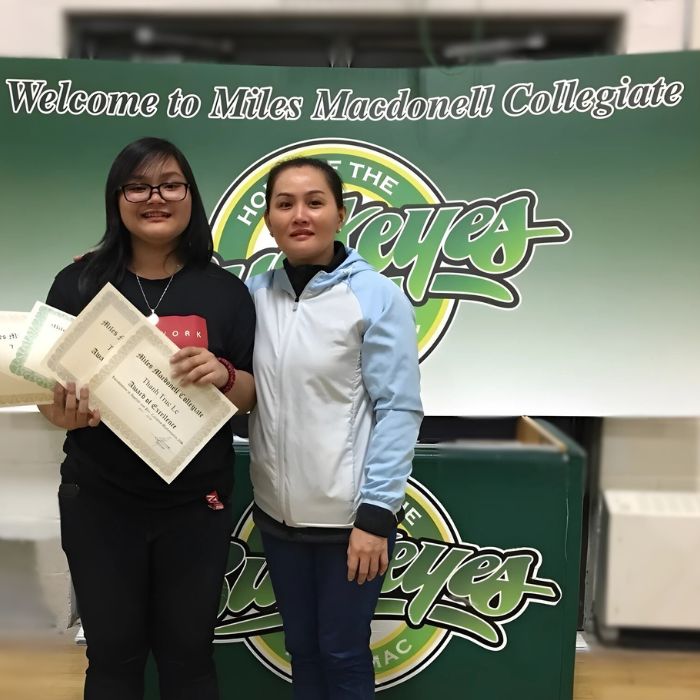
Lê Thanh Trúc, Student at Miles Macdonell Collegiate
“My family and I are deeply grateful to SIEC for not only securing my **Canada high school student visa** in Grade 10 but also for assisting my parents and siblings in obtaining their **visitor visas**. That was an invaluable gift.” — Lê Thanh Trúc, Student at **Miles Macdonell Collegiate** Secure Your Early High School (Secondary) […]
Phan Thị Ngọc Huỳnh, Former Student in Winnipeg
“The solid foundation provided by SIEC and Ms. Huong not only helped me realize my study abroad dream but also gave me the confidence to graduate, secure a stable job, and **settle permanently in Canada**.” — Phan Thị Ngọc Huỳnh, Former Student, currently working in **Winnipeg, Canada** Explore Your Study & Immigration Pathway in Canada […]
Hoàng Giang, Student at Edmonds College
“With her dedication and passion, Ms. Huong helped launch my **American dream**, opening up a vast world of opportunity and the chance to meet new friends.” — Hoàng Giang, Student at **Edmonds College** Explore More About Studying in the USA Spotlight on Edmonds College (Washington State) Gain in-depth knowledge about the programs, tuition fees, and […]
Khánh Lê, Student at LaSalle College
“Thank you to Ms. Huong and the SIEC team for their dedicated partnership and support, from my application phase until I was settled in Canada, helping me confidently pursue my dreams.” — Khánh Lê, Student at **LaSalle College** Explore Further Canada Study Opportunities Spotlight on LaSalle College Gain deeper insights into the programs, tuition fees, […]
Quỳnh Giao, Student at Red River Colleg
“She didn’t just stop at completing the application; she was an inspiration, a true motivator…” — Quỳnh Giao, Student at **Red River College** Continue Your Canada Study Abroad Journey Spotlight on Red River College Polytechnic (RRC Polytech) Discover the high-demand, **applied learning programs** at **Red River College** – one of the premier post-secondary institutions in […]