Why Pursuing a Master’s in Canada is a Great Career Choice
06/04/2026 Phong Nguyen
The journey to pursue a Master’s in Canada during the 2026–2027 period has undergone landmark shifts. The Canadian government is no longer encouraging mass immigration as before, but has pivoted its focus toward high-skilled candidates. Choosing a graduate program now must be closely aligned with priority sectors to ensure a sustainable pathway to permanent residency.
This article provides a detailed look at the new regulations and how to optimize your application profile.
1. Requirements and Documents for a Master’s in Canada in 2026
To begin your journey for a Master’s in Canada, students must meet rigorous academic and language standards. In 2026, top universities in Canada are prioritizing applicants with a solid knowledge base and work experience relevant to their field of study.
Most graduate programs require students to have graduated from a university with a GPA ranging from good to excellent. Additionally, English proficiency certificates are mandatory for both visa processing and admission. Below is a summary table of the basic requirements you need to prepare.
Category
Detailed Requirements
Degree
Graduated from a 4-year University program with a GPA of 3.0/4.0 or higher
English Proficiency
IELTS Academic from 6.5 – 7.0 or equivalent PTE score
Experience
Preference for 1-2 years of work experience in a related field
Other Certificates
GMAT or GRE (depending on Management or Engineering sectors)
Supplementary Documents
Letters of recommendation from professors, personal statement, and CV
1.1. Personal Competency Profile
Beyond administrative paperwork, your personal statement (Statement of Purpose) plays a decisive role when applying for a **Master’s in Canada**. You need to clearly demonstrate your career goals and explain why a master’s program in Canada will help you contribute to the nation’s economy. In 2026, universities highly value honesty and critical thinking in these essays.
1.2. Application Review Process
The review process typically lasts from 4 to 8 months depending on the institution. Students should prepare their application for a Master’s in Canada early to meet deadlines for the Fall intake in September or the Winter intake in January. Early submission also allows more time to handle visa procedures and financial proofing.
2. Study Permit Regulations and Financial Requirements for Master’s Students
Study Permit policies for the 2026–2027 period show clear differentiation. For the master’s level, students still enjoy more priorities compared to college or undergraduate levels. However, financial requirements have been significantly increased to ensure students can afford their entire stay during their studies.
Immigration, Refugees and Citizenship Canada (IRCC) has updated the minimum cost-of-living requirement that international students must prove. This helps prevent students from facing financial hardship after arriving. Transparent financial preparation is the key to receiving a Study Permit quickly.
Item
Estimated Cost (CAD/year)
Master’s Tuition
20,000 – 45,000
Living Expenses
21,000 – 25,000
Health Insurance
600 – 1,000
Study Materials
1,500 – 2,000
2.1. Proving Finances in 2026
When preparing your profile for a **Master’s in Canada**, you must provide evidence of a stable income source from a sponsor or a savings account. The account balance must be sufficient to cover at least one year of tuition and living expenses. Documents such as bank balance certificates and tuition receipts for the first semester are extremely important.
2.2. Advantages of a Master’s Level Study Permit
A noteworthy point is that students pursuing a Master’s in Canada are generally not limited by provincial attestation letter quotas like lower levels of study. This helps speed up the Study Permit processing. Furthermore, spouses of master’s students still have the opportunity to be granted an Open Work Permit to accompany them to Canada.
3. 24-Hour Weekly Work Regulation for Master’s Students
Starting in 2026, the off-campus work hour regulation for international students has been standardized at 24 hours per week during academic sessions. This change aims to help students balance their studies with practical experience. For those pursuing a Master’s in Canada, working part-time not only helps cover costs but also provides a chance to build a professional network.
During scheduled breaks or summer holidays, students are still permitted to work full-time without a limit on hours. However, the primary goal of a master’s program is in-depth research and academics. Therefore, you should prioritize finding work related to your field, such as teaching or research assistantships.
3.1. Benefits of Working in Your Field
While you are completing your **Master’s in Canada**, part-time work at local companies in STEM or Healthcare sectors will be a major plus for your future immigration profile. Canadian work experience is a key factor in Provincial Nominee Programs (PNP). Take advantage of those 24 hours a week to accumulate valuable practical skills.
3.2. Important Notes on Labor Regulations
Students must strictly adhere to work hour regulations to avoid affecting the legal status of their Study Permit. Working beyond the allowed hours can lead to deportation or refusal of visa extensions. Canadian businesses now also closely monitor the work hours of international students to ensure transparency.
4. How to Choose a Major and School to Optimize Immigration Opportunities
In the new immigration trends of 2027, not every major offers the same opportunities for permanent residency. The Canadian government is prioritizing the retention of high-quality human resources in sectors facing severe shortages. Choosing the right major for a **Master’s in Canada** is a strategic move for your future.
Top priority industry groups include Healthcare, STEM (Science, Technology, Engineering, Mathematics), and Construction. These fields have distinct and faster immigration pathways compared to general business or economic streams.
Industry Group
Suggested Majors
Job Opportunities
Healthcare
Health Management, Advanced Nursing, Psychology
Very High
STEM
Data Science, AI, Software Engineering
High
Construction
Construction Project Management, Urban Planning
Stable
4.1. Priority for Healthcare and STEM Groups
If you choose to pursue a Master’s in Canada in Data Science or Nursing, the likelihood of receiving an invitation for permanent residency after graduation is very high. Provinces like Ontario and British Columbia frequently hold specific draws for master’s candidates in technical and health sectors. These are core areas for developing the Canadian economy in the next decade.
4.2. Selecting the Right University
Besides the major, choosing the school is also vital. You should prioritize universities on the DLI list that have master’s programs eligible for the Post-Graduation Work Permit (PGWP). Universities in Eastern provinces or regions further from urban centers sometimes have more relaxed immigration policies to attract talent.
5. Roadmap from a Master’s in Canada to Employment and PR
The immigration roadmap for someone with a **Master’s in Canada** typically starts as soon as you graduate. With a master’s degree, you can apply for a post-graduation work permit with a duration of up to 3 years. This is the golden time to accumulate professional work experience in Canada.
In the 2026–2027 phase, immigration programs like Express Entry and the Provincial Nominee Program (PNP) will prioritize additional points for those with advanced degrees and Canadian work experience. Specifically, those working in priority occupations will have significantly more competitive scores.
5.1. Steps to Transition to Permanent Residency
After working for 1 to 2 years, students who completed a Master’s in Canada can apply for Permanent Residency (PR). Holding a master’s degree gives you an advantage in academic points within the global ranking system. Furthermore, language proficiency and the ability to adapt to Canadian work culture will be decisive factors for success.
5.2. The Importance of Professional Networking
During your master’s studies, participating in professional seminars and internships is essential. Relationships with professors and colleagues in Canada will help you find high-quality jobs immediately after graduation. This is a solid foundation for you to realize your dream of long-term settlement in the Maple Leaf country.
6. Assess Your Canada 2027 Immigration Eligibility Now
To know for certain if your profile meets the latest criteria, you need in-depth and personalized consultation. The roadmap for a **Master’s in Canada** is not just about studying; it is a long-term plan for your career and life. Assessing your profile early helps you adjust your direction correctly, avoiding wasted time and money.
The team of experts at SIEC always stays updated on the latest changes in immigration law and 2026–2027 labor market trends. We will help you analyze your chances of success based on your academic background, finances, and immigration goals.
Do not let policy changes become a barrier to your dreams. Be proactive in researching and preparing today to seize opportunities in priority sectors such as STEM, Healthcare, and Construction.
Contact SIEC immediately for detailed advice on your Master’s in Canada roadmap and to assess your future immigration eligibility. We are committed to accompanying you from the school selection step until you settle into your life in Canada.
Let us help you build a solid future in Canada through a professional master’s education path. Register your information now to receive the most dedicated support.
Are You Ready to Breakthrough Your Global Career with SIEC?
Don’t let your prestigious degree just stay on paper. Let SIEC experts advise you on a study roadmap combined with a job orientation strategy starting today!
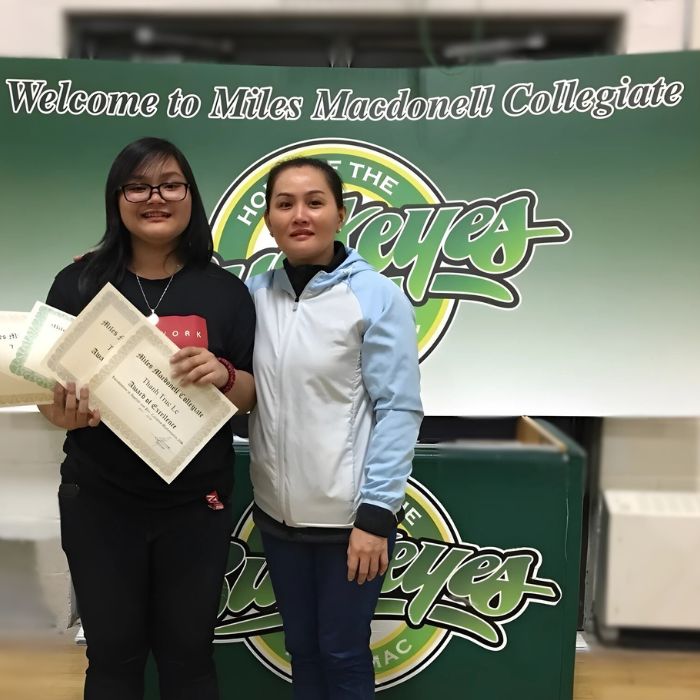
Lê Thanh Trúc, Student at Miles Macdonell Collegiate
“My family and I are deeply grateful to SIEC for not only securing my **Canada high school student visa** in Grade 10 but also for assisting my parents and siblings in obtaining their **visitor visas**. That was an invaluable gift.” — Lê Thanh Trúc, Student at **Miles Macdonell Collegiate** Secure Your Early High School (Secondary) […]
Phan Thị Ngọc Huỳnh, Former Student in Winnipeg
“The solid foundation provided by SIEC and Ms. Huong not only helped me realize my study abroad dream but also gave me the confidence to graduate, secure a stable job, and **settle permanently in Canada**.” — Phan Thị Ngọc Huỳnh, Former Student, currently working in **Winnipeg, Canada** Explore Your Study & Immigration Pathway in Canada […]
Hoàng Giang, Student at Edmonds College
“With her dedication and passion, Ms. Huong helped launch my **American dream**, opening up a vast world of opportunity and the chance to meet new friends.” — Hoàng Giang, Student at **Edmonds College** Explore More About Studying in the USA Spotlight on Edmonds College (Washington State) Gain in-depth knowledge about the programs, tuition fees, and […]
Khánh Lê, Student at LaSalle College
“Thank you to Ms. Huong and the SIEC team for their dedicated partnership and support, from my application phase until I was settled in Canada, helping me confidently pursue my dreams.” — Khánh Lê, Student at **LaSalle College** Explore Further Canada Study Opportunities Spotlight on LaSalle College Gain deeper insights into the programs, tuition fees, […]
Quỳnh Giao, Student at Red River Colleg
“She didn’t just stop at completing the application; she was an inspiration, a true motivator…” — Quỳnh Giao, Student at **Red River College** Continue Your Canada Study Abroad Journey Spotlight on Red River College Polytechnic (RRC Polytech) Discover the high-demand, **applied learning programs** at **Red River College** – one of the premier post-secondary institutions in […]