The Ultimate Guide to Attending High school in USA in 2026
31/08/2026 Phong Nguyen
Currently, the trend of pursuing a High school in USA education is no longer just about finding a prestigious institution to earn a bachelor’s degree. Vietnamese parents are gradually shifting towards the Double-Path strategy, a roadmap that combines intensive study with building a foundation for long-term residency. Planning early for the 2026–2027 period allows students enough time to optimize their profiles, hunt for high-value scholarships, and simultaneously initiate the EB-3 employment-based immigration process. This is a strategic move that solves the employment and residency puzzle in the U.S. immediately after university graduation.
Choosing the right school when planning for a High school in USA journey
Selecting a school is the first and most crucial step in the journey of attending a High school in USA. Instead of focusing solely on prestigious rankings, parents and students should consider the compatibility between personal ability, career goals, and the family’s financial capacity. The U.S. has a diverse higher education system with thousands of options ranging from state public universities to private boarding schools or liberal arts colleges.
Classifying university groups in the United States
For the High school in USA roadmap, students can choose between three main groups of schools. The first group consists of large research universities, which offer abundant technological resources and extensive corporate networks. The second group includes liberal arts colleges, focusing on comprehensive education and critical thinking skills with small class sizes. The third group is community colleges, a cost-effective option for the first two years before transferring to a four-year university.
Geographical location and employment opportunities
When searching for information about a High school in USA, the school’s location plays a key role in finding internship opportunities. States like California, Texas, or New York often have vibrant labor markets, making it easier for students to access major corporations. This is particularly important if students intend to pursue a residency path later, as local professional relationships will serve as a solid foundation for their employment records.
Scholarship hunting strategy for Fall 2027 for high school students
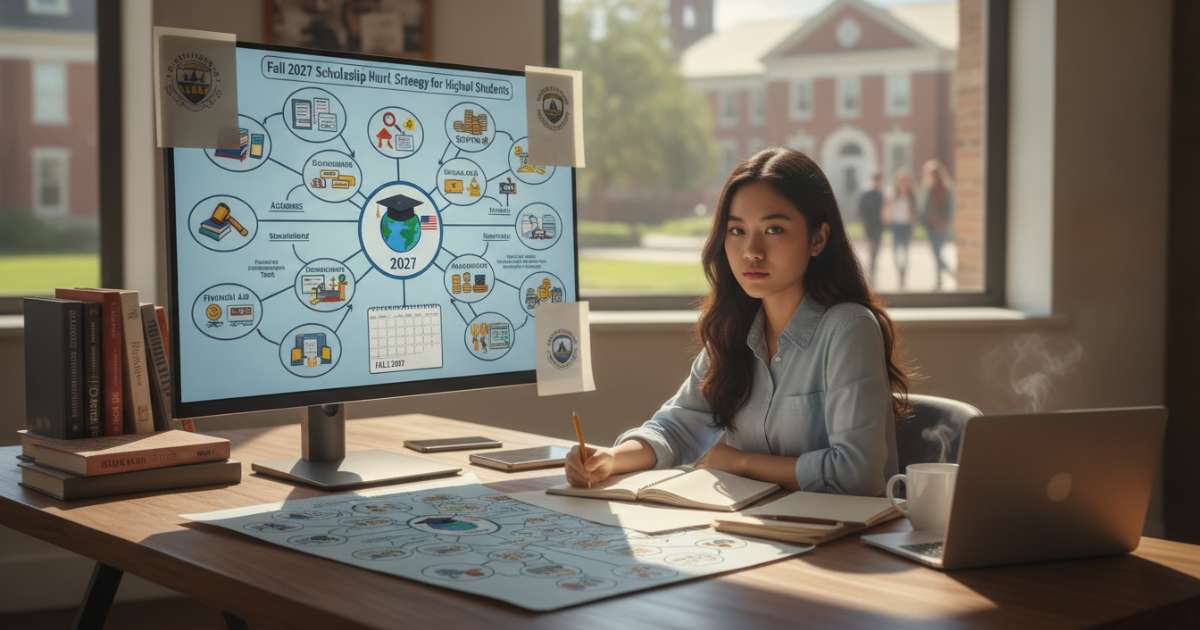
Securing scholarships is the top priority for most families when planning for a High school in USA experience. To prepare for the Fall 2027 intake, students need to start building their profiles as early as 10th or 11th grade. An impressive scholarship application is not based solely on grades but also needs to showcase the candidate’s personality and social contributions.
Academic requirements and standardized certificates
The Grade Point Average (GPA) is a prerequisite for schools to consider granting scholarships. Additionally, certificates such as the SAT or ACT still play an important role in proving the logical thinking abilities of Vietnamese students. For those pursuing a High school in USA, achieving an IELTS score of 7.0 or a TOEFL score of 90 or higher will open doors to top-tier schools and increase the value of financial aid packages.
Extracurricular activities and personal essays
Scholarships in the U.S. often prioritize individuals with leadership potential and community spirit. Students should participate in practical projects that demonstrate perseverance and passion in a specific field. The personal essay is where students can tell their stories in the most authentic way. In the High school in USA roadmap, the essay needs to highlight why the student chose the U.S. and what they will contribute to the learning environment there.
Preparing financial records and visa interviews for high school students
Financial records and visa interviews are the two biggest hurdles that anyone aiming for a High school in USA must overcome. Transparency and consistency in the application are the keys to receiving approval from the consular officer. Parents need to prepare documents proving a stable source of income and accumulated assets sufficient to cover the entire duration of their child’s studies.
Proving the family’s financial capacity
Preparing financial records for a High school in USA requires great detail. Documents include savings accounts, land use rights certificates, business licenses, or parents’ labor contracts. The consular officer needs to see that the family has funds available to pay for tuition and living expenses without the student needing to work illegally in the U.S.
Successful F1 visa interview skills
The visa interview is a short but decisive conversation. Students need to show confidence, answer questions directly, and especially prove their serious intent to study. Regarding a High school in USA program, having a clear understanding of the school, major, and plans to return or contribute after graduation is vital to persuading the interviewer.
Building a clear study plan and avoiding vague purpose errors
One of the common reasons for visa denials for a High school in USA is a vague study plan. Students often make the mistake of not being able to explain the reason for choosing their major or failing to show the connection between studying in the U.S. and their future career. A detailed study plan will make the application more persuasive and professional.
Identifying long-term career goals
Students should research the training program of their chosen school thoroughly. Understanding the subjects, leading professors, and research opportunities will help them answer fluently during the interview. When preparing for a High school in USA, write down a specific roadmap from the start of university until graduation and the subsequent career intentions.
Overcoming unclear study purpose errors
Unclear purpose errors often occur when students choose a school based only on its name or following a trend. To avoid this, they need to demonstrate an understanding of the labor market and why the U.S. educational environment is the best place to develop those skills. In a High school in USA application, the logic between past studies in Vietnam and the future in the U.S. must be closely connected.
Overview of the EB-3 residency roadmap for high school students
The Double-Path strategy allows students to simultaneously study under an F1 visa and process an EB-3 employment-based residency application. This residency category is for skilled workers, professionals, or unskilled workers. For those exploring a High school in USA, combining it with EB-3 helps them obtain a green card during or after graduation, eliminating worries about visa renewals or finding a short-term employer sponsor.
Benefits of filing an EB-3 application early
By filing an EB-3 application in parallel with the High school in USA process, students can take advantage of the four years of university to wait for the processing time by the Department of Labor and U.S. Citizenship and Immigration Services (USCIS). By the time they graduate, they may already be in the final stages of the green card process, giving them the right to legal residency and the freedom to work for any company without depending on a new employer’s sponsorship.
Conditions and process for participating in EB-3
The EB-3 program requires a U.S. employer to sponsor and prove that they cannot find a suitable local worker. For families planning a High school in USA, they can seek reputable consulting units to connect with legal sponsoring businesses. The process includes applying for labor certification, filing the I-140 petition, and finally adjusting status or interviewing at the consulate.
EB-3 wait times and the residency vision for 2026
Waiting time is a factor that needs to be carefully calculated in the High school in USA roadmap combined with residency. Currently, due to the high volume of applications from Vietnam, the EB-3 category is facing backlogs, leading to longer processing times than before. It is forecasted that by 2026, waiting times may vary by several years depending on specific cases.
Analysis of the EB-3 situation for Vietnamese applicants
Vietnamese citizens participating in the EB-3 category usually have to wait for the visa bulletin to be interviewed for an immigrant visa or to file for adjustment of status. When planning for a High school in USA for the 2026–2027 period, parents need to identify this as a long-distance race. Starting the EB-3 application as early as 12th grade or the first year of university is the golden time to ensure the green card is received just when the student needs to start their career.
Strategic vision for the student’s future
Combining a High school in USA path with the EB-3 category is a smart investment in the future. Instead of just possessing knowledge, students also gain U.S. citizenship, opening up access to the world’s most advanced social, medical, and educational benefits. 2026 will be an important milestone to reassess immigration policies; therefore, preparing a standard application with professional advice is essential.
The journey of pursuing a High school in USA according to the Double-Path strategy requires perseverance and a long-term vision from the family. By preparing thoroughly from school selection and scholarship hunting to establishing an EB-3 residency roadmap, students will have a solid start in the land of opportunity. This is not just about going to school; it is about building a new life with unlimited opportunities in the world’s number one power.
If parents and students are looking for a safe and effective roadmap for studying combined with residency, contact the expert team at SIEC immediately. We are committed to accompanying families in building a personalized strategy, from school selection until you hold the prestigious green card in your hand.
Don’t miss the golden opportunity to realize the American dream for your children in the 2026–2027 period. Let SIEC help you answer all questions regarding documentation, finance, and complex legal procedures to make the study journey as smooth and successful as possible.
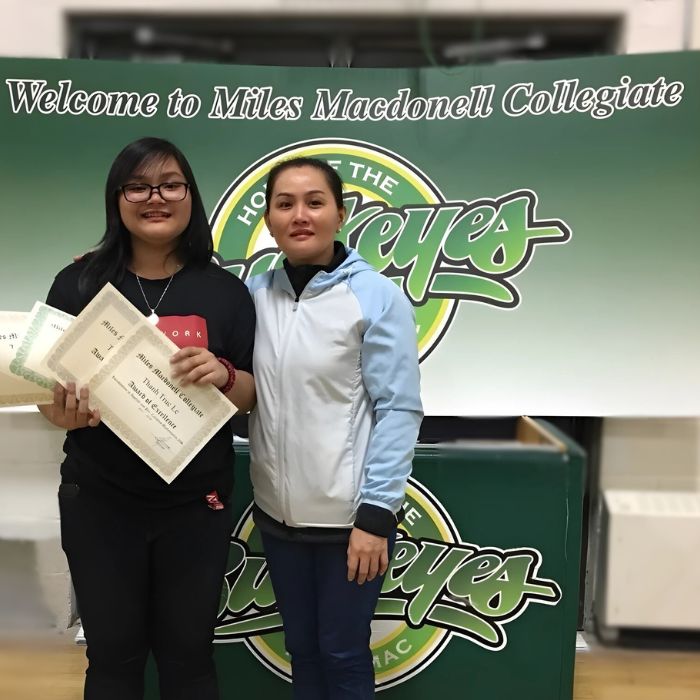
Lê Thanh Trúc, Student at Miles Macdonell Collegiate
“My family and I are deeply grateful to SIEC for not only securing my **Canada high school student visa** in Grade 10 but also for assisting my parents and siblings in obtaining their **visitor visas**. That was an invaluable gift.” — Lê Thanh Trúc, Student at **Miles Macdonell Collegiate** Secure Your Early High School (Secondary) […]
Phan Thị Ngọc Huỳnh, Former Student in Winnipeg
“The solid foundation provided by SIEC and Ms. Huong not only helped me realize my study abroad dream but also gave me the confidence to graduate, secure a stable job, and **settle permanently in Canada**.” — Phan Thị Ngọc Huỳnh, Former Student, currently working in **Winnipeg, Canada** Explore Your Study & Immigration Pathway in Canada […]
Hoàng Giang, Student at Edmonds College
“With her dedication and passion, Ms. Huong helped launch my **American dream**, opening up a vast world of opportunity and the chance to meet new friends.” — Hoàng Giang, Student at **Edmonds College** Explore More About Studying in the USA Spotlight on Edmonds College (Washington State) Gain in-depth knowledge about the programs, tuition fees, and […]
Khánh Lê, Student at LaSalle College
“Thank you to Ms. Huong and the SIEC team for their dedicated partnership and support, from my application phase until I was settled in Canada, helping me confidently pursue my dreams.” — Khánh Lê, Student at **LaSalle College** Explore Further Canada Study Opportunities Spotlight on LaSalle College Gain deeper insights into the programs, tuition fees, […]
Quỳnh Giao, Student at Red River Colleg
“She didn’t just stop at completing the application; she was an inspiration, a true motivator…” — Quỳnh Giao, Student at **Red River College** Continue Your Canada Study Abroad Journey Spotlight on Red River College Polytechnic (RRC Polytech) Discover the high-demand, **applied learning programs** at **Red River College** – one of the premier post-secondary institutions in […]