What is the Total Study in Canada cost? A Complete Guide
05/04/2026 Phong Nguyen
2026 marks significant changes in the education and immigration policies of the Maple Leaf country. The **Study in Canada cost** is always a top concern for parents and students when starting their plan. Understanding the expenses not only helps families prepare financially but is also the key to optimizing opportunities for priority Canada immigration in the future.
1. Profile Requirements and Study Permit Procedures in 2026
To begin the study abroad journey, students must meet strict academic and legal standards. The current Study Permit application process requires absolute transparency regarding the purpose of study. Students must have a Letter of Acceptance (LOA) from a Designated Learning Institution (DLI) and a Provincial Attestation Letter (PAL) if applicable.
The academic profile needs to demonstrate progress and suitability for the chosen field. For priority sectors such as Healthcare, STEM, and Construction, the consulate often highly values the practicality of the study pathway. Careful preparation of the profile helps minimize the risk of visa refusal and saves waiting time.
Additionally, language certificates such as IELTS or PTE are mandatory to prove adaptability. The required scores usually range from 6.0 to 6.5 depending on the level of study. A clean and complete application will help you manage the **Study in Canada cost** most effectively by avoiding additional expenses from multiple resubmissions.
2. New Financial Requirements and Answering the Study in Canada Cost
Since 2024, Immigration, Refugees and Citizenship Canada (IRCC) has significantly increased the financial proof requirements. This directly affects the total **Study in Canada cost** that students need to prepare for the 2026–2027 period. Students must prove they have enough funds to cover tuition fees and living expenses according to the government’s latest regulations.
Below is an estimate of the average study costs by education level in 2026:
Level of Study
Average Tuition (CAD/year)
Duration
High School
14,000 – 18,000
1 – 3 years
College
16,000 – 22,000
2 – 3 years
University
25,000 – 45,000
4 years
Post-Graduate
18,000 – 28,000
1 – 2 years
Besides tuition, living expenses are a major part of the total **Study in Canada cost**. Under the new rules, students need a Guaranteed Investment Certificate (GIC) of approximately 20,635 CAD to cover living costs for the first year. This figure ensures students can focus on their studies without excessive financial pressure.
| Health Insurance | 60 – 100 |
Expense Item
Estimated Cost (CAD/month)
Housing (Dormitory or Rent)
800 – 1,500
Food and Necessities
300 – 500
Transportation (Monthly bus/train pass)
80 – 150
Total
1,240 – 2,250
Consequently, the total **Study in Canada cost** for the first year typically ranges from 40,000 CAD to 65,000 CAD depending on lifestyle and the chosen school. Mastering these figures helps you be more proactive in hunting for scholarships or selecting provinces with lower costs like Manitoba or New Brunswick.
3. 24-Hour Weekly Work Regulation and Financial Support for Students
One of the most important updates in 2026 is the regulation regarding off-campus work hours for international students. Instead of the previous 20 hours, students are now allowed to work up to 24 hours per week during academic sessions. This helps alleviate the burden of the **Study in Canada cost** for many Vietnamese families.
Part-time work not only provides income to cover rent or food but is also an opportunity to gain work experience in Canada. With an average minimum wage of around 15-17 CAD/hour, students can earn from 1,400 to 1,600 CAD per month. This income plays a vital role in balancing the annual budget for studying abroad.
However, students should be careful to balance work and study. The main goal remains completing the program with good results to qualify for a Post-Graduation Work Permit (PGWP). Violating work hour regulations can seriously affect legal status and future immigration prospects.
4. How to Choose Majors and Schools to Optimize Canada Immigration Opportunities in 2027
Instead of choosing popular general majors, the trend for 2026–2027 focuses on sectors facing severe labor shortages. Choosing the right major not only helps you solve the **Study in Canada cost** puzzle through high post-graduation salaries but also makes the immigration pathway much smoother.
4.1. Healthcare and Social Care Sector
Canada is facing an aging population, leading to a massive demand for nurses, personal support workers, and medical technicians. Healthcare programs often have stable tuition fees but offer nearly 100% job opportunities immediately after graduation. This is a top choice for those seeking a secure immigration path.
4.2. STEM Sector (Science, Technology, Engineering, and Mathematics)
The explosion of AI and digital technology means IT specialists, software engineers, and data analysts are always in high demand. STEM fields typically offer high starting salaries, helping students quickly recover their initial investment in the **Study in Canada cost**. Provinces like Ontario and British Columbia are hubs for these industries.
4.3. Construction and Skilled Trades
With plans to expand infrastructure and housing, Canada needs a large number of electricians, carpenters, and construction managers. Vocational courses at colleges are often short-term (2 years), significantly saving on the total **Study in Canada cost** compared to university degrees. This is the shortest path to entering the labor market and applying for Permanent Residency (PR).
5. Pathway from Education to Employment and Priority Immigration
After completing a minimum 2-year program, students are eligible to apply for a PGWP with a duration of up to 3 years. This is the golden period to accumulate professional work experience. The Canadian government is currently prioritizing candidates with experience in Healthcare, STEM, and Construction through category-based selection draws.
A typical pathway starts with choosing a course from the priority list at SIEC. Then, students graduate and work in their field of study in provinces with flexible Provincial Nominee Programs (PNP). With careful financial preparation for the **Study in Canada cost**, you will have the peace of mind to focus fully on your immigration goals.
By 2027, immigration regulations are expected to focus even more deeply on practical skills. Possessing a Canadian degree along with local work experience will create an absolute competitive advantage. The team of experts at SIEC will accompany you to design a personalized pathway, from school selection to receiving your PR card.
6. Assess Your Canada Immigration Potential for 2027 with SIEC
The journey of studying abroad and immigrating is a major investment of both money and time. To know exactly what the **Study in Canada cost** will be for your specific case and your profile’s success rate, consulting an expert is essential. SIEC, with years of experience in study abroad and immigration consulting, will help you realize your Canadian dream.
We provide in-depth profile assessment services, helping you choose majors with the highest immigration rates for 2027. With the primary color #339933 representing growth and trust, SIEC is committed to providing the most transparent and updated information. Don’t let worries about expenses hinder your future.
Let SIEC help you create a detailed financial plan and build a safe immigration pathway today. We understand every change in immigration law and are always ready to support you in overcoming any challenges in your application.
Contact SIEC now for specialized consultation on priority study programs and receive a detailed cost estimate for 2026–2027.
Opportunities to immigrate to Canada are wide open for those who have the right preparation and decisiveness in choosing key industries.
Are You Ready to Breakthrough Your Global Career with SIEC?
Don’t let your prestigious degree just stay on paper. Let SIEC experts advise you on a study abroad pathway combined with a career orientation strategy starting today!
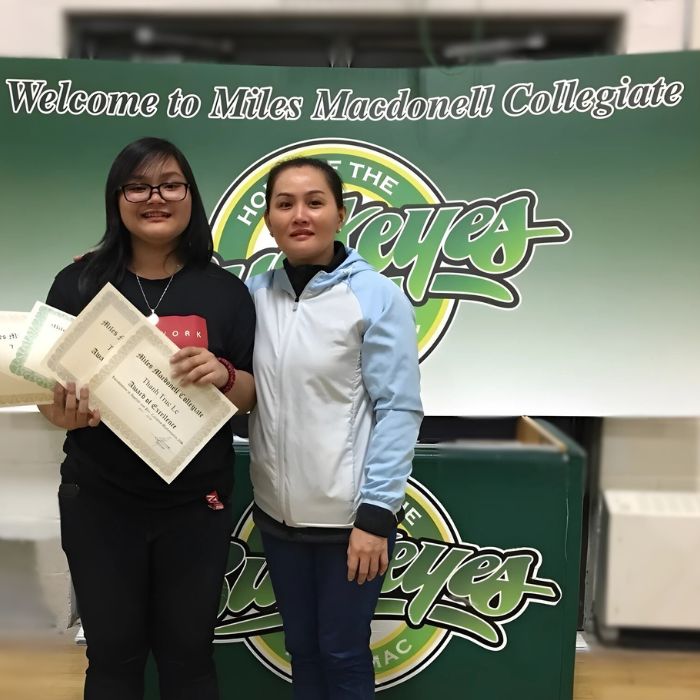
Lê Thanh Trúc, Student at Miles Macdonell Collegiate
“My family and I are deeply grateful to SIEC for not only securing my **Canada high school student visa** in Grade 10 but also for assisting my parents and siblings in obtaining their **visitor visas**. That was an invaluable gift.” — Lê Thanh Trúc, Student at **Miles Macdonell Collegiate** Secure Your Early High School (Secondary) […]
Phan Thị Ngọc Huỳnh, Former Student in Winnipeg
“The solid foundation provided by SIEC and Ms. Huong not only helped me realize my study abroad dream but also gave me the confidence to graduate, secure a stable job, and **settle permanently in Canada**.” — Phan Thị Ngọc Huỳnh, Former Student, currently working in **Winnipeg, Canada** Explore Your Study & Immigration Pathway in Canada […]
Hoàng Giang, Student at Edmonds College
“With her dedication and passion, Ms. Huong helped launch my **American dream**, opening up a vast world of opportunity and the chance to meet new friends.” — Hoàng Giang, Student at **Edmonds College** Explore More About Studying in the USA Spotlight on Edmonds College (Washington State) Gain in-depth knowledge about the programs, tuition fees, and […]
Khánh Lê, Student at LaSalle College
“Thank you to Ms. Huong and the SIEC team for their dedicated partnership and support, from my application phase until I was settled in Canada, helping me confidently pursue my dreams.” — Khánh Lê, Student at **LaSalle College** Explore Further Canada Study Opportunities Spotlight on LaSalle College Gain deeper insights into the programs, tuition fees, […]
Quỳnh Giao, Student at Red River Colleg
“She didn’t just stop at completing the application; she was an inspiration, a true motivator…” — Quỳnh Giao, Student at **Red River College** Continue Your Canada Study Abroad Journey Spotlight on Red River College Polytechnic (RRC Polytech) Discover the high-demand, **applied learning programs** at **Red River College** – one of the premier post-secondary institutions in […]