Study tourism in Canada: Requirements and New Procedures
26/05/2026 Phong Nguyen
In the context of Canada’s landmark immigration policy changes, choosing to Study tourism in Canada during the 2026–2027 period requires students to have thorough preparation and a strategic vision. Canada is no longer maintaining the mass settlement policies of previous years, but is shifting strongly toward a selection model based on the actual needs of the labor market. While the tourism and hospitality industry still plays a vital role in the economy, to secure a path to permanent residency, learners must clearly understand how priority immigration programs operate. Currently, the Canadian Government is placing special emphasis on sectors such as Healthcare, STEM (Science, Technology, Engineering, Mathematics), and Construction. For those who choose to Study tourism in Canada, combining management skills with professional certifications or working in regions facing labor shortages will be the key to future success.
1. Application requirements to Study tourism in Canada in 2026 2027
To begin your journey to Study tourism in Canada, the first and most important step is to prepare an impressive academic and language proficiency portfolio. Colleges and federal institutions in Canada have raised their entrance standards to ensure that international students are capable of keeping up with intensive training programs.
1.1. Academic Requirements
Most institutions offering programs to Study tourism in Canada require candidates to have graduated from high school with a GPA of 6.5 or higher. For postgraduate or senior management programs, this requirement may range from 7.0 to 7.5. Additionally, subjects related to mathematics, geography, and social sciences are often closely scrutinized by admissions boards to assess a student’s suitability for the service industry.
1.2. Language Proficiency Requirements
English is the primary language of communication in Canada’s tourism industry. Therefore, students planning to Study tourism in Canada need to achieve a minimum IELTS score of 6.0 (with no skill below 5.5) for College level and IELTS 6.5 for University level. Some schools also accept PTE Academic certificates with equivalent scores.
Possessing a high language certificate not only helps you easily obtain a letter of admission but is also a significant advantage during visa processing and when seeking employment later on.
1.3. Statement of Purpose (SOP)
In an application to Study tourism in Canada, the Statement of Purpose plays a decisive role. You need to clearly present your reasons for choosing Canada, your reasons for choosing the tourism industry, and your specific career plan. In particular, you should demonstrate an understanding of the Canadian labor market, recognizing that immigration now focuses on priority sectors and how you will adapt to contribute to the country’s economy.
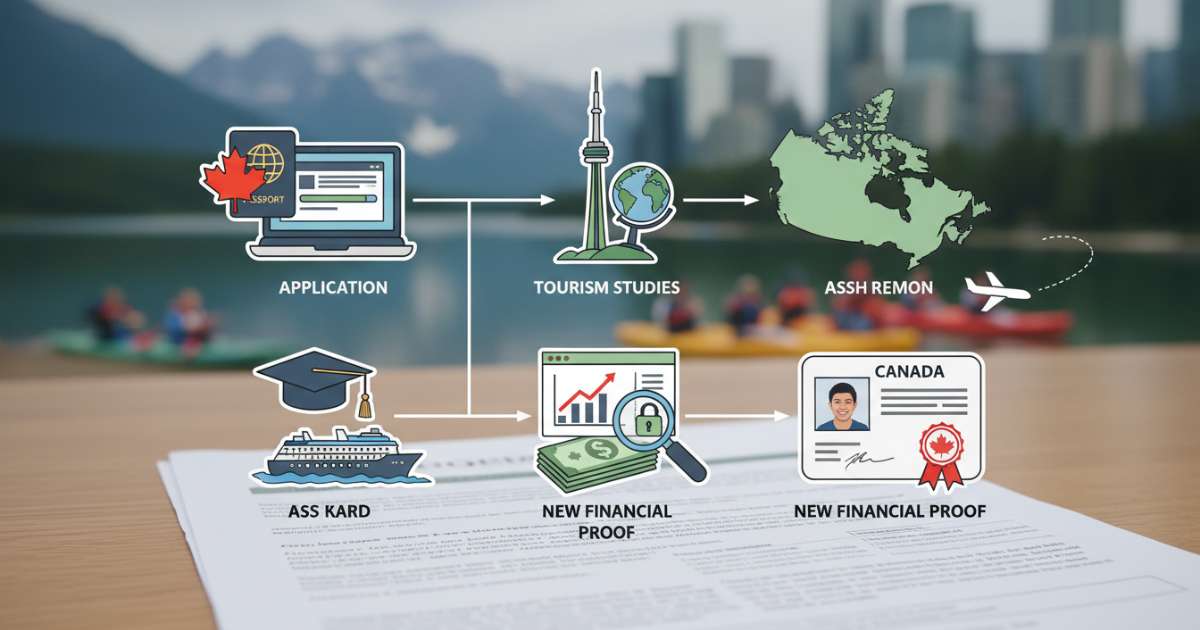
2. Study Permit Process and New Financial Requirements
From 2024 onwards, Study Permit regulations have undergone major changes that students who Study tourism in Canada must pay special attention to. The Canadian Government has implemented a cap on the number of study permits issued and has introduced stricter requirements regarding the financial capacity of international students.
2.1. Provincial Attestation Letter (PAL)
Currently, to apply for a Study Permit for a program to Study tourism in Canada, students are required to have a Provincial Attestation Letter from the province where the school is located. This is a new step designed to control the number of international students in each region. You should work closely with the school’s admissions office for guidance on obtaining this document immediately after receiving your official letter of acceptance.
2.2. Latest Financial Requirements for 2026
The most notable change for students who Study tourism in Canada is the level of financial proof required. According to new regulations, each student must prove they have at least approximately 20,635 CAD for living expenses for one year, excluding tuition and travel costs. This figure has doubled compared to the previous level to ensure that international students can afford their lives without relying too heavily on part-time work, allowing them to focus fully on their studies and professional skill development.
2.3. Documentation of Income Sources
In addition to the bank account balance, an application to Study tourism in Canada must include documents proving the stable income source of the sponsor. Documents such as labor contracts, payslips, business licenses, or tax receipts are vital evidence to convince the consulate that you have solid financial support throughout your study path in Canada.
3. 24-Hour Weekly Work Regulation for Students who Study Tourism in Canada
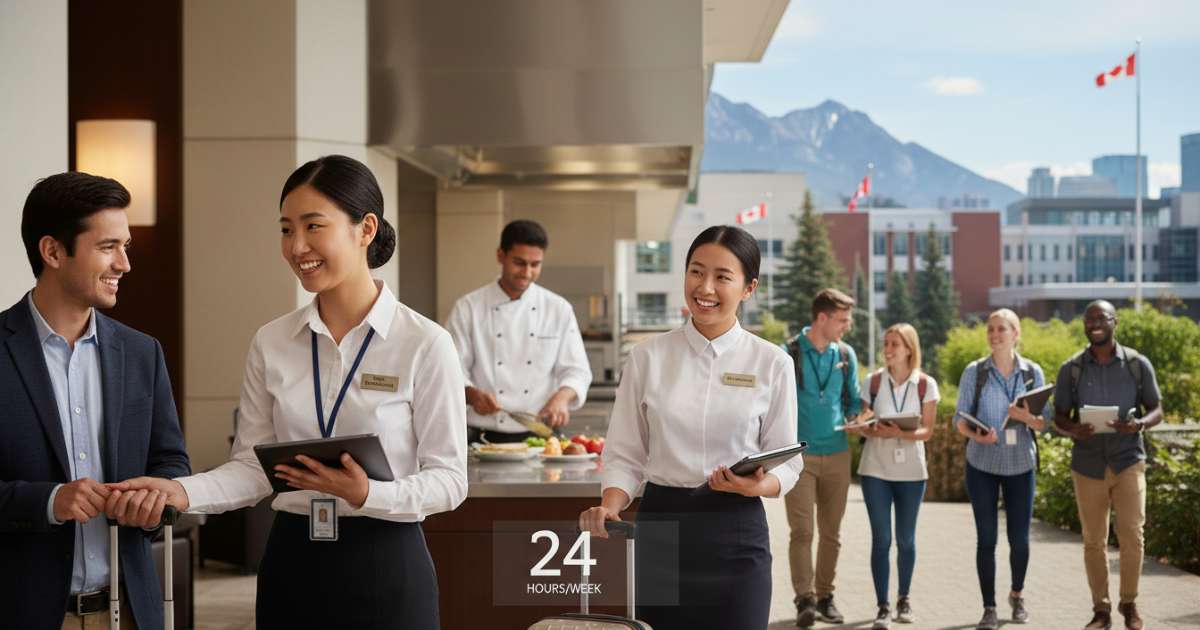
One of the most important updates directly affecting the lives of students who Study tourism in Canada is the regulation on part-time work hours. Instead of being allowed to work unlimited hours as during the pandemic phase, students are now only permitted to work a maximum of 24 hours per week during academic terms.
3.1. Balancing Studies and Practical Work
The 24-hour-per-week regulation helps students who Study tourism in Canada have more time to focus on theoretical lectures and mandatory internships. The tourism industry requires dynamism, but foundational knowledge in management, marketing, and finance is equally important. Limiting work hours helps ensure the quality of the degree and the well-being of students, preventing overwork that leads to declining academic results.
3.2. Paid Internship Opportunities in the Tourism Sector
Although part-time hours are limited, students who Study tourism in Canada can still take advantage of paid internship programs (Co-op). These internships often do not count toward the 24-hour work limit if they are a mandatory part of the curriculum. This is a golden opportunity to gain experience at major hotels and resorts and build a professional network, preparing for a residency pathway after graduation.
3.3. Benefits of Complying with Work Regulations
Full compliance with work hour regulations is a prerequisite for maintaining legal residency status in Canada. For those planning to Study tourism in Canada with an eye toward settlement, having a clean record without labor violations will make the process of applying for a Post-Graduation Work Permit (PGWP) and Permanent Resident (PR) status much smoother.
4. How to Choose a Major and School to Study tourism in Canada
Choosing the right school and the right specialized major when you Study tourism in Canada will determine up to 70% of your ability to find work and settle. You should not only choose large cities like Toronto or Vancouver but also consider regions with high labor demand and preferential immigration policies.
4.1. Selecting Reputable Public Institutions
To be eligible for a Post-Graduation Work Permit, students who Study tourism in Canada should prioritize public Colleges or Universities. These institutions typically offer training programs that are close to reality, have strong relationships with major businesses, and provide maximum support for students in finding internship placements. Names like Seneca College, Humber College, or Algonquin College are always top choices for this field.
4.2. Choosing a Major Aligned with Market Trends
Instead of studying general tourism, you should choose specialized fields such as International Hotel Management, Event Management, or Ecotourism. In particular, if you can combine your plan to **Study tourism in Canada** with certifications in data management or technology in services, you will have a massive competitive advantage. This helps you get closer to the STEM category, one of the top priority groups for immigration in Canada today.
4.3. Considering Provinces with Favorable Immigration Policies
Provinces such as New Brunswick, Nova Scotia, or Saskatchewan often have specific immigration programs for local graduates. When you Study tourism in Canada in these areas, you will receive bonus points in provincial nomination systems. Furthermore, the cost of living here is significantly lower than in bustling metropolises, helping to reduce financial pressure on families.
5. Path to Education, Employment, and PR in Canada via Priority Skilled Trades
Immigrating to Canada in 2026 and 2027 is no longer a smooth path for everyone. The government has clearly defined priority sectors including Healthcare, STEM, Construction, Agriculture, and Transport. So, what do students who Study tourism in Canada need to do to successfully settle?
5.1. Building a Strategic Career Roadmap
After completing a program to Study tourism in Canada, students need to make the most of their Post-Graduation Work Permit duration to seek jobs in management or specialist categories. Although tourism is not directly in the priority group like Healthcare or STEM, if you hold senior management positions or work in tourism businesses that apply high technology, you still have opportunities through general immigration streams or provincial nomination programs.
5.2. Transitioning or Supplementing Skills into Priority Sectors
A smart tactic for students who Study tourism in Canada is to take additional short-term certificate courses related to sectors facing labor shortages. For example, you can study project management in construction or information system management certifications. The combination of customer service skills from the tourism industry and specialized knowledge from priority groups like STEM will turn you into a potential and distinct candidate in the eyes of employers and immigration authorities.
5.3. Leveraging Regional Immigration Programs
Canada’s rural and northern immigration programs often have more flexible requirements for service-oriented occupations. Students who Study tourism in Canada and work in these regions can easily meet the eligibility criteria to apply for permanent residency. This is a sustainable direction instead of trying to compete in large cities where Healthcare and Construction sectors are currently dominating the invitation rounds.
6. Assess Your Canada 2027 Immigration Eligibility Now
The journey to Study tourism in Canada is a major investment of both time and money. In the context of constantly changing immigration regulations, researching information on your own can sometimes lead to avoidable mistakes. To ensure your roadmap is on the right track and to optimize your chances of settling under priority categories like STEM, Healthcare, or Construction, you need consultation from experienced experts.
Don’t let your dream of settling in the land of the maple leaf become distant just because of a lack of updated information. Take the initiative to evaluate your profile and build a study strategy today. Understanding your strengths and grasping Canada’s recruitment trends will help you feel more confident on your chosen path.
If you are interested in the path to Study tourism in Canada and want to learn more deeply about immigration opportunities during the 2026–2027 period, contact SIEC immediately for specialized support. Our consulting team will help you evaluate your profile and select the school and major that best suits your capacity and long-term settlement goals.
Let SIEC accompany you in realizing your dream of studying and settling in Canada. We provide the most accurate and updated information on visa policies, financial requirements, and priority skilled immigration programs so you can have the most perfect preparation.
Access the link below now to register for a consultation and receive a detailed roadmap for your study plan.
Are You Ready to Breakthrough into a Global Career with SIEC?
Don’t let your prestigious degree just stay on paper. Let SIEC experts advise you on a study path combined with an employment orientation strategy starting today!
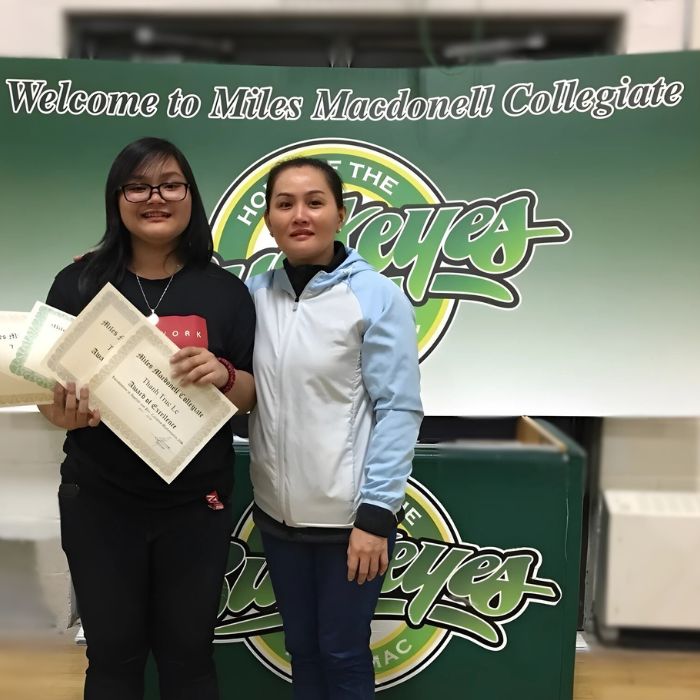
Lê Thanh Trúc, Student at Miles Macdonell Collegiate
“My family and I are deeply grateful to SIEC for not only securing my **Canada high school student visa** in Grade 10 but also for assisting my parents and siblings in obtaining their **visitor visas**. That was an invaluable gift.” — Lê Thanh Trúc, Student at **Miles Macdonell Collegiate** Secure Your Early High School (Secondary) […]
Phan Thị Ngọc Huỳnh, Former Student in Winnipeg
“The solid foundation provided by SIEC and Ms. Huong not only helped me realize my study abroad dream but also gave me the confidence to graduate, secure a stable job, and **settle permanently in Canada**.” — Phan Thị Ngọc Huỳnh, Former Student, currently working in **Winnipeg, Canada** Explore Your Study & Immigration Pathway in Canada […]
Hoàng Giang, Student at Edmonds College
“With her dedication and passion, Ms. Huong helped launch my **American dream**, opening up a vast world of opportunity and the chance to meet new friends.” — Hoàng Giang, Student at **Edmonds College** Explore More About Studying in the USA Spotlight on Edmonds College (Washington State) Gain in-depth knowledge about the programs, tuition fees, and […]
Khánh Lê, Student at LaSalle College
“Thank you to Ms. Huong and the SIEC team for their dedicated partnership and support, from my application phase until I was settled in Canada, helping me confidently pursue my dreams.” — Khánh Lê, Student at **LaSalle College** Explore Further Canada Study Opportunities Spotlight on LaSalle College Gain deeper insights into the programs, tuition fees, […]
Quỳnh Giao, Student at Red River Colleg
“She didn’t just stop at completing the application; she was an inspiration, a true motivator…” — Quỳnh Giao, Student at **Red River College** Continue Your Canada Study Abroad Journey Spotlight on Red River College Polytechnic (RRC Polytech) Discover the high-demand, **applied learning programs** at **Red River College** – one of the premier post-secondary institutions in […]