Study nursing in Canada: Requirements and PR Opportunities
24/05/2026 Phong Nguyen
As Canada’s immigration policies undergo landmark changes during the 2026-2027 period, choosing the right field of study is crucial for the ability to stay and work long-term. Instead of broad immigration programs as in the past, the Canadian government is now prioritizing three key sectors: Healthcare, STEM, and Construction. Among these, the decision to study nursing in Canada has emerged as a top choice due to the urgent demand for human resources and a clear pathway to permanent residency.
This article will provide detailed information on requirements, finances, and career development pathways for international students in the coming years.
1. Application Conditions and Entry Requirements to Study Nursing in Canada
To start your journey to study nursing in Canada, candidates need to prepare a strong academic and language profile. Nursing in Canada is a highly competitive field, requiring students to possess not only knowledge but also perseverance and dedication to the profession. Universities and colleges in Canada typically review applications based on academic results from three years of high school, with a particular focus on prerequisite subjects such as Mathematics, Biology, and Chemistry.
1.1. Academic Qualifications and GPA Requirements
Most colleges offering practical nursing programs require a GPA of 7.0 or higher. For Bachelor of Science in Nursing programs at prestigious universities, this requirement can reach 8.0 or 8.5. Students must demonstrate logical thinking skills and a solid foundation in natural sciences to keep up with a curriculum heavy in both theory and clinical practice.
When preparing your application to study nursing in Canada, you should arrange your academic certificates early to increase your competitiveness.
1.2. Strict Language Standards for the Healthcare Sector
Language proficiency is a key factor because nurses communicate directly with patients and medical teams. Typically, the minimum IELTS score for direct entry into specialized programs is 6.5 or 7.0, with no individual skill band below 6.0. Some schools may accept PTE Academic or TOEFL iBT certificates with equivalent scores.
If you have not yet met the language standards, you can enroll in supplementary English courses before officially starting the professional semesters of your program to study nursing in Canada.
2. Newest Study Permit Regulations and Financial Requirements
Starting from 2025 and extending through 2026-2027, Immigration, Refugees and Citizenship Canada (IRCC) has implemented stricter regulations regarding Study Permit issuance. One of the most significant changes is the application of study permit caps and the requirement for a Provincial Attestation Letter (PAL) for the majority of international students. This means you need to plan your application early and accurately to secure a spot at reputable institutions when you decide to study nursing in Canada.
2.1. Proving Financial Capacity Under New Cost-of-Living Standards
Financial requirements have increased significantly to ensure students can afford life in Canada without over-relying on part-time work. According to the new regulations, in addition to tuition fees, students must prove they have more than 20,000 CAD for their first year of living expenses. This figure reflects the reality of housing, food, and health insurance costs in major cities.
When preparing to study nursing in Canada, building a transparent and comprehensive financial plan is a decisive factor in receiving a study visa.
2.2. Provincial Attestation Letter (PAL) Application Process
Most students attending college and university programs now require a PAL to complete their Study Permit application. Each province has its own process for issuing PALs based on local labor needs. Since nursing is a priority occupation, PAL applications are generally supported more favorably compared to other general fields of study.
This is a major advantage for those who choose to study nursing in Canada during this period of tightened immigration policies.
3. 24-Hour Weekly Off-Campus Work Regulation for International Students
Another notable change in policies for international students is the adjustment of off-campus work hours. Instead of the unlimited work hours allowed during certain previous periods, students are now only permitted to work a maximum of 24 hours per week during regular academic sessions. This regulation aims to help students focus fully on their studies, especially in a demanding field like when you study nursing in Canada.
3.1. Balancing Academic Studies and Experience Accumulation
Nursing requires students to spend significant time on practical classes and hospital internships. The 24-hour work limit helps ensure students maintain their health and achieve the best academic results. However, during scheduled breaks or summer vacations, students can still work full-time to supplement their income.
For students who study nursing in Canada, seeking part-time jobs at healthcare facilities or nursing homes provides an excellent opportunity to become familiar with the actual medical environment.
3.2. Benefits of Working in Your Field of Study
Despite time constraints, leveraging jobs related to healthcare support allows students to accumulate valuable soft skills. These experiences not only benefit the learning process but also enhance your resume after graduation. The Canadian government always encourages students to study nursing in Canada and participate in community and healthcare activities to integrate early with professional standards here.
4. How to Choose a Major and School to Study Nursing in Canada
Choosing the right study program and educational institution is a vital stepping stone for a long-term career. In Canada, nursing is divided into several levels depending on training duration and scope of practice. Students need to clearly define their career goals—whether to become a Licensed Practical Nurse (LPN) or a Registered Nurse (RN)—to choose the most suitable pathway to study nursing in Canada.
4.1. Distinguishing Nursing Education Levels in Canada
Practical Nursing programs typically last 2 years at colleges, focusing on basic care skills and clinical practice. Meanwhile, the Bachelor of Science in Nursing program lasts 4 years, providing deeper training in medical theory, management, and research. Depending on your financial capacity and time, you can choose the appropriate route when deciding to study nursing in Canada to enter the labor market early.
4.2. Selecting Provinces with Priority Immigration Policies
Each province in Canada has different needs for nurses. Provinces like Ontario, British Columbia, or the Atlantic provinces often have specific Provincial Nominee Programs for healthcare workers. When choosing a school to study nursing in Canada, you should prioritize regions facing critical labor shortages to increase your chances of receiving job offers and immigration support later on.
Public colleges are usually a safe choice because they have close links with local hospital systems.
5. Pathway from Education to Employment and Priority Skilled Immigration
The ultimate goal for most students who study nursing in Canada is immigration and building a new life. Unlike fields that are being restricted, healthcare is always on the list of priority occupations invited for immigration through the Express Entry system and specialized skill-based immigration programs. This pathway is meticulously designed to retain capable individuals who contribute to the Canadian healthcare system.
5.1. Post-Graduation Work Permit (PGWP)
After completing a program to study nursing in Canada at a recognized educational institution, students will be granted a Post-Graduation Work Permit (PGWP). The duration of the PGWP is usually equivalent to the length of study, up to a maximum of 3 years. This is the golden time for students to accumulate practical work experience in Canada, a prerequisite for applying for Permanent Residency (PR).
5.2. Immigration Opportunities via the Priority Healthcare Category
During the 2026-2027 period, Category-based selection rounds for immigration invitations will continue to prioritize the Healthcare sector. Students who study nursing in Canada only need to have work experience in the field and meet the required language proficiency levels to have a very high chance of receiving an immigration invitation. Compared to administrative or business fields, nursing often has lower cut-off scores and faster processing times.
This confirms that healthcare remains the most sustainable path to becoming a Canadian citizen.
5.3. Building a Sustainable Career in Canada
The nursing profession in Canada not only provides immigration opportunities but also offers attractive salaries and excellent social welfare benefits. After becoming permanent residents, nurses can continue their education in higher specialties such as nurse anesthesia, pediatric nursing, or nursing management. The journey to study nursing in Canada is a smart investment for the future, providing you with a socially respected profession and a stable life in this developed nation.
To best prepare for your pathway to study nursing in Canada in the 2026-2027 phase, you need to update information regularly and seek support from experienced consultants. Grasping changes in immigration laws and school requirements in a timely manner will help you realize your immigration dream as smoothly as possible.
If you are looking for a secure way to settle in Canada, nursing is the key that opens the door to the future. Don’t miss the chance to join the core workforce of the Maple Leaf country by starting your study plan today.
The expert team at SIEC is always ready to accompany you in analyzing profiles, choosing schools, and building the most optimal immigration pathway. We understand the challenges and opportunities of choosing to study nursing in Canada in the new era and are committed to providing practical, effective solutions.
Let us help you turn your dreams into reality with the most thorough and professional preparation. Contact SIEC now for detailed advice on study programs and the latest immigration policies specifically for the healthcare sector.
Assess your Canada 2027 immigration potential now so you don’t miss out on valuable scholarships and career opportunities in the nursing field.
We will support you from academic preparation and financial proofing until you set foot in Canada and begin your new life.
Are You Ready to Breakthrough Your Global Career with SIEC?
Don’t let your prestigious degree just stay on paper. Let SIEC experts advise you on a study abroad pathway combined with a job orientation strategy starting today!
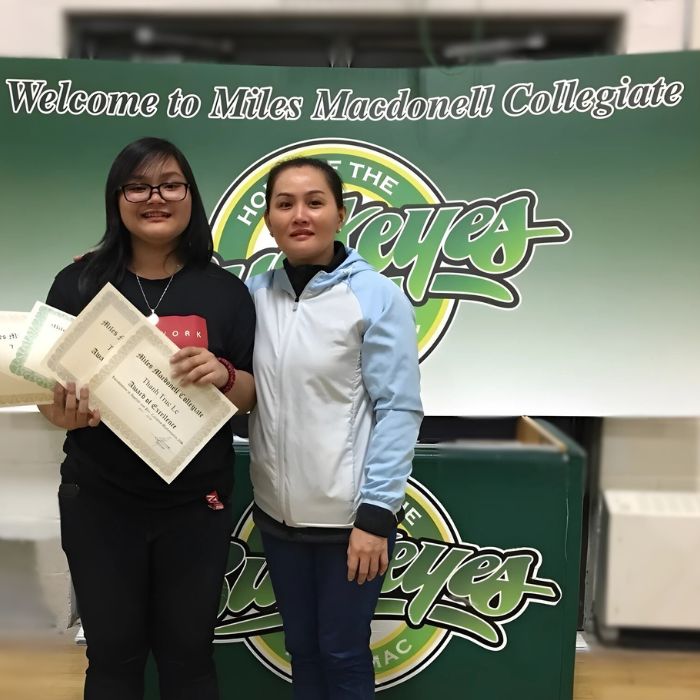
Lê Thanh Trúc, Student at Miles Macdonell Collegiate
“My family and I are deeply grateful to SIEC for not only securing my **Canada high school student visa** in Grade 10 but also for assisting my parents and siblings in obtaining their **visitor visas**. That was an invaluable gift.” — Lê Thanh Trúc, Student at **Miles Macdonell Collegiate** Secure Your Early High School (Secondary) […]
Phan Thị Ngọc Huỳnh, Former Student in Winnipeg
“The solid foundation provided by SIEC and Ms. Huong not only helped me realize my study abroad dream but also gave me the confidence to graduate, secure a stable job, and **settle permanently in Canada**.” — Phan Thị Ngọc Huỳnh, Former Student, currently working in **Winnipeg, Canada** Explore Your Study & Immigration Pathway in Canada […]
Hoàng Giang, Student at Edmonds College
“With her dedication and passion, Ms. Huong helped launch my **American dream**, opening up a vast world of opportunity and the chance to meet new friends.” — Hoàng Giang, Student at **Edmonds College** Explore More About Studying in the USA Spotlight on Edmonds College (Washington State) Gain in-depth knowledge about the programs, tuition fees, and […]
Khánh Lê, Student at LaSalle College
“Thank you to Ms. Huong and the SIEC team for their dedicated partnership and support, from my application phase until I was settled in Canada, helping me confidently pursue my dreams.” — Khánh Lê, Student at **LaSalle College** Explore Further Canada Study Opportunities Spotlight on LaSalle College Gain deeper insights into the programs, tuition fees, […]
Quỳnh Giao, Student at Red River Colleg
“She didn’t just stop at completing the application; she was an inspiration, a true motivator…” — Quỳnh Giao, Student at **Red River College** Continue Your Canada Study Abroad Journey Spotlight on Red River College Polytechnic (RRC Polytech) Discover the high-demand, **applied learning programs** at **Red River College** – one of the premier post-secondary institutions in […]