Study Masters in Canada: Requirements, Costs and New PR
13/05/2026 Phong Nguyen
In the context of significant adjustments to Canada’s immigration policies, choosing to pursue a Masters in Canada during the 2026–2027 period is considered a strategic move. Not only providing advanced professional knowledge, a master’s program also helps international students optimize their scores in the global ranking system and opens up opportunities for sustainable settlement. Notably, instead of the mass settlement policies of the past, the Canadian Government is now focusing on prioritizing candidates with expertise in sectors facing severe labor shortages. This article will provide a detailed look at the study and work pathway in the Great White North for postgraduate students.
To prepare for the plan to pursue a Masters in Canada, candidates need to meet strict standards for both academics and language proficiency. Canadian universities usually require students to have a solid knowledge base from the bachelor’s level to ensure their ability to absorb information at higher research and application levels.
Basic academic records usually include a university degree and transcripts for 4 years of study. The minimum cumulative grade point average (GPA) is usually 7.0 or higher on a 10-point scale (equivalent to a “Good” rating). However, for top-tier schools or highly competitive fields, the required GPA can reach 8.0 or 9.0. Additionally, English certificates such as IELTS Academic (usually requiring 6.5 to 7.0, with no skill below 6.0) or equivalent TOEFL iBT are mandatory conditions for a successful application.
Furthermore, depending on the major, candidates may need to provide GMAT or GRE certificates. Business administration majors often require the GMAT, while engineering or natural science majors may require the GRE. Another important factor in a Masters in Canada application is the Statement of Purpose and letters of recommendation from professors or supervisors at the workplace. These documents help the admissions committee evaluate the candidate’s research potential and seriousness regarding their chosen field of study.
2. Study Permit Procedures and Latest Financial Requirements
One of the most important changes for international students when implementing the Masters in Canada pathway in the 2026–2027 period is the regulation on proof of finances. Immigration, Refugees and Citizenship Canada (IRCC) has adjusted the required cost-of-living amount to ensure students can afford their stay without excessive pressure from part-time work.
Specifically, in addition to tuition for the first academic year, students pursuing a Masters in Canada need to prove they have a financial amount equivalent to the new cost-of-living rate set by the Government (usually ranging over 20,000 CAD per year for an individual). Preparing transparent and complete finances is a key factor for a Study Permit application to be approved quickly. For the master’s level, the study permit application process may be prioritized over lower levels of study, as this is a high-quality labor group that Canada aims to attract.
The current Study Permit application process also requires high accuracy in explaining the study plan. Students need to prove that pursuing a Masters in Canada is a logical step in their career and is closely linked to their previous study or work process in Vietnam. Clarity in study goals will help consular officers trust the candidate’s serious intentions when coming to Canada.
3. 24-Hour Weekly Part-Time Work Regulation for International Students
Since 2024, Canada has applied new regulations on off-campus part-time work hours for international students. Instead of the previous 20-hour limit, students pursuing a Masters in Canada are now allowed to work a maximum of 24 hours per week during official academic terms. This change aims to help students earn extra income to cover living expenses while gaining practical work experience in the local environment.
During scheduled breaks or summer holidays, students pursuing a Masters in Canada are still allowed to work full-time (no limit on hours). However, education experts advise students to balance part-time work and study. Master’s programs in Canada have a very large volume of knowledge and require in-depth research; therefore, excessive part-time work can affect academic results and the ability to graduate on time.
Utilizing 24 hours of part-time work per week for jobs related to the field of study is a smart strategy. For example, students pursuing a Masters in Canada in STEM fields can find teaching assistant or intern positions in laboratories. This not only increases income but is also a major plus when students apply for official jobs after graduation, making the settlement pathway more favorable.
4. How to Choose Majors and Schools for a Masters in Canada Under Priority Categories
In the 2026–2027 period, the Canadian Government no longer encourages mass settlement but has shifted focus to occupations facing labor shortages. When planning for a Masters in Canada, choosing the right major in the priority list will determine 80% of your success in settling.
4.1. Health and Healthcare Group
This group always tops Canada’s priority list due to the aging population. Students choosing a Masters in Canada in majors such as Health Management, Advanced Nursing, or Health Sciences will have extremely wide career opportunities. Provinces often have separate settlement streams for healthcare workers, allowing them to apply for permanent residency (PR) after only a short period of work.
4.2. STEM Group (Science, Technology, Engineering, Mathematics)
Masters in Canada programs in the STEM block are always a top priority in category-based selection rounds. With the strong development of artificial intelligence, cybersecurity, and data analysis, Canada needs a large number of highly qualified experts. Graduating with a STEM master’s from prestigious universities will help you achieve superior CRS scores in the Express Entry system.
4.3. Construction and Transportation Group
To meet housing and infrastructure needs, Canada is looking for skilled engineers and construction project managers. Students pursuing a Masters in Canada in Construction Management or Civil Engineering will easily find jobs immediately after graduation. This is a sector with high starting salaries and a very clear settlement pathway through provincial nominee programs for skilled workers.
5. Pathway from Study to Work and Canadian Settlement
After completing a Masters in Canada program, students have the opportunity to receive a Post-Graduation Work Permit (PGWP) with a duration of up to 3 years. This is the golden time to accumulate work experience in Canada – a prerequisite for transitioning to permanent resident status.
The most popular pathway today is through the Express Entry system. For those who already have a master’s degree in Canada, their education scores will be very high. Additionally, having work experience in Canada in priority sectors like Healthcare or STEM will help candidates receive an Invitation to Apply (ITA) for PR in separate selection rounds by the Government. Besides, Provincial Nominee Programs (PNP) are also an effective direction for students pursuing a Masters in Canada, especially in provinces like Ontario, British Columbia, or the Atlantic provinces.
To achieve the goal of settling by 2027, students need a detailed plan from the start of their enrollment. Proactively seeking internship opportunities, expanding professional networks, and improving language proficiency (English or French) will be deciding factors. A Masters in Canada is not just an academic journey but also a long-term investment for the future in one of the most livable countries in the world.
6. Assess Your 2027 Canadian Settlement Potential Now
Accurately grasping new immigration regulations and choosing the right priority occupation is the key to realizing your settlement dream. Each individual profile has its own strengths and limitations; therefore, a personalized pathway is essential to optimize the chances of success in the 2026–2027 period.
The expert team at SIEC is always ready to accompany you in analyzing profiles, choosing schools, and majors that match labor market trends in Canada. We will help you assess your settlement potential in detail and build a long-term strategy from the start of your Masters in Canada application until you hold your permanent resident card.
Contact SIEC today for in-depth consultation on priority master’s programs and receive a free settlement potential assessment. We are committed to providing the most updated information and optimal solutions for your future journey.
To receive dedicated support and detailed information about scholarships as well as safe settlement pathways, parents and students can register their information in our system. SIEC is proud to be a reliable bridge helping thousands of Vietnamese students reach out to the world.
Don’t miss the golden opportunity to build a sustainable career in Canada through a high-quality educational path. Register for consultation now at: https://siec.com.vn/dang-ky
Are You Ready to Breakthrough Your Global Career with SIEC?
Don’t let your prestigious degree just stay on paper. Let SIEC experts advise you on a study pathway combined with a job-oriented strategy starting today!
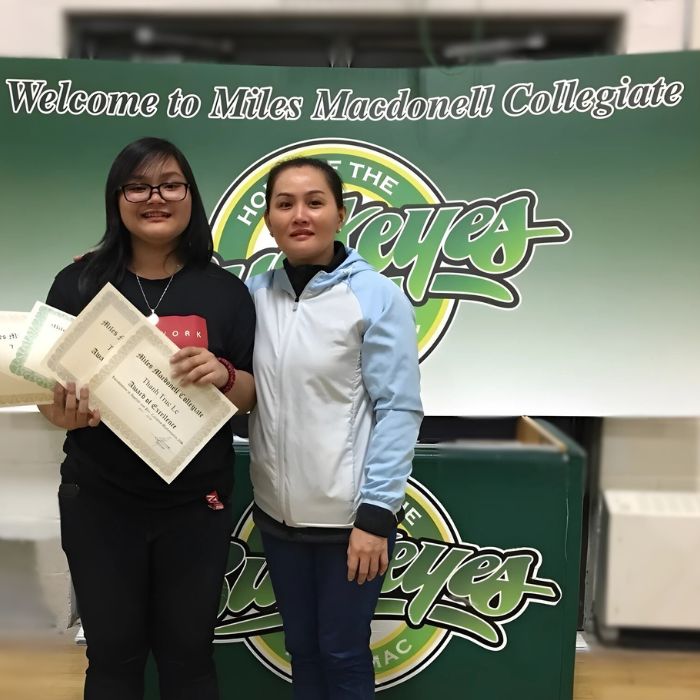
Lê Thanh Trúc, Student at Miles Macdonell Collegiate
“My family and I are deeply grateful to SIEC for not only securing my **Canada high school student visa** in Grade 10 but also for assisting my parents and siblings in obtaining their **visitor visas**. That was an invaluable gift.” — Lê Thanh Trúc, Student at **Miles Macdonell Collegiate** Secure Your Early High School (Secondary) […]
Phan Thị Ngọc Huỳnh, Former Student in Winnipeg
“The solid foundation provided by SIEC and Ms. Huong not only helped me realize my study abroad dream but also gave me the confidence to graduate, secure a stable job, and **settle permanently in Canada**.” — Phan Thị Ngọc Huỳnh, Former Student, currently working in **Winnipeg, Canada** Explore Your Study & Immigration Pathway in Canada […]
Hoàng Giang, Student at Edmonds College
“With her dedication and passion, Ms. Huong helped launch my **American dream**, opening up a vast world of opportunity and the chance to meet new friends.” — Hoàng Giang, Student at **Edmonds College** Explore More About Studying in the USA Spotlight on Edmonds College (Washington State) Gain in-depth knowledge about the programs, tuition fees, and […]
Khánh Lê, Student at LaSalle College
“Thank you to Ms. Huong and the SIEC team for their dedicated partnership and support, from my application phase until I was settled in Canada, helping me confidently pursue my dreams.” — Khánh Lê, Student at **LaSalle College** Explore Further Canada Study Opportunities Spotlight on LaSalle College Gain deeper insights into the programs, tuition fees, […]
Quỳnh Giao, Student at Red River Colleg
“She didn’t just stop at completing the application; she was an inspiration, a true motivator…” — Quỳnh Giao, Student at **Red River College** Continue Your Canada Study Abroad Journey Spotlight on Red River College Polytechnic (RRC Polytech) Discover the high-demand, **applied learning programs** at **Red River College** – one of the premier post-secondary institutions in […]