Study logistics in Canada: New Requirements and Procedures
16/05/2026 Phong Nguyen
Amidst the landmark changes in Canada’s immigration policies, deciding to study logistics in Canada for the 2026–2027 period requires students to have a clear strategy. Instead of mass immigration programs as in the past, the Canadian Government is now prioritizing sectors with severe labor shortages. Logistics and Supply Chain Management are considered the backbone of the economy, closely linked to priority sectors such as STEM, Healthcare, and Construction.
To succeed in this journey, learners must master the latest regulations regarding applications, finances, and changes in labor laws for international students.
1. Application Conditions and Entry Requirements for Logistics in Canada
To begin the journey to study logistics in Canada, the first and most important step is to prepare a solid academic profile. Universities and colleges in Canada typically require applicants to have graduated from high school with a GPA of “good” or higher. For postgraduate levels, students need a bachelor’s degree related to economics, engineering, or management.
Language proficiency is a decisive factor, usually with an IELTS score of 6.0 to 6.5 as the minimum requirement for acceptance into formal programs.
In addition to grades, a personal essay or Statement of Purpose (SOP) plays a key role. In this letter, you need to clearly state your reasons to study logistics in Canada and how this field contributes to the development of the transportation and supply system in the country. Linking Logistics to priority areas such as medical equipment transportation or construction material supply will make your application more persuasive to admissions officers and consular officials.
1.1. Essential Documents in the Application Portfolio
Transcripts and the highest degree obtained, translated and notarized.
English language certificates such as IELTS, PTE, or TOEFL.
A passport valid for at least 6 months beyond the expected course end date.
Letter of Acceptance (LOA) from a Designated Learning Institution (DLI) in Canada.
Awards, certificates of extracurricular activities, or work experience related to the supply chain.
2. New Study Permit Regulations and Financial Requirements for 2026–2027
The policy to study logistics in Canada during the 2026–2027 period applies stricter standards for study permits. One of the biggest changes is the implementation of a national cap on Study Permits, meaning students must obtain a Provincial Attestation Letter (PAL) before applying for a visa. This ensures students are distributed across regions and sectors that truly need labor, especially those pursuing STEM and engineering fields.
Regarding the financial aspect, Immigration, Refugees and Citizenship Canada (IRCC) has increased the threshold for proving the ability to pay for living expenses to ensure students have a stable life. When applying to study logistics in Canada, you need to prove you have enough funds equivalent to the first year’s tuition plus the living expense fee, which is updated annually. Using a Guaranteed Investment Certificate (GIC) remains the most popular and effective way to demonstrate financial transparency to the consular office.
2.1. Updated Mandatory Living Expenses
Since 2024, the required living expense level has increased significantly and will continue to be adjusted for inflation in 2026–2027. Students should prepare approximately 20,000 CAD per year for personal expenses, excluding tuition. Preparing abundant financial resources not only facilitates the visa application but also helps you focus entirely on studying and researching in Canada’s modern logistics environment.
3. 24-Hour Weekly Work Policy While You Study Logistics in Canada
An important change that students who study logistics in Canada need to note is the regulation on off-campus work hours. Instead of unlimited work hours as during the pandemic, the Canadian Government has now standardized off-campus work to 24 hours per week during regular academic sessions. This regulation aims to help students maintain a balance between studying and gaining practical experience, ensuring the quality of their degrees upon graduation.
For logistics students, part-time work is not just about earning extra income but also an opportunity to penetrate the labor market. You can look for part-time jobs at warehouses, distribution centers, or shipping companies. These practical experiences will be a huge plus when you apply for a formal job after graduation.
Working in a real-world environment helps you better understand the supply chain operation processes in a geographically vast country like Canada.
3.1. Benefits of Working Within Your Field
Build a network with employers in the transport and logistics sectors.
Apply theoretical knowledge of warehouse management to actual tasks.
Improve English communication skills and understand Canadian work culture.
Enhance competitiveness when applying for skilled worker immigration later.
4. How to Choose Majors and Schools to Optimize PR Opportunities in Canada
When choosing to study logistics in Canada, students should prioritize schools located in provinces with strong economies in trade and import-export, such as Ontario, British Columbia, or Quebec. However, to optimize the possibility of permanent residency (PR), the current trend is to choose to study in the Atlantic provinces or the Prairie regions, where there are attractive provincial nominee programs for technical workers.
Logistics in Canada is not just about shipping goods but also extends to data management and system optimization using technology. Therefore, choose study programs that integrate STEM elements or courses in supply chain data analysis. Public colleges often offer Co-op programs, allowing students to have paid internships, which is the shortest bridge to connect with reputable employers while still in school.
4.1. Top Criteria for Choosing a School
A good school to study logistics in Canada must have close ties with the national logistics association. Check if the training program is recognized by professional organizations such as Supply Chain Canada. Additionally, facilities, simulation labs, and the employment rate of students after graduation are also important metrics to consider carefully before making a decision.
5. Roadmap from Graduation to Employment and Priority Immigration
The roadmap to permanent residency after you study logistics in Canada has shifted significantly towards prioritizing essential occupations. After completing a program of at least 2 years, students will be granted a Post-Graduation Work Permit (PGWP) valid for up to 3 years. This is the golden time for you to accumulate professional work experience in Canada.
Logistics is currently on the list of prioritized occupations in the Express Entry system draws.
Instead of competing in mass immigration groups with sky-high scores, logistics students can take advantage of immigration streams dedicated to the Transport or STEM sectors. The Canadian Government is particularly focused on attracting human resources to build infrastructure and ensure supply chain security. If you work in positions such as warehouse manager, distribution specialist, or transport coordinator, your chances of receiving Permanent Resident (PR) status will be much higher than in common administrative professions.
5.1. Important Steps in the Immigration Roadmap
Complete a program to study logistics in Canada at a reputable DLI school.
Apply for a PGWP and find a job in your field or within a priority industry group.
Accumulate at least 1 year of formal work experience in Canada.
Assess your CRS score and apply for suitable immigration programs such as CEC or PNP.
Receive an Invitation to Apply (ITA) and become a Canadian Permanent Resident.
6. Assess Your Canada 2027 Immigration Potential with SIEC
Planning to study logistics in Canada needs to be executed professionally and with long-term vision. With constant changes in immigration policies, self-research can sometimes lead to unnecessary mistakes. To ensure your roadmap is on the right track and to optimize PR opportunities in the 2026–2027 period, consulting with experienced experts is essential.
We will help you evaluate your profile, choose the right school, and build a personalized immigration strategy based on your actual capabilities.
Don’t let administrative barriers or a lack of information interrupt your dream of settling in the Maple Leaf country. Start preparing today to seize new opportunities in the high-potential logistics field. A detailed plan for finance, education, and career will be the key to helping you confidently enter the international labor market and build a sustainable future in Canada.
If you are interested in the study and work path in Canada, contact SIEC now for in-depth support. We provide comprehensive consulting services from choosing a major and applying to schools until you stabilize your life in Canada.
Let SIEC accompany you on the path to conquering your immigration ticket through high-quality education. Register your information now to receive the most accurate assessment for your case.
Are You Ready to Breakthrough Your Global Career with SIEC?
Don’t let your prestigious degree stay only on paper. Let SIEC experts advise you on a study abroad roadmap combined with a career orientation strategy starting today!
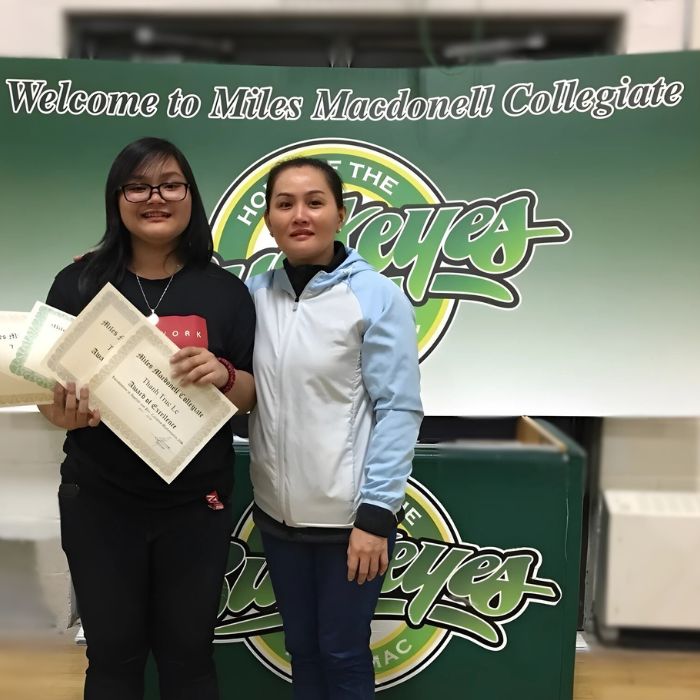
Lê Thanh Trúc, Student at Miles Macdonell Collegiate
“My family and I are deeply grateful to SIEC for not only securing my **Canada high school student visa** in Grade 10 but also for assisting my parents and siblings in obtaining their **visitor visas**. That was an invaluable gift.” — Lê Thanh Trúc, Student at **Miles Macdonell Collegiate** Secure Your Early High School (Secondary) […]
Phan Thị Ngọc Huỳnh, Former Student in Winnipeg
“The solid foundation provided by SIEC and Ms. Huong not only helped me realize my study abroad dream but also gave me the confidence to graduate, secure a stable job, and **settle permanently in Canada**.” — Phan Thị Ngọc Huỳnh, Former Student, currently working in **Winnipeg, Canada** Explore Your Study & Immigration Pathway in Canada […]
Hoàng Giang, Student at Edmonds College
“With her dedication and passion, Ms. Huong helped launch my **American dream**, opening up a vast world of opportunity and the chance to meet new friends.” — Hoàng Giang, Student at **Edmonds College** Explore More About Studying in the USA Spotlight on Edmonds College (Washington State) Gain in-depth knowledge about the programs, tuition fees, and […]
Khánh Lê, Student at LaSalle College
“Thank you to Ms. Huong and the SIEC team for their dedicated partnership and support, from my application phase until I was settled in Canada, helping me confidently pursue my dreams.” — Khánh Lê, Student at **LaSalle College** Explore Further Canada Study Opportunities Spotlight on LaSalle College Gain deeper insights into the programs, tuition fees, […]
Quỳnh Giao, Student at Red River Colleg
“She didn’t just stop at completing the application; she was an inspiration, a true motivator…” — Quỳnh Giao, Student at **Red River College** Continue Your Canada Study Abroad Journey Spotlight on Red River College Polytechnic (RRC Polytech) Discover the high-demand, **applied learning programs** at **Red River College** – one of the premier post-secondary institutions in […]