Detailed Guide on Total Study in USA cost for One Year
23/08/2026 Phong Nguyen
Preparing for an educational journey in the United States for the 2026–2027 period requires parents and students to have a comprehensive view of finances and long-term pathways. Understanding the Study in USA cost for one year goes beyond tuition fees and includes various incidental expenses. Particularly with the Double-Path strategy, families need to calculate both educational expenses and preparation costs for the EB-3 employment-based immigration route to optimize their future in America. This article provides a detailed analysis of fees and practical timelines to ensure you have the best preparation.
Overview of how much one year of study in the USA costs by school type
When researching the Study in USA cost, the first factor to consider is the type of institution. The U.S. has a diverse education system with significant tuition differences between public universities, private universities, and community colleges. The annual cost at a prestigious private university can range from $60,000 to $80,000, while public universities typically range from $25,000 to $45,000 per year for international students.
Tuition at 4-year universities
Tuition is the largest component when calculating how much a year in the U.S. costs. Public universities receive state government support, so their fees are usually lower, though international students must still pay out-of-state tuition rates. Conversely, private institutions do not differentiate based on student origin, but their listed fees are often very high. To determine the exact cost for the 2026–2027 academic year, parents should directly access the “Tuition and Fees” section on the school’s website.
Saving costs through the community college system
If a family wishes to reduce the burden of U.S. study expenses, a 2-year community college pathway followed by a transfer to a university is a smart choice. Tuition here is only about $8,000 – $12,000 per year. This is a way to make the annual cost more manageable in the initial phase while still ensuring the final bachelor’s degree holds equivalent value.
Mandatory fees beyond tuition
In addition to tuition, the total annual expense includes health insurance, laboratory fees, library fees, and extracurricular activities. Health insurance for international students typically ranges from $1,500 to $3,000 per year and is a mandatory requirement to maintain legal visa status. Understanding these fees helps families accurately answer how much a year in the U.S. costs without being surprised by hidden expenses.
How to optimize the annual cost by hunting for Fall 2027 scholarships
Securing scholarships is a vital strategy to minimize the annual cost of studying in the U.S. For the Fall 2027 intake, students should start preparing their applications early to compete for scholarships worth 20% to 100% of tuition. When a scholarship is awarded, the total financial requirement changes significantly, allowing families to allocate resources toward long-term plans like immigration.
Scholarship criteria for U.S. schools in 2027
To optimize the yearly cost, students should focus on their Grade Point Average (GPA), English proficiency certificates like IELTS or TOEFL, and standardized test scores such as the SAT or ACT if required by the school. Additionally, personal essays and extracurricular activities play a decisive role. An impressive profile can reduce the annual expenditure to a minimum, sometimes covering everything but living expenses.
The golden time to apply for scholarships
Early Action or Early Decision deadlines typically occur in November 2026 for the Fall 2027 intake. This is when schools have the largest scholarship budgets available. Applying early not only increases the chances of admission but also helps families determine the required budget early to have a backup financial plan. If these deadlines are missed, the opportunity to reduce the annual cost decreases in subsequent admission rounds.
Need-based vs. Merit-based scholarships
Students must distinguish between merit-based scholarships and need-based financial aid. Many top-tier private schools are willing to cover the entire annual cost if a student demonstrates exceptional talent but lacks sufficient financial means. Understanding each school’s policy will help you manage your educational investment most effectively.
Preparing transparent financial records for U.S. study costs
Financial documentation is a key factor in visa approval. The Consulate needs to ensure that the family has enough capacity to pay for the entire duration of study without the need for illegal employment. When calculating the Study in USA cost, the figures shown in savings accounts and monthly income must be commensurate with the tuition and living expenses reported by the school on the I-20 form.
Proving financial capacity to the Consulate
Families need to prepare a savings book with a balance at least equal to the first year’s total cost. However, for safety, the balance should be about 20-30% higher than the total estimated cost. Documents proving income from salary, business, or property rentals must be clear and highly authentic. This helps the consular officer trust your family’s ability to cover the yearly expenses.
Avoiding unclear study purposes during the interview
A common reason for visa denial is the failure to explain the study pathway and the reason for choosing a specific school. When asked about costs, students must answer confidently about the fees and how the family will pay. If a student is unclear about the required budget, the consular officer may doubt their preparation and true purpose for going to the U.S. Financial transparency must go hand in hand with a logical study plan.
Identifying backup financial sources for subsequent years
The Consulate is not only interested in the first year’s cost but also considers the financial sustainability for the remaining 3-4 years. Families should demonstrate accumulated assets or stable income to prove that paying for the annual education is well within their long-term capacity. This thorough preparation will make the visa application process much smoother.
A detailed study plan helps determine the annual budget
A clear study plan not only assists with the visa application but also helps optimize the annual expenditure. The choice of major and study route directly affects the graduation timeline and future career opportunities. If a student extends their study time due to choosing the wrong major or failing classes, the total cost will multiply, creating financial pressure for the family.
Choosing a major aligned with 2026 labor trends
In 2026, STEM (Science, Technology, Engineering, Mathematics) fields continue to be prioritized in the U.S., offering Optional Practical Training (OPT) for up to 3 years. Choosing these majors allows students to work and recoup their initial investment. Additionally, healthcare and data management sectors are seeing high demand, supporting a smooth transition to immigration later on.
Transfer pathways to reduce annual expenses
Many students choose to study at universities in states with lower living costs, such as Texas, Florida, or Midwestern states, rather than expensive cities like New York or San Francisco. This significantly reduces the total annual budget while maintaining educational quality. Building a pathway from college to university or university to graduate school needs careful timing to save on total costs.
The importance of maintaining academic performance
Maintaining high grades helps students keep their existing scholarships and opens opportunities to apply for other support funds during their studies. If a scholarship is lost, the annual cost will jump back to the full rate, disrupting the family’s financial plan. Therefore, focusing on academics is the best way to protect the initial investment in a U.S. education.
Double-Path strategy combined with EB-3 immigration for Vietnamese students in 2026
The Double-Path strategy is a combination of studying abroad and filing for EB-3 employment-based immigration. This is a long-term direction that effectively addresses the Study in USA cost by working toward permanent residency (Green Card). Once they have a Green Card, students enjoy domestic tuition rates, reducing the annual cost by up to two-thirds compared to international student rates.
Overview of the EB-3 immigration program
The EB-3 program is for skilled workers, professionals, and other workers. For international students, having their family file an EB-3 petition early provides the opportunity to receive a Green Card during or after their studies. When calculating the annual budget, families should view the EB-3 investment as a way to save on tuition for the final years or higher education levels. This is a smart approach to optimizing the long-term cost of a U.S. education.
Actual waiting times for Vietnamese applicants in 2026
It is predicted that in 2026, the waiting time for the EB-3 category for Vietnamese citizens may range from 4 to 6 years, depending on the timing and the backlog of applications. Therefore, starting the Double-Path route while the student is preparing for the 2027 intake is essential. Initiating the process early helps shorten the wait time and synchronizes the receipt of the Green Card with graduation.
Economic benefits of the Double-Path route
With a Green Card, students not only reduce their annual educational expenses but also have the right to work freely for any company without needing H-1B visa sponsorship. This opens doors to high income and rapid life stabilization. Compared to simply studying and facing the risk of returning home after graduation, investing in Double-Path turns the educational cost into a profitable investment for the child’s entire future.
Overall analysis of the Study in USA cost for a long-term pathway
To get the most accurate view of the Study in USA cost, families should create a detailed budget including tuition, living expenses, insurance, and immigration filing costs. The average annual cost for an international student currently falls between $35,000 and $55,000. However, this figure can vary depending on scholarship success and the specific study route.
Estimated monthly living expenses
Rent, food, and transportation make up a significant portion of the yearly budget. In states like Oklahoma, Kansas, or Nebraska, living costs are only about $800 – $1,000 per month. Meanwhile, in California or Massachusetts, this figure can reach $1,500 – $2,000. The choice of location directly impacts the monthly financial commitment the family must make.
Incidental costs to keep in mind
Families should also budget for travel between Vietnam and the U.S., holiday breaks, and other personal needs. These items often do not appear in the school’s official notice but contribute to the actual total annual expenditure. Tight expense management and having a backup financial plan will allow students to focus on their studies without interruption due to budget shortfalls.
Long-term vision for 2026 and 2027
Studying in the U.S. is not just a one-year story but a long journey of 4 to 6 years, or more if pursuing graduate studies. Determining the annual cost from the start helps families allocate resources reasonably between education and immigration investment. With the Double-Path strategy, the ultimate goal is not just a degree, but a secure future in the United States for generations to come.
For in-depth advice on the study abroad pathway combined with U.S. EB-3 immigration, parents and students should contact SIEC immediately. We will help you design a detailed financial plan, answer all cost-related questions, and support effective scholarship hunting for the 2026–2027 intake.
Don’t let information barriers slow down your progress toward the future. Register to receive newsletters and personalized pathways from experienced experts at SIEC to optimize your financial resources for your U.S. study and immigration journey.
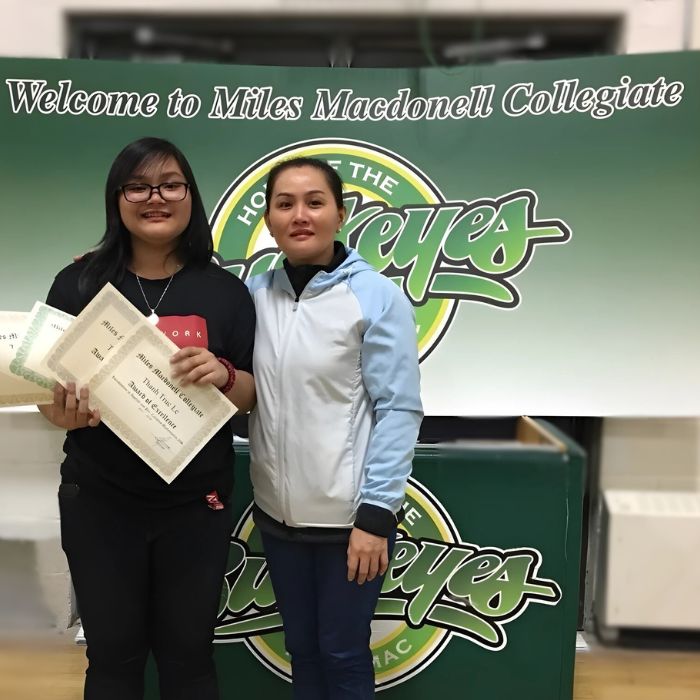
Lê Thanh Trúc, Student at Miles Macdonell Collegiate
“My family and I are deeply grateful to SIEC for not only securing my **Canada high school student visa** in Grade 10 but also for assisting my parents and siblings in obtaining their **visitor visas**. That was an invaluable gift.” — Lê Thanh Trúc, Student at **Miles Macdonell Collegiate** Secure Your Early High School (Secondary) […]
Phan Thị Ngọc Huỳnh, Former Student in Winnipeg
“The solid foundation provided by SIEC and Ms. Huong not only helped me realize my study abroad dream but also gave me the confidence to graduate, secure a stable job, and **settle permanently in Canada**.” — Phan Thị Ngọc Huỳnh, Former Student, currently working in **Winnipeg, Canada** Explore Your Study & Immigration Pathway in Canada […]
Hoàng Giang, Student at Edmonds College
“With her dedication and passion, Ms. Huong helped launch my **American dream**, opening up a vast world of opportunity and the chance to meet new friends.” — Hoàng Giang, Student at **Edmonds College** Explore More About Studying in the USA Spotlight on Edmonds College (Washington State) Gain in-depth knowledge about the programs, tuition fees, and […]
Khánh Lê, Student at LaSalle College
“Thank you to Ms. Huong and the SIEC team for their dedicated partnership and support, from my application phase until I was settled in Canada, helping me confidently pursue my dreams.” — Khánh Lê, Student at **LaSalle College** Explore Further Canada Study Opportunities Spotlight on LaSalle College Gain deeper insights into the programs, tuition fees, […]
Quỳnh Giao, Student at Red River Colleg
“She didn’t just stop at completing the application; she was an inspiration, a true motivator…” — Quỳnh Giao, Student at **Red River College** Continue Your Canada Study Abroad Journey Spotlight on Red River College Polytechnic (RRC Polytech) Discover the high-demand, **applied learning programs** at **Red River College** – one of the premier post-secondary institutions in […]