Study in Quebec Canada Guide: Admission and PR Tips A to Z
10/05/2026 Phong Nguyen
In the context of Canada’s immigration policy undergoing significant adjustments towards selecting highly skilled workers, to Study in Quebec Canada still maintains its position as one of the top choices for international students. The 2026–2027 period marks a major turning point as the province focuses its resources on attracting human resources in essential sectors rather than opening up for mass immigration as before. Understanding the new regulations on finances, part-time work hours, and immigration pathways based on priority occupations is key to building a successful study plan.
1. Application Requirements and Study Permit Process to Study in Quebec Canada 2026–2027
To begin your journey to Study in Quebec Canada, students need to prepare a profile that meets the strict standards of both the provincial and federal governments. The biggest difference between Quebec and other provinces is the requirement for the Quebec Acceptance Certificate, also known as the CAQ. This is a mandatory step before you can apply for a Study Permit from Immigration, Refugees and Citizenship Canada (IRCC).
1.1. Academic and Language Requirements
For undergraduate and postgraduate levels, students need an average academic record of “good” or higher, typically from 7.0/10. Regarding language proficiency, although Quebec is a French-speaking province, many major universities still teach in English. However, to optimize the possibility of settling after graduation, equipping yourself with French right from the start of your plan to Study in Quebec Canada is a huge advantage.
Certificates such as IELTS 6.5 or French certificates like TEF and TCF are becoming mandatory standards in the application review process for 2026.
1.2. CAQ and Study Permit Application Process
The process to Study in Quebec Canada begins with receiving a Letter of Acceptance (LOA) from a Designated Learning Institution (DLI) in Quebec. After that, you must apply for a CAQ online and send hard copy documents to Canada if requested. Once you have the CAQ, the next step is to apply for a Study Permit with the federal immigration authority.
In the 2026–2027 period, processing times may be longer due to regulations controlling the number of new international students; therefore, submitting your application at least 6 months in advance is essential.
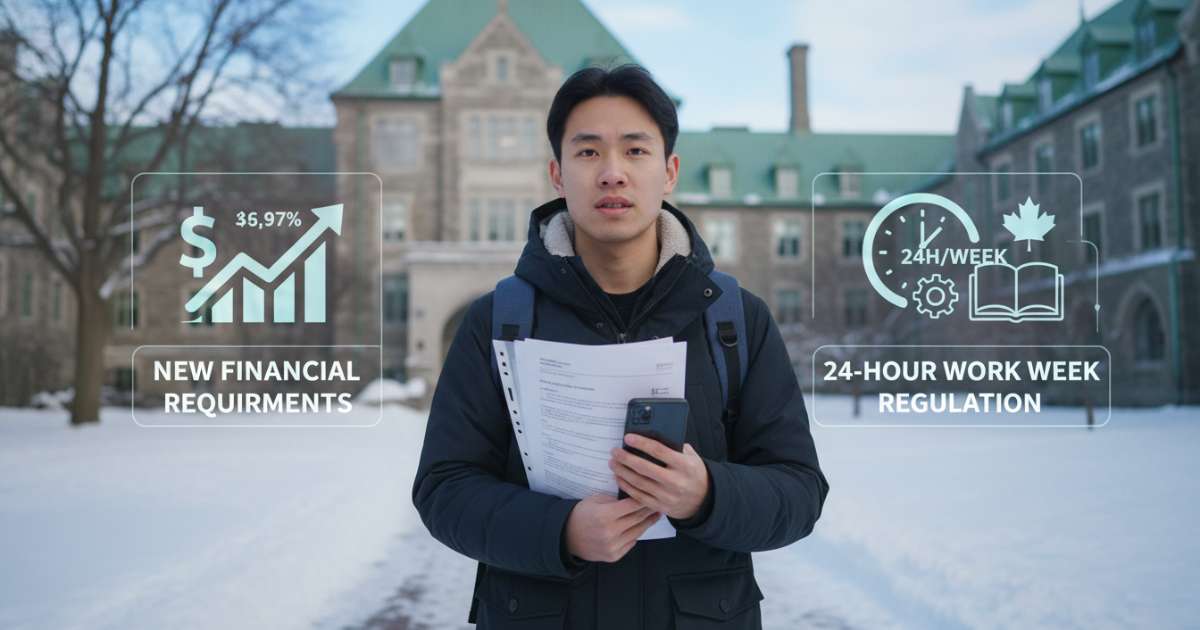
2. New Financial Requirements and 24-Hour Weekly Work Regulation
The Canadian government has officially applied new regulations on financial capacity to ensure international students can afford their lives without being overly dependent on part-time work. When choosing to Study in Quebec Canada, students should note that the required cost of living has increased significantly compared to previous years.
2.1. Updated Financial Proof Levels for 2026
Instead of the old level, students must now prove they have enough money equivalent to 75% of the Low Income Cut-Off (LICO) in Canada in addition to the first year’s tuition. For a single student planning to Study in Quebec Canada, this amount usually ranges around 20,635 CAD per year for living expenses. Financial proof should be demonstrated through savings accounts, bank statements, and valid income sources of the sponsor to ensure transparency for the application.
2.2. New Regulations on Student Work Hours
Another important change directly affecting student life is the regulation on the number of off-campus work hours. Starting from this period, students who Study in Quebec Canada are allowed to work a maximum of 24 hours per week during the academic term and full-time during breaks. This regulation aims to help students focus on their studies while still having enough time to gain practical work experience and support part of their living costs in cities like Montreal or Quebec City.
3. How to Choose Priority Majors and Schools to Ensure Immigration Opportunities
Quebec’s immigration strategy in the 2026–2027 period no longer focuses on quantity but has shifted to quality and suitability for the labor market. Choosing the right priority fields when you Study in Quebec Canada will determine up to 80% of your ability to receive a permanent resident card after graduation.
3.1. Health and Healthcare Sector
Due to an aging population, Quebec is facing a severe shortage of human resources in nursing, medical assistants, and health service management. Students who choose to Study in Quebec Canada in this group of majors often enjoy priority policies for fast-track immigration application processing through the province’s pilot programs. Schools like McGill or the Université de Montréal are top training locations for this field.
3.2. STEM Group including Science, Technology, and Engineering
STEM has always been the backbone of Quebec’s economy, especially in fields such as artificial intelligence, aerospace, and green energy. When pursuing to Study in Quebec Canada in the STEM block, students not only have high starting salaries but also easily find jobs at major technology corporations. The province is applying mechanisms to attract tech talent to maintain its position as an innovation hub in North America.
3.3. Construction and Infrastructure Sector
With the high demand for housing and urban development, fields such as civil engineering, construction management, and skilled trades are becoming extremely valuable. Choosing to Study in Quebec Canada in the construction industry helps students access a labor market that is severely lacking in human resources, thereby increasing the opportunity to be sponsored by businesses for long-term stay and work.
4. Pathway from Study to Employment and Long-term Settlement in Quebec
A complete Study in Quebec Canada roadmap must include three main stages: quality education, practical work, and applying for immigration. Mastering the timelines and requirements of each stage will help students avoid immigration legal risks.
4.1. Graduation Stage and Post-Graduation Work Permit (PGWP)
After completing their study program, international students can apply for a PGWP to stay in Canada to work for up to 3 years. This is the golden time to accumulate work experience in Quebec. Note that to be eligible for immigration later, the job you undertake should belong to the priority occupational groups identified in your initial Study in Quebec Canada plan.
Local practical work experience is the clearest evidence of your ability to integrate.
4.2. Quebec Experience Program (PEQ) and Skilled Worker Immigration
The PEQ program remains the shortest path to achieving permanent residency for students who Study in Quebec Canada. However, new regulations require students to reach an upper-intermediate level of oral and written French. For those not following the PEQ route, the Quebec Regular Skilled Worker Program also provides opportunities based on a points system, where factors such as priority occupations, age, and work experience in the province are highly valued.
5. Important Changes in Quebec Immigration Policy for 2027
Moving into 2027, Quebec’s immigration policy is expected to tighten for general labor groups and focus entirely on individuals capable of contributing immediately to the economy. This means that to Study in Quebec Canada needs to be carefully calculated right from the school and major selection stage. This change is not intended to restrict immigrants but to ensure that those coming to Canada have a solid professional future.
The provincial government is also increasing support programs for international students to learn French for free or with subsidies. This is an effort to protect Quebec’s cultural identity while helping students who Study in Quebec Canada easily connect with the local community. Proficiency in this language is not only a condition for immigration but also the key to career advancement in major enterprises in Montreal.
In summary, to Study in Quebec Canada in the 2026–2027 period requires serious preparation in terms of finance, language, and career orientation. Instead of following mass immigration trends, students should focus on Healthcare, STEM, and Construction sectors to ensure a safe and sustainable pathway. With proper preparation, Quebec remains a land of promise that brings a brilliant career and a quality life for Vietnamese students.
If you are nurturing the intention to conquer the Canadian dream, this is the golden time to start preparing your application. Capturing exactly the changes in the 2026 immigration law and the specific regulations of Quebec province will help you save time and optimize education investment costs.
Let experienced consultants support you in building a personalized study roadmap, suitable for your capacity and long-term settlement goals. We will help you assess the success potential of your application, choose majors with the highest employment rates, and prepare financial proof steps transparently and effectively.
Don’t miss the opportunity to become the next successful generation of international students in the beautiful province of Quebec. Contact SIEC now to have your Canada 2027 settlement potential assessed today and receive the latest updates on scholarship programs as well as government priority policies for Vietnamese students.
Are You Ready to Break Through to a Global Career with SIEC?
Don’t let your prestigious degree just sit on paper. Let SIEC experts advise you on a study abroad pathway combined with a career orientation strategy starting today!
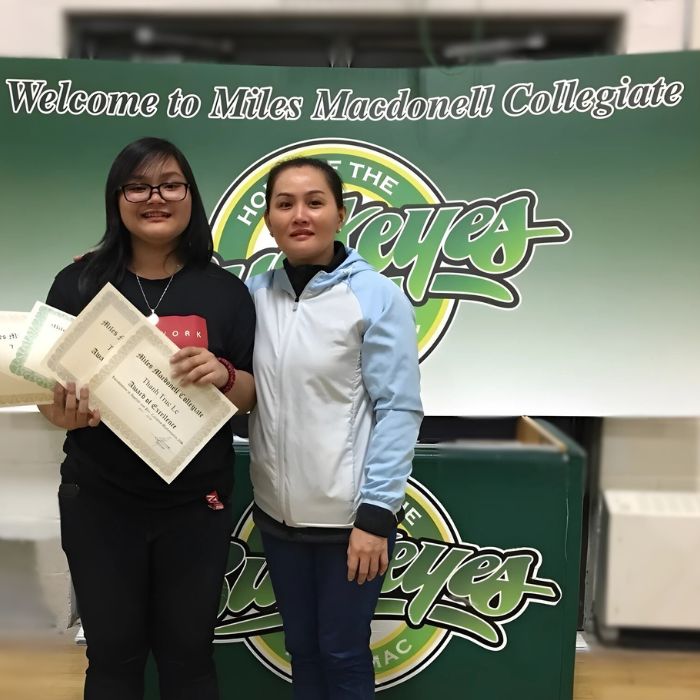
Lê Thanh Trúc, Student at Miles Macdonell Collegiate
“My family and I are deeply grateful to SIEC for not only securing my **Canada high school student visa** in Grade 10 but also for assisting my parents and siblings in obtaining their **visitor visas**. That was an invaluable gift.” — Lê Thanh Trúc, Student at **Miles Macdonell Collegiate** Secure Your Early High School (Secondary) […]
Phan Thị Ngọc Huỳnh, Former Student in Winnipeg
“The solid foundation provided by SIEC and Ms. Huong not only helped me realize my study abroad dream but also gave me the confidence to graduate, secure a stable job, and **settle permanently in Canada**.” — Phan Thị Ngọc Huỳnh, Former Student, currently working in **Winnipeg, Canada** Explore Your Study & Immigration Pathway in Canada […]
Hoàng Giang, Student at Edmonds College
“With her dedication and passion, Ms. Huong helped launch my **American dream**, opening up a vast world of opportunity and the chance to meet new friends.” — Hoàng Giang, Student at **Edmonds College** Explore More About Studying in the USA Spotlight on Edmonds College (Washington State) Gain in-depth knowledge about the programs, tuition fees, and […]
Khánh Lê, Student at LaSalle College
“Thank you to Ms. Huong and the SIEC team for their dedicated partnership and support, from my application phase until I was settled in Canada, helping me confidently pursue my dreams.” — Khánh Lê, Student at **LaSalle College** Explore Further Canada Study Opportunities Spotlight on LaSalle College Gain deeper insights into the programs, tuition fees, […]
Quỳnh Giao, Student at Red River Colleg
“She didn’t just stop at completing the application; she was an inspiration, a true motivator…” — Quỳnh Giao, Student at **Red River College** Continue Your Canada Study Abroad Journey Spotlight on Red River College Polytechnic (RRC Polytech) Discover the high-demand, **applied learning programs** at **Red River College** – one of the premier post-secondary institutions in […]