Study in Canada SOS Handbook: New Requirements & Procedures
18/05/2026 Phong Nguyen
In the context of major adjustments to Canada’s immigration policies, understanding Study in Canada SOS information has become more urgent than ever for Vietnamese students. The 2026–2027 period marks a significant turning point as the Canadian Government shifts away from encouraging mass settlement to focusing intensely on attracting talent in priority sectors. To succeed in this journey, learners need thorough preparation in terms of knowledge, language skills, and financial capacity according to the latest regulations.
This article will provide the most comprehensive and detailed insight to help you build a sustainable study and settlement plan in the land of the maple leaf.
1. The Study in Canada SOS Situation for 2026–2027
The Study in Canada SOS market over the next two years will witness a tightening of the number of Study Permits issued. Immigration, Refugees and Citizenship Canada (IRCC) has established strict quotas to ensure educational quality and reduce pressure on the housing system. This means that competition among applicants will increase, requiring applications to be truly outstanding with a clear study purpose.
A noteworthy new point is the priority given to postgraduate programs such as Master’s and Doctoral degrees, as well as occupations where the Canadian labor market is facing severe shortages. Current Study in Canada SOS programs are no longer just about attending school but are part of Canada’s national human resource strategy. Therefore, those who choose the right priority occupations will have a significant advantage in visa processing and post-graduation settlement pathways.
Additionally, changes in the regulations for issuing Provincial Attestation Letters (PAL) are a factor that those interested in Study in Canada SOS need to pay special attention to. This process requires close coordination between schools and provincial governments, which may cause application processing times to be longer than before. Timely updates will help you be proactive in your application and avoid unnecessary risks.
2. Application Conditions and Study Permit Regulations for Study in Canada SOS
To prepare a successful Study in Canada SOS application in 2026 and 2027, candidates must meet rigorous standards for academics and language proficiency. For undergraduate and college levels, a Grade Point Average (GPA) is usually required at a good level or higher, while an English certificate (IELTS or PTE) is a mandatory requirement to prove the ability to absorb knowledge in an international environment.
2.1. Academic and Language Proficiency Requirements
Schools in Canada are currently raising entrance standards to ensure students are capable of completing their programs. When researching Study in Canada SOS, you will find that an IELTS score of 6.0 to 6.5 is no longer an absolute safety threshold but merely a prerequisite. To increase competitiveness, especially in priority sectors, students should aim for higher scores or obtain additional relevant professional certifications.
2.2. Provincial Attestation Letters and the Study Permit Process
The new Study Permit system requires most students to have a Provincial Attestation Letter (PAL) before applying for a visa. This is an important screening step to distribute students evenly across regions instead of concentrating too heavily in large cities like Toronto or Vancouver. When pursuing a Study in Canada SOS pathway, you need to check if your chosen school is on the list eligible for PAL and how long the waiting period is.
Furthermore, the Study Plan plays a vital role in a Study in Canada SOS application. You need to demonstrate the connection between your previous academic background, your upcoming study program in Canada, and your long-term career goals. Logic and persuasiveness in your explanation will help consular officers see your serious intention when choosing Canada as a study destination.
3. New Financial Requirements and the 24-Hour Weekly Work Rule
One of the most important changes affecting the Study in Canada SOS community is the level of financial proof. Since 2024, Canada has significantly increased the minimum cost-of-living requirement that students must prove. This is to ensure that students do not fall into economic hardship while living in a country with high spending costs.
3.1. Updated Minimum Cost of Living
Instead of the 10,000 CAD level as in previous years, Study in Canada SOS students now need to prove an account balance or guaranteed financial sources equivalent to more than 20,000 CAD for one year of living, excluding tuition fees. This is a more realistic figure, reflecting the fluctuations in rent and food prices in Canada. Preparing solid finances not only makes the visa application smoother but also helps students focus entirely on their studies.
3.2. Regulations on 24-Hour Weekly Part-Time Work
The Canadian Government has also officially applied new regulations regarding part-time work for international students. Instead of being allowed to work unlimited hours during certain temporary periods, Study in Canada SOS students are now permitted to work a maximum of 24 hours per week during the academic term. This regulation aims to balance earning extra income with ensuring students’ academic results.
The 24-hour limit is a slight relaxation from the previous 20-hour rule, creating conditions for students to cover part of their costs while still maintaining their primary goal of studying. For Study in Canada SOS students, effective time management between studying and working will be the key to maintaining legal status and achieving the best results in their training program.
4. Choosing Priority Sectors: Healthcare, STEM, and Construction for Study in Canada SOS
In the 2026–2027 period, Canada’s settlement strategy focuses heavily on category-based selection rounds. This means that those with work experience or training in shortage areas will have a much higher chance of receiving Permanent Residency (PR). When planning for Study in Canada SOS, choosing the right industry is a factor that determines 80% of the success of the settlement pathway.
4.1. Healthcare and Medical Services Group
With an aging population, Canada is short of tens of thousands of personnel in the Healthcare sector. Study in Canada SOS programs in Nursing, Dental Assisting, Laboratory Technology, or Elderly Care are always at the top of the priority list. Graduates in these fields not only have high salaries but are also sought after by provinces with many specific settlement programs.
4.2. STEM Group: Science, Technology, Engineering, and Mathematics
The development of the digital economy means the demand for STEM talent has never cooled down. When choosing Study in Canada SOS in the STEM direction, you can consider fields such as Computer Science, Software Engineering, Data Analysis, or Mechanical Engineering. These are highly applicable professions and easily transition to high-skilled settlement categories in the Express Entry system.
4.3. Construction and Transportation Group
To address the housing crisis and develop infrastructure, Canada needs a large number of civil engineers, electricians, plumbers, and project managers. Enrolling in vocational or technical programs in the construction field while pursuing Study in Canada SOS is a smart move. These fields usually have short training times, lots of practice, and great opportunities for employment immediately after graduation.
5. Pathway from Study to Employment and PR in Canada 2027
The Study in Canada SOS journey does not end after you receive your degree. The next step is transitioning to a Post-Graduation Work Permit (PGWP). However, regulations regarding the PGWP also have changes that students need to note, especially the link between the study program and labor market demand to be granted a long-term work permit.
After obtaining a PGWP, students need to accumulate work experience in Canada for at least one year to be eligible to apply for settlement programs. With a Study in Canada SOS pathway, you should focus on seeking jobs in the priority sectors mentioned above. Work experience in Healthcare, STEM, or Construction will help you accumulate significant bonus points in the immigration point system.
In addition to the federal Express Entry system, Provincial Nominee Programs (PNP) are also an effective direction for Study in Canada SOS students. Each province will have its own priority occupation lists based on local practical needs. Choosing to study in provinces that have policies to attract talent will help your settlement path become shorter and less competitive.
6. Assess Your Canada PR Eligibility for 2027 Now
Self-assessing your profile is the first but extremely important step in the Study in Canada SOS journey. You need to look objectively at your academic ability, language proficiency, and financial capacity. A successful settlement path is not for the majority but for those who have in-depth preparation and choose the right direction according to the requirements of the Canadian Government.
Settlement through priority skilled categories requires you to constantly update changes in immigration law. Information about Study in Canada SOS in 2026 and 2027 shows more strictness in selecting candidates. Therefore, consulting with experienced immigration experts will help you build a personalized pathway, optimize scores, and minimize the risk of visa refusal or not achieving settlement goals.
Don’t let policy changes be a barrier to your dreams. In fact, these changes create great opportunities for students who are truly capable and choose the right industries that society needs. Start your Study in Canada SOS journey with a strategic mindset, focusing on the practical values you can contribute to Canada in the future.
The journey to conquering the Canadian Permanent Resident card in the 2026–2027 period requires persistence and a detailed plan. By choosing priority sectors like Healthcare, STEM, or Construction, you are opening a wider door to becoming part of Canadian society. Proactively research and prepare today to turn your Study in Canada SOS dream into reality.
If you are wondering about your profile or don’t know where to start to fit the latest regulations, do not hesitate to seek professional support. Early profile assessment will help you identify strengths to promote and gaps to fill to ensure the highest success rate for your Study in Canada SOS plan.
Let us accompany you on the path to creating a future in Canada. With deep understanding of immigration law and a wide network of links with prestigious schools, SIEC will advise you on the most optimal study and settlement pathway, helping you confidently enter the promising 2026–2027 period.
Contact the expert team at SIEC now for profile assessment and in-depth advice on Canada study and settlement programs according to priority occupations. We are committed to bringing the most accurate information and effective solutions for your journey.
Don’t miss the chance to become a future resident of one of the most livable countries in the world. Register for a consultation today to receive a detailed pathway and dedicated support from SIEC at https://siec.com.vn/dang-ky.
Are You Ready for a Global Career Breakthrough with SIEC?
Don’t let your prestigious degree just stay on paper. Let SIEC experts advise you on a study abroad pathway combined with a career orientation strategy starting today!
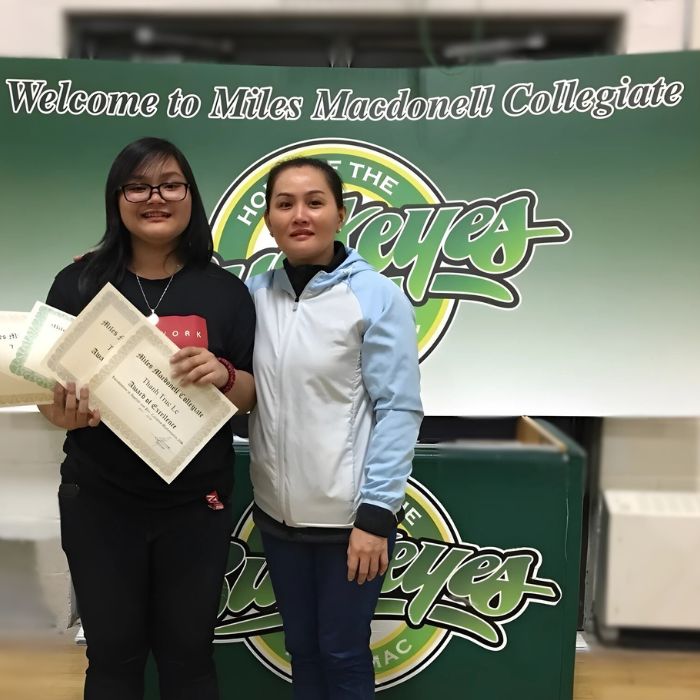
Lê Thanh Trúc, Student at Miles Macdonell Collegiate
“My family and I are deeply grateful to SIEC for not only securing my **Canada high school student visa** in Grade 10 but also for assisting my parents and siblings in obtaining their **visitor visas**. That was an invaluable gift.” — Lê Thanh Trúc, Student at **Miles Macdonell Collegiate** Secure Your Early High School (Secondary) […]
Phan Thị Ngọc Huỳnh, Former Student in Winnipeg
“The solid foundation provided by SIEC and Ms. Huong not only helped me realize my study abroad dream but also gave me the confidence to graduate, secure a stable job, and **settle permanently in Canada**.” — Phan Thị Ngọc Huỳnh, Former Student, currently working in **Winnipeg, Canada** Explore Your Study & Immigration Pathway in Canada […]
Hoàng Giang, Student at Edmonds College
“With her dedication and passion, Ms. Huong helped launch my **American dream**, opening up a vast world of opportunity and the chance to meet new friends.” — Hoàng Giang, Student at **Edmonds College** Explore More About Studying in the USA Spotlight on Edmonds College (Washington State) Gain in-depth knowledge about the programs, tuition fees, and […]
Khánh Lê, Student at LaSalle College
“Thank you to Ms. Huong and the SIEC team for their dedicated partnership and support, from my application phase until I was settled in Canada, helping me confidently pursue my dreams.” — Khánh Lê, Student at **LaSalle College** Explore Further Canada Study Opportunities Spotlight on LaSalle College Gain deeper insights into the programs, tuition fees, […]
Quỳnh Giao, Student at Red River Colleg
“She didn’t just stop at completing the application; she was an inspiration, a true motivator…” — Quỳnh Giao, Student at **Red River College** Continue Your Canada Study Abroad Journey Spotlight on Red River College Polytechnic (RRC Polytech) Discover the high-demand, **applied learning programs** at **Red River College** – one of the premier post-secondary institutions in […]