Study in Canada Otofun: Guide on Requirements and Costs
19/05/2026 Phong Nguyen
Currently, the topic of Study in Canada Otofun has become a central point of discussion for many parents and young people on major forums. The 2026 – 2027 period marks a significant turning point in the Maple Leaf country’s immigration policy as the Canadian Government begins tightening general settlement conditions and shifting focus toward occupational groups facing severe labor shortages. Gaining accurate information about Study in Canada Otofun will help learners have a more realistic view of their educational roadmap as well as their job prospects after graduation.
Instead of choosing general majors that easily saturate the labor market, the current trend is to focus on priority sectors such as Healthcare, STEM, and Construction to ensure more certain settlement opportunities.
To start the Study in Canada Otofun journey in the 2026 – 2027 period, students need to prepare a truly impressive portfolio. The first prerequisite is academic performance, reflected in the cumulative Grade Point Average (GPA). Leading universities and colleges in Canada currently often require a minimum GPA of 7.0 or higher for colleges and 7.5 or higher for universities.
In addition, language certificates such as IELTS or PTE are indispensable factors in proving the ability to communicate and absorb knowledge in an international academic environment. The required IELTS score is usually 6.0 for college levels and 6.5 for university levels, with no individual skill falling below the specified threshold.
A new point in the Study in Canada Otofun application process that learners need to note is the Provincial Attestation Letter (PAL). This is a mandatory requirement for most levels of study to control the number of international students entering specific regions. Obtaining this attestation letter requires students to prepare early and apply to schools on the province’s designated list.
The application should be presented clearly and honestly, demonstrating a serious academic goal to increase the acceptance rate from the institution.
Besides academic papers, the Study in Canada Otofun application also requires personal documents such as a valid passport, police certificate, and medical examination according to the regulations of Immigration, Refugees and Citizenship Canada (IRCC). Careful preparation of these documents will help the review process go smoothly and minimize the risk of visa rejection. Learners should also focus on writing a convincing Statement of Purpose (SOP), clearly stating the reasons for choosing the major and future career development plans linked to the actual needs of the Canadian labor market.
2. Updates on Study Permits and Financial Requirements for Study in Canada Otofun
A Study Permit is the most important document allowing international students to stay and study legally in Canada. In discussions about Study in Canada Otofun, the issue of renewal and compliance with Study Permit regulations is always a top priority. Since 2026, regulations on maintaining active enrollment status have been tightened.
Students must ensure full attendance and maintain stable academic results so as not to affect the validity of this permit. Any change in school or major must also be reported promptly to the immigration authorities to update information in the management system.
Financial requirements for participating in Study in Canada Otofun have also undergone significant changes to ensure students can afford to live in this country. Instead of previous financial proof levels, the Canadian Government has raised the cost-of-living requirement to a higher figure to match inflation and actual costs. Specifically, students need to prove they have enough funds equivalent to the first year’s tuition plus living expenses of more than 20,000 CAD per year.
Purchasing a Guaranteed Investment Certificate (GIC) at Canadian banks is considered the fastest and most effective method of financial proof today.
In addition to the GIC deposit, learners researching Study in Canada Otofun also need to prepare evidence of the financial guarantor’s stable income. This may include savings books, real estate documents, labor contracts, or parents’ business licenses. Transparency of the source of funds and demonstrating sustainable financial capacity will give visa officers more confidence in the student’s application.
This is an extremely important preparation step to ensure the Study in Canada Otofun process is not interrupted by money-related issues throughout the duration of study abroad.
3. 24-Hour Weekly Off-Campus Work Regulation and Balancing Studies
One of the most positive changes that the Study in Canada Otofun community is interested in is the regulation on the number of working hours. Instead of the previous limit of 20 hours per week, international students are now allowed to work up to 24 hours per week during official school terms. This change aims to support students with extra income to cover living expenses while helping them accumulate practical work experience in the local environment.
However, increasing the number of working hours also poses a challenge in time management to ensure it does not affect academic performance at school.
When researching Study in Canada Otofun, many advise that students should prioritize finding jobs related to their field of study. For example, Healthcare students can work as assistants in clinics, or Construction students can find part-time jobs at material supply companies. This not only helps increase income but is also a major plus on a resume after graduation.
The 24-hour-per-week regulation is a reasonable limit so that students can still focus on lectures and exams without being overwhelmed by external work pressure.
To balance study and work while participating in Study in Canada Otofun, students need to create a detailed schedule. Using task management apps or notebooks will help keep close track of class schedules, work shifts, and self-study time at home. During holidays or summer breaks, students are still allowed to work full-time without a limit on hours.
This is a golden opportunity to accumulate a significant amount of money and expand social networks. However, always remember that the primary purpose of Study in Canada Otofun is to obtain a degree and knowledge, so one should not get too caught up in earning money and miss important learning opportunities.
4. Priority Occupations for Immigration in Canada 2026 – 2027
Canada’s immigration strategy in the coming years will focus heavily on selecting candidates with expertise in fields facing labor shortages. When discussing Study in Canada Otofun, experts often emphasize that choosing the right major will determine 70% of the success for settlement. Instead of choosing Economics or Business Administration, which already have an abundance of labor, students should look toward sectors like Healthcare, STEM, and Construction to be prioritized in federal and provincial immigration draws.
4.1. Healthcare and Community Health Care Group
The Healthcare sector always tops the Canadian Government’s priority list due to the rapidly aging population. Students pursuing Study in Canada Otofun in fields such as Nursing, Pharmacy, Lab Technicians, or Aged Care will have almost absolute job opportunities after graduation. Provinces like Ontario, British Columbia, and Alberta continuously open Provincial Nominee Programs specifically for healthcare workers with lower settlement score requirements compared to other sectors.
Jobs in the healthcare sector not only provide high salaries but also help students easily integrate into social life in Canada.
4.2. STEM Group including Science and High Technology
STEM stands for Science, Technology, Engineering, and Mathematics. These are the core sectors driving Canada’s economic development in the digital era. Those who choose Study in Canada Otofun in directions like Information Technology, Data Science, Artificial Intelligence, or Mechanical Engineering will be sought after by major technology corporations.
Canada is striving to attract STEM talent to compete with other nations; therefore, policies regarding Post-Graduation Work Permits (PGWP) and high-skilled immigration programs always prioritize this group. Owning a STEM degree from a prestigious Canadian university is a solid passport to the future.
4.3. Construction and Transportation Group
With the continuous development of infrastructure, the Construction sector in Canada is facing a serious shortage of skilled tradespeople. Jobs such as civil engineers, electricians, plumbers, or construction project managers are being paid very attractive salaries. When researching Study in Canada Otofun, many often overlook this group, thinking the work is hard, but in reality, it is currently the fastest path to settlement.
Federal skilled trades immigration programs frequently have specific invitation rounds for construction candidates, helping them obtain Permanent Resident status after only a short period of actual work.
5. Educational Roadmap to Achieve Canada 2027 Immigration Goals
To realize the dream of settlement through the Study in Canada Otofun pathway, students need a clear study and work roadmap from day one. The first step after completing the program is to apply for a Post-Graduation Work Permit (PGWP). This permit allows students to stay in Canada to work for 1 to 3 years, depending on the length of the course.
During this time, finding a job in a priority sector and accumulating at least one year of professional work experience is a mandatory condition to qualify for a settlement application.
While working, students need to continuously update themselves on changes in the Express Entry points system. Improving English proficiency or learning French will significantly increase scores. For those following the Study in Canada Otofun roadmap, taking advantage of Provincial Nominee Programs is a smart move.
Every province in Canada has its own priority occupation lists, and if your job is on that list, you will be awarded a large number of points to ensure you receive an invitation to apply for PR. Persistence and being keen on policy information will help you overcome barriers during the application review process.
In addition, building a professional network within the field of study also plays a vital role. Participating in career seminars, student clubs, and performing well in co-op paid internships will help students get valuable recommendations from employers. With support from local businesses, your settlement profile will become much more convincing.
The journey from Study in Canada Otofun to becoming a Canadian Permanent Resident is a long one that requires constant effort, but the reward will be a stable and developing life in one of the world’s most livable countries.
6. Assess Your Canada 2027 Settlement Potential Now
If you are nurturing plans for Study in Canada Otofun but are still concerned about your future settlement potential, conducting an early profile assessment is essential. Every individual has their own strengths and limitations regarding education, finance, and work experience. Accurately evaluating these factors will help you choose the major that best fits your capacity and labor market trends in Canada for the 2026 – 2027 period.
Don’t let misleading information affect the most important decision of your life.
Start preparing for your Study in Canada Otofun journey today by seeking advice from units with experience and deep understanding of Canadian immigration law. A personalized roadmap will help you save time and costs while maximizing your chances of obtaining a Permanent Resident card. Timely grasping of new regulations on Study Permits, financial requirements, and priority occupation lists will be the key to opening the door to success in the Maple Leaf country.
To receive the most professional and updated advice on the study and settlement roadmap in Canada, contact our team of experts immediately. We will help you analyze your profile in detail, and select schools and majors with the highest settlement rates today.
Don’t miss the chance to change your future in a developed and potential-filled country like Canada. Let us accompany you on the path to conquering your dream of studying and sustainable settlement.
Are You Ready to Breakthrough Your Global Career with SIEC?
Don’t let your prestigious degree just stay on paper. Let SIEC experts advise you on a study abroad roadmap combined with a job-oriented strategy starting today!
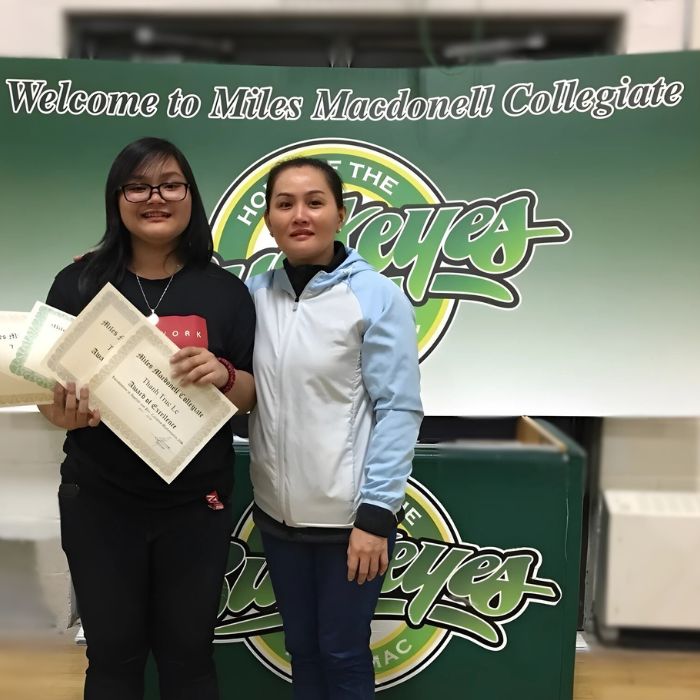
Lê Thanh Trúc, Student at Miles Macdonell Collegiate
“My family and I are deeply grateful to SIEC for not only securing my **Canada high school student visa** in Grade 10 but also for assisting my parents and siblings in obtaining their **visitor visas**. That was an invaluable gift.” — Lê Thanh Trúc, Student at **Miles Macdonell Collegiate** Secure Your Early High School (Secondary) […]
Phan Thị Ngọc Huỳnh, Former Student in Winnipeg
“The solid foundation provided by SIEC and Ms. Huong not only helped me realize my study abroad dream but also gave me the confidence to graduate, secure a stable job, and **settle permanently in Canada**.” — Phan Thị Ngọc Huỳnh, Former Student, currently working in **Winnipeg, Canada** Explore Your Study & Immigration Pathway in Canada […]
Hoàng Giang, Student at Edmonds College
“With her dedication and passion, Ms. Huong helped launch my **American dream**, opening up a vast world of opportunity and the chance to meet new friends.” — Hoàng Giang, Student at **Edmonds College** Explore More About Studying in the USA Spotlight on Edmonds College (Washington State) Gain in-depth knowledge about the programs, tuition fees, and […]
Khánh Lê, Student at LaSalle College
“Thank you to Ms. Huong and the SIEC team for their dedicated partnership and support, from my application phase until I was settled in Canada, helping me confidently pursue my dreams.” — Khánh Lê, Student at **LaSalle College** Explore Further Canada Study Opportunities Spotlight on LaSalle College Gain deeper insights into the programs, tuition fees, […]
Quỳnh Giao, Student at Red River Colleg
“She didn’t just stop at completing the application; she was an inspiration, a true motivator…” — Quỳnh Giao, Student at **Red River College** Continue Your Canada Study Abroad Journey Spotlight on Red River College Polytechnic (RRC Polytech) Discover the high-demand, **applied learning programs** at **Red River College** – one of the premier post-secondary institutions in […]