Study in Canada duration: Complete academic pathway guide
31/05/2026 Phong Nguyen
The question of Study in Canada duration is always the first concern for parents and students when they begin exploring their educational journey in the Great White North. In the context of Canada’s immigration policies undergoing significant changes for the 2026–2027 period, determining the length of study not only affects costs but also directly decides future settlement opportunities. Currently, the Canadian government is tightening general immigration pathways and prioritizing focus on sectors facing severe labor shortages.
Therefore, clearly understanding the Study in Canada duration associated with priority occupations such as Healthcare, STEM, and Construction will help you establish a more solid and secure roadmap.
Study time in Canada is very diverse, depending on the level of study and the type of degree the student chooses. Generally, to answer the question about the length of study, we need to categorize by the most popular educational systems today.
1.1. College and Vocational Certificate Systems
For the college level (Diploma), the study time usually lasts from 2 to 3 years. Vocational certificate programs can be shorter, starting from just 1 year. However, if your goal is to stay and work for settlement, considering the length of study in this system is very important because it affects the duration of your Post-Graduation Work Permit (PGWP).
Majors in the Construction or Applied Engineering groups often have 2-year courses, which are just enough for students to equip themselves with practical skills and meet the requirements of the labor market.
1.2. Bachelor’s Degree System
University systems in Canada usually require students to study for 4 years. This is the standard period to complete a bachelor’s program in most provinces. When researching the length of study for a bachelor’s degree, students should note that some specific majors in the STEM group (Science, Technology, Engineering, Mathematics) may require paid internship periods (Co-op), which can extend the total time by 6 months to 1 year.
However, a 4-year bachelor’s degree is always a “golden ticket” that helps you score high in the Express Entry settlement ranking system.
1.3. Postgraduate and Master’s Systems
Master’s programs usually last from 1 to 2 years depending on the requirements of each school and major. For those who already have work experience and want to transition into priority sectors like Healthcare Management or Data Analytics, determining the length of study at the Master’s level will help optimize time and costs. From 2024, even 1-year Master’s programs have been facilitated by the government to apply for a PGWP of up to 3 years, which is a huge advantage for international students.
2. Latest Application Conditions and Financial Requirements for 2026-2027
In addition to concerns about the length of study, students need to update important changes regarding application conditions. To be granted a study visa in the 2026–2027 period, your profile must demonstrate a clear study purpose and strong financial capacity according to new regulations.
Financial requirements have been significantly adjusted to ensure students can afford living expenses in major cities. Specifically, in addition to tuition fees, students need to prove they have approximately 20,635 CAD for the first year (this figure may change slightly according to annual inflation). Understanding the Study in Canada duration will help you multiply this amount to prepare a long-term financial plan, avoiding the risk of interrupting your studies halfway.
For priority sectors like Healthcare, some provinces may have separate scholarship packages or financial support; you should research carefully to reduce the burden.
Regarding academic records, schools in Canada are becoming increasingly strict in selection. A Grade Point Average (GPA) of 7.0 or higher and an English certificate (IELTS or PTE) are prerequisites. Particularly for the STEM group, requirements for math and science scores will be higher.
Once you have determined your length of study, prepare your English learning pathway early to achieve optimal scores, helping your profile compete better in the context of limited Provincial Attestation Letters (PAL).
3. 24-Hour Weekly Part-Time Work Regulation and Practical Experience
One of the positive changes since late 2024 and applied throughout the 2026–2027 period is the regulation on part-time work hours. International students are now allowed to work off-campus up to 24 hours per week during study terms. This is an opportunity for you to both cover costs and accumulate practical experience during your study period here.
Part-time work is not just about earning income. For those studying Construction or Healthcare, finding part-time jobs related to your major will be a huge plus when applying for jobs after graduation. The Canadian government encourages students to work in priority fields to become familiar with a professional environment.
Regardless of your length of study, utilizing 24 hours per week intelligently will help you build a vast social network.
During holiday breaks or summer vacations, students are still allowed to work full-time. This is the golden time to conduct research projects or participate in actual construction works. Canadian work experience is one of the most important factors for transitioning from a study visa to permanent residency.
Therefore, do not just focus on the years spent in the classroom; focus on practical time in society as well.
4. Choosing Priority Sectors for Settlement Instead of General Streams
The 2026–2027 period marks a clear shift in Canada’s settlement policy. Instead of opening doors to all professions, Immigration, Refugees and Citizenship Canada (IRCC) is focusing on inviting candidates with expertise in labor-shortage areas. Determining your length of study needs to be linked with choosing the right major to ensure a sustainable outcome.
4.1. Healthcare and Social Assistance Group
Canada is facing an aging population, leading to a massive demand for nurses, medical assistants, and psychological experts. If you choose to study Healthcare, the answer to the length of study usually ranges from 2 to 4 years depending on the level. Graduates in this field typically have an almost 100% job placement rate and are prioritized for settlement through Provincial Nominee Programs (PNP) specifically for the health sector.
4.2. STEM Group (Science, Technology, Engineering, Mathematics)
With the goal of becoming a technological powerhouse, Canada continuously recruits software engineers, cybersecurity experts, and mechanical engineers. The study time for these majors is typically 4 years for a bachelor’s degree. This is the group with the highest starting salaries and the most stable settlement pathway through occupation-based selection draws in the Express Entry system.
4.3. Construction and Skilled Trades Group
To address the housing crisis, Canada needs hundreds of thousands of workers in the construction industry, from project managers to electricians and welders. These courses are often shorter, helping you answer the question of study duration most economically (usually 2 years of college). After graduation, with solid skills, you can easily find work in any province and receive enthusiastic support from local governments in processing settlement procedures.
5. Study and Work Pathway to Achieve Settlement Goals by 2027
To realize your settlement dream by 2027, you need a detailed roadmap starting now. This roadmap includes not only the length of study but also calculates the time needed to accumulate work experience after graduation. Typically, after completing a program of at least 2 years, you will be granted a 3-year PGWP.
In the first year after graduation, you need to focus on finding a job in a priority sector (Healthcare, STEM, Construction). With just at least 1 year of full-time work experience in Canada, you are eligible to apply for the Canadian Experience Class (CEC) program. When combined with your degree and language proficiency, your CRS score will be very competitive.
Avoid saturated fields like general business administration, as general settlement opportunities are narrowing and require extremely high scores.
Another smart strategy is choosing to study in provinces with strong labor attraction policies such as Saskatchewan, Manitoba, or the Atlantic provinces. Here, your study duration can be shortened in terms of settlement procedures if you commit to long-term work in essential local sectors. Staying close to priority occupations is the key to avoiding risks from sudden immigration policy changes.
6. Important Notes on Study in Canada duration and Study Permits
When planning your length of study, students need to pay special attention to the legality of their Study Permit. A Study Permit usually has a duration equal to the length of the study program plus 90 days. If you change your major or extend your study time, you must renew this permit before it expires to avoid illegal residency.
In the 2026–2027 period, maintaining full-time study status is a mandatory condition to preserve your work rights and future PGWP eligibility. If you drop out without a valid reason or switch to part-time study, your years of study may become meaningless because you won’t be able to apply for a work permit after graduation. Always keep in touch with your school’s international student office to update the latest residency regulations.
Finally, remember that the ultimate goal of determining the Study in Canada duration is not just the degree, but the best preparation for a career in North America. Choosing the right major, studying seriously, and complying with work regulations will create a strong profile in the eyes of employers and immigration authorities. Canada always welcomes skilled and dedicated workers, especially in the core sectors of the economy.
Are you wondering which major to choose to optimize your settlement opportunities in Canada in the coming years? Don’t let policy changes hinder your dream. Let experienced experts help you design a personalized study and work roadmap, focusing on today’s top priority sectors.
Contact us now for in-depth advice on study programs suitable for your abilities and finances. We will work with you to answer the question of Study in Canada duration in detail and support you in perfecting your application professionally to catch the 2027 settlement wave.
Are You Ready to Break Through Your Global Career with SIEC?
Don’t let your prestigious degree just sit on paper. Let SIEC experts advise you on a study roadmap combined with a job orientation strategy starting today!
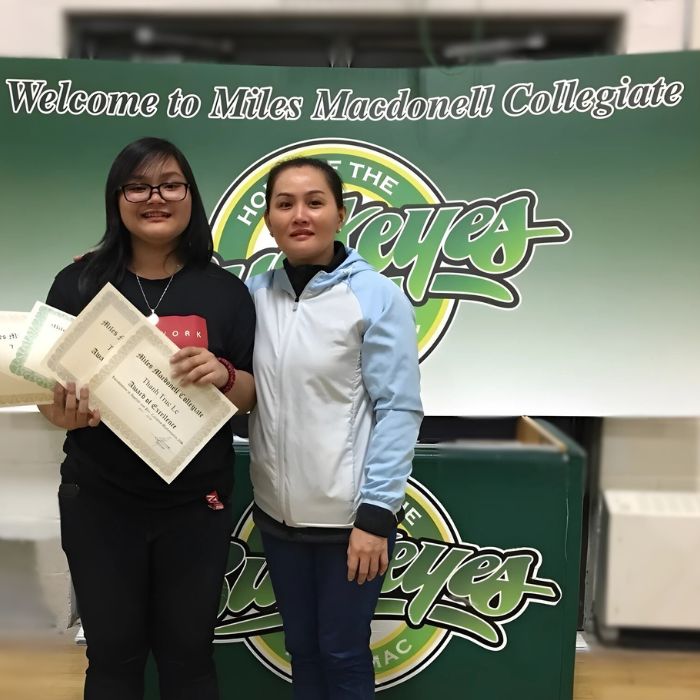
Lê Thanh Trúc, Student at Miles Macdonell Collegiate
“My family and I are deeply grateful to SIEC for not only securing my **Canada high school student visa** in Grade 10 but also for assisting my parents and siblings in obtaining their **visitor visas**. That was an invaluable gift.” — Lê Thanh Trúc, Student at **Miles Macdonell Collegiate** Secure Your Early High School (Secondary) […]
Phan Thị Ngọc Huỳnh, Former Student in Winnipeg
“The solid foundation provided by SIEC and Ms. Huong not only helped me realize my study abroad dream but also gave me the confidence to graduate, secure a stable job, and **settle permanently in Canada**.” — Phan Thị Ngọc Huỳnh, Former Student, currently working in **Winnipeg, Canada** Explore Your Study & Immigration Pathway in Canada […]
Hoàng Giang, Student at Edmonds College
“With her dedication and passion, Ms. Huong helped launch my **American dream**, opening up a vast world of opportunity and the chance to meet new friends.” — Hoàng Giang, Student at **Edmonds College** Explore More About Studying in the USA Spotlight on Edmonds College (Washington State) Gain in-depth knowledge about the programs, tuition fees, and […]
Khánh Lê, Student at LaSalle College
“Thank you to Ms. Huong and the SIEC team for their dedicated partnership and support, from my application phase until I was settled in Canada, helping me confidently pursue my dreams.” — Khánh Lê, Student at **LaSalle College** Explore Further Canada Study Opportunities Spotlight on LaSalle College Gain deeper insights into the programs, tuition fees, […]
Quỳnh Giao, Student at Red River Colleg
“She didn’t just stop at completing the application; she was an inspiration, a true motivator…” — Quỳnh Giao, Student at **Red River College** Continue Your Canada Study Abroad Journey Spotlight on Red River College Polytechnic (RRC Polytech) Discover the high-demand, **applied learning programs** at **Red River College** – one of the premier post-secondary institutions in […]