How to Study graphic design USA: Avoid Mistakes & Succeed
18/04/2026 Phong Nguyen
In the context of the ever-expanding global creative economy, the decision to study graphic design USA is becoming a top priority for many Vietnamese students for the 2026–2027 academic year. The United States is not only the cradle of leading technology and media corporations but also possesses the world’s most advanced arts education system. However, to optimize costs and ensure a long-term future, parents and students need a comprehensive strategy that combines quality education with a sustainable residency pathway.
The Double-Path strategy is the key to helping you obtain an international degree while securing the opportunity to receive a Green Card through the EB-3 employment-based residency category.
1. Choosing Reputable Institutions to Study Graphic Design USA in 2026
Choosing the right educational environment plays a decisive role in your professional skills and future networking. When you research how to study graphic design USA, you should prioritize schools accredited by the National Association of Schools of Art and Design (NASAD). This ensures that the curriculum meets rigorous standards for facilities and teaching quality.
In 2026, states like California, New York, and Massachusetts remain the most attractive destinations due to the high concentration of major design studios and advertising agencies. Below is a list of some prominent schools that students can consider:
School Name
Location
Training Strengths
Rhode Island School of Design (RISD)
Rhode Island
Communication Design, Fine Arts
Parsons School of Design
New York
Fashion Design, Commercial Graphics
California Institute of the Arts (CalArts)
California
Motion Graphics, Animation
Savannah College of Art and Design (SCAD)
Georgia
User Experience (UX), Advertising Graphics
Besides reputation, students need to carefully consider tuition fees and financial aid available for international students. To study graphic design USA at public universities can help save costs, while private schools often have high-value scholarship funds for exceptional talents.
2. Secrets to Securing Scholarships to Study Graphic Design USA for Fall 2027
To prepare for the Fall 2027 intake, students should start building their profiles from early 2026. Scholarships to study graphic design USA are typically based on two main factors: academic merit (Merit-based) and artistic talent demonstrated through a Portfolio. An impressive Portfolio not only showcases software skills but must also reflect creative thinking and a unique personal style.
2.1. Portfolio and GPA Requirements
Most top universities require a Portfolio consisting of 15 to 20 of your best works. You should include various types such as hand sketches, digital designs, and real-world projects. Additionally, a GPA of 3.0/4.0 or higher and a minimum IELTS score of 6.5 are necessary conditions for scholarship consideration.
For the Fall 2027 term, schools expect increased competition; therefore, submitting applications early during the Early Decision round is a significant advantage.
2.2. Common Types of Scholarships
Talent Scholarships
Exclusively for students with excellent Portfolios; support can cover 50-100% of tuition.
Leadership Scholarships
For students with outstanding extracurricular activities and the ability to contribute to the school’s artistic community.
Financial Aid
Some private schools provide support packages based on the actual financial needs of the student’s family.
3. Financial Documentation and U.S. Student Visa Interview Process
Proof of finances is a crucial step to receiving the I-20 form and applying for an F-1 visa. For the program to study graphic design USA in 2026, families need to prepare documents proving the ability to pay for at least the first academic year, including tuition, living expenses, and insurance. The total amount required for proof usually ranges from $45,000 to $70,000 depending on the school and location.
When preparing financial records, transparency and the source of income are key factors. Consular officers will carefully check income sources from salaries, business, or property rentals. Preparing a clear financial plan for the entire 4 years of study will significantly increase the visa approval rate.
3.1. Experiences for a Successful Visa Interview
During the interview, you need to confidently present your study goals. Consular officers often focus on why you chose the U.S. and that specific university instead of studying in Vietnam. For creative fields, explaining a specific career path after you study graphic design USA will help confirm your seriousness.
3.2. Avoiding the “Vague Purpose” Error
The error of unclear purpose is a common reason for visa denial under Section 214(b). Students often make the mistake of not understanding the curriculum or failing to explain the link between their major and future plans. To overcome this, you should prepare a detailed study plan, clearly stating specialized subjects and why the U.S. educational environment is essential for your development.
4. The Double-Path Strategy and EB-3 Residency Pathway for Vietnamese Citizens
The Double-Path strategy is a smart combination of choosing to study graphic design USA and preparing for the EB-3 employment-based residency application. Instead of focusing solely on studying, students can begin exploring the EB-3 category as early as their second or third year of university to optimize waiting times. This pathway gives students the chance to receive a Green Card immediately after graduation or during their Optional Practical Training (OPT) period.
4.1. Overview of the EB-3 Residency Category in 2026
The EB-3 category is for skilled workers, professionals, and other workers. For students who study graphic design USA, you fall into the Professionals group, which requires at least a U.S. bachelor’s degree. A company in the U.S. will act as a sponsor, proving they cannot find a suitable local worker and committing to pay the prevailing wage as regulated by the U.S. Department of Labor.
4.2. Waiting Times and Conditions for Vietnamese Citizens
As of 2026, the waiting time for the EB-3 category for Vietnamese citizens typically lasts from 4 to 6 years. Therefore, starting the application early through reputable consulting firms like SIEC is extremely important. Below is the projected process for the Double-Path route:
Phase
Action Plan
Estimated Timeline
Year 1 – Year 2
Study graphic design and build a professional Portfolio.
2026 – 2028
Year 3
Seek a sponsoring business and begin EB-3 filing (PERM Labor Certification).
2028 – 2029
Year 4
Graduate and utilize OPT to work officially for the sponsoring business.
2030
Post-Graduation
File Form I-140 and wait for Adjustment of Status (I-485) to receive the Green Card.
2031 – 2032
This route requires perseverance and a clear study plan from the beginning. Maintaining valid F-1 visa status throughout the EB-3 application process is mandatory to ensure the legality of the entire residency strategy.
5. A Clear Study Plan to Optimize Your Career in the U.S.
A detailed plan to study graphic design USA not only helps you pass the visa interview but also serves as a guide for your 4 years of study. You should clearly identify minors or short-term certifications to increase your competitive edge in the U.S. labor market. Supporting skills such as User Interface (UI/UX) design, Motion Graphics, or Artificial Intelligence in Design are top trends for 2026.
During your studies, make the most of internships and Curricular Practical Training (CPT) programs. This is an opportunity for you to get used to a professional working environment, build relationships with potential employers, and seek EB-3 sponsorship opportunities later. A student who is well-prepared in both knowledge and residency orientation will have a much higher success rate than those who only focus on studying.
Choosing to study graphic design USA according to the Double-Path strategy requires in-depth consultation and close legal support. The team of experts at SIEC, with years of experience, will accompany you from school selection and scholarship hunting to the completion of residency documents, helping you realize the American dream in the safest and most effective way.
If you are looking for a sustainable pathway to develop your passion for art and build a future in the U.S., contact SIEC immediately for detailed advice on the study abroad combined with EB-3 residency program for the 2026–2027 academic year.
We will help you build a personalized roadmap, from preparing an impressive Portfolio to connecting with reputable sponsoring businesses, ensuring your residency journey goes smoothly.
Are You Ready to Breakthrough Your Global Career with SIEC?
Don’t let your prestigious degree just sit on paper. Let SIEC experts advise you on a study abroad roadmap combined with a job orientation strategy starting today!
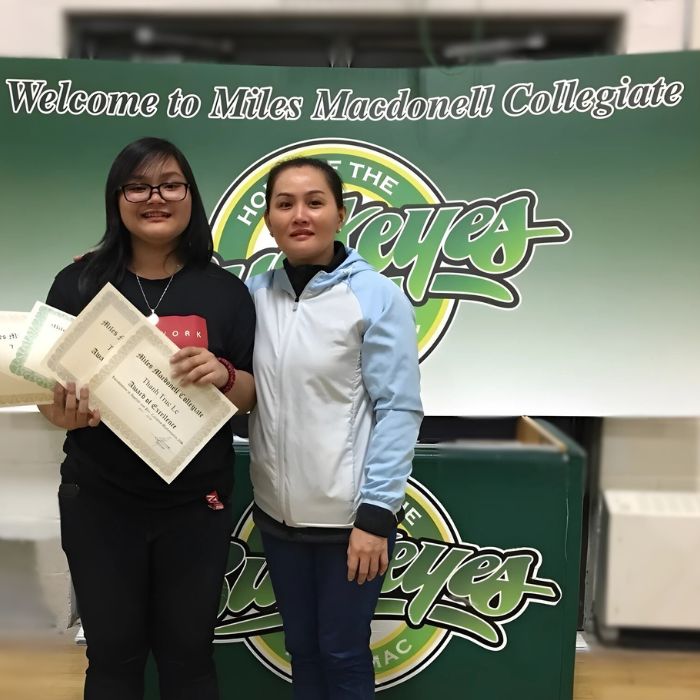
Lê Thanh Trúc, Student at Miles Macdonell Collegiate
“My family and I are deeply grateful to SIEC for not only securing my **Canada high school student visa** in Grade 10 but also for assisting my parents and siblings in obtaining their **visitor visas**. That was an invaluable gift.” — Lê Thanh Trúc, Student at **Miles Macdonell Collegiate** Secure Your Early High School (Secondary) […]
Phan Thị Ngọc Huỳnh, Former Student in Winnipeg
“The solid foundation provided by SIEC and Ms. Huong not only helped me realize my study abroad dream but also gave me the confidence to graduate, secure a stable job, and **settle permanently in Canada**.” — Phan Thị Ngọc Huỳnh, Former Student, currently working in **Winnipeg, Canada** Explore Your Study & Immigration Pathway in Canada […]
Hoàng Giang, Student at Edmonds College
“With her dedication and passion, Ms. Huong helped launch my **American dream**, opening up a vast world of opportunity and the chance to meet new friends.” — Hoàng Giang, Student at **Edmonds College** Explore More About Studying in the USA Spotlight on Edmonds College (Washington State) Gain in-depth knowledge about the programs, tuition fees, and […]
Khánh Lê, Student at LaSalle College
“Thank you to Ms. Huong and the SIEC team for their dedicated partnership and support, from my application phase until I was settled in Canada, helping me confidently pursue my dreams.” — Khánh Lê, Student at **LaSalle College** Explore Further Canada Study Opportunities Spotlight on LaSalle College Gain deeper insights into the programs, tuition fees, […]
Quỳnh Giao, Student at Red River Colleg
“She didn’t just stop at completing the application; she was an inspiration, a true motivator…” — Quỳnh Giao, Student at **Red River College** Continue Your Canada Study Abroad Journey Spotlight on Red River College Polytechnic (RRC Polytech) Discover the high-demand, **applied learning programs** at **Red River College** – one of the premier post-secondary institutions in […]