Study education in Canada: Top Path to Permanent Residence
13/05/2026 Phong Nguyen
In the 2026–2027 period, Canada’s immigration policies are undergoing significant transformations, focusing deeply on attracting talent in essential sectors. Choosing to Study education in Canada not only provides access to a world-class education system but also opens doors to a stable career path. However, to optimize the potential for permanent residency, international students must clearly understand the shifts in the Canadian Government’s priorities toward sectors such as Healthcare, STEM, Construction, and Early Childhood Education.
This article provides a detailed look at the learning pathways, the latest regulations, and strategies for success when pursuing a pedagogical career in this new context.
1. Trends in Priority Skilled Immigration and the Choice to Study Education in Canada
Currently, Canada has shifted its immigration pathway from a general approach to focusing on occupational groups facing severe labor shortages. Although sectors like Healthcare, STEM (Science, Technology, Engineering, Mathematics), and Construction top the priority list, the decision to Study education in Canada remains a strategic choice, particularly in early childhood education and language teaching. Understanding this trend helps students better prepare when applying for permanent residency after graduation.
Instead of focusing on general teaching certificates, those who study pedagogy in Canada should aim for specialized niches that the labor market demands. For example, Early Childhood Educators frequently appear in Provincial Nominee Programs (PNP) with high priority scores. This indicates that if you know how to combine your passion for teaching with the actual needs of specific provinces, your chances of receiving a Permanent Resident (PR) card will be much higher than in other saturated fields.
Competition for Canadian immigration in 2026 and 2027 is expected to be more rigorous. Therefore, planning to study education in Canada needs to be done systematically, starting from the selection of the school and the province of residence. Provinces like Saskatchewan, Manitoba, or the Atlantic provinces often have more open policies for education graduates to address local teacher shortages.
2. Application Requirements and the Latest Study Permit Process
To begin the journey to study education in Canada, candidates must meet strict academic and linguistic standards. Typically, Canadian universities and colleges require a Grade Point Average (GPA) of 7.0 or higher. For those studying pedagogy, English or French proficiency requirements are often higher than in other fields, as the nature of the work demands precise communication and delivery skills.
IELTS scores usually range from 6.5 to 7.0, with no individual band below 6.0.
The Study Permit application process now includes new regulations that students must note. One of the most important changes is the requirement for a Provincial Attestation Letter (PAL) for most college and undergraduate programs. When applying to study education in Canada, you must first be accepted by a school, which will then assist you in obtaining a PAL from the provincial government to complete your application for Immigration, Refugees and Citizenship Canada (IRCC).
The visa application also needs to demonstrate a logical and transparent study pathway. You must clearly explain why you chose to study pedagogy in Canada and your plan to contribute to the Canadian labor market after graduation. Preparing a complete file—from criminal record checks to medical exams—will help shorten processing times and increase the success rate for a Study Permit amidst tightening international student quotas.
3. New Financial Requirements and the 24-Hour Weekly Work Regulation
One of the most significant updates for students planning to Study education in Canada during the 2026–2027 period is the financial proof requirement. According to new regulations, international students must prove a minimum financial capacity of approximately 20,635 CAD for living expenses in the first year, excluding tuition fees. This is a substantial adjustment from previous years, aimed at ensuring students have enough financial resources to focus on their studies without excessive economic pressure.
When pursuing an education degree in Canada, tuition fees typically range from 15,000 CAD to 30,000 CAD per year depending on the level of study and the institution. Preparing a solid financial plan is a prerequisite for visa approval. Students should prepare documents such as savings accounts, bank statements, or evidence of a sponsor’s income to prove a stable source of funds throughout their time studying education in Canada.
Regarding work regulations, the Canadian Government has officially implemented a 24-hour weekly limit during study terms for international students. This is welcome news as it is higher than the previous 20-hour limit, helping students studying pedagogy in Canada earn extra income to cover living costs. However, you must balance your time between work and teaching practicums, as the education sector often requires a high number of practical hours in schools to qualify for graduation and professional certification.
3.1. How to Choose Majors and Schools to Study Education in Canada
Choosing the right major and the appropriate school is a decisive factor for your long-term career. When you decide to Study education in Canada, you should not only look at school rankings but also consider the geographic location and the job demand in that specific area. Programs for early childhood educators, special education, or French language teaching are currently in very high demand.
These are smart choices for those who want to study pedagogy in Canada with the goal of long-term immigration.
Major universities like the University of Toronto, UBC, or McGill often offer research-intensive education programs. Conversely, community colleges like Seneca, George Brown, or Humber focus on practical skills and help students quickly enter the labor market. Depending on your career goals, you should choose a learning environment that optimizes your employability after graduating from your pedagogical studies in Canada.
Additionally, check if your program is on the list eligible for a Post-Graduation Work Permit (PGWP). This is a critical factor because without a PGWP, you will not have the opportunity to stay and work to gain experience for your immigration profile. Most education programs at public institutions meet this condition, but you still need to confirm carefully before paying tuition.
3.2. Pathway from Graduation to Employment and Immigration in 2027
An ideal pathway for students who study education in Canada begins with completing a program of 2 years or more to receive a 3-year PGWP. During this time, finding a job within your field is the primary goal. With a degree in education from Canada, you can apply to public schools, private institutions, or community education centers.
Canadian work experience will be a major plus when applying through the Express Entry system.
In 2027, Express Entry’s Category-based Selection programs are expected to continue prioritizing sectors that contribute significantly to society. Although Healthcare and STEM are top priorities, those who have completed their journey to study education in Canada and possess strong language skills (especially French) will have a massive advantage. Canada is striving to promote French-speaking communities outside of Quebec; therefore, French teachers are always sought after and prioritized for immigration.
Besides Express Entry, Provincial Nominee Programs (PNP) are an open path for education students. Each province has its own list of priority occupations. If you work in early childhood education in British Columbia or Ontario, you may be invited to apply for residency through draws specifically designated for the education sector.
This is the occupation-based immigration strategy that students who study education in Canada should aim for instead of competing in general categories.
4. Assess Your Canadian Immigration Potential for 2027 Today
With constant policy changes, self-assessing your profile can be difficult and risky. To ensure your path to Study education in Canada leads to a successful immigration outcome, consulting with immigration experts is essential. A detailed plan from choosing a major and school to preparing a PR application will save you time and money.
Don’t let changes in financial regulations or Study Permit quotas interrupt your dream of studying pedagogy in Canada.
A profile assessment helps you identify the strengths and weaknesses in your personal file. Is your language proficiency enough to compete in a priority sector? Or does the province you chose actually need labor from those who study education in Canada?
All these questions will be answered through an in-depth evaluation process, helping you feel more confident on your journey to conquer a PR card in the Great White North by 2027.
If you are nurturing plans to study pedagogy in Canada and seeking a secure immigration path, start taking action now. Thorough preparation in terms of knowledge, finance, and career strategy will be the key to your success in a world-class educational environment. Let experts accompany you in realizing your goal to Study education in Canada and building a sustainable future in the country.
The journey to study and settle in Canada is opening many new opportunities but is also full of challenges with stricter regulations. To avoid missing important updates on visa policies, financial requirements, and the 2026–2027 priority occupation list, you need a dedicated and experienced consulting partner.
Contact SIEC immediately for in-depth profile analysis and a personalized study-to-immigration pathway. We will help you assess your immigration potential, select the most prestigious schools, and prepare a perfect application to optimize your success rate. Don’t hesitate—register for a consultation today to start your future-changing journey in Canada with SIEC at https://siec.com.vn/dang-ky
Are You Ready to Break Through Your Global Career with SIEC?
Don’t let your prestigious degree just sit on paper. Let SIEC experts advise you on a study pathway combined with a job-oriented strategy starting today!
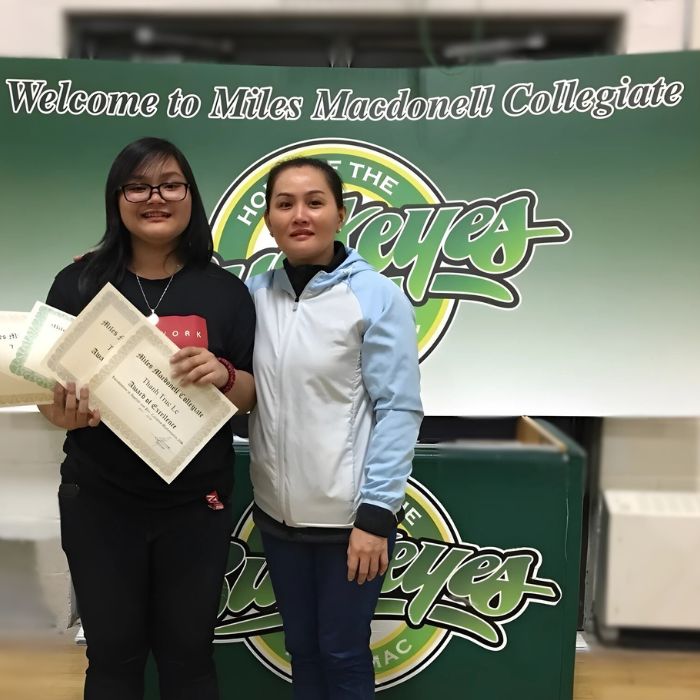
Lê Thanh Trúc, Student at Miles Macdonell Collegiate
“My family and I are deeply grateful to SIEC for not only securing my **Canada high school student visa** in Grade 10 but also for assisting my parents and siblings in obtaining their **visitor visas**. That was an invaluable gift.” — Lê Thanh Trúc, Student at **Miles Macdonell Collegiate** Secure Your Early High School (Secondary) […]
Phan Thị Ngọc Huỳnh, Former Student in Winnipeg
“The solid foundation provided by SIEC and Ms. Huong not only helped me realize my study abroad dream but also gave me the confidence to graduate, secure a stable job, and **settle permanently in Canada**.” — Phan Thị Ngọc Huỳnh, Former Student, currently working in **Winnipeg, Canada** Explore Your Study & Immigration Pathway in Canada […]
Hoàng Giang, Student at Edmonds College
“With her dedication and passion, Ms. Huong helped launch my **American dream**, opening up a vast world of opportunity and the chance to meet new friends.” — Hoàng Giang, Student at **Edmonds College** Explore More About Studying in the USA Spotlight on Edmonds College (Washington State) Gain in-depth knowledge about the programs, tuition fees, and […]
Khánh Lê, Student at LaSalle College
“Thank you to Ms. Huong and the SIEC team for their dedicated partnership and support, from my application phase until I was settled in Canada, helping me confidently pursue my dreams.” — Khánh Lê, Student at **LaSalle College** Explore Further Canada Study Opportunities Spotlight on LaSalle College Gain deeper insights into the programs, tuition fees, […]
Quỳnh Giao, Student at Red River Colleg
“She didn’t just stop at completing the application; she was an inspiration, a true motivator…” — Quỳnh Giao, Student at **Red River College** Continue Your Canada Study Abroad Journey Spotlight on Red River College Polytechnic (RRC Polytech) Discover the high-demand, **applied learning programs** at **Red River College** – one of the premier post-secondary institutions in […]