Study Canada without proof: Latest Guide and Requirements
28/05/2026 Phong Nguyen
In the context of landmark changes in Canada’s immigration policy, learning about the program to Study Canada without proof of financial means has become a top concern for many Vietnamese students and parents. Entering the 2026–2027 period, the Canadian Government is no longer encouraging mass immigration but is instead focusing on attracting high-skilled labor in sectors facing severe shortages. This opens up great opportunities for those who grasp the trend and choose priority fields such as Healthcare, STEM, and Construction to optimize their long-term settlement prospects.
1. Application Requirements to Study Canada without proof for 2026-2027
To join the stream to Study Canada without proof, students must meet stricter academic and language standards instead of just focusing on family assets. This is a priority processing method that helps reduce cumbersome paperwork regarding income sources, taxes, or long-term savings books. In 2026–2027, your application must ensure key factors to increase the visa approval rate.
1.1. Language and Academic Proficiency Requirements
Language proficiency is a prerequisite and the most important condition for the pathway to Study Canada without proof. Typically, applicants need to achieve an IELTS Academic score of 6.0 or higher (with no skill below 6.0) or equivalent certificates such as PTE Academic. Possessing a strong language foundation not only makes it easier to obtain a Study Permit but is also the key to keeping up with intensive training programs at prestigious universities and colleges.
1.2. Letter of Acceptance and Provincial Attestation Letter (PAL)
A mandatory new point in the current process to Study Canada without proof is the requirement for a Provincial Attestation Letter (PAL). This is a confirmation letter from the provincial government where the school is located, confirming that the student is within the allocated enrollment quota. You need to apply to schools on the DLI (Designated Learning Institutions) list and receive an official letter of acceptance before proceeding with the next steps of your Study Permit application.
1.3. Guaranteed Investment Certificate (GIC)
Instead of having to explain the monthly income source of a sponsor, students choosing the stream to Study Canada without proof will use a Guaranteed Investment Certificate (GIC). This is a fixed amount of money deposited into a Canadian bank to prove that you have enough ability to cover living expenses for the first year. This amount will be gradually refunded to the student by the bank every month after arriving in Canada to start their studies.
2. New Financial and Study Permit Regulations for Studying in Canada
From 2026, Immigration, Refugees and Citizenship Canada (IRCC) has applied stricter new regulations on the minimum financial threshold. Understanding these figures is mandatory if you want to smoothly pursue the goal to Study Canada without proof. This change aims to ensure that international students do not fall into economic hardship when facing the rising cost of living in major cities.
2.1. Updated GIC Deposit Levels for the 2026-2027 Period
The GIC amount required for the Study Canada without proof stream has increased significantly compared to previous years. Students need to prepare an amount equivalent to the standard cost of living as prescribed by IRCC, usually ranging above 20,000 CAD (the exact figure will be updated annually based on the inflation index). This amount, plus the tuition receipt for the first year, is the strongest evidence of your financial capability to the consular authority.
2.2. Study Permit Review Process and Important Notes
When applying for a Study Permit under the no-proof-of-funds stream, the processing time is usually shorter than the regular stream. However, the strictness regarding the honesty of the application remains paramount. You must ensure all documents such as criminal record checks, medical exams, and the Study Plan are clear and logical.
In particular, the Study Plan needs to emphasize why you chose that specific field and how it helps your future career in Canada.
3. 24-Hour Weekly Work Policy for International Students
One of the important changes affecting the lives of those who Study Canada without proof is the regulation on off-campus work hours. Instead of being allowed to work unlimited hours or only 20 hours as before, the new regulation allows students to work a maximum of 24 hours per week during study terms. This is a reasonable adjustment that helps students earn extra income while still ensuring time for research and attending classes.
3.1. Benefits of Working Part-Time According to Regulations
Working 24 hours per week helps students who Study Canada without proof cover part of their living expenses and accumulate practical work experience. The work environment in Canada highly values dynamism and soft skills. These part-time jobs will be a good stepping stone for you to get used to office culture, improve English communication skills, and expand your local social network.
3.2. Balancing Work and Study to Ensure Good Results
Although the work-study policy is quite open, the core goal to Study Canada without proof is still to complete the program with high results. Students need to manage their time strictly so as not to affect their GPA. Good academic results are a mandatory condition for you to apply for a Post-Graduation Work Permit (PGWP) and proceed to the skilled immigration pathway in the future.
4. Priority for Settlement in Healthcare, STEM, and Construction Instead of Mass Immigration
The Canadian Government has clearly defined its immigration strategy for the 2026–2027 period as focusing on quality over quantity. Instead of opening doors to all occupations, settlement programs now give special priority to three key sectors: Healthcare, STEM (Science, Technology, Engineering, Mathematics), and Construction. This is a smart direction for those seeking the opportunity to Study Canada without proof and wanting to settle long-term.
4.1. Healthcare and Medical Care Sector
With an aging population, Canada is facing a severe shortage of nurses, medical technicians, rehabilitation specialists, and personal support workers. Students who choose to Study Canada without proof in the Healthcare sector often have a nearly 100% job placement rate after graduation. Provinces always have specific Provincial Nominee Programs (PNP) for healthcare workers with lower settlement point requirements compared to economic or arts sectors.
4.2. STEM Group – The Engine of Digital Economic Development
STEM has always been the “backbone” of the Canadian economy. Positions such as software engineers, data analysts, electronic engineers, and cybersecurity specialists are in high demand. When pursuing the goal to Study Canada without proof in the STEM field, you not only receive a high starting salary but are also prioritized in rounds of invitations to apply for settlement through the Express Entry system under category-based selection.
4.3. Construction and Infrastructure Engineering Sector
To address the housing crisis, Canada needs hundreds of thousands of workers in the construction industry, from carpenters and electricians to project managers. Choosing to Study Canada without proof in these technical trades helps students easily find high-skilled jobs (Skilled Trades). This is a sector group with a very stable settlement pathway and less competition than traditional office-based sectors.
5. How to Choose Schools and Majors to Optimize Job Opportunities in Canada
Choosing the right school and major is the decisive factor for the success of the pathway to Study Canada without proof. You should not chase prestigious schools in overly expensive cities if the main goal is settlement. Instead, look for schools with strengths in training priority occupations located in areas with good labor attraction policies.
5.1. Selecting Schools on the DLI List and Eligible for PGWP
Before applying to Study Canada without proof, carefully check if the school is on the Designated Learning Institutions (DLI) list and if the study program is eligible for a Post-Graduation Work Permit (PGWP). A PGWP is a permit that allows you to stay and work for 1 to 3 years after graduation, which is a necessary condition to accumulate Canadian work experience for settlement purposes.
5.2. Prioritizing Schools in Provinces Hungry for Labor
Instead of focusing on Toronto or Vancouver, students in the Study Canada without proof stream can consider schools in Alberta, Saskatchewan, Manitoba, or the Atlantic provinces. These places often have a lower cost of living, while provincial nominee policies (PNP) are much more open to local graduates, especially in the Healthcare and Construction sectors.
6. Pathway from Study to High-Skilled Canadian Settlement
The journey to Study Canada without proof does not end with a university or college degree; it is the beginning of a journey to becoming a Permanent Resident (PR). To achieve this goal, you need a clear strategy from day one in the land of the maple leaf, focusing on improving professional qualifications and accumulating practical work experience.
6.1. Accumulating Work Experience After Graduation
After completing the program to Study Canada without proof, you need to make the most of your PGWP time to work in occupations under the priority categories (TEER 0, 1, 2, 3). Work experience in Canada is an extremely important factor in the Comprehensive Ranking System (CRS). If you work in Healthcare, STEM, or Construction, the chance of receiving a settlement invitation will be much higher through specialized selection rounds.
6.2. Improving CRS Scores and Applying for Settlement
Besides work experience, maintaining high proficiency in English/French and continuously updating new government regulations is essential. The route to Study Canada without proof becomes complete when you apply through Express Entry or provincial nominee programs. With a Canadian degree, local work experience, and belonging to a priority occupation group, the possibility of obtaining a green card in 2027 is entirely feasible for students with thorough preparation.
The journey to Study Canada without proof in the 2026–2027 period requires sensitivity in choosing majors and careful preparation of documentation. Instead of following old paths, focusing on Healthcare, STEM, and Construction will help you not only have a solid career but also secure a ticket to settle in this most livable country in the world.
If you are cherishing the dream of settling in the land of the maple leaf but are still concerned about documentation and how to choose a major suitable for new trends, let experienced experts support you. Assessing capability and building a personalized roadmap is the first very important step to realizing the goal to Study Canada without proof.
Don’t miss the opportunity to become part of the high-quality workforce community in Canada in 2027 by registering for in-depth consultation today. We will help you analyze settlement possibilities, choose the optimal school, and complete your Study Permit application in the most professional way.
Contact SIEC now to receive the latest updates on immigration policies and scholarships in Canada.
Are You Ready to Breakthrough Your Global Career with SIEC?
Don’t let your prestigious degree just stay on paper. Let SIEC experts advise you on a study path combined with a career orientation strategy starting today!
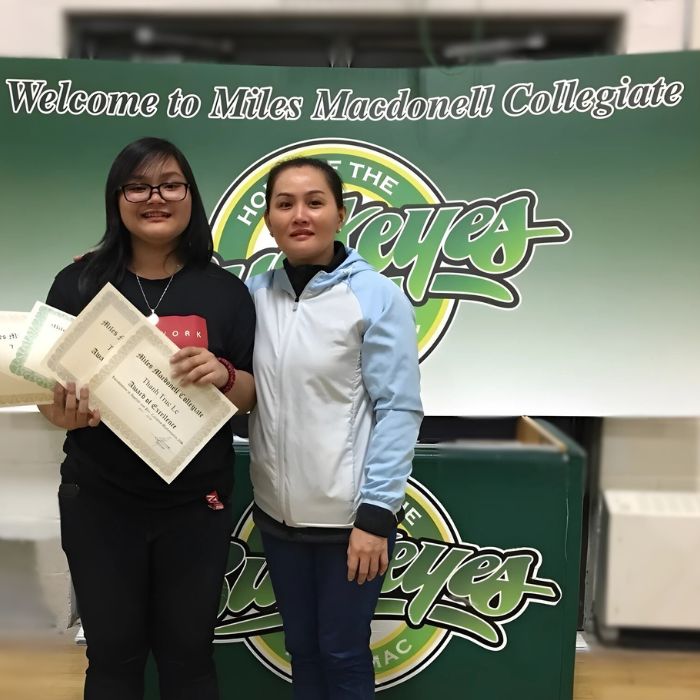
Lê Thanh Trúc, Student at Miles Macdonell Collegiate
“My family and I are deeply grateful to SIEC for not only securing my **Canada high school student visa** in Grade 10 but also for assisting my parents and siblings in obtaining their **visitor visas**. That was an invaluable gift.” — Lê Thanh Trúc, Student at **Miles Macdonell Collegiate** Secure Your Early High School (Secondary) […]
Phan Thị Ngọc Huỳnh, Former Student in Winnipeg
“The solid foundation provided by SIEC and Ms. Huong not only helped me realize my study abroad dream but also gave me the confidence to graduate, secure a stable job, and **settle permanently in Canada**.” — Phan Thị Ngọc Huỳnh, Former Student, currently working in **Winnipeg, Canada** Explore Your Study & Immigration Pathway in Canada […]
Hoàng Giang, Student at Edmonds College
“With her dedication and passion, Ms. Huong helped launch my **American dream**, opening up a vast world of opportunity and the chance to meet new friends.” — Hoàng Giang, Student at **Edmonds College** Explore More About Studying in the USA Spotlight on Edmonds College (Washington State) Gain in-depth knowledge about the programs, tuition fees, and […]
Khánh Lê, Student at LaSalle College
“Thank you to Ms. Huong and the SIEC team for their dedicated partnership and support, from my application phase until I was settled in Canada, helping me confidently pursue my dreams.” — Khánh Lê, Student at **LaSalle College** Explore Further Canada Study Opportunities Spotlight on LaSalle College Gain deeper insights into the programs, tuition fees, […]
Quỳnh Giao, Student at Red River Colleg
“She didn’t just stop at completing the application; she was an inspiration, a true motivator…” — Quỳnh Giao, Student at **Red River College** Continue Your Canada Study Abroad Journey Spotlight on Red River College Polytechnic (RRC Polytech) Discover the high-demand, **applied learning programs** at **Red River College** – one of the premier post-secondary institutions in […]