Study Canada vs Australia: Better and Cheaper Comparison
28/05/2026 Phong Nguyen
Choosing whether to Study Canada vs Australia is always a difficult decision for many Vietnamese families and students during the 2026-2027 period. Both countries possess world-leading education quality and ideal living environments. However, given the significant changes in immigration policies and financial requirements, learners need a detailed look to determine whether they should Study Canada vs Australia to better suit their long-term goals.
This article will provide an in-depth analysis of aspects ranging from costs and application requirements to settlement pathways so you can make the most accurate decision.
When weighing the options to see if Study Canada vs Australia is better, the first factor to consider is post-graduation job opportunities. In the 2026-2027 period, Canada is shifting its focus from general immigration to priority skilled immigration. This means if you choose the right sectors such as Healthcare, STEM, or Construction, the possibility of receiving an invitation for permanent residency in Canada will be significantly higher than studying general business sectors.
The Canadian government is working to address labor shortages in these essential fields by allocating more quotas to candidates with relevant professional experience.
Meanwhile, Australia also has a list of priority occupations, but the assessment process is often strict and involves significant competition between states. Deciding whether to Study Canada vs Australia at this time depends on whether you are ready to pursue technical and healthcare sectors. In Canada, provinces like Ontario or British Columbia always have specific nomination programs for STEM and Healthcare graduates, making the residency pathway clearer.
For those seeking a stable working environment with good support policies for immigrants, Canada is often rated as a better choice in the current context.
Policy stability is a major plus when comparing the two. Canada has announced long-term immigration level plans, focusing on attracting skilled workers to support its aging economy. This provides peace of mind for international students when planning their long-term study and work.
If you are wondering which is better, look at the priority Canada gives to the Construction and high-tech sectors, where labor demand is always at a critical level.
2. Comparing whether to Study Canada vs Australia is cheaper in terms of tuition and living costs
Financial issues are always a key factor when deciding between destinations. To answer whether it is cheaper, we need to consider both tuition fees and daily living expenses. In Canada, average tuition for college and university programs ranges from 15,000 to 35,000 CAD per year.
In Australia, this figure is usually higher, ranging from 25,000 to 45,000 AUD per year. The exchange rate for the Canadian dollar is also typically lower than the Australian dollar, helping to reduce financial pressure on parents when sending money from Vietnam.
Living costs are also an important part of determining affordability. Although rents in major cities like Toronto or Vancouver have risen, they generally remain lower than in Sydney or Melbourne. Additionally, the cost of food and public services in Canada is considered quite reasonable if students manage their spending well.
When calculating the total cost for an academic year, many experts believe that Canada wins the comparison, especially when studying in regional areas or Eastern provinces.
The choice also depends on insurance fees and travel costs. Canada has an excellent public health insurance system; although each province has its own regulations for international students, the fees are generally very competitive. If you are looking for a budget-friendly option that still ensures quality of life, a comparison will show that Canada is an economically advantageous destination.
However, students should note that from 2024, Canada has increased the financial proof requirement to over 20,000 CAD to ensure students can afford their lives without being overly dependent on part-time work.
3. Application conditions and the latest Study Permit regulations 2026-2027
To prepare for your journey, understanding the application conditions is extremely important. For Canada, the Study Permit application process in the 2026-2027 period has seen significant changes. International students are now required to have a Provincial Attestation Letter (PAL) for most undergraduate and college programs.
This is an additional step to control the number of students entering and ensure educational quality. When comparing the procedures, Canada is still seen as having a transparent process, although requirements for academic capacity and language proficiency are becoming stricter.
New financial requirements are a point to note when you wonder about the costs of preparing documents. Currently, students need to prove they have at least 20,635 CAD for first-year living expenses, excluding tuition. This requires families to have a financial accumulation plan early on.
Meanwhile, Australia has also raised the financial proof level to over 29,000 AUD. When looking at both countries, you will see that both are tightening regulations to ensure students come to study rather than just for labor purposes. However, with a slightly lower requirement, Canada remains a more affordable choice regarding initial deposits.
Canada’s Study Permit application also requires a detailed study plan. You need to clearly explain the reason for choosing Healthcare, STEM, or Construction and how this major helps your career. Preparing the application requires meticulousness, especially the documents proving the sponsor’s income source.
Regardless of your choice for the future, compliance with new medical examination and criminal record regulations is mandatory to ensure the highest visa approval rate.
4. The 24h per week part-time work policy and international student support regulations
One of the biggest changes affecting the decision is the regulation on part-time work hours. Since late 2024, Canada has officially applied a regulation allowing international students to work part-time for a maximum of 24 hours/week during study terms. This adjustment helps students focus more on their studies while still having enough income to cover part of their expenses.
When comparing financial support through employment, this 24-hour limit is considered more reasonable and balanced than previous regulations.
In Australia, part-time work regulations have similar limits. However, the minimum wage in Australia is often higher, which might lead some to think it’s a better financial deal. But you must remember that the cost of living in Australia is also much more expensive.
Being able to work 24 hours per week in Canada gives students the opportunity to experience a real working environment, especially if you find jobs related to STEM or Healthcare, which will greatly benefit your future resume. When considering your options, look at the long-term value of these work experiences.
Additionally, universities in Canada often have support services for students to find part-time jobs and paid internships (Co-op). This is a strong point. The Co-op program not only provides extra income but is also an important stepping stone to residency.
If you are hesitating, consider schools with strong links to businesses in priority fields like Construction and engineering. This not only helps solve the cost issue through actual income but also ensures sustainable job outcomes.
5. Choosing priority majors and schools for sustainable residency in Canada
In the 2026-2027 period, choosing a major plays a decisive role in residency potential. If you are still undecided, focus on the sectors Canada truly lacks. The Healthcare sector, including nursing, personal support, and medical technicians, always tops the priority list.
Next is the STEM group with IT specialists, software engineers, and data analysts. Finally, the Construction sector is also receiving great attention due to the high demand for infrastructure and housing development in Canada. Choosing these majors will help you see better opportunities for permanent residency.
When choosing a school, students should prioritize public educational institutions authorized to issue a Post-Graduation Work Permit (PGWP). This is a vital factor. In Canada, community colleges often provide high-quality vocational training programs in Construction and engineering with affordable tuition fees.
These schools are often located in areas with high labor demand, making it easy for students to find jobs and accumulate Canadian work experience immediately after graduation.
The residency pathway through Category-based selection in Express Entry is the clearest evidence of the benefits for those with professional skills. Instead of competing for scores with everyone, STEM or Healthcare graduates will be assessed in separate groups with typically lower cutoff scores. Therefore, when planning, you need to carefully research the list of priority occupations to optimize your residency potential.
Don’t just choose a major based on trends; choose based on the actual needs of the Canadian labor market in the coming years.
6. The pathway from studying to working and settling in Canada in 2027
A typical pathway for an international student in Canada begins with completing a program of 2 years or more to receive a 3-year PGWP. This is the golden time to accumulate professional work experience. When comparing, Canada’s long and flexible PGWP duration is a massive advantage.
During this time, if you work in Healthcare, STEM, or Construction, you will have many paths to a green card through programs like the Canadian Experience Class or Provincial Nominee Programs (PNP).
By 2027, Canada’s residency regulations are expected to focus even more deeply on candidates’ economic contribution. Having actual Canadian work experience in priority sectors will be an absolute plus. If you are wondering about the best choice, remember that Canada has very clear and consistent immigration policies for those who have studied and worked there.
Conversely, Australia frequently changes its list of residency occupations, causing many difficulties for students in long-term planning. This stability makes the choice lean heavily towards Canada for residency goals.
Regarding long-term financial aspects, obtaining a job in your field with a good salary in Canada will help you quickly recover your educational investment. This once again confirms that affordability lies not only in initial tuition but also in the ability to recoup costs and stabilize life later. With the pathway from Study Permit to PGWP and finally Permanent Residency, Canada remains the most attractive destination for Vietnamese students.
Start preparing your application now so as not to miss valuable opportunities in the 2026-2027 period.
Deciding your study destination in the current period requires careful preparation and smart strategies. Canada, with its clear priority policies for Healthcare, STEM, and Construction, is opening sustainable and certain residency opportunities for international students. Do not hesitate to learn more about the latest regulations to ensure your pathway is always on the right track.
If you are looking for a stable future in the Land of the Maple Leaf, start by assessing your profile and choosing a major that fits your strengths and the labor market’s needs. The opportunity to settle in Canada in 2027 is within reach for those with thorough preparation and determination.
Contact SIEC now for detailed advice on study and work pathways in Canada, as well as the latest updates on visa and residency policies. We are ready to accompany you on the road to conquering your dream of international study and settlement.
Evaluate your Canada 2027 residency potential now so as not to miss valuable scholarships and attractive career opportunities in one of the most livable countries in the world.
ARE YOU READY TO BREAK THROUGH YOUR GLOBAL CAREER WITH SIEC?
Don’t let your prestigious degree just stay on paper. Let SIEC experts advise you on a study pathway combined with a career orientation strategy starting today!
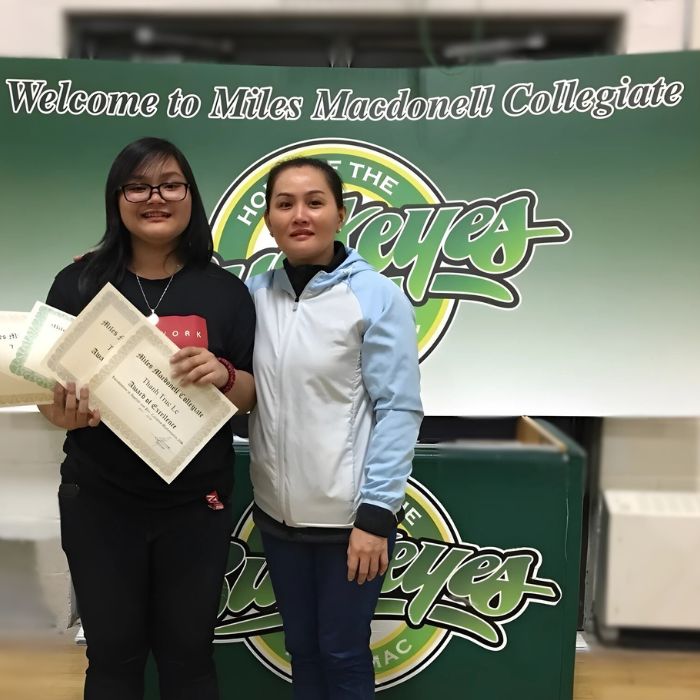
Lê Thanh Trúc, Student at Miles Macdonell Collegiate
“My family and I are deeply grateful to SIEC for not only securing my **Canada high school student visa** in Grade 10 but also for assisting my parents and siblings in obtaining their **visitor visas**. That was an invaluable gift.” — Lê Thanh Trúc, Student at **Miles Macdonell Collegiate** Secure Your Early High School (Secondary) […]
Phan Thị Ngọc Huỳnh, Former Student in Winnipeg
“The solid foundation provided by SIEC and Ms. Huong not only helped me realize my study abroad dream but also gave me the confidence to graduate, secure a stable job, and **settle permanently in Canada**.” — Phan Thị Ngọc Huỳnh, Former Student, currently working in **Winnipeg, Canada** Explore Your Study & Immigration Pathway in Canada […]
Hoàng Giang, Student at Edmonds College
“With her dedication and passion, Ms. Huong helped launch my **American dream**, opening up a vast world of opportunity and the chance to meet new friends.” — Hoàng Giang, Student at **Edmonds College** Explore More About Studying in the USA Spotlight on Edmonds College (Washington State) Gain in-depth knowledge about the programs, tuition fees, and […]
Khánh Lê, Student at LaSalle College
“Thank you to Ms. Huong and the SIEC team for their dedicated partnership and support, from my application phase until I was settled in Canada, helping me confidently pursue my dreams.” — Khánh Lê, Student at **LaSalle College** Explore Further Canada Study Opportunities Spotlight on LaSalle College Gain deeper insights into the programs, tuition fees, […]
Quỳnh Giao, Student at Red River Colleg
“She didn’t just stop at completing the application; she was an inspiration, a true motivator…” — Quỳnh Giao, Student at **Red River College** Continue Your Canada Study Abroad Journey Spotlight on Red River College Polytechnic (RRC Polytech) Discover the high-demand, **applied learning programs** at **Red River College** – one of the premier post-secondary institutions in […]