Short-term study Canada Guide: Requirements and Costs Info
19/05/2026 Phong Nguyen
In the context of Canada’s immigration policy undergoing landmark adjustments, the trend of Short-term study Canada is becoming the optimal choice for those wanting to quickly join the labor market. The 2026–2027 period marks a strong shift from mass immigration to focused immigration based on skills and priority sectors. Instead of pursuing costly long-term programs, many international students now prioritize certificate or fast-track college courses to gain work experience in Canada sooner.
Choosing Short-term study Canada not only helps save costs but is also the shortest path to access skilled worker immigration programs currently favored by the government.
1. Profile Conditions and Entrance Requirements for Short-term study Canada
To begin a Short-term study Canada pathway in the 2026–2027 period, students need to prepare a strong academic profile. Although these are short-term courses, language proficiency requirements and academic backgrounds are still strictly controlled by schools and immigration authorities. Typically, these courses require candidates to have graduated from high school or hold a university or college degree in Vietnam if they wish to pursue advanced certificates.
Regarding language proficiency, Short-term study Canada usually requires an IELTS Academic score of 6.0 or higher, or equivalent certificates such as PTE or TOEFL. For specialized fields like Healthcare or STEM, language scores may be higher to ensure the ability to absorb technical knowledge and communicate in a real-world work environment. Additionally, a clear explanation of study purposes in the Study Plan is a key factor in convincing the consulate of your serious intention when choosing Short-term study Canada.
Personal profiles should also include documents proving continuous education and work history. If you already have work experience in priority fields such as Construction or Technology, this will be a significant advantage when applying for Short-term study Canada. The Canadian government is looking for candidates capable of contributing immediately to the economy, so the link between existing experience and the oriented course in Canada will increase the visa success rate.
2. New Regulations on Study Permits and Financial Requirements 2026–2027
One of the most important changes for Short-term study Canada in 2026 and 2027 is the regulation regarding Study Permits and financial capacity. According to the latest regulations, Immigration, Refugees and Citizenship Canada (IRCC) has adjusted financial proof levels to ensure international students can afford the increasingly expensive cost of living in major cities. When preparing a Short-term study Canada application, you need to prove sufficient account balances including tuition for the first year and living expenses according to the newest benchmarks.
Currently, the required cost of living for a single student has increased significantly, exceeding 20,000 CAD per year, excluding tuition. This requires those intending to pursue Short-term study Canada to have more thorough financial preparation than in previous years. Proving the sponsor’s income source or personal assets must be done transparently with full legal documentation.
For courses lasting less than 6 months, you may not need a Study Permit; however, if the goal is to stay and work for immigration, applying for a Study Permit from the beginning is a strategic move when undertaking Short-term study Canada.
Additionally, the Provincial Attestation Letter (PAL) system continues to be applied to most training programs. When registering for Short-term study Canada, students should check if their course falls under the PAL exemption. Usually, short-term master’s programs or vocational courses in certain priority provinces may have more flexible regulations.
Understanding Study Permit regulations will help your Short-term study Canada roadmap proceed smoothly and avoid unnecessary legal risks.
3. 24-Hour Weekly Work Regulation for Short-term study Canada
Off-campus work policies for international students have seen stable adjustments in 2026. Instead of allowing unlimited work as during the pandemic, students pursuing Short-term study Canada are now allowed to work a maximum of 24 hours per week during academic sessions. This regulation aims to balance studying with gaining practical experience while helping students earn extra income to cover living expenses.
For those choosing Short-term study Canada, utilizing these 24 work hours in fields related to their specialization is extremely important.
Part-time work is not just a financial matter but also an opportunity to build social networks in Canada. For students pursuing Short-term study Canada in Healthcare or Construction, seeking assistant or intern positions in local businesses will enhance their professional profiles. The Canadian government encourages students in Short-term study Canada to participate in the labor market in positions facing labor shortages, thereby creating a solid foundation for applying for a Post-Graduation Work Permit (PGWP).
It should be noted that strictly complying with work hour limits is mandatory. If the 24-hour weekly limit is violated, students in Short-term study Canada may face the risk of Study Permit cancellation, affecting future immigration prospects. During scheduled school breaks, students may still be allowed to work full-time, optimizing income and practical experience.
This is a highlight that helps the Short-term study Canada program maintain its appeal for international students with moderate budgets.
4. Priority Fields for Immigration in Short-term study Canada
Rather than immigrating through general occupations, Canada’s 2026–2027 immigration strategy focuses heavily on three main sectors: Healthcare, STEM (Science, Technology, Engineering, Mathematics), and Construction. When choosing Short-term study Canada, targeting these fields will give you a superior advantage in federal and provincial immigration invitation rounds. Short-term certificate programs in Healthcare, such as personal support workers, nursing assistants, or laboratory technicians, are in very high demand.
Within the STEM group, Short-term study Canada courses in data analysis, cybersecurity, or software development are always the focus. Canada is striving to become a global tech powerhouse, so those with high technical expertise are always sought after. For the Construction industry, certificates in construction project management, electrical engineering, or heavy equipment operation are smart choices for a Short-term study Canada pathway.
These are the backbone occupations for infrastructure and housing development in Canada today.
Studying priority fields during Short-term study Canada brings opportunities to receive Invitations to Apply (ITA) through category-based selection draws in the Express Entry system. The required CRS scores for these sectors are often lower than for general labor, helping Short-term study Canada students shorten their waiting time. Choosing the right field of study not only ensures stable employment with high salaries but is also the key to opening the door to becoming a Canadian permanent resident as quickly as possible.
5. How to Select Schools and Courses for Short-term study Canada Effectively
To optimize immigration opportunities, choosing a school for Short-term study Canada should be based on the list of Designated Learning Institutions (DLI) authorized to offer Post-Graduation Work Permits (PGWP). Not all schools offering short-term programs qualify, so students must carefully check information on the official IRCC website. When selecting Short-term study Canada, you should prioritize public colleges or reputable institutes with strong links to businesses in the Healthcare, STEM, and Construction sectors.
The school’s geographic location also plays a vital role in your Short-term study Canada roadmap. Provinces like Ontario, British Columbia, or Alberta each have their own Provincial Nominee Programs (PNP) with different priorities. For example, if you choose Short-term study Canada in less populated regions or provinces hungry for construction labor like Saskatchewan, immigration opportunities may be higher and assessment conditions more flexible.
Thoroughly researching the local labor market before choosing a school will give you a realistic view of job prospects after graduation.
The training program should also be highly practical, including paid internship periods (Co-op) if possible. Despite being Short-term study Canada, courses that integrate internships help students familiarize themselves with the professional work environment in Canada and build relationships with future employers. A quality course provides not only theoretical knowledge but also equips students with the necessary practical skills to immediately meet the requirements of businesses in priority fields.
6. Roadmap from Short-term study Canada to Employment and Residency
A typical roadmap for a Short-term study Canada student starts with completing a course lasting from 8 months to 1 year. After graduation, students apply for a PGWP to stay and work legally in Canada. During this time, the most important goal is to accumulate at least one year of professional work experience in priority sectors.
Canadian work experience is the decisive factor that increases CRS scores or satisfies the conditions of provincial immigration programs for graduates of Short-term study Canada programs.
The next step in the Short-term study Canada roadmap is to leverage specialized immigration streams. With work experience in Healthcare, STEM, or Construction, you can participate in Express Entry draws dedicated to these fields. Additionally, many provinces have priority immigration streams for international students who have graduated and are working locally.
Maintaining a clean record, paying full taxes, and actively participating in the community will make the transition from a Short-term study Canada visa to Permanent Residency (PR) smoother.
By 2027, Canada is projected to maintain high demand for skilled labor in essential sectors. Therefore, those who have completed a Short-term study Canada program and have practical experience will have a significant competitive advantage. This roadmap requires perseverance and good adaptability to a new living environment.
However, with careful preparation and choosing the right priority occupation from the start, the goal of immigrating after Short-term study Canada is well within reach for Vietnamese students.
Grasping changes in immigration policy and labor market trends is the key to success when choosing this path. If you are looking for a solution that saves time and money while still ensuring solid immigration opportunities, then Short-term study Canada is a direction not to be missed in the 2026–2027 period. Start preparing today so you don’t miss out on precious opportunities in the land of the maple leaf.
To better understand your personalized roadmap and the occupations in high demand in each province, you need advice from experienced experts. Don’t let policy changes be a barrier to your dreams.
Contact SIEC for a detailed profile analysis and to build a study plan that best fits your financial capacity and immigration goals. We are always ready to accompany you on the journey to conquer the Canadian permanent resident card through a strategic educational path.
Assess your Canada 2027 immigration potential now by registering for online consultation to receive the latest updates on visa regulations and the list of priority schools.
The expert team at SIEC will help you choose the course and province with the highest immigration rate today.
Are You Ready to Breakthrough Your Global Career with SIEC?
Don’t let your prestigious degree stay just on paper. Let SIEC experts advise you on a study abroad roadmap combined with a job-oriented strategy starting today!
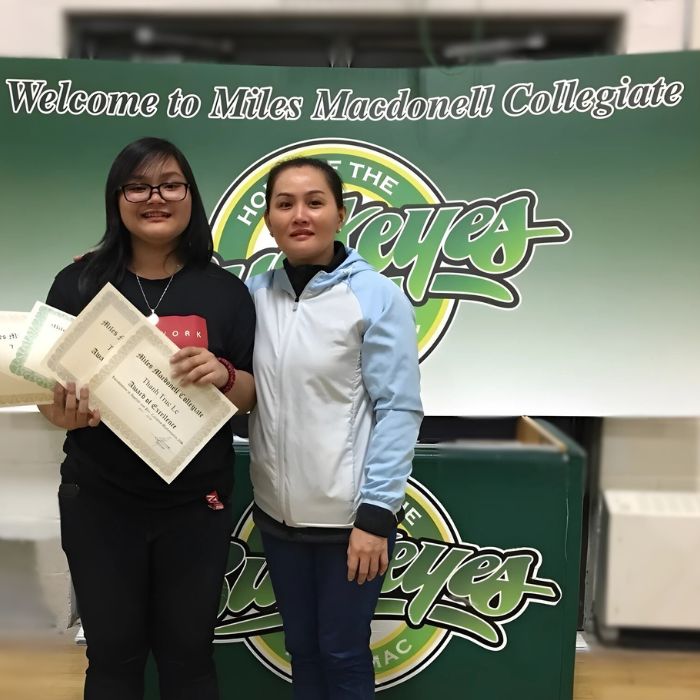
Lê Thanh Trúc, Student at Miles Macdonell Collegiate
“My family and I are deeply grateful to SIEC for not only securing my **Canada high school student visa** in Grade 10 but also for assisting my parents and siblings in obtaining their **visitor visas**. That was an invaluable gift.” — Lê Thanh Trúc, Student at **Miles Macdonell Collegiate** Secure Your Early High School (Secondary) […]
Phan Thị Ngọc Huỳnh, Former Student in Winnipeg
“The solid foundation provided by SIEC and Ms. Huong not only helped me realize my study abroad dream but also gave me the confidence to graduate, secure a stable job, and **settle permanently in Canada**.” — Phan Thị Ngọc Huỳnh, Former Student, currently working in **Winnipeg, Canada** Explore Your Study & Immigration Pathway in Canada […]
Hoàng Giang, Student at Edmonds College
“With her dedication and passion, Ms. Huong helped launch my **American dream**, opening up a vast world of opportunity and the chance to meet new friends.” — Hoàng Giang, Student at **Edmonds College** Explore More About Studying in the USA Spotlight on Edmonds College (Washington State) Gain in-depth knowledge about the programs, tuition fees, and […]
Khánh Lê, Student at LaSalle College
“Thank you to Ms. Huong and the SIEC team for their dedicated partnership and support, from my application phase until I was settled in Canada, helping me confidently pursue my dreams.” — Khánh Lê, Student at **LaSalle College** Explore Further Canada Study Opportunities Spotlight on LaSalle College Gain deeper insights into the programs, tuition fees, […]
Quỳnh Giao, Student at Red River Colleg
“She didn’t just stop at completing the application; she was an inspiration, a true motivator…” — Quỳnh Giao, Student at **Red River College** Continue Your Canada Study Abroad Journey Spotlight on Red River College Polytechnic (RRC Polytech) Discover the high-demand, **applied learning programs** at **Red River College** – one of the premier post-secondary institutions in […]