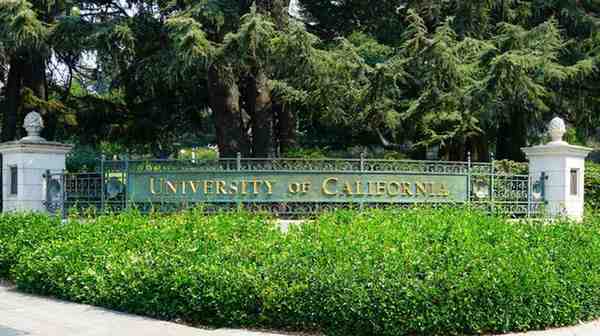
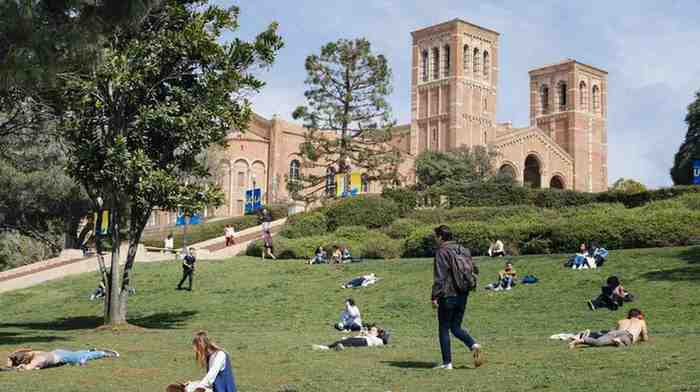
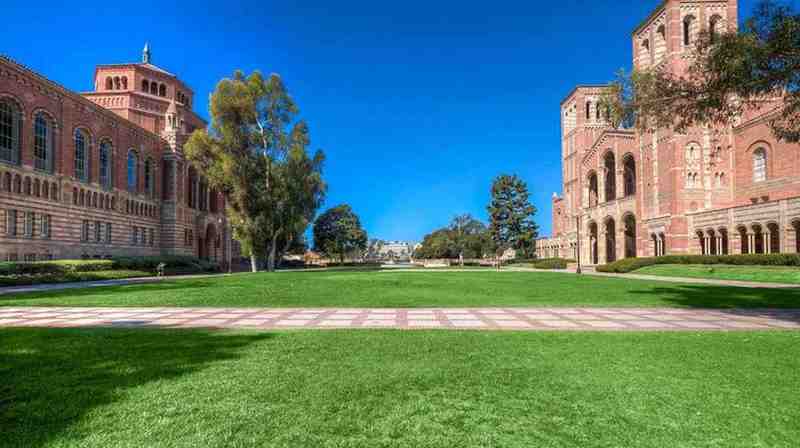
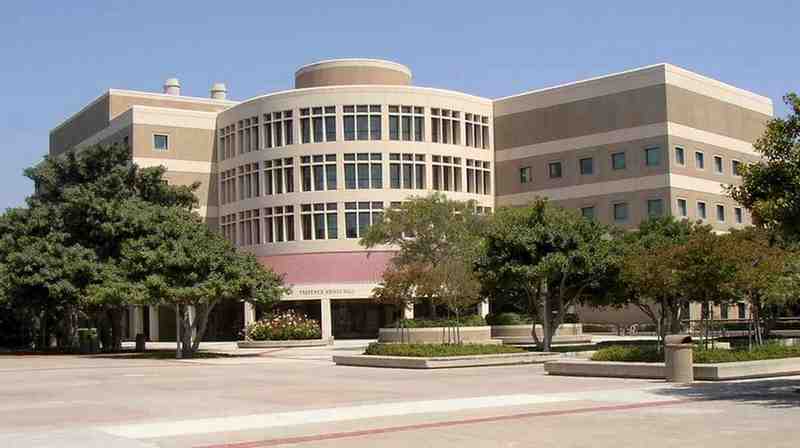
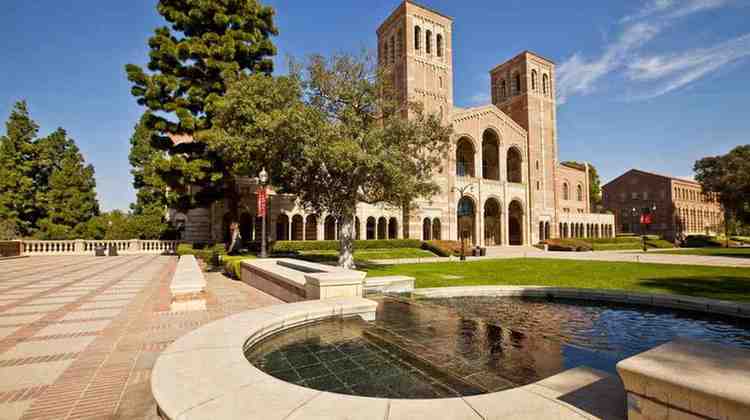
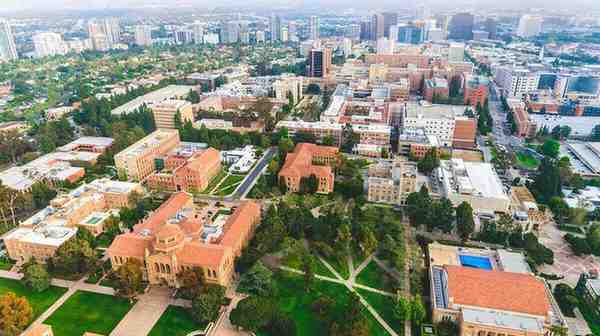
When envisioning the ultimate, career-defining study in the USA dream, no institutional name carries more global prestige, academic weight, or transformational power than the University of California (UC) System. This is not merely a single higher education institution; it is an elite constellation of nine world-renowned public research undergraduate campuses spread across the Golden State. Globally recognized as the absolute number one public university system on the planet, choosing to study at University of California in 2026 means launching your professional career inside the world’s fifth-largest economy—California.
At SIEC – Leaders in Global Education and Visa Consulting, we know that applying to this prestigious network requires a highly customized, sophisticated strategy. Because the UC system does not use the Common Application, your entire admissions approach must be custom-tailored to satisfy their unique institutional requirements. Deciding to study at University of California does not simply earn you an elite degree; it grants you a lifetime membership to a powerful alumni network that dictates terms in global industries—from Silicon Valley executive boardrooms to world-changing biomedical research laboratories.

|

University of California System: Essential Fast Facts 2026
- ✔Geographic Spread: Spans the entire state of California (Berkeley, Los Angeles, San Diego, Irvine, Davis, etc.).
- ✔Institutional Status: Tier-1 Public Research University System (Carnegie Classification R1).
- ✔Undergraduate Locations: 9 distinct campuses accepting international undergraduate applications.
- ✔2026 Base International Tuition: Approximately 48,000 to 54,000 USD per academic year.
- ✔Standardized Testing Stance: 100% Test-Blind policy (SAT/ACT scores are completely disregarded).
- ✔Primary Application Deadline: November 30th annually for the following Fall academic intake semester.
- ✔Dedicated Portal: UC Application System (Entirely separate from the Common App framework).
- ✔Official Web Platform: universityofcalifornia.edu
Chapter 1: Why Choosing to Study at University of California is a Global Gold Standard?
The long-term decision to study at University of California is far more than an ordinary academic pursuit; it is a calculated, strategic investment into a future without corporate or geographic boundaries. In 2026, as the international employment market demands elite analytical capability alongside adaptive technical expertise, holding a degree from a UC institution acts as an unparalleled premium credential. Global recruiters immediately recognize that individuals who study at University of California possess the baseline resilience and rigorous training needed to thrive in fast-paced corporate environments.
1.1. An Unmatched Legacy of Breakthrough Academic Excellence
The empirical metrics defining the UC System consistently stun academic analysts worldwide. Across its campuses, the system boasts more than 70 Nobel Prizes, dozens of MacArthur “Genius” grants, and countless Pulitzer Prizes awarded to its distinguished faculty and research alumni. When you commit to study at University of California, you exit the realm of passive textbook learning and enter an ecosystem where professors are actively discovering the next frontiers of human knowledge. Whether it is pioneered breakthroughs in CRISPR gene editing, the foundation of early internet protocols, or revolutionary climate change models, UC campuses are the literal cradles of global innovation.
This unparalleled academic mastery is directly fueled by billions of dollars in annual research and development grants. For an international student, this means immediate access to state-of-the-art laboratory infrastructure, extensive library archives, and undergrad research opportunities (such as the URCA program) that are typically reserved exclusively for post-doctoral scholars at other elite global universities.
1.2. Direct Access to the Massive Economic Engine of California
To live and study within the boundaries of California is to position yourself at the absolute nexus of modern corporate innovation and venture capital. As the undisputed global capital for the technology, entertainment, and biotechnology sectors, California presents an environment overflowing with professional opportunity. Students who choose to study at University of California enjoy an intrinsic, unfair geographical advantage when looking to secure competitive internships, Curricular Practical Training (CPT), and post-graduation Optional Practical Training (OPT) roles. You can cross-verify their elite educational outcomes through international benchmarks like the U.S. News Education Rankings, which consistently place UC institutions at the pinnacle of public higher education.
Whether your long-term professional goal is to secure an engineering role within Silicon Valley tech titans like Apple, Google, and NVIDIA, launch a finance career in San Francisco, or break into the entertainment industry of Los Angeles, a UC background provides structural access. The campus environments cultivate a distinct “entrepreneurial mindset,” encouraging students to collaborate across disciplines, pitch ideas to venture capitalists, and build startups before they even walk across the graduation stage.
1.3. The Power of a Global, Lifelong Alumni Network
One of the most overlooked components of a premium US higher education is the enduring strength of the community you join after graduation. When you complete your journey to study at University of California, you join a global network of over two million living alumni. This network is densely concentrated in positions of immense geopolitical and economic influence. From heads of state and top-tier legal minds to pioneering astronauts and executive directors of Fortune 500 companies, the UC alumni registry provides an integrated support mechanism that spans the globe, ensuring that your initial investment yields dividends throughout your entire professional life.
| Campus Name | 2026 Strategic Identity | Flagship Academic Fields |
|---|---|---|
| UC Berkeley (Cal) | Intellectual epicenter located directly adjacent to the Silicon Valley tech ecosystem. | Computer Science, Chemical Engineering, Haas Business, Economics. |
| UCLA | The most applied-to undergraduate public institution in the United States. | Pre-Medicine, Cinema & Media, Psychology, Global Economics. |
| UC San Diego (UCSD) | A coastal scientific powerhouse operating on a structured residential college system. | Bioengineering, Data Science, Oceanography, Molecular Biology. |
| UC Irvine (UCI) | Ultra-safe, tech-centric campus positioned inside Orange County’s tech corridor. | Software Engineering, Game Design, Cyber Security, Criminology. |
| UC Davis (UCD) | Massive, sustainability-driven campus leading global agricultural research. | Veterinary Medicine, Agricultural Sciences, Food Ecology, Biotechnology. |
| UC Santa Barbara (UCSB) | Spectacular coastal campus blending premier research with elite beachside living. | Quantum Physics, Materials Science, Marine Biology, Communication. |
Chapter 2: Deep Dive into the Top UC Campuses: Culture, Fit, and Strengths
The calculated decision to study at University of California must be grounded in an objective, analytical understanding of what each individual campus requires and offers. A very common tactical mistake among applicants is treating the UC system as a single entity where one size fits all. In reality, each location features a highly distinct campus culture, specific geographic variables, and divergent academic expectations. Finding your ideal fit is the critical first step to long-term success.
2.1. UC Berkeley vs. UCLA: The Elite Clash of the Titans
For decades, UC Berkeley and UCLA have fiercely competed for the coveted title of the number one public university in the nation. UC Berkeley (often called Cal) represents a deeply historic, intensely intellectual, and politically active atmosphere. Located across the bay from San Francisco, it features a demanding academic climate where “grade deflation” is a real factor. It is the absolute paradise for students who want to study at University of California with a singular focus on raw theoretical engineering, mathematics, or revolutionary social sciences.
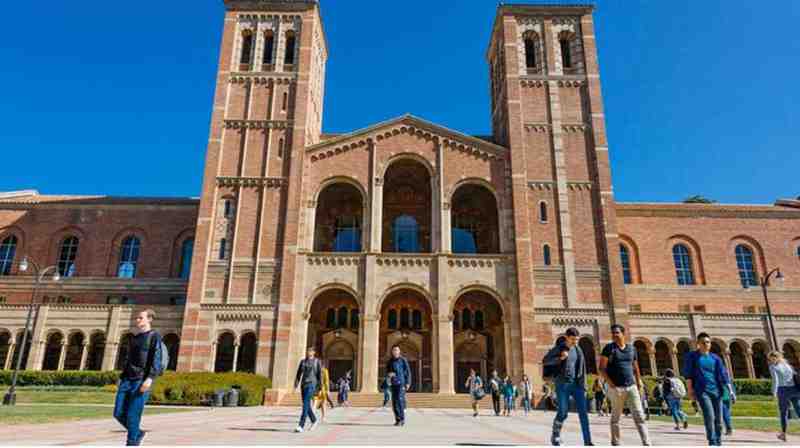
UCLA, situated in the affluent Westwood neighborhood of Los Angeles, offers a strikingly different, highly dynamic energy. It seamlessly balances elite academic rigor with a legendary school spirit, world-renowned athletic programs (NCAA Division I), and immediate access to the global entertainment, media, and medical networks of Southern California. For students aiming to study at University of California while experiencing a vibrant campus social life, premium student dining options, and a highly collaborative culture, UCLA remains the ultimate destination, drawing over 150,000 applicants annually.
2.2. UC San Diego and UC Santa Barbara: Where Advanced Science Meets Natural Serenity
If your primary academic objective is to step into the life sciences or cutting-edge technical innovation, UC San Diego (UCSD) demands your full attention. Bordering the Pacific Ocean in the biotech hub of La Jolla, UCSD functions under a unique structure of eight distinct residential colleges. This system offers students the personalized, supportive environment of a small liberal arts college combined with the massive infrastructure of a tier-one research university. It is a premier global hub for bioengineering, genetic research, and data science.
Conversely, UC Santa Barbara (UCSB) masterfully disproves the misconception that a beautiful beachside campus cannot maintain world-class academic standards. UCSB features its own private lagoon and stunning ocean views, yet it houses multiple research centers that have produced Nobel laureates in Physics and Chemistry. Students who choose to study at University of California via UCSB possess a unique capacity to handle highly demanding workloads in materials science or environmental systems while maintaining a balanced lifestyle centered around outdoor recreation and community collaboration.
2.3. UC Irvine and UC Davis: Safety, Industry Innovation, and Global Sustainability
UC Irvine (UCI), located in the meticulously planned city of Irvine in Orange County, is consistently ranked as one of the safest urban areas in the entire nation. Built in a distinct concentric circle layout around the beautiful Aldrich Park, UCI is a powerhouse for software development, technical business management, and corporate analytics. The campus is surrounded by major technical operations and medical device manufacturers, offering a straightforward bridge into the corporate world. Furthermore, it boasts an elite, dedicated Esports arena and specialized degree programs in game design, reflecting its forward-thinking approach to modern industries.
UC Davis (UCD), located near the state capital of Sacramento, offers a classic, welcoming “college town” atmosphere across the largest physical campus in the entire system. At Davis, the bicycle is the undisputed king of transportation, connecting a tight-knit community of scholars dedicated to solving global challenges. UCD holds absolute global supremacy in veterinary medicine, agricultural systems, food science, and environmental ecology. For students intending to study at University of California to pioneer solutions in sustainable agriculture, animal welfare, or green engineering, Davis provides an unmatched educational sandbox.
2.4. UC Santa Cruz, UC Riverside, and UC Merced: Distinct Pathways to High-Impact Careers
The remaining three campuses offer exceptional, specialized environments that international applicants should never overlook. UC Santa Cruz (UCSC) is nestled inside a stunning redwood forest overlooking Monterey Bay. It features an progressive, creative learning environment with immense strengths in astronomy, marine biology, and game creation. Moving inland, UC Riverside (UCR) is widely celebrated for its elite focus on social mobility and deep diversity. UCR provides extensive undergraduate research funding, ensuring that international students can work directly under elite faculty mentors early in their academic journey.
Finally, UC Merced (UCM), located in California’s Central Valley, is the newest and fastest-growing campus in the system. Because of its modern construction and boutique scale, undergraduate students at Merced get immediate, unhindered access to advanced sustainable energy laboratories and engineering design projects that would typically face intense competition at larger campuses. Choosing to study at University of California through Merced is an excellent choice for adaptive individuals who want to build standout profiles as foundational leaders within a rapidly expanding campus ecosystem.
Chapter 3: Strategic Mastery of the 2026 UC Application Architecture
Gaining admission to this elite network requires a complete shift away from standard application tactics. Because the system utilizes its own independent application portal—the UC Application—your general essay strategies and academic presentation must be deliberately rebuilt from the ground up to satisfy their comprehensive, holistic review protocol.
3.1. Decoding the 13 Comprehensive Holistic Review Criteria
Admissions officers within this system do not look at applicants through a simple mathematical formula. Instead, they evaluate every file across 13 distinct academic and personal factors. When you prepare to study at University of California, you must ensure your application explicitly showcases these core areas:
- Your cumulative GPA in all completed academic courses.
- The depth, difficulty, and quantity of advanced courses taken (AP, IB, Honors, or dual enrollment).
- Your performance ranking relative to the available academic opportunities at your specific secondary school.
- The absolute quality of your senior high school year academic program and planned course schedule.
- Outstanding performance in one or more specific academic subject sectors.
- Significant, sustained achievements in recent academic enrichment or school-sponsored outreach programs.
- The overall quality of your personal project execution, extracurricular commitments, and community leadership.
3.2. Formulating a Winning Strategy for the Personal Insight Questions (PIQs)
The Personal Insight Questions (PIQs) are the absolute core of your qualitative application profile. The system presents you with eight distinct prompt options, and you must select exactly four to answer. Each response faces a strict limit of 350 words. It is vital to understand that UC admissions officers explicitly dislike poetic, flowery prose or metaphorical introductions. They look for direct, evidence-based, factual commentary that clearly highlights your active problem-solving skills and values.
• Prompt 1: The Leadership Blueprint
Strategic Objective: Do not limit leadership to formal titles like Class President. Focus instead on how you have directly mediated group conflicts, initiated community projects, or reliably supported your family. Clearly quantify the tangible impact of your actions.
• Prompt 2: The Creative Problem-Solving Prism
Strategic Objective: True creativity goes far beyond fine arts or music performance. Use this space to demonstrate how you designed an original software script, fixed a broken operational process, or introduced an innovative approach to an academic club. Show your critical thinking in action.
• Prompt 4: Overcoming Educational Barriers
Strategic Objective: If you have faced structural hurdles, financial hardships, or unexpected personal difficulties, this prompt is your ideal tool. Do not look for pity; instead, clearly explain your resilience, your proactive resource management, and the specific steps you took to protect your academic standing.
• Prompt 6: Deep Intellectual Curiosity
Strategic Objective: This is a mandatory selection for anyone applying to competitive STEM, computer science, or business tracks. You must detail how you have actively explored your chosen field outside the school classroom—whether through academic journals, independent coding projects, or summer internships.
3.3. Navigating the Strict ‘Test-Blind’ Landscape of 2026
As we navigate the 2026 admissions cycle, the UC system maintains a strict, unyielding Test-Blind policy. This means that standardized test scores like the SAT or ACT are completely removed from the evaluation pipeline—even if you achieve a perfect score and attempt to submit it, the system will actively block it from view. While this policy removes the stress of standardized testing, it places immense pressure on your school transcript and activity logs.
To build a truly competitive profile to study at University of California under these rules, you must demonstrate a rigorous course selection history over multiple years. Your transcript needs to show that you have consistently challenged yourself with the most advanced coursework available in your secondary school system. SIEC’s strategic advisors work closely with you to curate your academic presentation, ensuring your activities list clearly reflects deep, sustained commitment rather than a collection of shallow, short-term memberships.
Chapter 4: The California Community College Transfer Pathway
If your current high school academic record or financial constraints prevent you from securing direct freshman entry into competitive campuses like UCLA or Berkeley, you should absolutely not abandon your ambitions. The state of California features a highly integrated, legally protected higher education transition framework known as the Community College Transfer Pathway. This highly strategic avenue serves as an exceptional second chance for international scholars.
In fact, roughly one out of every three bachelor’s degrees awarded by the UC system goes to a student who began their journey at a California Community College. By choosing to study at University of California through this innovative, two-stage approach, you unlock massive structural benefits:
- ➤
Substantial Cost Reductions: Completing your first two years of lower-division general education requirements at an accredited community college allows you to save up to 60% on base tuition costs compared to university rates. - ➤
The TAG Program Advantage: Six premier UC campuses (Davis, Irvine, Merced, Riverside, Santa Barbara, and Santa Cruz) actively participate in the Transfer Admission Guarantee (TAG) program. If you maintain a specific minimum GPA and complete your required prerequisite courses, your junior-year admission is legally guaranteed by contract. - ➤
The UCLA TAP Framework: While UCLA does not participate in the standard TAG program, it features the specialized Transfer Alliance Program (TAP) through specific honors community college programs. This pathway historically boosts an applicant’s transfer acceptance rate up to an impressive 70-80%. - ➤
Smoother Academic Transitions: The smaller class sizes characteristic of community colleges allow international students to adjust to the American university system with personalized attention from professors before entering large university lecture halls.
Chapter 5: 2026 Financial Engineering, Entry Thresholds, and Cost Management
A realistic, thoroughly analyzed financial strategy is an absolute necessity when preparing your application. Because the system is heavily funded by local taxpayers, California law strictly limits institutional financial aid or need-based scholarships for out-of-state and international undergraduate applicants. Therefore, international families must demonstrate full financial readiness to cover all academic and personal expenses throughout the program.
| Annual Budget Category (2026 Estimates) | Estimated Cost (USD) | Strategic Cost-Control Methods |
|---|---|---|
| Non-Resident Tuition & Fees | $48,000 – $54,000 | This is a fixed baseline cost; consider pursuing the Community College pathway to drastically reduce this expense for the first two years. |
| Campus Housing & Dining Plans | $17,000 – $22,000 | You can significantly reduce costs by moving into shared, off-campus student apartments starting in your sophomore year. |
| Mandatory University Health Insurance | $2,500 – $3,500 | The standard UC SHIP coverage is mandatory unless you secure an approved, independent private insurance waiver that meets all university requirements. |
| Textbooks, Materials & Tech Services | $1,200 – $1,600 | Avoid buying new books; utilize digital library rentals, source used textbooks, or use digital alternative formats. |
| TOTAL OUT-OF-POCKET ESTIMATE | $68,700 – $81,100 / Year | Families should factor in an annual inflationary adjustment of 3-5% when planning multi-year educational budgets. |
5.1. Strict English Language Proficiency Thresholds for 2026
To ensure international scholars can seamlessly manage intensive classroom lectures, rapid-fire team debates, and advanced research writing, the system enforces non-negotiable language proficiency minimums. While the absolute baseline requirement to apply is an **IELTS score of 6.5** or a TOEFL iBT score of 80, navigating the hyper-competitive admissions realities of 2026 tells a different story. To stand out for selective programs at UCLA, UC Berkeley, or UC San Diego, competitive applicants should strategically aim for an **IELTS band of 7.5** or a TOEFL score of 100+.
5.2. Legal On-Campus Employment Strategies under F-1 Student Visas
While off-campus work is strictly prohibited during your first academic year under US federal immigration regulations, international students holding valid F-1 status can legally work on-campus for up to 20 hours per week during active semesters, and up to 40 hours per week during scheduled holiday breaks. These university roles—ranging from campus library administrators and tech support assistants to academic peer tutors and specialized graduate laboratory assistants—provide a steady source of personal spending money while expanding your professional resume directly within the university environment.
Conquer the California Academic Dream with SIEC
The highly competitive 2026 admissions cycle is approaching rapidly. Do not allow complex portal technicalities, confusing transcript evaluations, or challenging PIQ prompts to compromise your family’s future. Partner with the elite admissions advisors at SIEC to access custom application blueprints, personalized essay strategies, and secure visa consulting designed to maximize your acceptance potential.
Conclusion: Embark on Your Journey of Intellectual Mastery
Choosing to study at University of California in 2026 is an ambitious, life-changing decision that demands exceptional focus, rigorous preparation, and absolute execution. Whether you find your ideal academic home amidst the competitive energy of Berkeley, the creative dynamism of UCLA, the tech corridor of Irvine, or the collaborative community of Davis, the journey will push you to become an elite global professional. Navigating this complex process requires seasoned expertise. Let SIEC act as your trusted strategic partner, carefully optimizing your profile, clarifying the application architecture, and guiding you toward global success.
Optimized via Strategic Corporate SEO Protocols by the SIEC Marketing Executive Committee — 2026
Verified and updated according to the latest 2026 institutional dataset for international university applicants.