Provincial Attestation Letter (PAL) for Canada study permits
24/10/2025 Phong Nguyen
Heading into 2026, understanding the application process for the **Provincial Attestation Letter (PAL) for Canada study permits** has become the *prerequisite and mandatory* step for a successful study journey. The **PAL** is now considered the most vital “admission ticket”, directly determining whether your Study Permit application will be accepted for processing by Immigration, Refugees and Citizenship Canada (**IRCC**). This profound shift in Canada’s latest international student policy has left many students and parents confused about how to obtain a **Provincial Attestation Letter**.
With over 20 years of experience in Canada study consulting, SIEC is confident in demystifying the entire process. This article serves as the detailed and most current guide on the **Provincial Attestation Letter (PAL) for Canada Study Permit 2026**, helping you clearly understand the requirements, specific procedures for each province, and a successful application strategy to open the doors to the land of the maple leaf.
The **Provincial Attestation Letter (PAL)** has become an indispensable part of the Canada 2026 study application package.
—
## 1. What is the Provincial Attestation Letter (PAL)? Understanding the New Confirmation for Studying in Canada
**PAL** stands for **Provincial Attestation Letter**, which translates to a Provincial Confirmation Letter. This is an official document issued by the government of the province or territory where you intend to study. Its fundamental purpose is to officially confirm that: **Your application has been accounted for within the international student quota (cap)** that the province is permitted to accept for the year.
In essence, it serves as proof that the province has agreed to allocate a study slot to you from its limited international student capacity. Without a **PAL**, **IRCC** will not have the basis to process your Study Permit application, as they must comply with the National Cap set by the federal government and distributed to each province. The process for obtaining the **PAL for Canada study permits** is now mandatory for most post-secondary applicants.
1.1. Core Objectives of the Provincial Attestation Letter (PAL) (Fact Check)
The introduction of the **PAL Canada 2026** requirement is a key governmental strategy to address sustainability challenges associated with rapid international student growth:
Controlling Volume: The **IRCC** set a **National Cap** of approximately $360,000$ Study Permits for 2024. The **PAL** mechanism enforces this cap by allowing provinces to manage their allocated share of the total number of new study visas, aiming to ease pressure on infrastructure, especially housing and the healthcare system, in large metropolitan areas.
Ensuring Quality & Distribution: It encourages Designated Learning Institutions (DLIs) to recruit only within their capacity and helps the government better distribute students to provinces that have greater labor needs outside of major urban centers.
Increasing Accountability: It enhances accountability and transparency among institutions, provinces, and the federal government in managing international students, especially with the **PAL for international students** requirement.
1.2. Who is Exempt from the Provincial Attestation Letter (PAL) Requirement?
According to the latest official regulations from the IRCC website (Official Source), the following groups are exempt from submitting a **PAL** when applying for a Study Permit. This means these applicants can proceed with their Study Permit application immediately after receiving their Letter of Acceptance (LOA):
Primary and Secondary (K-12) students.
Students applying for **Master’s or Doctoral (PhD) programs** (Post-Graduate programs are exempt from the cap).
Exchange students (Short-term study for up to 6 months is generally exempt).
Individuals already in Canada applying to extend their Study Permit (Extension) (unless changing study level from K-12 to post-secondary).
Individuals in Canada holding a valid Work Permit.
Family members of individuals who already have a valid Study Permit or Work Permit in Canada.
Refugee claimants and protected persons.
—
## 2. Why the Provincial Attestation Letter (PAL) is the New Gatekeeper, Replacing SDS
Prior to November 2024, the *SDS (Student Direct Stream)* program was the preferred pathway that allowed Vietnamese students to bypass detailed proof of financial resources, accelerating the visa process. However, following the cancellation of SDS and the introduction of **PAL**, the rules have completely changed, making **PAL** the central focus.
Most Importantly: The **PAL** is a mandatory prerequisite; it is the first administrative condition for your Study Permit application to be opened for review by IRCC. Without a valid **IRCC PAL**, the application will be deemed incomplete and returned to the applicant. Therefore, securing the **Provincial Attestation Letter (PAL) for Canada study permits** is the single most critical first step for your **Canada Study Permit 2026** application.
⚡Key Differences Between SDS (Cancelled) and PAL (Mandatory)
SDS (Cancelled): Was an **optional** priority processing stream that helped reduce financial documentation requirements (GIC $10,000 CAD) for studying in Canada. It sped up processing.
PAL (Mandatory): Is the **required** authorization needed for you to even *submit* your visa application to **IRCC**. Even if you meet the old SDS financial requirements, you still need the **Provincial Attestation Letter (PAL)** to apply under the current Standard Stream.
—
## 3. General Requirements and Process for Institutions to Request a PAL for International Students
The good news for most applicants is that the actual request for the **PAL** is not submitted directly by the student to the provincial government. This administrative process is typically handled by the **educational institution (DLI) on your behalf** after you have completed the necessary enrollment steps. This streamlines the application process for the student.
3.1. Steps Students Must Complete with the DLI to Trigger the **Provincial Attestation Letter (PAL)** Request
For the institution to initiate the **Provincial Attestation Letter (PAL) for Canada study permit** request, you must meet the following mandatory conditions. These steps confirm your commitment to enrolling:
Receive the Letter of Acceptance (LOA): You must be formally accepted into a specific study program by an eligible DLI (Designated Learning Institution).
Accept the LOA: You must formally accept the institution’s offer of admission, usually by signing a commitment form.
Complete Tuition Payment/Deposit: Most institutions require students to pay the full first year’s tuition or a *substantial* non-refundable deposit before they will begin the **PAL** request process. This financial commitment is crucial for preparing the Cost of Studying in Canada 2026 documents.
Provide Other Necessary Documents: Including a copy of your valid passport, institutional forms, and accurate personal address information so the institution can request the **Provincial Attestation Letter (PAL)** on your behalf.
3.2. The DLI’s Process for Requesting the **Provincial Attestation Letter (PAL)** from the Province
Once you complete the above steps, the institution initiates the formal administrative process with the provincial government:
**Student Information Submission:** The DLI compiles your personal and program details and sends a request (often in bulk batches) for the **PAL** to the relevant provincial authority (e.g., the Ministry of Post-Secondary Education).
**Provincial Verification and Quota Allocation:** The province reviews the information and cross-references it against its approved **Canada National Cap** allocation. This ensures that every **Thư Xác nhận Tỉnh Bang** issued falls within the federal limits.
**PAL Issuance and Notification:** If approved, the province issues the **PAL** (either an electronic document or a unique reference number) back to the DLI. Finally, the DLI sends the official copy of the **PAL** (or an updated LOA containing the PAL reference number) to you so you can proceed with the Study Permit application to **IRCC**. Receiving the **PAL** is the decisive factor for your **Study Permit Canada** application to be considered.
—
## 4. Specific PAL Application Procedures in Key Canadian Provinces
The **PAL** (or its equivalent document) system varies across Canada’s provinces and territories. Here are the crucial details for the most popular study destinations for international students, outlining the path to receiving your **PAL Canada 2026**.
4.1. Ontario (ON): The PAL Application Process in the Largest Province
As the province hosting the highest volume of international students, Ontario has a highly structured and strict **PAL** issuance process, with quotas primarily allocated to public colleges and universities. The Ministry of Colleges and Universities (MCU) oversees this process.
Institutional Procedures: Complete the application, receive LOA, accept the offer, and pay the required Deposit/Tuition.
DLI Submits PAL Request: The DLI gathers student information and sends bulk **PAL** requests to the MCU via the provincial online portal.
PAL Confirmation: The **PAL** information is returned to the institution. You receive the official **PAL** copy from the school.
Critical Note: The Ontario system heavily prioritizes public institutions. Students enrolled in private career colleges often face greater difficulty or may not be granted a **PAL** due to quota prioritization. The choice of institution profoundly affects your success in receiving the **Provincial Attestation Letter (PAL)** in Ontario.
4.2. British Columbia (BC): Experience with the **Provincial Attestation Letter (PAL)**
BC was one of the first provinces to effectively implement the **PAL** system. The process is similar to Ontario, with the DLI directly managing and submitting the request on your behalf to the Ministry of Post-Secondary Education and Future Skills (PSFS).
BC System: DLIs are required to use the provincial online portal to register and secure the **PAL** for each student.
Priority: BC maintains a strong focus on public post-secondary institutions, though private DLIs that meet certain stringent provincial criteria may also receive a limited **PAL** quota.
Processing Time: BC often reports quicker and more transparent processing times than some other provinces due to its early adoption and established digital infrastructure for managing the **Provincial Attestation Letter (PAL)**.
4.3. Alberta and the Prairies: More Accessible PAL Opportunities
Provinces like Alberta, Saskatchewan, and Manitoba often have more proactive policies to attract international students to fill regional labor gaps. The **PAL Canada 2026** process here is often more streamlined: after receiving the LOA and paying fees, the institution automatically completes the remaining steps and notifies you of the **PAL**. The likelihood of receiving the **Provincial Attestation Letter (PAL)** in these provinces may be higher, making them strategic options for applicants seeking a high certainty of admission.
4.4. Quebec: CAQ is the Equivalent Document to the PAL
Quebec operates with immigration autonomy, which means it utilizes its existing system instead of the **PAL**. You must apply for a **Certificat d’acceptation du Québec (CAQ)**. The **CAQ** serves as the equivalent document to the **PAL** for **IRCC** purposes, confirming that Quebec accepts you as an international student under its quota system.
CAQ Process: Unlike the **PAL**, students typically must apply for the **CAQ** directly to the Quebec government (MIFI) and pay a separate application fee.
Visa Submission: When submitting your Study Permit application to **IRCC**, you must attach the **CAQ** Acceptance Letter instead of the **PAL**.
French Language Focus: Quebec prioritizes applicants with French language proficiency or those enrolling in French-language programs.
—
## 5. Successful Study Permit Strategy After Receiving Your **Canada PAL**
Securing the **Provincial Attestation Letter (PAL) for Canada study permits** is a major success, but it is only a necessary condition. Your application must still meet **IRCC**’s strict requirements to ensure the highest visa approval rate. Since the cancellation of SDS, detailed financial proof and a strong narrative have become even more critical for your **Canada study abroad 2026** journey.
Since all applicants from Vietnam now apply under the Standard Stream, you must provide detailed and convincing financial proof:
First Year’s Tuition: Invoice or receipt showing payment made to the institution (this step is required for the **PAL** request).
Living Expenses: Proof of the minimum required amount of **$20,635 CAD** (the updated figure for 2024, subject to annual inflation) available in a *GIC* or a **savings account** with a clear, documented history of accumulation (ideally 6-12 months).
Stable Income Source: Comprehensive documentation proving the sponsor’s monthly income (salary, business, rental) is stable and sufficient to cover subsequent years of study, even after you have received the **Provincial Attestation Letter (PAL)**.
5.2. Optimizing the Statement of Purpose (SOP) with the PAL
While the **PAL** clears the administrative hurdle, the **Statement of Purpose (SOP)** is your chance to convince the visa officer about the genuine nature and logical coherence of your study plan. Your SOP should:
Clearly articulate the strong link between the chosen Canadian program of study and your academic background and/or work experience in your home country.
Present a clear plan demonstrating strong ties to your home country (e.g., family, property, career prospects) and a specific, compelling career path after graduating from Canada. Both must be submitted alongside the **Provincial Attestation Letter (PAL)** to complete the application package.
—
## 6. Processing Times and Essential “Golden” Tips for Your **PAL** Application
Navigating the **Provincial Attestation Letter (PAL) for Canada study permits** requires strategic timing and adherence to best practices. Be aware of the following crucial tips to optimize your application process:
PAL Processing Time: Typically, the **PAL** issuance process takes about **2 to 4 weeks** from the moment the institution submits the request to the province. However, this period can extend longer (up to 6-8 weeks) during peak application season or for provinces with new systems.
PAL Validity: The **PAL** has a specific validity period, usually tied to your intake semester. You must submit your Study Permit application to **IRCC** while the **PAL** is still valid. Apply for your visa immediately upon receiving the **Provincial Attestation Letter (PAL)**.
Prioritize Public DLIs: Always prioritize selecting Public Universities/Colleges, as provinces allocate the majority of their limited quotas to these institutions, making the **PAL** request process smoother and safer.
PAL is a Necessary, NOT Sufficient Condition: Obtaining the **Provincial Attestation Letter (PAL) for Canada study permits** is a vital first step, but it does not guarantee visa approval. Your application must still meet all other **IRCC** requirements, especially the genuineness of purpose and financial capacity.
Apply Early for the **PAL Canada 2026** Intake: Since the **PAL** adds a new mandatory step, start your institutional application and tuition payment as early as possible (ideally 6-9 months before the intake) to ensure timely receipt of the **PAL** and avoid missing your desired Canada 2026 intake.
Although the **PAL** process is primarily managed by the DLI, students can still face unforeseen risks and complications. Understanding these potential issues is key to successfully navigating the **PAL Canada 2026** environment.
7.1. Common Risks in the PAL Application Process
**Institutional Quota Exhaustion:** A common issue where a DLI may issue an LOA but has already exceeded its **PAL** allocation from the province. This risk is highest among non-prioritized private institutions. *Solution:* Work with SIEC to immediately transfer to a public DLI or a province with a less restrictive cap.
**Data Mismatch Errors:** Minor discrepancies in personal data (name, address, date of birth) between the institutional records and the passport/Study Permit application can lead to the **PAL** being rejected or issued incorrectly. *Solution:* Meticulous cross-checking of all personal information with the DLI before they submit the **PAL** request.
**Extended Processing Time:** During peak season, provincial processing times may exceed the official estimates. *Solution:* Proactive follow-up is necessary. Request your DLI to contact the provincial government liaison to expedite the process.
7.2. PAL Requirements for Transfer Students and Program Changes
Students already in Canada seeking to change their study status must be aware of specific **PAL** requirements:
**Transitioning from K-12 to Post-Secondary:** If you graduate from high school (K-12) in Canada and plan to study at a college/university, you **MUST** obtain a **PAL** from the province to apply for a new Study Permit.
**Transferring within the Same Province:** If you transfer from one DLI to another at the post-secondary level *within the same province*, you generally **DO NOT need a new PAL**. You only need to update your DLI information with **IRCC**.
**Transferring to a Different Province:** If you transfer to an institution in a *different province*, you **WILL need a new PAL** from the new province. This is a significant risk due to potential quota limitations and should be planned carefully.
—
## 8. SIEC: Comprehensive Support for Your **PAL** and Canada Study Visa Application
The process of applying for the **Provincial Attestation Letter (PAL) for Canada study permits** combined with the Standard Stream application is complex. A minor error in providing documentation to the institution or preparing financial records could significantly delay or completely derail your entire Canada study abroad plan. Ensuring the **PAL** is issued quickly and correctly is the highest priority.
With extensive experience and strong partnership relationships with hundreds of DLIs across Canada, SIEC’s team of experts will help you optimize your application from start to finish, ensuring technical compliance and strategic advantage:
Optimal PAL Strategy Consulting: Evaluate your profile and advise on the school and province (Public University/College) with the highest **PAL** issuance rate and the most favorable immigration policies for international graduates.
PAL Procedure Support: Detailed guidance on preparing documents and completing fee payments with the institution so they can request the **Provincial Attestation Letter (PAL)** as quickly and accurately as possible, minimizing data mismatch risk.
Close Monitoring & Updates: Closely track the **PAL** issuance progress with the DLI and provide timely updates to students and parents, intervening if processing delays occur.
Visa Processing (Standard Stream): Develop a complete and highly persuasive visa application package, including a strong Statement of Purpose (SOP) and detailed financial proof, after the **Provincial Attestation Letter (PAL)** has been secured, maximizing your chance of final approval.
Summary: The **Provincial Attestation Letter (PAL)** – Securing Your “Golden Ticket” to Canada 2026
The **Provincial Attestation Letter (PAL)** represents the most significant policy change for Canada study abroad in 2026. It is a mandatory requirement, managed by your chosen institution. Your primary tasks are to **prepare strong academic documents** and **commit financially** early to ensure the institution can secure the **Thư Xác nhận Tỉnh Bang** for you promptly. Remember, even with the **PAL**, your final visa approval hinges on a robust Standard Stream application.
Don’t let the complex procedures of the **Provincial Attestation Letter (PAL) for Canada study permits** stand in the way of your dream.
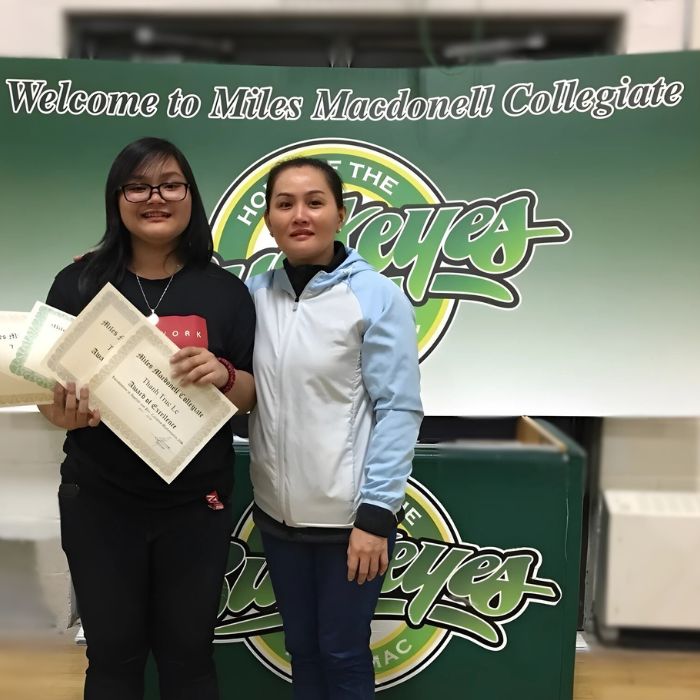
Lê Thanh Trúc, Student at Miles Macdonell Collegiate
“My family and I are deeply grateful to SIEC for not only securing my **Canada high school student visa** in Grade 10 but also for assisting my parents and siblings in obtaining their **visitor visas**. That was an invaluable gift.” — Lê Thanh Trúc, Student at **Miles Macdonell Collegiate** Secure Your Early High School (Secondary) […]
Phan Thị Ngọc Huỳnh, Former Student in Winnipeg
“The solid foundation provided by SIEC and Ms. Huong not only helped me realize my study abroad dream but also gave me the confidence to graduate, secure a stable job, and **settle permanently in Canada**.” — Phan Thị Ngọc Huỳnh, Former Student, currently working in **Winnipeg, Canada** Explore Your Study & Immigration Pathway in Canada […]
Hoàng Giang, Student at Edmonds College
“With her dedication and passion, Ms. Huong helped launch my **American dream**, opening up a vast world of opportunity and the chance to meet new friends.” — Hoàng Giang, Student at **Edmonds College** Explore More About Studying in the USA Spotlight on Edmonds College (Washington State) Gain in-depth knowledge about the programs, tuition fees, and […]
Khánh Lê, Student at LaSalle College
“Thank you to Ms. Huong and the SIEC team for their dedicated partnership and support, from my application phase until I was settled in Canada, helping me confidently pursue my dreams.” — Khánh Lê, Student at **LaSalle College** Explore Further Canada Study Opportunities Spotlight on LaSalle College Gain deeper insights into the programs, tuition fees, […]
Quỳnh Giao, Student at Red River Colleg
“She didn’t just stop at completing the application; she was an inspiration, a true motivator…” — Quỳnh Giao, Student at **Red River College** Continue Your Canada Study Abroad Journey Spotlight on Red River College Polytechnic (RRC Polytech) Discover the high-demand, **applied learning programs** at **Red River College** – one of the premier post-secondary institutions in […]