Post-graduation stay in US: Guide to Work and Live Legally
19/08/2026 Phong Nguyen
The question of whether one can remain in America after finishing their studies is always a top concern for parents and students when planning for their future in the Land of Opportunity. In the context of many changes in immigration policy, building a long-term roadmap that combines education and employment-based residency is becoming an inevitable trend. A **Post-graduation stay in US** through the Double-Path strategy for 2026–2027 not only helps students access world-class education but also opens the door to becoming a legal permanent resident. This article analyzes the detailed preparation steps, from scholarship hunting to residency pathways, to thoroughly address the concern about staying in the U.S. for Vietnamese families.
The Double-Path Strategy and the Post-graduation stay in US
The Double-Path strategy, also known as the dual roadmap, is a combination of studying under an F-1 visa and preparing an EB-3 employment-based residency application. This is the optimal solution to answer the question regarding a **Post-graduation stay in US** most definitively. Instead of relying solely on luck in the H-1B work visa lottery after graduation, students can proactively manage their green card roadmap while still in school.
Benefits of Combining Study and Early Residency Planning
By applying this roadmap, students no longer have to worry about whether they can stay after their studies because the residency application is processed in parallel. Obtaining a green card helps students save significantly on tuition fees, as they can enjoy in-state tuition rates at public universities. Additionally, post-graduation job opportunities are much broader, as American businesses prioritize hiring those who already have legal and long-term residency rights.
Long-term Vision for the Fall 2027 Intake
To implement this strategy, families need to start preparing in 2025 and 2026. Early preparation gives students enough time to build a strong profile for scholarship hunting for the Fall 2027 term. At the same time, this is an appropriate period to research EB-3 labor sponsorship entities. The answer to staying in the U.S. after studying depends heavily on timing and thorough preparation of legal documents from the initial stages.
Choosing Schools and Hunting Fall 2027 Scholarships to Optimize Staying Opportunities
Choosing the right school and major plays a decisive role in a student’s ability to secure a **Post-graduation stay in US**. STEM fields (Science, Technology, Engineering, and Mathematics) are always prioritized, offering Optional Practical Training (OPT) for up to 36 months. This is a golden period for students to accumulate experience and transition to more sustainable residency statuses.
Criteria for Selecting Schools Compatible with Residency Roadmaps
Parents should prioritize universities located in states with vibrant labor markets and open policies toward immigrants. These areas often have many businesses willing to support labor sponsorship, helping to completely resolve concerns about staying in the U.S. after graduation. Besides academic reputation, a school’s corporate networking capabilities are also a crucial factor to consider when applying for the Fall 2027 term.
Secrets to Scholarship Hunting to Reduce Financial Pressure
Scholarships not only help alleviate the financial burden but also serve as evidence of a student’s outstanding capability to immigration authorities. An impressive academic profile with a high GPA, strong English certificates, and meaningful extracurricular activities will increase the chances of receiving financial support. When education costs are optimized, families will have more resources to invest in long-term residency pathways, making the goal of staying in the U.S. easier to achieve.
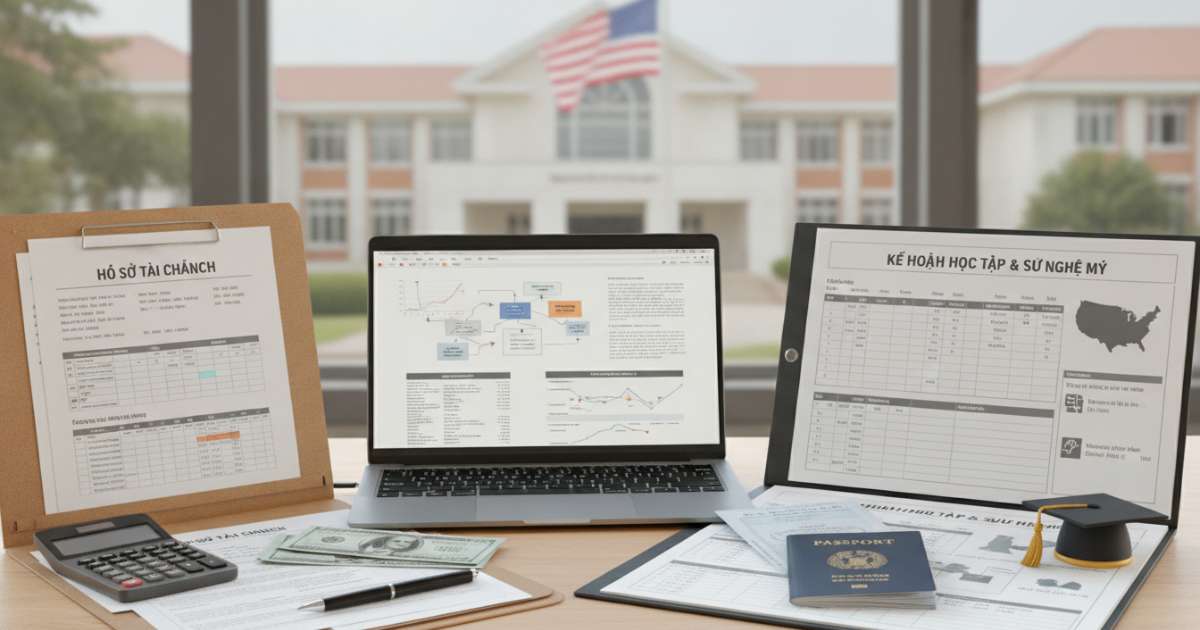
Financial Records and Clear Study Plans for Students
To obtain a student visa, students must prove strong financial capacity and a logical study plan. This is a vital stepping stone because without an F-1 visa, you cannot begin your journey, and the question of staying after graduation becomes moot. Financial records need to demonstrate stable income sources and the family’s accumulated assets over many years.
Requirements for Transparency in Financial Records
U.S. consular authorities are very strict in verifying the source of assets. Documents such as savings books, land use rights certificates, labor contracts, and tax receipts must be prepared fully and accurately. Financial transparency helps confirm that the family is capable of paying for the entire education process, thereby building trust with the consular officer regarding the genuine purpose of study, regardless of future desires for a labor-based residency.
Building a Highly Persuasive Study Plan
A clear study plan must explain the reasons for choosing the major, the school, and career goals after graduation. Students need to demonstrate the link between their field of study in the U.S. and their previous educational background in Vietnam. With a well-structured study roadmap, you will avoid suspicions of illegal immigration intent while creating a solid foundation for later residency steps to legally resolve the issue of staying in the U.S.
Visa Interview Experience and Vague Purpose Errors
The visa interview is the final and often most difficult challenge for many students. The most common error leading to rejection is the failure to prove the intent to return or having an unclear study purpose. To ensure the opportunity for a future stay in the U.S., you must first pass this interview round with honesty and confidence.
How to Answer Interview Questions to Avoid Visa Denial
Consular officers often focus on why you are not studying in Vietnam but choosing the U.S. instead. Students should emphasize the quality of training and the value that a U.S. degree brings to their future career. Note that during the F-1 visa interview, expressing a desire for a **Post-graduation stay in US** too early can lead to rejection for violating the non-immigrant intent regulations of this visa type. You need to focus on your immediate educational goals.
Overcoming Vague Purpose Errors in the Application
An unclear purpose often stems from choosing a major that does not match one’s abilities or not researching the school thoroughly. To avoid this error, students should participate in orientation sessions and practice interviewing carefully. Once you hold a student visa, you will have legal status in the U.S., from which you can proceed with the next steps in the Double-Path roadmap to secure a green card.
Overview of EB-3 Residency for Vietnamese Students
EB-3 residency is a program for skilled workers, professionals, and other workers. This is the most popular path to resolve the **Post-graduation stay in US** issue for international students. This program allows workers to receive a green card directly through the sponsorship of a U.S. employer, provided that the employer cannot find a suitable local worker.
Categories of Labor within the EB-3 Visa
The EB-3 category is divided into three main groups: professionals (with a university degree), skilled workers (with at least 2 years of experience), and other workers (no experience required). For students, after graduation, they usually fall into the professional group. Finding a reputable sponsoring entity while still in school will give students more certainty about staying in the U.S. after completing their training program.
The EB-3 Green Card Application Process
This process consists of three main steps: obtaining Labor Certification from the U.S. Department of Labor, filing the I-140 immigrant petition with USCIS, and finally filing the I-485 adjustment of status application to receive the green card. This is the safest and most sustainable legal roadmap to ensure you can stay in the U.S. Students can utilize their OPT time to work for the sponsoring employer, creating a bond and increasing the success rate of the residency application.
EB-3 Wait Times for Vietnamese Applicants in 2026
One of the most important factors when considering staying in the U.S. after graduation is the processing wait time. Due to the increasing number of EB-3 applications from Vietnam, backlogs are inevitable. It is expected that in 2026, wait times may be longer than in previous years, requiring families to calculate their timing carefully.
Forecasts for the Visa Bulletin and Priority Dates
The Visa Bulletin, published monthly by the U.S. Department of State, determines when you can file for your green card. For Vietnamese applicants, 2026 may see fluctuations in priority dates due to high demand for employment-based residency. Filing early within the Double-Path strategy will help you secure an early priority date, thereby shortening the wait time and providing an affirmative answer for your long-term stay.
Notes on Maintaining Legal Status While Waiting
While waiting for the EB-3 application to be processed, students must always maintain legal residency status in the U.S. via an F-1 visa or OPT. Even the smallest violation of immigration regulations can affect the green card outcome. Therefore, the guidance of professional consulting units is essential to ensure the roadmap to stay in the U.S. proceeds smoothly and legally. Thorough preparation in terms of knowledge and law will help students be more confident on their journey to conquer the American dream.
Understanding immigration and labor regulations will help young people no longer feel confused about whether they can stay in the U.S. after studying. With the 2026–2027 Double-Path strategy, the opportunity for residency is no longer far-fetched if you have the right roadmap and perseverance. Start today to build a solid future in the United States, where your academic efforts will be rewarded with a stable and long-term life.
We hope the information above has provided a comprehensive and detailed view of the **Post-graduation stay in US** for parents and students. The combination of top-tier education and a smart residency roadmap is the key to opening the door to success in America. Don’t let worries about procedures hinder your progress; be proactive in seeking solutions to realize your goal of staying in the U.S. most effectively.
If you are looking for a study roadmap combined with safe and effective residency, SIEC is always ready to accompany you. We provide specialized solutions for Fall 2027 scholarship hunting and detailed EB-3 roadmap consulting, helping you alleviate all worries about staying in the U.S. after graduation.
Don’t miss the opportunity to build a sustainable future in the U.S. for your children. Contact our team of experts now for 1-on-1 consultation and receive a personalized Double-Path roadmap today.
Access the following link to register for consultation and detailed information on the latest study-residency programs at SIEC: https://siec.com.vn/dang-ky
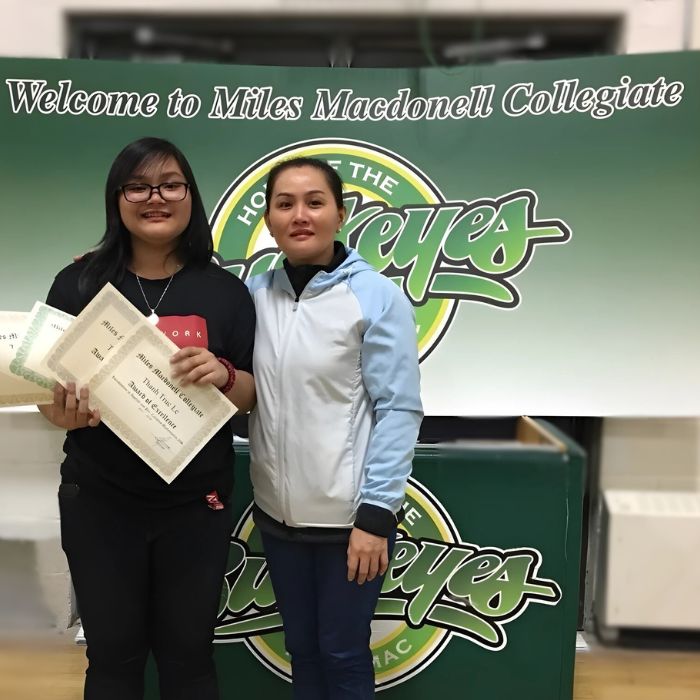
Lê Thanh Trúc, Student at Miles Macdonell Collegiate
“My family and I are deeply grateful to SIEC for not only securing my **Canada high school student visa** in Grade 10 but also for assisting my parents and siblings in obtaining their **visitor visas**. That was an invaluable gift.” — Lê Thanh Trúc, Student at **Miles Macdonell Collegiate** Secure Your Early High School (Secondary) […]
Phan Thị Ngọc Huỳnh, Former Student in Winnipeg
“The solid foundation provided by SIEC and Ms. Huong not only helped me realize my study abroad dream but also gave me the confidence to graduate, secure a stable job, and **settle permanently in Canada**.” — Phan Thị Ngọc Huỳnh, Former Student, currently working in **Winnipeg, Canada** Explore Your Study & Immigration Pathway in Canada […]
Hoàng Giang, Student at Edmonds College
“With her dedication and passion, Ms. Huong helped launch my **American dream**, opening up a vast world of opportunity and the chance to meet new friends.” — Hoàng Giang, Student at **Edmonds College** Explore More About Studying in the USA Spotlight on Edmonds College (Washington State) Gain in-depth knowledge about the programs, tuition fees, and […]
Khánh Lê, Student at LaSalle College
“Thank you to Ms. Huong and the SIEC team for their dedicated partnership and support, from my application phase until I was settled in Canada, helping me confidently pursue my dreams.” — Khánh Lê, Student at **LaSalle College** Explore Further Canada Study Opportunities Spotlight on LaSalle College Gain deeper insights into the programs, tuition fees, […]
Quỳnh Giao, Student at Red River Colleg
“She didn’t just stop at completing the application; she was an inspiration, a true motivator…” — Quỳnh Giao, Student at **Red River College** Continue Your Canada Study Abroad Journey Spotlight on Red River College Polytechnic (RRC Polytech) Discover the high-demand, **applied learning programs** at **Red River College** – one of the premier post-secondary institutions in […]