Newest Canada family sponsorship process for your family
14/08/2026 Phong Nguyen
In the context of Canada’s rapidly changing immigration policies, understanding the latest regulations regarding Canada family sponsorship and residency for the 2026-2027 period has become more crucial than ever for Vietnamese applicants. Instead of focusing on general immigration streams that are being tightened, the Canadian government is now shifting priority toward high-skilled candidates in essential sectors. The roadmap from studying to working and eventually achieving permanent residency is considered the most sustainable path with the highest success rate. This article provides detailed insights into document conditions, new financial requirements, and how to choose priority fields like Healthcare, STEM, and Construction to optimize your residency opportunities.
Requirements for Canada family sponsorship and study abroad in 2026-2027
To begin the journey toward residency through the academic pathway, candidates need to prepare a truly impressive profile. The first and most important condition is language proficiency. In the 2026-2027 period, requirements for IELTS Academic or equivalent certificates such as PTE have increased significantly. Most top universities and colleges require a minimum score of 6.0 to 6.5, with no skill below 6.0, to ensure the ability to acquire knowledge and integrate into the community. Besides language skills, academic performance reflected through the Grade Point Average (GPA) is also a key factor. Candidates aiming for high-skilled residency need a strong academic foundation from Vietnam, especially in natural science subjects if pursuing STEM fields. Personal records must be transparent, including all degrees, transcripts, and relevant certificates that have been notarially translated. An indispensable part of the application is the police certificate and medical exam. The Canadian government maintains strict standards for security and public health. Candidates must not have a criminal record and must ensure they do not have dangerous infectious diseases. Careful preparation of these documents from the start will help the process of reviewing residency applications proceed smoothly, avoiding errors that cause unnecessary delays.
Requirements for document integrity
Transparency in information is a prerequisite for any residency application to be accepted. All information regarding education, work history, and family relationships must be declared accurately. Fraudulent information can lead to serious consequences, such as being banned from entering Canada for many years.
Necessary identification documents
Applications for a Study Permit and residency require a passport valid for at least 6 months, national ID card, birth certificate, and household registration. These documents must be prepared as certified copies with English or French translations by authorized units.
Changes in Study Permit and financial requirements for Canada family sponsorship
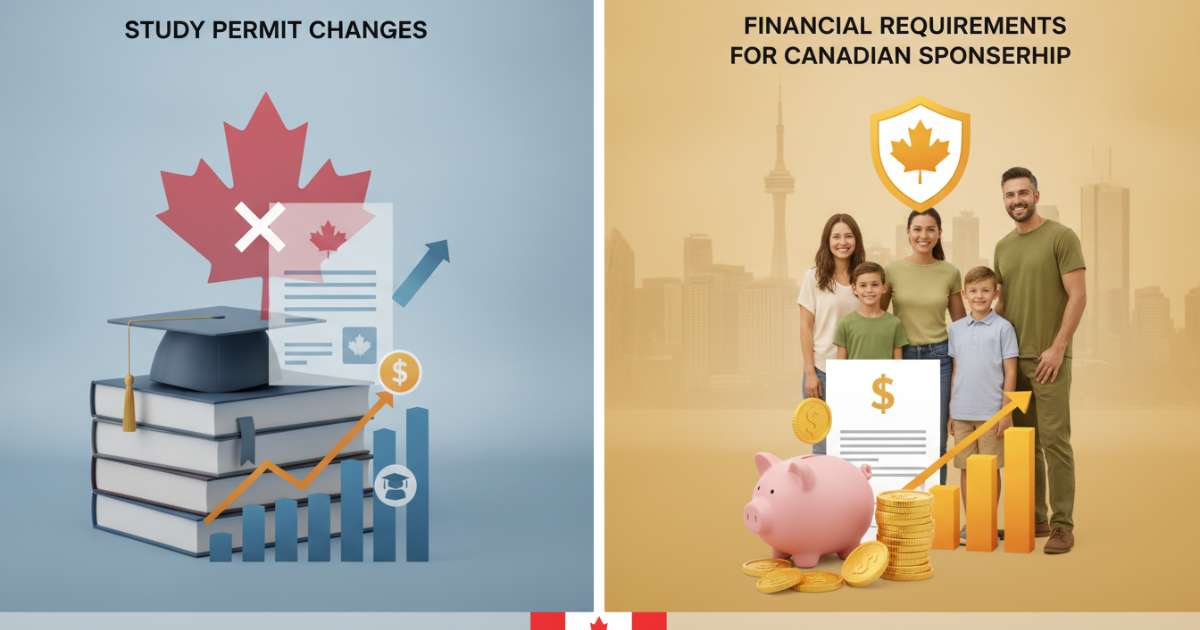
Starting from 2024 and extending into the 2026-2027 period, the Study Permit application process has undergone milestone changes. One of the newest points is the requirement for a Provincial Attestation Letter (PAL). This is a mandatory step before submitting a study permit application to control the number of international students in each region. This directly affects the plans for many families as competition in major provinces like Ontario or British Columbia becomes more intense. Financial requirements are also a major hurdle to note. Immigration, Refugees and Citizenship Canada (IRCC) has adjusted the cost-of-living financial proof requirement, doubling it compared to before. Specifically, in addition to the first year’s tuition, students need to prove they have approximately 20,635 CAD to cover personal living expenses. Proving a stable source of income for the financial guarantor is a decisive factor for the application to be approved. The financial guarantor, usually parents or relatives, needs to provide evidence of savings accounts, real estate assets, labor contracts, or business licenses. The goal is to ensure students have enough financial resources to complete their program without becoming a burden on Canada’s social welfare system. This is an important preparation step to create a foundation for future residency after graduation.
Proving clear origin of assets
Not only is a large account balance required, but candidates must also explain the origin of that money. Financial transactions need to be logical and transparent to convince consular officers of the family’s sustainable financial capacity.
The Provincial Attestation Letter (PAL) process
Each province has a separate PAL issuance process based on allocated quotas. Students must apply to the school first; after receiving the letter of acceptance, the school will apply for the PAL from the provincial government on behalf of the student. This is an essential step to complete the study-based residency application.
The 24-hour weekly work rule and opportunities to gain experience
Important information for international students aiming for residency is the new regulation on off-campus work hours. Instead of 20 hours as before, international students are now allowed to work up to 24 hours per week during academic sessions. This change aims to help students earn extra income to cover living costs amidst inflation while creating conditions for them to accumulate work experience in a local environment. Part-time work is not just about earning money; it is a golden opportunity to build a professional network. For those interested in future residency, Canadian work experience is a huge plus in the Comprehensive Ranking System (CRS). Part-time jobs related to the field of study will help students better understand the labor market and Canadian work culture. However, students should be careful to balance study and work. If academic results decline or work hour regulations are violated, the Study Permit may be revoked, seriously affecting long-term residency goals. During scheduled breaks or summer vacations, students are still allowed to work full-time without the 24-hour limit.
Benefits of part-time work for residency profiles
Work experience in Canada helps candidates understand the operational processes of local businesses. This increases the likelihood of finding a formal job immediately after graduation, a necessary condition for professional skilled immigration.
Time management and compliance
Students need to keep track of their weekly work hours to ensure they do not exceed the 24-hour limit. Compliance with the law is evidence of the responsibility of a potential candidate for future residency.
How to choose majors and schools to optimize Canada family sponsorship
In the 2026-2027 period, choosing the right major determines 70% of the success of a residency plan. The Canadian government has announced a list of priority occupations based on actual labor market needs. The Healthcare sector always tops the list with a huge demand for nurses, medical laboratory technicians, and health care assistants. Studying these majors makes it easier for students to receive job offers and be prioritized in provincial residency draws. The STEM group (Science, Technology, Engineering, and Mathematics) is also an excellent choice. With the development of information technology, artificial intelligence, and renewable energy, experts in these fields are always sought after. STEM graduates not only have high starting salaries but also have many pathways for residency through provincial nominee programs specifically for the technical block. Additionally, the Construction and Trades group, such as electricians, plumbers, and carpenters, is facing a severe labor shortage. Canada is implementing many large infrastructure projects; therefore, those with skills in construction will have very fast residency opportunities. When choosing a school, students should prioritize public colleges/universities to ensure eligibility for a Post-Graduation Work Permit (PGWP).
Advantages of the Healthcare sector in immigration
The Healthcare sector not only provides a stable income but is also a field protected and prioritized by the Canadian government. Healthcare-related residency programs often have lower cutoff scores and faster processing times compared to other groups.
Importance of the STEM and Construction sectors
The shortage of technical labor causes provinces to continuously introduce policies to attract talent. Choosing to study STEM or Construction is the fastest way to access residency programs under skill priorities, helping to shorten the waiting time for a permanent resident card.
The roadmap from study to work and successful Canada family sponsorship
The typical roadmap to achieve residency goals begins with completing a study program of 2 years or more at a Designated Learning Institution (DLI). After graduation, students will apply for a Post-Graduation Work Permit (PGWP) valid for up to 3 years. This is a precious time for students to find full-time jobs in professional occupation groups (TEER 0, 1, 2, or 3) to accumulate Canadian work experience. After having at least 1 year of formal work experience, candidates can apply to the Express Entry system under the Canadian Experience Class (CEC) or Provincial Nominee Programs (PNP). For those working in Healthcare, STEM, or Construction, the chance of receiving an Invitation to Apply (ITA) for residency is very high thanks to category-based draws. Once you have become a permanent resident (PR), you have the right to perform **Canada family sponsorship** for your spouse or children to reunite and build a new life in the Maple Leaf country. This roadmap requires perseverance, careful preparation, and constant updates on changes in Canada’s immigration policies. Utilizing the PGWP is the most powerful tool to help international students transition from student status to legal worker. The professional work experience gained during this time is the key to opening the door to residency in an official and safe manner.
Maximizing the Post-Graduation Work Permit (PGWP)
The PGWP allows international students to gain the necessary local experience to qualify for various immigration streams. This practical experience is often the deciding factor in a successful transition to permanent residency.
Provincial Nominee Programs (PNP) and occupational advantages
Each province in Canada has its own labor needs. Understanding which province needs human resources in your field of study will increase your chances of being nominated for residency through specific local programs.
Preparing for the Canadian residency roadmap in the 2026-2027 period requires a deep understanding of immigration law and the ability to be sharp in choosing a profession. If you are looking for a solid direction to achieve the goal of **Canada family sponsorship** for yourself and your family, start now by assessing your capacity and building a study roadmap suitable for the current Canadian labor market reality.
Do not let policy changes hinder your dreams. Contact experienced consultants for support in profile analysis, school selection, major selection, and to optimize your chances for **Canada family sponsorship**. A detailed and correct plan from today will be a solid foundation for your success in Canada in the future.
Assess your ability for Canadian residency in 2027 now by contacting SIEC to receive specialized advice on study and residency programs according to priority occupations. We will help you evaluate your profile and provide the most optimal solution for your **Canada family sponsorship** plan.
To receive detailed and updated information on new immigration policies, register for a consultation at SIEC today via https://siec.com.vn/dang-ky. Our team of experts is always ready to accompany you on the path to conquering your Canadian dream.
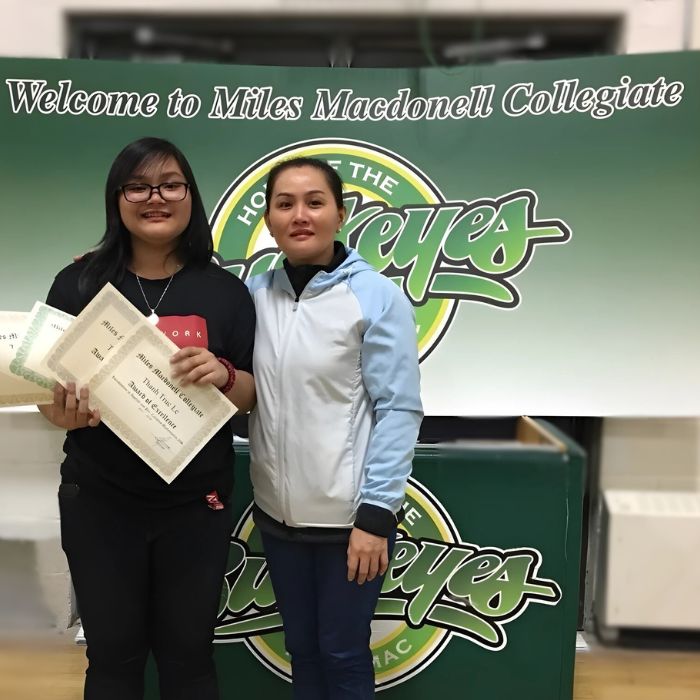
Lê Thanh Trúc, Student at Miles Macdonell Collegiate
“My family and I are deeply grateful to SIEC for not only securing my **Canada high school student visa** in Grade 10 but also for assisting my parents and siblings in obtaining their **visitor visas**. That was an invaluable gift.” — Lê Thanh Trúc, Student at **Miles Macdonell Collegiate** Secure Your Early High School (Secondary) […]
Phan Thị Ngọc Huỳnh, Former Student in Winnipeg
“The solid foundation provided by SIEC and Ms. Huong not only helped me realize my study abroad dream but also gave me the confidence to graduate, secure a stable job, and **settle permanently in Canada**.” — Phan Thị Ngọc Huỳnh, Former Student, currently working in **Winnipeg, Canada** Explore Your Study & Immigration Pathway in Canada […]
Hoàng Giang, Student at Edmonds College
“With her dedication and passion, Ms. Huong helped launch my **American dream**, opening up a vast world of opportunity and the chance to meet new friends.” — Hoàng Giang, Student at **Edmonds College** Explore More About Studying in the USA Spotlight on Edmonds College (Washington State) Gain in-depth knowledge about the programs, tuition fees, and […]
Khánh Lê, Student at LaSalle College
“Thank you to Ms. Huong and the SIEC team for their dedicated partnership and support, from my application phase until I was settled in Canada, helping me confidently pursue my dreams.” — Khánh Lê, Student at **LaSalle College** Explore Further Canada Study Opportunities Spotlight on LaSalle College Gain deeper insights into the programs, tuition fees, […]
Quỳnh Giao, Student at Red River Colleg
“She didn’t just stop at completing the application; she was an inspiration, a true motivator…” — Quỳnh Giao, Student at **Red River College** Continue Your Canada Study Abroad Journey Spotlight on Red River College Polytechnic (RRC Polytech) Discover the high-demand, **applied learning programs** at **Red River College** – one of the premier post-secondary institutions in […]