The Most Effective AIPP Canada immigration Guide for 2026
12/07/2026 Phong Nguyen
In the context of Canada’s immigration policies undergoing significant adjustments towards selecting highly skilled workers, **AIPP Canada immigration** (now the Atlantic Immigration Program – AIP) remains one of the shortest and most effective pathways. The 2026-2027 period marks a strong shift from mass immigration to prioritizing candidates with expertise in essential fields. Understanding the changes in financial regulations, part-time work hours, and study roadmaps will help you prepare your application most thoroughly to realize your dream of settling in the Land of the Maple Leaf.
1. Overview of AIPP Canada immigration in 2026-2027
The Atlantic Immigration Program, formerly known as AIPP, has officially become a permanent immigration program named AIP. This program is dedicated to the four Atlantic provinces of Canada, including New Brunswick, Nova Scotia, Prince Edward Island, and Newfoundland and Labrador. The main goal of AIPP Canada immigration is to attract foreign workers and international graduates from Canada to address labor shortages in this region.
Entering 2026 and 2027, the Canadian government is focusing on population stability and ensuring that immigrants can contribute immediately to the economy. Instead of opening doors to all sectors, the Atlantic provinces are prioritizing applications in Healthcare, STEM, and Construction. This means that if you choose the right field of study and roadmap from the start, your chances of receiving a job offer from designated employers will be much higher.
A major difference of AIPP Canada immigration compared to other programs is that the work experience and English requirements are usually more lenient. However, candidates need a Job Offer from a business already approved by the provincial government. This is the key factor determining the success of an immigration file in the new phase.
2. Conditions and Documents for AIPP Canada immigration – New Updates
To participate in AIPP Canada immigration, candidates need to meet basic standards for education, work experience, and language proficiency. For the international student stream graduating in the Atlantic region, you do not need work experience if you meet the requirements for study duration and credentials from public institutions in the area. This creates favorable conditions for young people who want to start their careers in Canada immediately after graduation.
2.1. Education and Work Experience Requirements
For the skilled worker stream, you need at least one year of relevant work experience within the last five years. This job must fall under occupational categories TEER 0, 1, 2, 3, or 4 according to Canada’s NOC system. Meanwhile, the international student stream requires you to have graduated from a program lasting at least two years from a recognized institution in one of the four Atlantic provinces.
Mastering these requirements is the first step to preparing for AIPP Canada immigration effectively.
2.2. Language Proficiency and Health Certification
The minimum English or French requirement for this program is usually CLB 4 or CLB 5, depending on the occupation code. This requirement is relatively low compared to federal immigration programs like Express Entry. Additionally, all candidates and accompanying family members must undergo a health examination and provide a clean criminal record certificate.
Thorough preparation of documents will help the AIPP Canada immigration review process proceed more smoothly and quickly.
3. Study Permit Regulations and Financial Requirements for AIPP Canada immigration
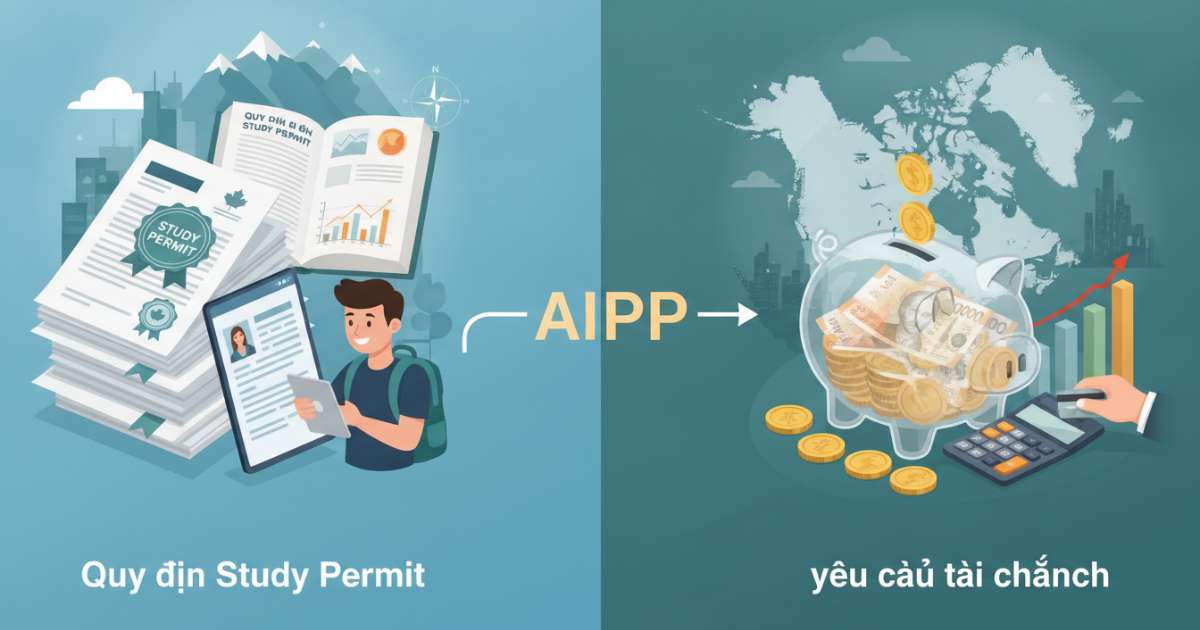
Since 2024, Immigration, Refugees and Citizenship Canada (IRCC) has implemented stricter regulations on issuing Study Permits and financial requirements for international students. These changes directly affect the AIPP Canada immigration pathway through the study route. Understanding these regulations helps you avoid the risk of visa refusal due to insufficient financial resources or failure to prove a clear study purpose.
3.1. New Financial Requirements for International Students
The Canadian government has increased the financial proof requirement for international students to ensure they can afford living costs amidst inflation. Instead of the old rate, students now need to prove they have approximately 20,635 CAD for a single person, excluding tuition and travel costs. This is an important figure to keep in mind when planning for AIPP Canada immigration.
Solid financial preparation not only helps you obtain a Study Permit but also reduces pressure during your initial time adjusting to life in Canada.
3.2. Regulation for Working 24 Hours Per Week
Another notable change is the regulation on the number of off-campus work hours. Starting from late 2024, international students are allowed to work a maximum of 24 hours per week during regular academic semesters, instead of the previous 20 hours. This regulation helps students earn extra income and accumulate practical local work experience.
For those aiming for AIPP Canada immigration, working part-time in priority sectors such as healthcare support or technical retail can be an opportunity to build networks with potential employers.
4. Choosing Priority Majors for Effective AIPP Canada immigration
In the 2026-2027 period, choosing a major is no longer just based on personal preference but must align closely with labor market demands. The Atlantic provinces are facing severe shortages in specialized fields. Choosing the right priority major will make your AIPP Canada immigration journey much smoother with the ability to find a job immediately after graduation.
4.1. Healthcare and Medical Group
Healthcare is always a top priority for Canada in general and the Atlantic region in particular. Positions such as nurses, personal care assistants, and physiotherapy specialists are in extremely high demand. When studying these fields, students not only have opportunities for scholarships but are also sought after by employers even during their internships.
This is the surest way to achieve the goal of AIPP Canada immigration because the government always prioritizes processing files for this essential sector.
4.2. STEM and Information Technology Group
STEM (Science, Technology, Engineering, and Mathematics) is the driver of Canada’s economic development. Provinces like Nova Scotia and New Brunswick are promoting the development of technology and innovation hubs. Graduates in programming, data analysis, or electrical engineering will have many career options.
Possessing a STEM degree from an Atlantic region university is a valuable ticket for you to advance towards AIPP Canada immigration quickly.
4.3. Construction and Technical Trades Group
With population growth, the demand for housing and infrastructure in the Atlantic provinces has surged. Sectors such as construction management, electricians, carpenters, and civil engineering need a large number of skilled workers. This group offers high starting salaries and clear promotion paths.
If you have good technical skills and want to pursue AIPP Canada immigration, attending intensive vocational training programs in the construction field is a very practical choice.
5. Roadmap from Study to AIPP Canada immigration for Beginners
To succeed in AIPP Canada immigration, you need a clear roadmap prepared early. This process usually lasts from 3 to 5 years, starting from choosing a school until receiving a Permanent Resident (PR) card. Adhering to the steps and maintaining good academic and work results is the key to overcoming changes in immigration policy.
5.1. Study and Accumulation Phase in Canada
First, you need to choose a study program lasting at least 2 years at a Designated Learning Institution (DLI) in the Atlantic region. During your studies, take advantage of the 24-hour weekly part-time work allowance to gain experience and improve language skills. Participating in Co-op internships is also a great way to connect with businesses that can sponsor your AIPP Canada immigration later.
Always ensure you comply with Study Permit conditions so as not to affect your future immigration file.
5.2. Graduation and Transition to Permanent Residency
After graduation, you can apply for a Post-Graduation Work Permit (PGWP) to stay and work freely in Canada for up to 3 years. During this time, the most important goal is to find a full-time job from a designated employer in the AIP program. Once you have a job offer and commitment from the employer, you can apply for provincial endorsement and then submit your AIPP Canada immigration application to the federal government.
Support from the business side is a key factor that helps your application get prioritized for processing.
6. Assess Your Eligibility for Canada Immigration 2027 Now
Immigration policies are always changing, and 2027 promises more updates on quotas and review methods. To avoid missing opportunities, assessing your personal profile right now is essential. You need to know if your educational background, financial capacity, and language skills are suitable for the AIPP Canada immigration criteria.
Accurate assessment will help you save time and money, while finding the most effective direction for yourself and your family.
Don’t let administrative hurdles slow down your journey to conquer Canada. With thorough preparation of knowledge and advice from experts, the AIPP Canada immigration roadmap will become clear and within reach. Start by carefully researching priority occupations and reputable schools in the Atlantic region to build a solid foundation for your long-term future in the Land of the Maple Leaf.
If you are wondering about choosing a major or worried about new financial regulations, seek professional support for a comprehensive and accurate view. The opportunity for AIPP Canada immigration is always open to those with serious preparation and clear career goals in the fields Canada needs most.
Let SIEC accompany you on the journey to conquer your Canadian dream. With a team of experienced experts, we will help you analyze your profile, choose a priority major, and build the most optimal AIPP Canada immigration roadmap for the 2026-2027 period.
Don’t hesitate, contact us now for in-depth advice and the latest information on study-to-immigrate policies. Register your information here to start your new beginning: https://siec.com.vn/dang-ky
Realize Your Dream of Settling and Developing Your Career in Canada with SIEC
**AIPP Canada immigration** is an attractive pathway that helps you and your family quickly stabilize life in the high-potential Atlantic coastal provinces. To seize this opportunity most effectively, SIEC provides consultation on study roadmaps combined with global career orientation, helping you equip yourself with professional skills and an outstanding profile to confidently conquer the international labor market.
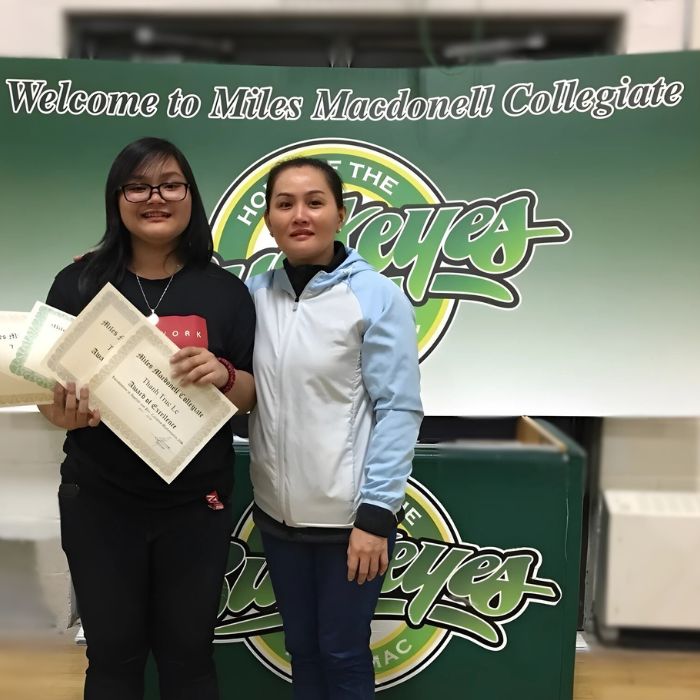
Lê Thanh Trúc, Student at Miles Macdonell Collegiate
“My family and I are deeply grateful to SIEC for not only securing my **Canada high school student visa** in Grade 10 but also for assisting my parents and siblings in obtaining their **visitor visas**. That was an invaluable gift.” — Lê Thanh Trúc, Student at **Miles Macdonell Collegiate** Secure Your Early High School (Secondary) […]
Phan Thị Ngọc Huỳnh, Former Student in Winnipeg
“The solid foundation provided by SIEC and Ms. Huong not only helped me realize my study abroad dream but also gave me the confidence to graduate, secure a stable job, and **settle permanently in Canada**.” — Phan Thị Ngọc Huỳnh, Former Student, currently working in **Winnipeg, Canada** Explore Your Study & Immigration Pathway in Canada […]
Hoàng Giang, Student at Edmonds College
“With her dedication and passion, Ms. Huong helped launch my **American dream**, opening up a vast world of opportunity and the chance to meet new friends.” — Hoàng Giang, Student at **Edmonds College** Explore More About Studying in the USA Spotlight on Edmonds College (Washington State) Gain in-depth knowledge about the programs, tuition fees, and […]
Khánh Lê, Student at LaSalle College
“Thank you to Ms. Huong and the SIEC team for their dedicated partnership and support, from my application phase until I was settled in Canada, helping me confidently pursue my dreams.” — Khánh Lê, Student at **LaSalle College** Explore Further Canada Study Opportunities Spotlight on LaSalle College Gain deeper insights into the programs, tuition fees, […]
Quỳnh Giao, Student at Red River Colleg
“She didn’t just stop at completing the application; she was an inspiration, a true motivator…” — Quỳnh Giao, Student at **Red River College** Continue Your Canada Study Abroad Journey Spotlight on Red River College Polytechnic (RRC Polytech) Discover the high-demand, **applied learning programs** at **Red River College** – one of the premier post-secondary institutions in […]