Master Your Canada Immigration Application: Step by Step
02/07/2026 Phong Nguyen
Immigrating to Canada is entering a new phase with many important changes in immigration management policies. In the context of the Canadian government starting to tighten mass immigration programs, preparing a **Canada immigration application** for the 2026–2027 period requires a deep understanding of new regulations. Instead of focusing on saturated fields, the study-to-immigration pathway in priority sectors such as Healthcare, STEM, and Construction is becoming the most viable route.
This article will provide detailed information on the necessary steps to complete your Canada immigration application and important changes regarding finances and working procedures in this country.
1. Conditions for preparing a Canada immigration application for 2026–2027
To begin the immigration journey, the first and most important step is to assess personal capacity based on new criteria from Immigration, Refugees and Citizenship Canada (IRCC). In the 2026–2027 period, a **Canada immigration application** not only requires degrees but also emphasizes practical work experience in sectors facing severe labor shortages.
Regarding education, candidates need at least a high school diploma to enroll in college or university programs. However, for those wanting to shorten the Canada immigration process, possessing a bachelor’s or postgraduate degree from Vietnam will be a significant advantage when calculating immigration points. Language remains a key factor, with IELTS Academic or PTE Core certificates usually required at a minimum score equivalent to CLB 7 to ensure professional communication and work capability.
Additionally, health and criminal records are two mandatory factors when preparing Canada immigration documents. Candidates must undergo health checks at designated units and provide a Police Clearance Certificate to prove no criminal record. Carefully preparing these documents from the start will help your **Canada immigration application** avoid unnecessary delays during the review process.
2. Canada immigration process through study and skilled work
Currently, the most effective Canada immigration process often begins with studying at a Designated Learning Institution (DLI) and then transitioning to a Post-Graduation Work Permit (PGWP). This pathway allows candidates time to adapt to the culture and accumulate local work experience, which is a huge plus for a future **Canada immigration application**.
2.1. Study Permit application steps and important notes
When following the Canada immigration process, the Study Permit application step is the biggest hurdle. Since 2024, Canada has implemented a Provincial Attestation Letter (PAL) system for most levels of study. This means that before applying for a visa, you must be approved by the province where the school is located.
When preparing Canada immigration documents, you must ensure that the Letter of Acceptance from the school is accompanied by a valid PAL code.
In addition, the Study Plan in your **Canada immigration application** must demonstrate logic between your previous education and the chosen field of study in Canada. IRCC will highly value applications with clear study goals that prove the ability to return home or contribute to the Canadian economy after graduation. Preparing Canada immigration documents honestly and logically is the key to receiving approval from the consulate.
2.2. New financial requirements for Canada immigration paperwork
One of the biggest changes affecting the **Canada immigration application** in 2026–2027 is the financial proof requirement. The Canadian government has increased the Cost of Living requirement to a much higher level than in previous years to ensure international students can afford their expenses without being overly dependent on part-time work. Specifically, in addition to the first year’s tuition, candidates need to prove they have approximately 20,635 CAD in a bank account for personal expenses.
Preparing these funds requires transparency regarding the source of income. When preparing Canada immigration documents, you should provide evidence such as savings books, salary statements, property ownership documents, or business income sources. A **Canada immigration application** with solid finances will help minimize the risk of visa refusal due to doubts about financial capacity.
3. 24-hour weekly work regulation and its impact on students
Since late 2024, Canada has officially applied a new regulation on the number of part-time work hours for international students. Instead of being allowed to work unlimited hours as during the pandemic, students are now only permitted to work a maximum of 24 hours per week during study terms. This regulation aims to help students focus on their studies, which is the primary purpose of the Canada immigration process through the educational route.
Although hours are limited, the minimum wage in Canadian provinces is still enough for students to cover part of their living expenses if they manage their spending well. When preparing your **Canada immigration application**, note that compliance with work hour regulations is extremely important. Any violation of labor laws can lead to the cancellation of your study permit and seriously affect future opportunities for preparing Canada immigration documents.
4. Choosing priority occupations to optimize your Canada immigration application
Instead of choosing general majors like business administration or marketing, the immigration trend for 2026–2027 focuses strongly on sectors with labor shortages. Choosing the right occupation from the start will help your **Canada immigration application** be prioritized in federal and provincial immigration invitations through the Express Entry category-based selection system.
4.1. Healthcare and Medical Care Sector
Healthcare always tops the priority list in the Canada immigration process. With an aging population, Canada needs a large number of nurses, personal care assistants, and laboratory technicians. When preparing Canada immigration documents for this sector, candidates often receive maximum support from provinces with specific nomination programs.
A **Canada immigration application** in the healthcare field often has lower immigration scores but a much higher rate of receiving an invitation to apply for permanent residency compared to other sectors.
4.2. STEM and Construction Sectors
Science, Technology, Engineering, and Mathematics (STEM) along with Construction are the pillars of Canada’s economic development. Software engineers, data analysts, and skilled electricians or carpenters are in high demand. Completing a **Canada immigration application** with a degree in a STEM field not only brings a high salary but also simplifies the Canada immigration process after graduation.
In particular, the construction industry is receiving many procedural incentives when preparing Canada immigration documents due to the urgent need for housing in major cities.
5. Roadmap from study to work and official immigration
A standard roadmap to complete a **Canada immigration application** usually lasts from 3 to 5 years. After completing a study program of at least 2 years, you will be granted a PGWP valid for up to 3 years. This is the golden time to accumulate work experience in Canada at a professional level (TEER 0, 1, 2, or 3).
This work experience is a prerequisite for entering your **Canada immigration application** into the Express Entry system or Provincial Nominee Programs (PNP).
During the working process, you need to continuously update yourself on the Canada immigration process of the province where you live. Each province, such as Ontario, British Columbia, or Alberta, has its own regulations regarding labor sponsorship. Once you meet the requirements for work duration and language proficiency, you can begin preparing Canada immigration documents to apply for Permanent Residency (PR).
This is the final and most important step for you and your family to officially become part of Canadian society.
6. Notes when self-preparing Canada immigration documents
Many people choose to prepare their own **Canada immigration application** to save costs, but this carries many risks if they do not master immigration laws. A small error in information declaration or missing a type of financial proof can disrupt the Canada immigration process. In particular, explaining gaps in your education or work history (Gap year) needs to be done skillfully with authentic evidence.
When preparing Canada immigration documents, always ensure that all information provided is consistent across applications. Discrepancies between a previous tourist visa application and the current **Canada immigration application** can lead to allegations of Misrepresentation, resulting in a 5-year entry ban. Therefore, carefully researching regulations or consulting with reputable advisors is extremely necessary.
7. Assess your Canada immigration capacity for 2027 now
If you are planning to live and work in the land of the maple leaf, starting to prepare your **Canada immigration application** right now is a wise decision. Immigration policies are always changing, and priority opportunities for Healthcare, STEM, or Construction may become more competitive in the coming years. Don’t miss the golden moment to complete your own Canada immigration process.
Contact us for support in assessing your capacity, choosing the right field of study, and receiving professional guidance on preparing Canada immigration documents. We are committed to accompanying you in building a solid **Canada immigration application**, helping to realize your dream of settling in one of the most livable countries in the world.
To receive detailed advice on the study and immigration pathway that fits your personal capacity, register your information today. Our team of experts will help you assess the success rate of your **Canada immigration application** and provide the most practical advice for your upcoming journey.
Access the link below to start your new beginning in Canada with SIEC:
Conquer Your Canadian Dream And Build A Global Career With SIEC
Your **Canada immigration application** is a major turning point that requires careful preparation in both knowledge and long-term career orientation to optimize your chances of success. Understanding these challenges, SIEC is proud to provide study pathway consultation combined with in-depth career orientation, helping you build an outstanding profile and a solid career path in the world’s most developed country.
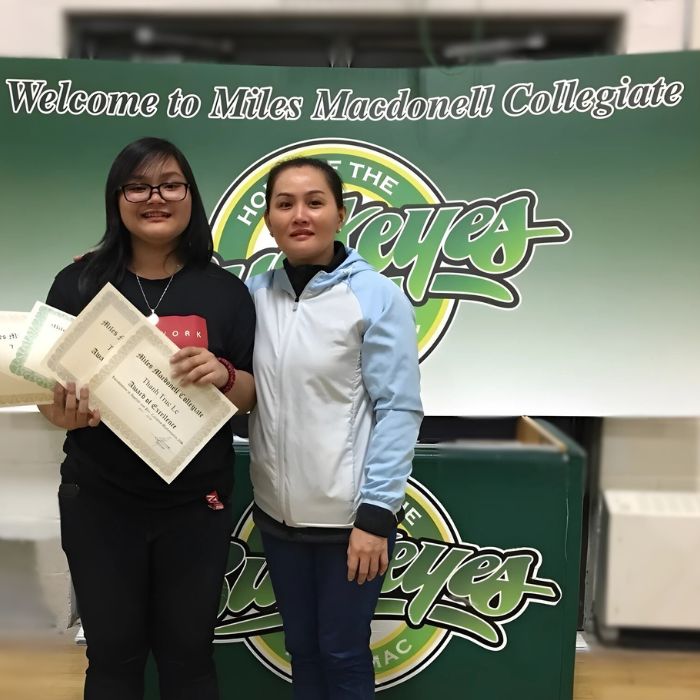
Lê Thanh Trúc, Student at Miles Macdonell Collegiate
“My family and I are deeply grateful to SIEC for not only securing my **Canada high school student visa** in Grade 10 but also for assisting my parents and siblings in obtaining their **visitor visas**. That was an invaluable gift.” — Lê Thanh Trúc, Student at **Miles Macdonell Collegiate** Secure Your Early High School (Secondary) […]
Phan Thị Ngọc Huỳnh, Former Student in Winnipeg
“The solid foundation provided by SIEC and Ms. Huong not only helped me realize my study abroad dream but also gave me the confidence to graduate, secure a stable job, and **settle permanently in Canada**.” — Phan Thị Ngọc Huỳnh, Former Student, currently working in **Winnipeg, Canada** Explore Your Study & Immigration Pathway in Canada […]
Hoàng Giang, Student at Edmonds College
“With her dedication and passion, Ms. Huong helped launch my **American dream**, opening up a vast world of opportunity and the chance to meet new friends.” — Hoàng Giang, Student at **Edmonds College** Explore More About Studying in the USA Spotlight on Edmonds College (Washington State) Gain in-depth knowledge about the programs, tuition fees, and […]
Khánh Lê, Student at LaSalle College
“Thank you to Ms. Huong and the SIEC team for their dedicated partnership and support, from my application phase until I was settled in Canada, helping me confidently pursue my dreams.” — Khánh Lê, Student at **LaSalle College** Explore Further Canada Study Opportunities Spotlight on LaSalle College Gain deeper insights into the programs, tuition fees, […]
Quỳnh Giao, Student at Red River Colleg
“She didn’t just stop at completing the application; she was an inspiration, a true motivator…” — Quỳnh Giao, Student at **Red River College** Continue Your Canada Study Abroad Journey Spotlight on Red River College Polytechnic (RRC Polytech) Discover the high-demand, **applied learning programs** at **Red River College** – one of the premier post-secondary institutions in […]