Latest Updates on Canada immigration law: Key Regulations
02/07/2026 Phong Nguyen
During the 2026-2027 period, the Canadian government continues to implement significant adjustments to its immigration policies to balance economic development and social infrastructure stability. Accurately understanding **Canada immigration law** is a key factor that helps candidates, especially international students, build a clear and effective pathway. Instead of the open-door immigration policies of previous years, current **Canadian residency regulations** now focus strongly on attracting highly skilled human resources in sectors facing severe shortages.
This requires applicants to prepare thoroughly in terms of both professional qualifications and financial capacity to meet the stricter standards set by Immigration, Refugees and Citizenship Canada (IRCC).
1. Overview of Canada immigration law for the 2026-2027 period
The Immigration Levels Plan for 2026-2027 reveals a strategic shift in Canada immigration law by prioritizing sustainable stability. The Canadian government has set specific targets to alleviate pressure on the housing system and public services while still ensuring a labor supply for key economic sectors. According to the latest Canadian residency regulations, skilled immigration programs will focus on selection based on priority occupation categories rather than just relying on high CRS scores as in the past.
This opens up significant opportunities for individuals with work experience in essential fields.
Changes in Canada immigration law also emphasize a more even distribution of the population across provinces. Instead of over-concentrating in large metropolitan areas like Toronto or Vancouver, Canadian residency regulations encourage candidates to choose regions with high labor demand through Provincial Nominee Programs (PNP). Understanding these rules will help you choose the most suitable study and work location for your long-term residency prospects.
1.1. Shifting from mass immigration to category-based selection
One of the most notable points of Canada immigration law today is the strong application of group-based selection mechanisms. Express Entry draws now frequently target candidates with experience in priority occupations. According to Canadian residency regulations, possessing degrees and work experience in fields such as Healthcare, STEM, and Construction will provide a superior advantage over other general occupations.
This helps Canada address labor shortages more directly and effectively.
1.2. The importance of regularly updating Canadian residency regulations
Canada’s immigration policies frequently undergo sudden changes depending on the economic and social situation. Therefore, closely monitoring Canada immigration law is mandatory for anyone intending to live long-term in this country. Changes in score thresholds, language requirements, or the list of priority occupations in Canadian residency regulations can directly affect your ability to receive an invitation to apply for residency.
Preparing an application based on outdated information can lead to unfortunate mistakes and the loss of valuable opportunities.
2. Application conditions and new financial requirements under Canada immigration law
To ensure that international students and immigrants can support themselves during their initial period, **Canada immigration law** has significantly increased the financial proof requirements. Starting from this phase, Canadian residency regulations require candidates to demonstrate larger savings to cover the rising cost of living in major cities. This is a step aimed at protecting immigrants from economic difficulties when they first arrive in Canada, while ensuring they have enough resources to focus on studying and accumulating work experience.
In addition to financial issues, personal profiles are also scrutinized more closely under Canada immigration law. Requirements for language proficiency, including English (IELTS/PTE) or French (TEF/TCF), still play a decisive role. According to Canadian residency regulations, minimum language score levels tend to increase for skilled immigration programs, especially within the Express Entry system.
Preparing a complete, transparent application that meets the latest standards is an indispensable stepping stone toward obtaining a Permanent Resident (PR) card.
2.1. Updated financial proof levels for Study Permits
According to the latest Canada immigration law, international students need to prove financial capacity with an amount equivalent to approximately 20,635 CAD for annual living expenses, excluding tuition fees. This is a major shift from the 10,000 CAD figure that existed for decades. These Canadian residency regulations aim to ensure that students do not face excessive financial pressure, thereby allowing them to complete their studies successfully.
Failure to meet the financial requirements can lead to a Study Permit rejection at the initial review stage.
2.2. Requirements for qualifications and practical work experience
Besides finances, Canada immigration law for 2026-2027 also emphasizes the practicality of qualifications. Short-term training programs or those with low applicability will face more difficulties in applying for residency. According to Canadian residency regulations, candidates with degrees from reputable colleges and universities who have internship or practical work experience in Canada will be prioritized.
Canadian Work Experience remains one of the strongest point-scoring factors on the pathway to becoming a permanent resident.
3. The 24-hour-per-week off-campus work regulation and Study Permit policies
Another important change in Canada immigration law directly affecting international students is the regulation on part-time work hours. Instead of allowing unlimited work as during the pandemic phase, current Canadian residency regulations have limited off-campus work hours to 24 hours per week during official academic terms. This regulation is intended to help students focus maximum effort on their studies, ensuring the quality of graduates to meet the strict recruitment standards of the Canadian labor market after graduation.
Compliance with work hour limits under Canada immigration law is extremely important. If students violate these rules, they may face the risk of having their Study Permit revoked and seriously impacting their ability to apply for a Post-Graduation Work Permit (PGWP). Canadian residency regulations are designed to create a professional learning environment where international students can experience local work culture while ensuring excellent academic results for long-term residency goals.
3.1. Impact of the 24-hour work limit on international student life
Although limiting work hours may cause some initial income difficulties, according to Canada immigration law, this is a necessary measure to maintain the integrity of the education system. Students need to balance time between studying and working to avoid violating Canadian residency regulations. Working too much not only affects health but also reduces a student’s competitiveness upon graduation, as Canadian employers always prioritize candidates with a solid knowledge base and good professional skills.
3.2. Process for extending and maintaining a valid Study Permit
To continue living and studying in Canada, students must ensure their Study Permit remains valid. According to Canada immigration law, extension applications must be submitted at least 30 days before the current permit expires. Canadian residency regulations also require students to maintain active enrollment at Designated Learning Institutions (DLI).
Any disruption in the study process without a valid reason can lead to a violation of immigration law and create difficulties for future residency steps.
4. Choosing priority occupations according to **Canada immigration law** 2026-2027
In the new context, choosing the right field of study not only determines your career but is also an important passport according to Canada immigration law. The government has clearly identified priority sectors including Healthcare, STEM, and Construction. These are fields with sustainable labor demand that play a core role in the nation’s development.
According to Canadian residency regulations, candidates in these sectors will receive maximum support through specialized immigration programs with faster processing times and more flexible score requirements.
Focusing on priority occupations helps candidates minimize risks when Canada immigration law fluctuates. Instead of fierce competition in general business or administration fields, possessing skills in technical or healthcare sectors will make you a sought-after target for employers. Current Canadian residency regulations are creating a clear priority pathway for those ready to contribute to essential areas of Canadian society.
4.1. Healthcare and Medical Sector
Healthcare is always a top priority in Canada immigration law due to the aging population. Positions such as nurses, medical assistants, psychologists, and laboratory technicians are in high demand. According to Canadian residency regulations, provinces frequently open separate draws for healthcare workers with prioritized score thresholds.
This is a field that not only brings high income but also ensures almost absolute residency potential if you complete the training program and obtain a license to practice in Canada.
4.2. STEM and Information Technology Sector
Science, Technology, Engineering, and Mathematics (STEM) are the drivers of Canada’s economic growth. According to Canada immigration law, professionals in software, data analysis, cybersecurity, and mechanical engineering are always on the top priority list. Canadian residency regulations encourage international students to study these fields by providing many internship and work opportunities at major technology corporations.
Working in the STEM field not only helps you easily accumulate residency points but also opens up broad career advancement opportunities in North America.
4.3. Construction and Technical Trades Sector
With the goal of building millions of new homes to solve the housing crisis, Canada immigration law has added construction trades to the special priority list. Electricians, plumbers, welders, and construction project managers are occupations facing extreme shortages. Current Canadian residency regulations allow skilled workers in this field to easily access permanent residency through federal or provincial skilled trades programs.
This is an excellent choice for those who enjoy practical work and want a stable career in Canada.
5. Pathway from studying abroad to employment and permanent residency
To achieve the goal of becoming a permanent resident, you need to build a structured pathway based on Canada immigration law. The first step is choosing a suitable study program at a DLI school to qualify for a PGWP after graduation. According to Canadian residency regulations, the duration of the PGWP usually corresponds to your study duration, up to a maximum of 3 years.
This is a golden period for you to accumulate Canadian work experience, a key factor in increasing your score in the residency system.
After gaining work experience, you can choose different residency paths depending on your personal profile. According to Canada immigration law, the Express Entry system with programs like the Canadian Experience Class (CEC) is the most popular choice. Additionally, Provincial Nominee Programs (PNP) are also an effective route if you work in occupations that the province prioritizes.
Understanding Canadian residency regulations at each stage will help you optimize time and effort to obtain a PR card as smoothly as possible.
5.1. Optimizing scores in the Express Entry system
The Express Entry system is the fastest route to residency under Canada immigration law. To succeed, you need to focus on improving factors such as education level, language proficiency, and professional work experience. Canadian residency regulations allow for significant additional points for candidates with a valid Job Offer or who have siblings living in Canada.
Achieving a competitive CRS score is an important goal you should aim for while still in school.
5.2. Leveraging Provincial Nominee Programs (PNP)
If your CRS score is not high enough to compete in Express Entry, PNP programs are an excellent alternative under Canada immigration law. Each province in Canada has its own Canadian residency regulations aimed at attracting workers suitable for local economic needs. For example, Ontario prioritizes tech professionals, while Atlantic provinces have flexible policies for students graduating in that region.
Choosing the right province right from the start when selecting a school will make your residency pathway much easier.
6. How to choose majors and schools to optimize residency potential
Choosing a school and major should not only be based on personal preference but must closely follow Canada immigration law. You should prioritize colleges and universities on the DLI list that offer training programs directly related to priority occupations such as Healthcare, STEM, or Construction. According to Canadian residency regulations, graduating from these programs not only helps you find work easily but also receives high appraisal from immigration authorities when reviewing PR applications.
Additionally, the geographical location of the school plays an important role in Canada immigration law. Sparsely populated regions or provinces with policies to attract human resources often have more favorable Canadian residency regulations regarding scores and review conditions. Instead of choosing overly competitive areas, studying in provinces like Saskatchewan, Manitoba, or Atlantic provinces can be a smart strategy to shorten the path to becoming a permanent resident for you and your family.
6.1. Criteria for selecting reputable educational institutions
A good school according to Canada immigration law must be one that provides highly applicable study programs and close links with businesses. You should carefully research the employment rate of students after graduation and the school’s internship (Co-op) support. According to Canadian residency regulations, work experience gained through Co-op programs can also contribute to your profile, helping you become familiar with the professional work environment in Canada while still in school.
6.2. Evaluating residency potential of majors by province
Each province has a different list of priority occupations based on local Canada immigration law. Before deciding, you need to carefully study the Canadian residency regulations of the province where you plan to study. A major might be very popular in British Columbia but not prioritized in Quebec.
Correctly evaluating the residency potential of a major in each region will help you avoid unnecessary risks and ensure a solid future in the land of the maple leaf.
7. Assess your Canada residency potential for 2027 now
With complex changes in Canada immigration law for 2026-2027, trying to navigate it on your own can lead to unfortunate misunderstandings. Canadian residency regulations increasingly require absolute precision in every step of application preparation. To not miss out on residency opportunities in the coming years, you need an in-depth and objective evaluation of your personal profile from experts experienced in the field of migration.
Early profile assessment will help you identify strengths to leverage and gaps to fill to meet **Canada immigration law**. Whether you are a student preparing to study abroad or a worker seeking job opportunities, knowing your chances of success based on the latest Canadian residency regulations is the most important step. Start preparing today to be ready for the journey to conquer your dream of Canadian residency in 2027.
If you are concerned about your study and residency pathway amidst many changes in Canada’s immigration rules, do not hesitate to seek professional support. Connecting with consultants at SIEC will help you quickly update the latest policy changes, thereby building the most optimal study and work plan.
Let us accompany you in analyzing your profile, choosing priority occupations, and preparing the necessary financial conditions to realize your residency goals. Do not let valuable opportunities pass by due to lack of information or incorrect preparation. Contact us now for detailed and personalized advice for your journey.
Realize Your Dream of Residency and Global Career Development in Canada
**Canada immigration law** frequently updates new regulations, requiring candidates to have an extremely precise study and work plan to capture the highest chance of success. To avoid missing the ‘golden moment’, SIEC is ready to accompany you in designing a personalized study-abroad-combined-with-career-orientation pathway, helping you both own an international degree and confidently meet the strict conditions of residency policies.
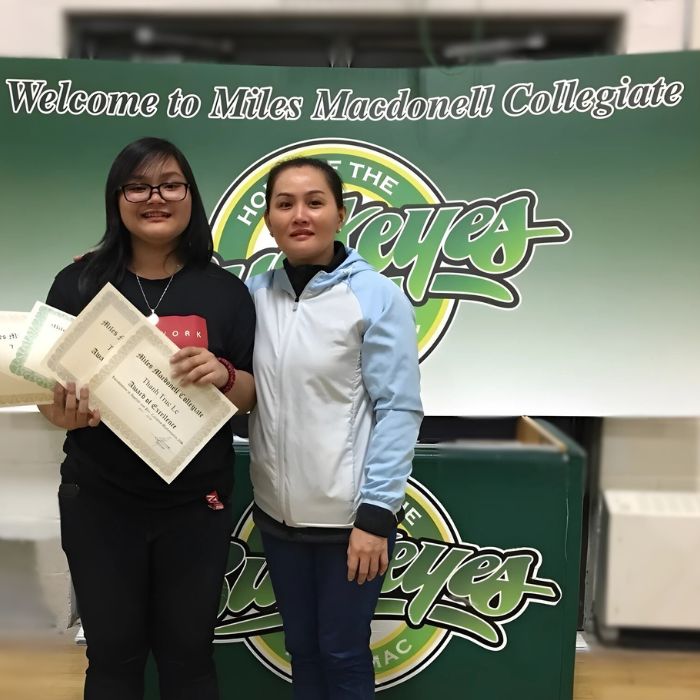
Lê Thanh Trúc, Student at Miles Macdonell Collegiate
“My family and I are deeply grateful to SIEC for not only securing my **Canada high school student visa** in Grade 10 but also for assisting my parents and siblings in obtaining their **visitor visas**. That was an invaluable gift.” — Lê Thanh Trúc, Student at **Miles Macdonell Collegiate** Secure Your Early High School (Secondary) […]
Phan Thị Ngọc Huỳnh, Former Student in Winnipeg
“The solid foundation provided by SIEC and Ms. Huong not only helped me realize my study abroad dream but also gave me the confidence to graduate, secure a stable job, and **settle permanently in Canada**.” — Phan Thị Ngọc Huỳnh, Former Student, currently working in **Winnipeg, Canada** Explore Your Study & Immigration Pathway in Canada […]
Hoàng Giang, Student at Edmonds College
“With her dedication and passion, Ms. Huong helped launch my **American dream**, opening up a vast world of opportunity and the chance to meet new friends.” — Hoàng Giang, Student at **Edmonds College** Explore More About Studying in the USA Spotlight on Edmonds College (Washington State) Gain in-depth knowledge about the programs, tuition fees, and […]
Khánh Lê, Student at LaSalle College
“Thank you to Ms. Huong and the SIEC team for their dedicated partnership and support, from my application phase until I was settled in Canada, helping me confidently pursue my dreams.” — Khánh Lê, Student at **LaSalle College** Explore Further Canada Study Opportunities Spotlight on LaSalle College Gain deeper insights into the programs, tuition fees, […]
Quỳnh Giao, Student at Red River Colleg
“She didn’t just stop at completing the application; she was an inspiration, a true motivator…” — Quỳnh Giao, Student at **Red River College** Continue Your Canada Study Abroad Journey Spotlight on Red River College Polytechnic (RRC Polytech) Discover the high-demand, **applied learning programs** at **Red River College** – one of the premier post-secondary institutions in […]