Latest updates on Alberta immigration costs for newcomers
08/08/2026 Phong Nguyen
In the context of significant changes in Canada’s immigration policies, Alberta has emerged as an attractive destination due to its dynamic economy and affordable cost of living. Thoroughly researching **Alberta immigration costs** for the 2026–2027 period is an essential step for anyone planning to establish a new life in the Great White North. Instead of choosing traditional immigration pathways that are becoming increasingly restricted, current trends focus heavily on study-to-work pathways in priority sectors. This article provides a detailed look at fees, documentation requirements, and optimal pathways to help you maximize your budget and success rate when choosing Alberta as your second home.
Eligibility requirements and new Study Permit regulations in Alberta
To begin your journey and accurately estimate **Alberta immigration costs**, the first step involves understanding Study Permit requirements. In the 2026–2027 period, the Canadian government continues to apply strict quota regulations for international students. This means you must obtain a Provincial Attestation Letter (PAL) before applying for a study visa. Applicant profiles must meet academic and language standards. Typically, colleges and universities in Alberta require a GPA of “above average” or higher. Regarding English proficiency, the minimum IELTS score usually ranges from 6.0 to 6.5, depending on the level of study. Preparing a meticulous application not only saves time but also minimizes additional costs arising from having to re-apply multiple times. Furthermore, the study plan must clearly state the purpose of study and its connection to a career path in Alberta. The province specifically prioritizes candidates who intend to contribute to the local economy through occupations facing labor shortages. Demonstrating serious intent and the ability to adapt will be a major advantage during the later stages of the permanent residency application process.
Financial Requirement Updates and Alberta immigration costs 2026–2027
Financial requirements are among the most significant changes affecting **Alberta immigration costs** in recent years. Since 2024, Immigration, Refugees and Citizenship Canada (IRCC) has increased the financial proof requirements for international students to ensure they can afford their living expenses without over-relying on part-time work. By 2026–2027, this figure is expected to be further adjusted according to the inflation index. Currently, in addition to the first year’s tuition, you must prove you have living funds equivalent to approximately 20,635 CAD for a single individual. If accompanied by family, this number increases significantly. Tuition fees at Alberta institutions such as the University of Alberta or SAIT range from 15,000 CAD to 30,000 CAD per year depending on the major. The total initial **Alberta immigration costs** for studying can fall between 40,000 CAD and 60,000 CAD for the first year. However, Alberta maintains low taxes and has no Provincial Sales Tax (PST), which helps reduce the burden of daily expenses compared to provinces like Ontario or British Columbia. Other fees, including health insurance, study materials, and application fees, should also be included in a detailed budget forecast to avoid financial shortages midway through the process.
24-Hour Weekly Work Limit Regulations and Affordability
Good news for those concerned about **Alberta immigration costs** is the new regulation regarding part-time work. The Canadian government has officially implemented a regulation allowing international students to work up to 24 hours per week during academic terms and unlimited hours during scheduled breaks. This change provides students with a significant source of income to offset high living expenses. With Alberta’s minimum wage currently at 15 CAD per hour, a student working a full 24 hours per week can earn approximately 1,440 CAD per month before taxes. This amount is sufficient to cover basic rent and food in cities like Edmonton or Calgary. Working part-time not only helps reduce the overall financial burden but also provides an opportunity to gain work experience in a real-world Canadian environment. However, you must balance studying and working to ensure good academic results. Academic performance is a prerequisite for being granted a Post-Graduation Work Permit (PGWP) and subsequently applying for permanent residency. Jobs related to your field of study will provide higher value for your future immigration profile, especially when pursuing the province’s priority occupations.
Choosing Priority Occupations to Optimize Alberta immigration costs
Instead of pursuing general fields, focusing on priority sectors is a smart strategy to optimize **Alberta immigration costs** and shorten application processing times. Alberta is currently implementing several distinct immigration streams for individuals with skills in essential areas. The Healthcare and medical services sector tops the priority list due to an aging population and increasing demand for medical services. Positions such as nurses, personal care assistants, and laboratory technicians are always in high demand with attractive salaries. Next is the STEM group, which includes Science, Technology, Engineering, and Mathematics. With the growth of tech hubs in Calgary, software specialists and data engineers have a very high chance of immigrating through the Accelerated Tech Pathway. The Construction and infrastructure sector also plays a vital role in the province’s development plan. As Alberta’s population grows rapidly, the need for housing and infrastructure becomes urgent. Skilled workers in construction not only find jobs easily but also benefit from priority policies when applying for permanent residency. Choosing the right major from the start helps you avoid the risk of unemployment and wasting money on courses that do not offer high immigration value.
How to Choose Schools and Pathways to Sustainable Employment
To make the immigration journey smooth, choosing a school that fits your financial capacity and career goals is crucial. Alberta possesses a quality education system with many reputable technical colleges and universities. When selecting a school, you should prioritize institutions on the PGWP-eligible list that have strong links with local businesses. Colleges like SAIT in Calgary or NAIT in Edmonton are famous for their practical training programs focused on vocational skills. Tuition fees at colleges are generally lower than at universities, helping you save a large portion of your total **Alberta immigration costs**. A popular pathway is to study a college program for at least 2 years, then apply for a PGWP to work and gain experience for 1 to 2 years before applying for Permanent Residency (PR). During your studies, participating in paid internship programs (Co-op) is an excellent way to earn extra income while building a professional network. These relationships often lead to official job offers after graduation, helping you quickly stabilize your life and recoup the initial investment made into your immigration journey.
Long-term Immigration Pathways and Provincial Nominee Programs
After completing your studies and gaining local work experience, you can access the Alberta Advantage Immigration Program (AAIP). This is the shortest path to becoming a Canadian permanent resident. Immigration streams such as the Alberta Opportunity Stream or Rural Renewal Stream are designed to retain skilled workers who wish to commit to the province long-term. Mastering the regulations regarding work experience and language requirements during this stage is extremely important. You must ensure your current job is on the list of eligible occupations and that your salary meets the required standards. The costs at the PR application stage include provincial processing fees, federal application fees, medical exams, and police certificates. The pathway from studying to immigrating requires perseverance and a clear financial plan. Once you hold a permanent resident card, benefits regarding education for your children and healthcare will significantly reduce your cost of living compared to when you were an international student. This is the worthy result of a sound initial investment in your future. Opportunities to immigrate to Alberta in the 2026–2027 period remain wide open for those who are well-prepared and choose the right priority occupations. Understanding the costs and the realistic pathway will help you feel more confident on the road to conquering your Canadian dream. To receive in-depth and up-to-date advice on the immigration situation in Alberta, contact our team of experts immediately. We will help you analyze your profile, choose a major that fits labor market trends, and create the most detailed financial plan. Don’t miss the opportunity to build your future in one of Canada’s most prosperous provinces by participating in our 2027 Canada Immigration Assessment today. Let us accompany you in optimizing your budget and achieving your goal of becoming a permanent resident quickly and safely. Call to contact for study abroad and immigration information at SIEC: https://siec.com.vn/dang-ky
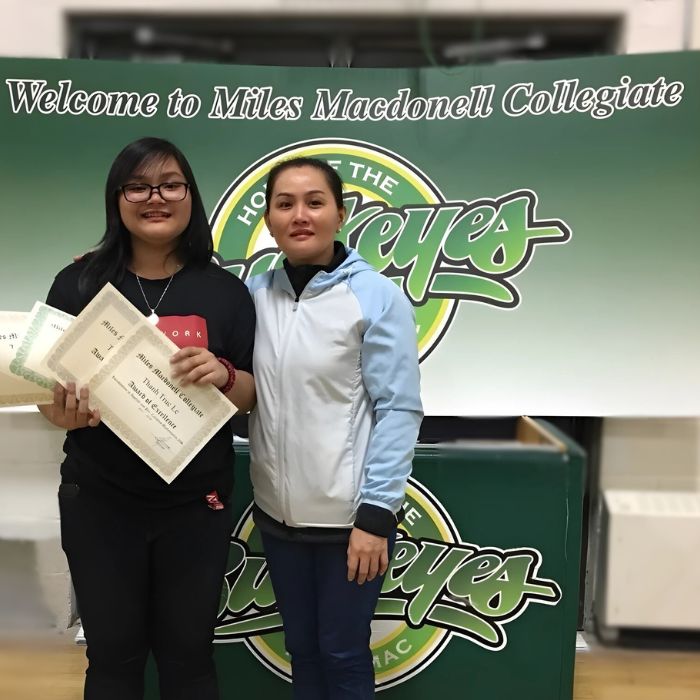
Lê Thanh Trúc, Student at Miles Macdonell Collegiate
“My family and I are deeply grateful to SIEC for not only securing my **Canada high school student visa** in Grade 10 but also for assisting my parents and siblings in obtaining their **visitor visas**. That was an invaluable gift.” — Lê Thanh Trúc, Student at **Miles Macdonell Collegiate** Secure Your Early High School (Secondary) […]
Phan Thị Ngọc Huỳnh, Former Student in Winnipeg
“The solid foundation provided by SIEC and Ms. Huong not only helped me realize my study abroad dream but also gave me the confidence to graduate, secure a stable job, and **settle permanently in Canada**.” — Phan Thị Ngọc Huỳnh, Former Student, currently working in **Winnipeg, Canada** Explore Your Study & Immigration Pathway in Canada […]
Hoàng Giang, Student at Edmonds College
“With her dedication and passion, Ms. Huong helped launch my **American dream**, opening up a vast world of opportunity and the chance to meet new friends.” — Hoàng Giang, Student at **Edmonds College** Explore More About Studying in the USA Spotlight on Edmonds College (Washington State) Gain in-depth knowledge about the programs, tuition fees, and […]
Khánh Lê, Student at LaSalle College
“Thank you to Ms. Huong and the SIEC team for their dedicated partnership and support, from my application phase until I was settled in Canada, helping me confidently pursue my dreams.” — Khánh Lê, Student at **LaSalle College** Explore Further Canada Study Opportunities Spotlight on LaSalle College Gain deeper insights into the programs, tuition fees, […]
Quỳnh Giao, Student at Red River Colleg
“She didn’t just stop at completing the application; she was an inspiration, a true motivator…” — Quỳnh Giao, Student at **Red River College** Continue Your Canada Study Abroad Journey Spotlight on Red River College Polytechnic (RRC Polytech) Discover the high-demand, **applied learning programs** at **Red River College** – one of the premier post-secondary institutions in […]