The Latest Guide to Canada immigration 920 for Vietnamese
03/08/2026 Phong Nguyen
In the context of significant shifts in Canadian migration policies, understanding the Canada immigration 920 pathway for the 2026–2027 period has become more crucial than ever. The Canadian government is currently transitioning from broad immigration to selecting candidates based on actual skills and sectors that the economy is lacking. To succeed in Canada immigration 920, students and workers need a clear strategy, focusing on priority sectors such as Healthcare, STEM, and Construction instead of general fields of study. This article will provide a detailed look at the latest regulations, from financial requirements to employment roadmaps, so readers can best prepare for their plans.
Overview of Canada immigration 920 during the 2026–2027 period
The 2026–2027 period marks a major turning point in the Canada immigration 920 policy as Immigration, Refugees and Citizenship Canada (IRCC) tightens the number of study permits and focuses on candidate quality. Instead of granting residency to all graduates, Canada now prioritizes those capable of contributing directly to sectors facing labor shortages. This means that choosing the right field of study and career path will determine 80% of the success of your Canada immigration 920 application.
The new Canada immigration 920 strategy no longer encourages spontaneous study abroad. Instead, Economic Class immigration programs and Provincial Nominee Programs (PNP) will allocate more slots to candidates graduating from engineering and healthcare sectors. To adapt to this reality, applicants need to clearly understand Study Permit regulations, new financial capacity requirements, and how the Canadian labor market will operate in the near future.
Documentation Requirements and New Financial Criteria for Canada immigration 920
To begin the Canada immigration 920 journey, the first and most important step is to prepare a complete Study Permit application that meets strict financial standards. From 2024 onwards and extending through the 2026–2027 period, financial capacity requirements have increased significantly to ensure international students can afford the high cost of living in Canada.
New Regulations on Study Permits and Proof of Funds
In the Canada immigration 920 roadmap, applicants must demonstrate a minimum amount of money to cover living expenses, in addition to the first year’s tuition. According to the latest regulations, the required financial balance has more than doubled compared to previous years. This aims to protect students from financial hardship upon arriving in Canada and ensure they can focus on high-quality education. Additionally, obtaining a Provincial Attestation Letter (PAL) is a mandatory step for most levels of study, except for master’s and doctoral degrees, to control the number of international students entering the country.
24-Hour Weekly Work Limit Regulation for Students
Another notable change affecting the Canada immigration 920 plan is the regulation on off-campus work hours. Instead of allowing unlimited work or only 20 hours as before, the Canadian government has adjusted it to 24 hours per week during academic sessions. This regulation helps students earn extra income to support living costs while still ensuring time for high-quality study. Compliance with the correct number of work hours is a prerequisite for maintaining legal status and avoiding negative impacts on your Canada immigration 920 application after graduation.
Choosing Priority Occupations to Optimize Canada immigration 920
Instead of choosing general fields like Business Administration or Marketing, which are already saturated with labor, a smart Canada immigration 920 strategy is to focus on sectors that Canada is severely lacking. These sectors not only make it easier for you to find a job but also grant priority points in invitation rounds for Express Entry and various provinces.
Healthcare and Medical Sciences Sector
With an aging population, Canada needs a large number of personnel in nursing, personal support, and health management. Applicants choosing the Canada immigration 920 pathway through the healthcare sector often see a very high rate of receiving invitations for residency. Educational programs ranging from vocational certificates to university degrees in this field are supported by the government and prioritized for long-term residency processing.
STEM Sector (Science, Technology, Engineering, and Mathematics)
STEM has always been a pillar of Canada’s economic development plan. Experts in artificial intelligence, software development, mechanical engineering, and data analysis are among the most sought-after individuals. Pursuing STEM studies not only brings attractive income levels but is also the shortest path to achieving the goal of Canada immigration 920, thanks to priority programs dedicated to tech talent.
Construction and Skilled Trades Sector
The housing crisis in Canada has driven demand for electricians, carpenters, civil engineers, and project managers. If you have technical skills and want to achieve Canada immigration 920 quickly, vocational training programs in the construction field are an excellent choice. These sectors often have more flexible language entry requirements but offer immediate job opportunities upon graduation in rapidly developing provinces.
How to Choose Schools and Study Paths for Successful Canada immigration 920
Choosing a school is not just based on academic rankings but also on the list of schools permitted to issue a Post-Graduation Work Permit (PGWP). In your Canada immigration 920 plan, you need to ensure that your educational institution is on the Designated Learning Institution (DLI) list. Specifically, from 2025, new PGWP regulations will be tied to priority fields of study, meaning only students graduating from sectors the market needs will be granted long-term work permits.
The ideal study path for the Canada immigration 920 goal usually begins with a college or university program lasting at least 2 years to receive a 3-year PGWP. During this time, accumulating work experience in Canada is a key factor. You should choose schools located in provinces with open immigration policies such as Saskatchewan, Manitoba, or the Atlantic provinces to increase your chances of provincial nomination, a major advantage in your Canada immigration 920 profile.
The Journey from Studying to Employment and Sustainable Canada immigration 920
The Canada immigration 920 journey does not end when you receive your diploma; it truly begins when you step into the labor market. After completing their studies, candidates need to make the most of their PGWP time to work in occupations classified under the National Occupational Classification (NOC) types 0, A, or B (now the TEER system). At least one year of Canadian work experience will qualify you for the Canadian Experience Class (CEC) program.
Furthermore, continuous improvement of language skills (English or French) is mandatory to increase your CRS score in the Express Entry system. For the Canada immigration 920 roadmap, having a valid Job Offer from a Canadian employer will cause your score to skyrocket. The combination of professional qualifications in a priority sector, practical work experience, and good language proficiency is the perfect formula for owning a Canadian Permanent Resident card in the 2026–2027 period.
Assess Your Canada Immigration Potential for 2027 Today
With the constant fluctuations in immigration law, self-assessing your Canada immigration 920 profile is a necessary step to avoid wasting time and money. Every individual has a different educational, financial, and experiential background; therefore, there is no one-size-fits-all formula. You need to clearly identify where your strengths lie: do you have the academic strength to pursue STEM, or do you have the dexterity to join the Construction and Healthcare sectors?
Early assessment helps you recognize gaps in your Canada immigration 920 profile, allowing you to plan timely improvements in IELTS scores, work experience, or more solid financial preparation. Do not wait until policies become more difficult; start your Canada immigration 920 roadmap with professional and in-depth preparation now to stay ahead of the major opportunities in 2027.
To ensure your study and immigration roadmap is built on the most accurate and updated information, seeking support from experienced experts is vital. Contact the consulting team at SIEC immediately for a detailed profile analysis and the design of a personalized immigration plan tailored to your abilities and aspirations.
We are committed to accompanying you from the step of choosing a major and a school until you realize your dream of settling in the land of the maple leaf. Do not miss the golden opportunity to build a future in one of the most livable countries in the world; connect with us to receive the most optimal roadmap for your settlement goals.
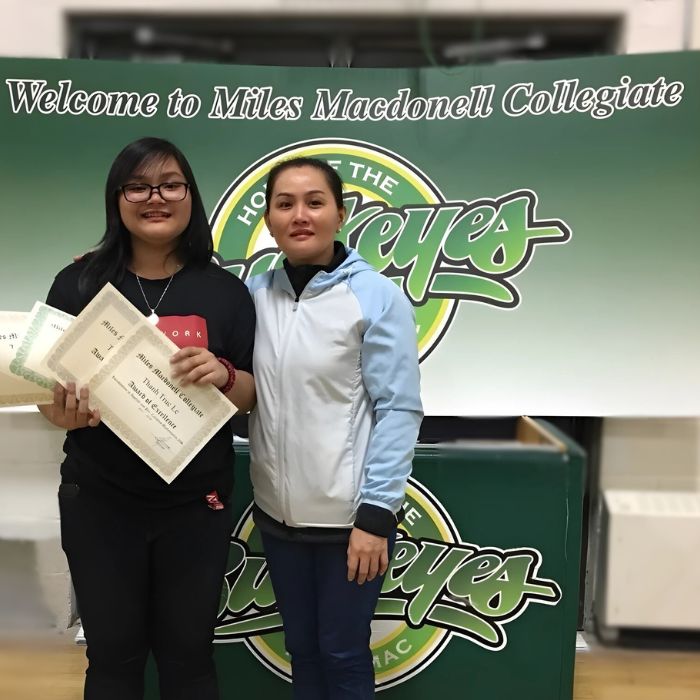
Lê Thanh Trúc, Student at Miles Macdonell Collegiate
“My family and I are deeply grateful to SIEC for not only securing my **Canada high school student visa** in Grade 10 but also for assisting my parents and siblings in obtaining their **visitor visas**. That was an invaluable gift.” — Lê Thanh Trúc, Student at **Miles Macdonell Collegiate** Secure Your Early High School (Secondary) […]
Phan Thị Ngọc Huỳnh, Former Student in Winnipeg
“The solid foundation provided by SIEC and Ms. Huong not only helped me realize my study abroad dream but also gave me the confidence to graduate, secure a stable job, and **settle permanently in Canada**.” — Phan Thị Ngọc Huỳnh, Former Student, currently working in **Winnipeg, Canada** Explore Your Study & Immigration Pathway in Canada […]
Hoàng Giang, Student at Edmonds College
“With her dedication and passion, Ms. Huong helped launch my **American dream**, opening up a vast world of opportunity and the chance to meet new friends.” — Hoàng Giang, Student at **Edmonds College** Explore More About Studying in the USA Spotlight on Edmonds College (Washington State) Gain in-depth knowledge about the programs, tuition fees, and […]
Khánh Lê, Student at LaSalle College
“Thank you to Ms. Huong and the SIEC team for their dedicated partnership and support, from my application phase until I was settled in Canada, helping me confidently pursue my dreams.” — Khánh Lê, Student at **LaSalle College** Explore Further Canada Study Opportunities Spotlight on LaSalle College Gain deeper insights into the programs, tuition fees, […]
Quỳnh Giao, Student at Red River Colleg
“She didn’t just stop at completing the application; she was an inspiration, a true motivator…” — Quỳnh Giao, Student at **Red River College** Continue Your Canada Study Abroad Journey Spotlight on Red River College Polytechnic (RRC Polytech) Discover the high-demand, **applied learning programs** at **Red River College** – one of the premier post-secondary institutions in […]