Latest Guide for Students to Study in Canada SDS Program
12/05/2026 Phong Nguyen
The Study in Canada SDS program continues to be the top choice for Vietnamese students in the 2026-2027 period thanks to its fast-track application process and the reduction of complex financial proof burdens. However, Canada’s immigration policy is undergoing significant shifts, focusing strongly on attracting human resources in priority sectors rather than encouraging mass immigration as before. Grasping the new regulations for the Study in Canada SDS program accurately will help you build an effective study and work pathway, ensuring your long-term settlement potential in the Maple Leaf country.
1. Understanding what Study in Canada SDS is and its benefits
To begin this journey, students need to clearly understand what Study in Canada SDS is and why it is the shortest path to obtaining a Study Permit. SDS stands for Study Direct Stream, a priority visa processing program for students from specific countries, including Vietnam. Instead of preparing a series of documents to prove income, assets, or the sponsor’s savings book, students participating in Study in Canada SDS only need to meet language proficiency requirements and pay an upfront Guaranteed Investment Certificate (GIC).
The greatest benefit of the Study in Canada SDS stream is the significantly shortened application processing time, usually taking only 20 to 45 working days. This helps students be more proactive in preparing their luggage and enrolling on time. Additionally, the visa approval rate for this stream is often higher than the regular financial proof stream, as you have proven your academic ability through IELTS scores and financial capacity through the GIC certificate.
In the context of 2026 and 2027, Study in Canada SDS is not just about studying; it is a strategic stepping stone to access new immigration policies. The Canadian government is tightening regulations on the number of international students but opening doors wider for individuals with expertise in sectors facing severe labor shortages. Therefore, choosing Study in Canada SDS from the very beginning will help you have a transparent and reliable profile in the eyes of immigration authorities.
To qualify for Study in Canada SDS in the 2026-2027 period, students need to prepare a standard application that meets the strict standards of Immigration, Refugees and Citizenship Canada (IRCC). First and foremost is language proficiency. You must achieve a minimum IELTS Academic score of 6.0 for all skills: listening, speaking, reading, and writing.
This is a mandatory requirement to ensure you can keep up with the academic programs at colleges and universities in Canada.
Next, you need an official Letter of Acceptance (LOA) from a Designated Learning Institution (DLI) in Canada. Note that not all DLI schools qualify for students to apply for a Post-Graduation Work Permit (PGWP). Therefore, when pursuing Study in Canada SDS, you should prioritize public schools or high-quality training programs recognized by the government. Having a clear study plan that aligns with your previous educational background is also a key factor in explaining your intent to the consular officer.
The Study Permit application process for this stream includes a medical exam before submission and paying the biometrics fee. For Study in Canada SDS, online application is mandatory. You need to ensure all documents such as degrees, transcripts, and passports are notarized and translated into English or French.
Meticulousness in your application not only helps the review process go smoothly but also demonstrates your serious attitude toward studying in Canada.
3. New financial requirements and 24h per week work regulations
One of the most important changes for Study in Canada SDS in recent years is the financial requirement level. Instead of the previous 10,000 CAD, students now must possess a Guaranteed Investment Certificate (GIC) with a significantly higher value to ensure sufficient living expenses for the first year. This figure is adjusted annually based on the cost-of-living index in Canada, aiming to protect students from financial difficulties when arriving in a new country.
This GIC amount will be deposited into a designated Canadian bank and will be gradually refunded to the student every month after you arrive in Canada. This is “ironclad proof” of financial capacity when applying for Study in Canada SDS, helping you eliminate the need for complex explanations of family income sources. Additionally, you must still complete the tuition payment for the first academic year and attach the receipt to your visa application.
Regarding work regulations, from 2024 onwards, Canada has applied a new law allowing international students to work part-time for a maximum of 24 hours per week during the semester. This is a reasonable adjustment from the previous 20-hour regulation, helping Study in Canada SDS students earn extra income to cover living expenses while still ensuring time for studying. During holidays or summer breaks, you are still allowed to work full-time.
However, remember that your main goal remains completing your study program to transition to the settlement phase later.
4. How to choose majors and schools to optimize immigration potential in Canada
In the 2026-2027 period, choosing a major when pursuing Study in Canada SDS is no longer based solely on personal preference but must closely follow the government’s list of priority occupations. Canada is focusing on attracting human resources in three main sectors: Healthcare, STEM (Science, Technology, Engineering, Mathematics), and Construction. These are fields with high labor demand and are prioritized in immigration invitation rounds through the Express Entry system or Provincial Nominee Programs (PNP).
If you choose Study in Canada SDS in the Healthcare sector, such as nursing, personal support workers, or laboratory technicians, your immigration chances are almost guaranteed if you complete the program successfully. Similarly, the STEM group with majors in artificial intelligence, cybersecurity, and software engineering is always on the “red list” of personnel shortages. For those with technical strengths, Construction sectors like project management, electrical, and plumbing also offer attractive salaries and stable immigration pathways.
When choosing a school for Study in Canada SDS, you should prioritize schools located in provinces with open immigration policies such as Saskatchewan, Manitoba, or the Atlantic provinces. Community colleges here often have close links with local businesses, making it easier for students to find jobs immediately after graduation. Choosing the right major and the right school from the start of your Study in Canada SDS journey will help you save time and increase your success rate in becoming a permanent resident.
5. Pathway from study to work and stable settlement for SDS students
The pathway after completing the Study in Canada SDS program usually begins with applying for a Post-Graduation Work Permit (PGWP). Depending on the length of your study program, you may be granted a PGWP with a duration of up to 3 years. This is the “golden time” for you to accumulate Canadian work experience, a crucial factor in increasing your score in the Comprehensive Ranking System (CRS).
Work experience in priority occupations will make your profile stand out more than other candidates.
After gaining at least one year of professional work experience, Study in Canada SDS students can apply for permanent residency through the Canadian Experience Class (CEC) or provincial skilled worker streams. The difference in the 2026-2027 period is the rise of category-based selection rounds. If you work in Healthcare, STEM, or Construction, the CRS score required to receive an invitation to apply for PR will often be much lower than in other general occupations.
For the Study in Canada SDS pathway to lead to a successful immigration outcome, students need to actively improve their language proficiency and soft skills during their studies. Participating in paid internship programs (Co-op) is also a great way to build a professional network. Settling in Canada today requires careful preparation and a clear strategy, and is no longer suitable for those intending to pursue mass immigration without investment in specialized vocational skills.
6. Assess your Canada 2027 immigration potential now
The **Study in Canada SDS** journey is a major life project, requiring investment in time, money, and perseverance. With constant changes in immigration policies, trying to figure it out on your own can sometimes lead to unnecessary mistakes. To ensure your pathway is on the right track and to optimize future immigration opportunities, consulting with experienced experts is absolutely essential.
Don’t let procedural barriers or information gaps disrupt your dreams. Start by assessing your personal capacity and choosing a major that fits the 2027 Canadian labor market trends. Preparing early and accurately for the Study in Canada SDS program is the key to opening the door to success in one of the most livable countries in the world.
To receive in-depth and personalized support for your application, contact our consulting team immediately for a detailed assessment of your immigration potential. We will help you answer all questions about what Study in Canada SDS is, how to choose schools in potential provinces, and build a sustainable post-graduation career path.
Let SIEC accompany you on the path to conquering your Canadian dream. We provide the most updated information and optimal solutions for your study and immigration plans.
Contact us now for a free consultation and profile assessment, helping you realize your goal of settling in Canada in the near future. Register for information at: https://siec.com.vn/dang-ky
Are You Ready to Break Through Your Global Career with SIEC?
Don’t let your prestigious degree just sit on paper. Let SIEC experts advise you on a study abroad pathway combined with a strategic career orientation starting today!
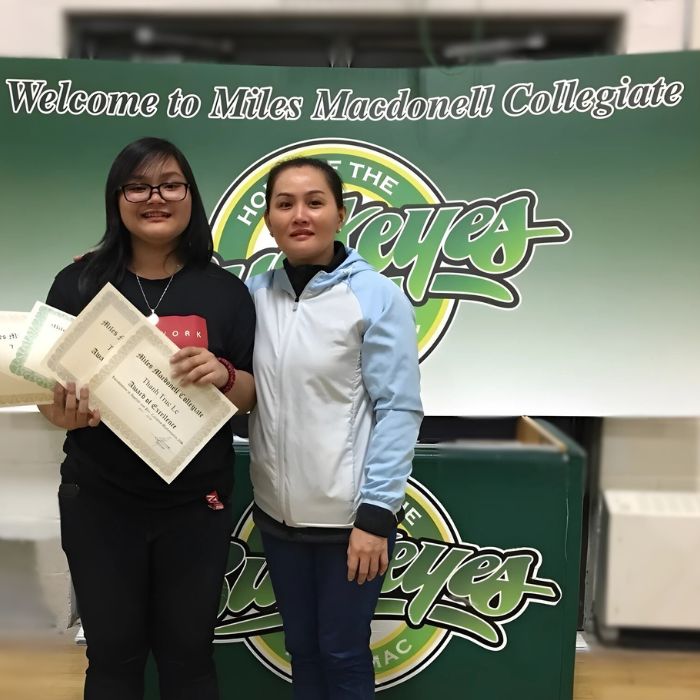
Lê Thanh Trúc, Student at Miles Macdonell Collegiate
“My family and I are deeply grateful to SIEC for not only securing my **Canada high school student visa** in Grade 10 but also for assisting my parents and siblings in obtaining their **visitor visas**. That was an invaluable gift.” — Lê Thanh Trúc, Student at **Miles Macdonell Collegiate** Secure Your Early High School (Secondary) […]
Phan Thị Ngọc Huỳnh, Former Student in Winnipeg
“The solid foundation provided by SIEC and Ms. Huong not only helped me realize my study abroad dream but also gave me the confidence to graduate, secure a stable job, and **settle permanently in Canada**.” — Phan Thị Ngọc Huỳnh, Former Student, currently working in **Winnipeg, Canada** Explore Your Study & Immigration Pathway in Canada […]
Hoàng Giang, Student at Edmonds College
“With her dedication and passion, Ms. Huong helped launch my **American dream**, opening up a vast world of opportunity and the chance to meet new friends.” — Hoàng Giang, Student at **Edmonds College** Explore More About Studying in the USA Spotlight on Edmonds College (Washington State) Gain in-depth knowledge about the programs, tuition fees, and […]
Khánh Lê, Student at LaSalle College
“Thank you to Ms. Huong and the SIEC team for their dedicated partnership and support, from my application phase until I was settled in Canada, helping me confidently pursue my dreams.” — Khánh Lê, Student at **LaSalle College** Explore Further Canada Study Opportunities Spotlight on LaSalle College Gain deeper insights into the programs, tuition fees, […]
Quỳnh Giao, Student at Red River Colleg
“She didn’t just stop at completing the application; she was an inspiration, a true motivator…” — Quỳnh Giao, Student at **Red River College** Continue Your Canada Study Abroad Journey Spotlight on Red River College Polytechnic (RRC Polytech) Discover the high-demand, **applied learning programs** at **Red River College** – one of the premier post-secondary institutions in […]